This year's top office design trends are bold, intentional, and deeply connected to design psychology and functional architecture. In 2026, office environments will be more than just places to work. They’ll be strategic tools that support productivity, employee well-being, and brand identity.
Staying ahead of office design trends is essential for attracting top talent, impressing clients, and future-proofing your workspace. Whether you're remodeling or planning a new build, the way you structure and finish your office directly impacts how people feel and perform inside it.
From door selections to layout innovations, the following trends will define high-performance office design in 2026.
1. Modern Interior Office Doors
Reimagining office spaces with modern interior doors will transform them in minutes. Interior doors influence how a space flows, how private it feels, and how it looks. Some top modern interior door designs include:
-
“Magic” or concealed-rail barn doors, offering a seamless slide mechanism with no visible hardware
-
French doors, which are ideal for allowing light between rooms while maintaining acoustical separation
-
Flush frameless swing doors, which blend cleanly into walls for a minimalist, uninterrupted aesthetic
The right door choice doesn’t just separate rooms—it defines them.
While open plans are a popular design for modern offices, more business owners are turning to flexible workspaces that offer a variety of settings for employees to choose from. These spaces include private offices, collaboration areas, and quiet zones to accommodate different work styles and preferences.
A study from the World Economic Forum found a clear causal link between open-plan office noise and increased physiological stress. In their study, just eight minutes in a simulated open-plan environment led to a 25% rise in negative mood among participants.
To strike a balance between an open layout and a closed office plan, create a cohesive yet flexible workspace with the use of doors. The California-based door company Doors Los Angeles, for example, offers sliding and folding interior office doors with contemporary finishes and optional frosted glass. These configurations allow you to create distinct zones that support both collaboration and privacy.
2. Adaptive Design and Flexibility
One of the leading office design trends of 2026 is adaptability. Offices need to function for multiple teams, schedules, and work styles, especially with hybrid work on the rise.
Ways to implement adaptive design:
-
Modular furniture that rearranges easily
-
Movable partitions and acoustic panels
-
Sliding or bi-fold doors that expand or reduce space as needed
-
Touch-down workstations for remote team members
Flexible spaces support collaboration without sacrificing focused productivity. Use architectural design elements, like concealed barn doors, to fluidly shift between open and private settings.
3. Wellness-Driven Workspaces
Employee wellness is at the core of modern office planning. As companies prioritize retention and satisfaction, wellness-focused design is no longer optional—it’s essential.
Trending wellness features include:
-
Ergonomic furniture with adjustable desks and chairs
-
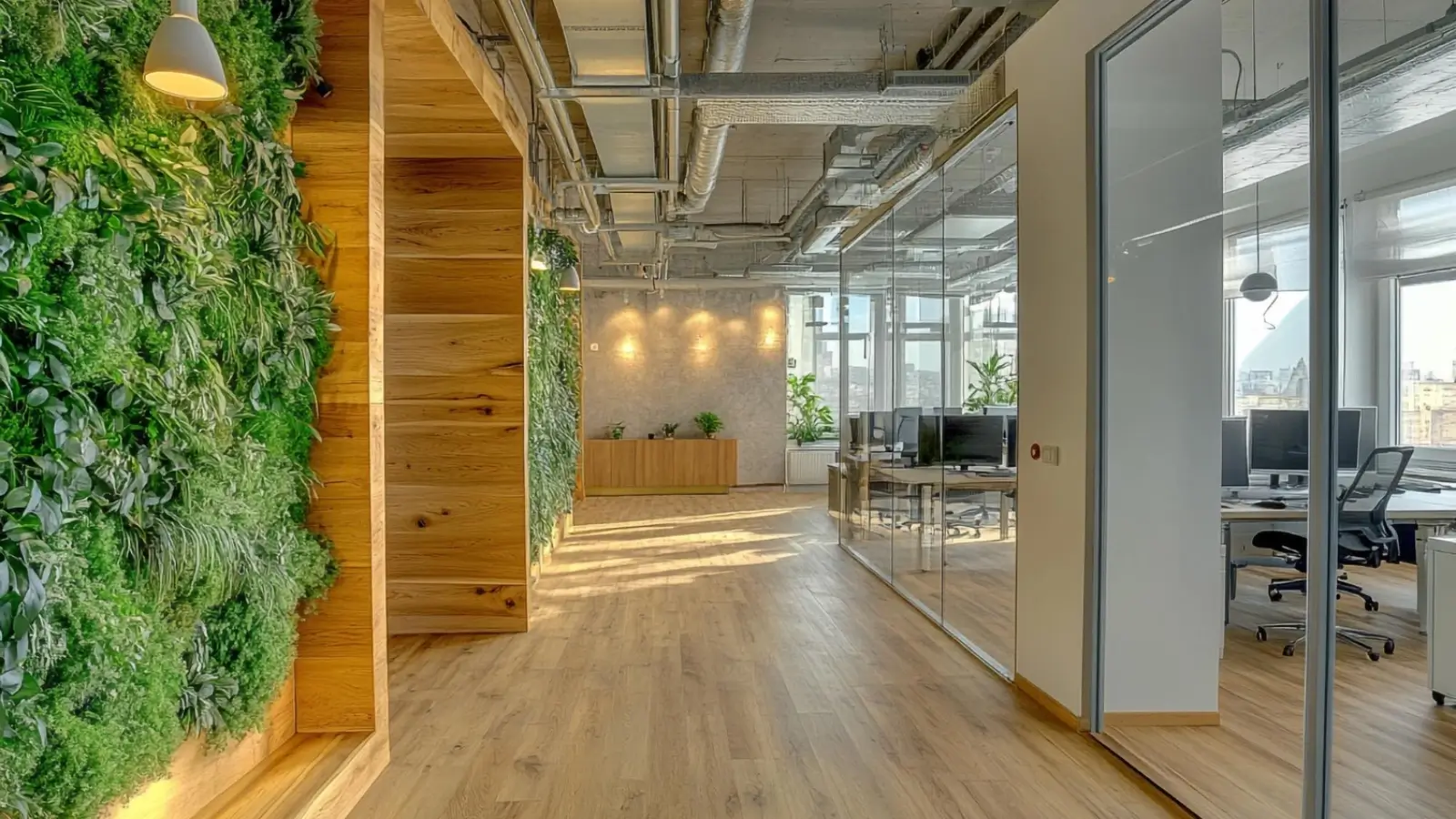
Daylight maximization using glass partitions and doors
-
Natural materials such as wood veneer or stone finishes
-
Biophilic elements, including plant walls and water features
Designing for wellness promotes physical health and mental clarity. Even your choice of interior finishes, like non-toxic door coatings or natural textures, reinforces this holistic approach.
4. Texture and Color: Bold, Yet Balanced
Gone are the days of sterile white offices. In 2026, workplaces will embrace mood-enhancing palettes and tactile surfaces to create visual interest and a sense of personality.
Color Trends:
-
Deep greens, burnt orange, and navy for warmth and confidence
-
Neutral grays, taupes, and off-whites for versatility
-
Matte black or gold finishes as subtle luxury accents
Material Trends:
-
Smooth, minimalist door finishes with subtle grain
-
Warm wood tones paired with metal or glass
-
Layered wall panels or textured ceiling details
Pairing color and texture allows each area of the office to carry a specific tone—calm for focus rooms, bold for creative zones, and grounded neutrals for common areas.
5. Smart Technology Integration
Design meets intelligence in 2026. Office design is increasingly merging with tech to enhance security, efficiency, and user experience.
Key technology upgrades:
-
Automated door systems with access control
-
Smart lighting that adjusts with occupancy
-
Acoustic zoning tools for noise control
-
Meeting room sensors that manage bookings and usage
By embedding smart tech directly into your doors, lighting, and furnishings, you eliminate friction and create a workspace that responds to user behavior.
6. Sustainable Materials and Environmental Responsibility
Sustainability is embedded in every design decision this year. Business owners are demanding materials and finishes that minimize environmental impact while maintaining performance.
Eco-forward design features:
-
FSC-certified wood for doors and panels
-
Recycled aluminum and glass in door frames
-
Water-based paints and low-VOC finishes
-
Modular furniture made from upcycled materials
7. Personalized Brand Aesthetics
Your office isn’t just a place to work—it’s a visual expression of your brand. In 2026, offices will reflect company culture through highly curated finishes and customized design elements.
Brand identity through design includes:
-
Custom-colored doors in brand tones
-
Logo etching on glass or metal finishes
-
Feature walls in reception areas
-
Coordinated door hardware and lighting
Your brand’s identity should be evident from the front entry to the furthest corner. Thoughtfully designed interior office doors reinforce consistency and professionalism throughout your space.
Redesign With Purpose in 2026
Office design in 2026 is all about how the space works, feels, and adapts to the people in it. The trends shaping today’s workspaces reflect deeper priorities: flexibility, wellness, sustainability, and identity. As businesses face evolving work models and higher employee expectations, your office must be more than functional—it should be thoughtfully designed to perform on every level.
Key Takeaways:
-
Balance openness and privacy: Hybrid layouts with defined zones—using doors and partitions to create options—support different work styles without sacrificing collaboration or focus.
-
Invest in flexibility: Modular furniture, movable walls, and multi-use areas make your space agile and future-proof.
-
Prioritize employee wellness: Natural light, ergonomic furnishings, biophilic design, and acoustical privacy contribute to a healthier, more productive environment.
-
Use texture and color strategically: Tactile surfaces and bold yet balanced color palettes create distinct moods and enhance visual interest across different office areas.
-
Integrate smart technology: Automated systems, acoustic zoning, and sensor-based controls streamline operations and improve user experience.
-
Design with sustainability in mind: Eco-friendly materials, low-VOC finishes, and long-lasting fixtures reduce environmental impact and signal long-term thinking.
-
Express your brand through space: Custom finishes, coordinated materials, and subtle branding elements reinforce your company’s values and identity.
The modern office is no longer just a place to work—it’s a powerful reflection of your culture, priorities, and vision. By applying these trends with intention, you’ll build a space that supports your team today and evolves with you tomorrow.
Business Outstanders brings you sharp insights on tech, business, entrepreneurship, law, crypto, and more. We uncover what’s next. Stay updated, sign up for our newsletter and be part of the future!