Key Takeaways
- Booster pumps increase and maintain water pressure where gravity-fed or municipal supply falls short
- Vertical multistage centrifugal pumps are among the most efficient configurations for water distribution boosting
- Applications span high-rise buildings, municipal networks, industrial facilities, irrigation systems, and wastewater treatment plants
- Variable frequency drives (VFDs) dramatically improve energy efficiency and pressure consistency in variable-demand systems
- Proper sizing, pressure settings, and preventive maintenance are the difference between long-term reliability and premature failure
Water pressure problems don't usually announce themselves with much warning. One day the system runs fine, and the next you've got engineers on-site trying to figure out why equipment on an upper floor is barely getting usable flow. That's exactly the kind of problem booster pumps exist to solve.
In water distribution systems, pressure loss is almost inevitable. Water travels through long pipe networks, climbs vertical distances, or serves loads that exceed what the municipal supply can consistently deliver. Booster pumps address all of these scenarios. And while they've been a fixture of industrial and commercial infrastructure for decades, how they're selected, sized, and integrated with modern controls has changed quite a bit.
What a Booster Pump Actually Does
At its core, a booster pump increases incoming water from low or inconsistent pressure to the level a system actually needs. Simple enough in concept. But the complexity of that job varies enormously depending on the application.
In a basic residential scenario, a booster might handle a single household's supply where well pressure drops during peak demand. Scale that up to a 20-story building or a large industrial processing facility, and you're looking at multiple pump stages, sophisticated controls, and precise pressure regulation across dozens of endpoints. The physics are the same; the engineering demands are not.
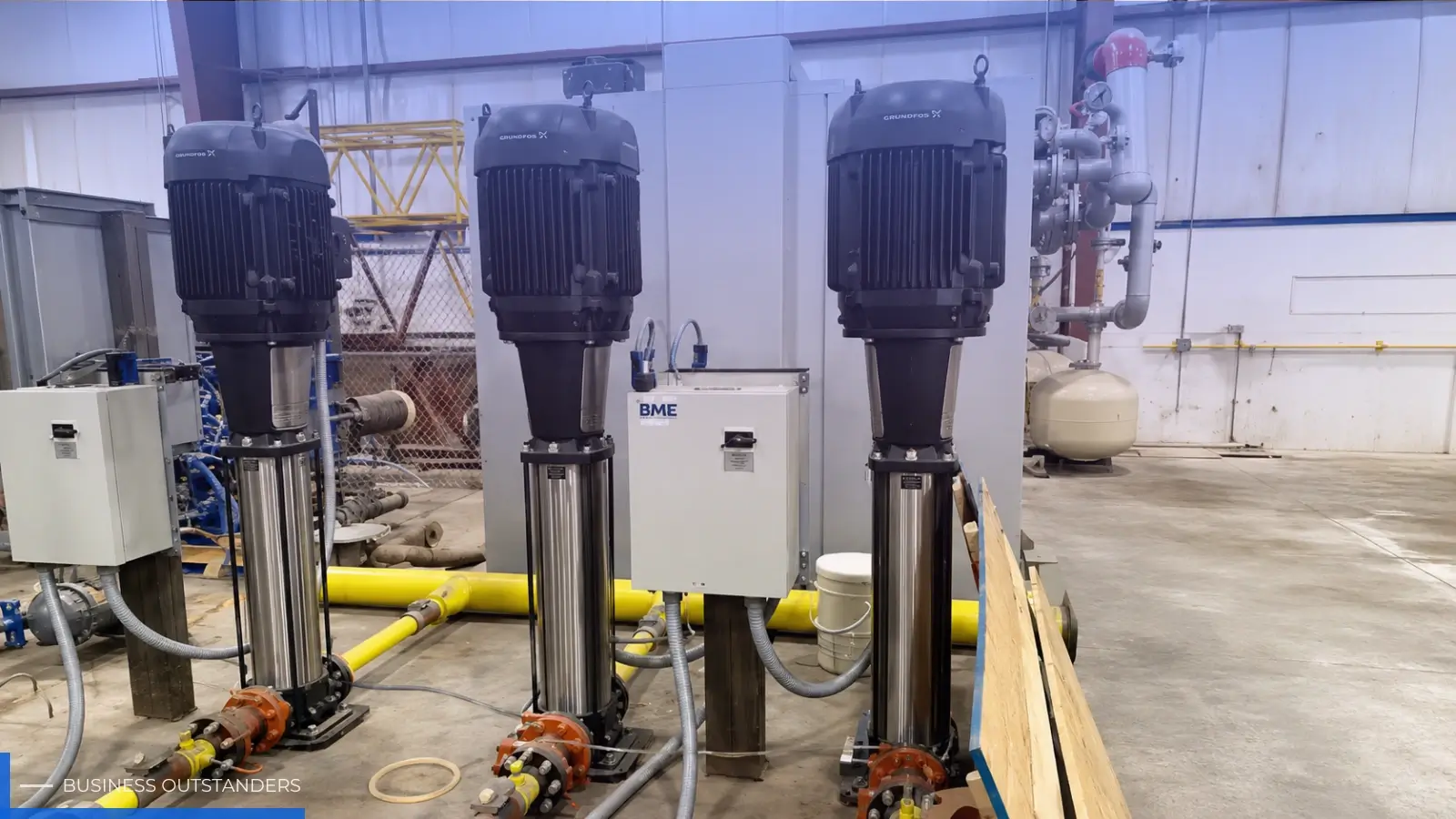
Most booster pumps used in water systems are centrifugal in design. Water enters the impeller, gains kinetic energy, and that energy converts to pressure as it exits the casing. Multistage designs stack several impellers in series, building pressure incrementally with each stage. That's why vertical multistage centrifugal pumps are so common in water boosting: they're compact, efficient, and capable of generating significant head pressure without requiring a large equipment footprint.
Where Booster Pumps Are Used
The range of applications is broader than most people assume.
Municipal water networks often depend on booster stations to maintain consistent pressure across distribution zones, particularly in areas with significant elevation changes or high demand fluctuations. A supply grid's pressure at the source might be adequate, but by the time water reaches the far end of a long distribution main, it frequently isn't.
High-rise buildings are a classic use case. Water pressure drops roughly 0.43 PSI per vertical foot of elevation, so any building with 10 or more floors needs a dedicated boosting system to keep upper levels at serviceable pressure. Most modern commercial buildings have these systems built in.
Industrial facilities use booster pumps for process water supply, cooling towers, boiler feed, and equipment washing. Pressure requirements vary between these applications, but reliability is non-negotiable across all of them. A pressure drop at the wrong moment can halt production or trip safety interlocks.
Irrigation networks, particularly in agriculture and large commercial landscaping, depend on booster pumps to maintain consistent flow over wide coverage areas. Inconsistent pressure means uneven distribution, which affects crop yields or turf quality in predictable but frustrating ways.
Wastewater treatment plants use booster pumps at various stages of the treatment process, including recirculation and transfer between basins. AMED-US, a Miami-based industrial equipment distributor, serves clients across this full range of applications, supplying pumps and rotating equipment to water treatment, construction, manufacturing, and industrial sectors throughout North and South America.
Choosing the Right Booster Pump
This is where a lot of projects go sideways.
Selecting a booster pump isn't just about matching a flow rate to a pipe size. You need to account for total system head (the resistance the pump must overcome), peak demand, the pressure tolerance of downstream equipment, and whether load is constant or variable. Overlooking any of these leads to pumps that either can't do the job or burn themselves out working against conditions they weren't designed for.
Flow rate and head pressure are the starting point. Manufacturers publish pump curves that show performance across a range of operating conditions. A pump running too far from its best efficiency point (BEP) runs hotter, wears faster, and costs more per unit of output.
Variable frequency drives (VFDs) have become standard in most modern booster installations, and for good reason. Rather than running at full speed and throttling back with a valve, a VFD adjusts motor speed to match real-time demand. That means lower energy use during off-peak hours, less mechanical stress on the pump, and more precise pressure control. In any system with variable demand, a booster running without a VFD is almost always leaving efficiency on the table.
So what happens when demand fluctuates widely throughout the day? That's exactly where multiple pump configurations make the most sense. Running two or three smaller pumps in parallel, with staging logic to bring them on and off as needed, provides built-in redundancy and lets the system scale with actual load. If one pump fails, the others continue running. In any application where downtime is costly, that redundancy matters more than people often realize ahead of time.
For high-pressure water distribution specifically, vertical multistage configurations tend to be the most practical choice. Pearl vertical multistage pumps, including the VPS Vertical Water Pump series, are the type of equipment designed specifically for pressurized water supply and distribution systems, offering high-pressure output in a space-efficient form factor. AMED-US carries this product line as part of its broader pump portfolio for water and industrial applications.
Pressure Settings and System Design
Getting the pressure setpoint right is more nuanced than it sounds.
Set it too low and you'll have inadequate flow at critical endpoints. Set it too high and you're stressing fittings, valves, and seals throughout the system, increasing the risk of leaks and shortening the lifespan of equipment that was never supposed to see that load. Most systems target a pressure range rather than a fixed point, which is another reason VFDs are so useful: they modulate output to hold pressure within a defined band instead of cycling between on and off states.
Pressure reducing valves (PRVs) are commonly installed downstream of booster stations to protect lower-pressure zones in the network. A well-designed system uses both boosting and pressure management together. Booster pumps solve the supply side of the pressure equation; PRVs handle delivery to zones with different requirements.
Water hammer is another design consideration that gets overlooked until something breaks. When pumps start or stop abruptly, pressure waves travel through the piping and stress joints and fittings over time. Soft-start controls, slow-closing check valves, and expansion tanks are standard tools for managing it. But they work best when accounted for in the initial design, not retrofitted after the fact.
Maintenance and Long-Term Reliability
Even a well-specified pump will underperform if it's not maintained.
Bearing condition, seal integrity, and impeller wear are the main things to track. Most modern booster pump systems include pressure and flow monitoring that can flag performance changes before they become failures. That data is worth using, not just collecting.
Mechanical seals are a common wear point, especially in systems handling water with mineral content. Flushing arrangements that keep clean fluid around the seal face extend service life considerably. And for facilities where downtime is expensive and replacement lead times matter, having a service relationship with a knowledgeable supplier makes a real operational difference.
Scheduled preventive maintenance, including bearing lubrication, seal inspection, and impeller clearance checks, is the practical difference between a pump that runs reliably for 15 years and one that needs major repairs after five. Most booster pump failures in the field are traceable to deferred maintenance rather than equipment quality issues.
Why Pressure Consistency Matters More Than Most People Think
In industrial applications, inconsistent pressure affects product quality, process timing, and equipment reliability. In municipal systems, low pressure can create conditions that allow contaminants to enter the network through pipe defects or compromised joints. In buildings, chronic under-pressure leads to ongoing complaints and accelerated wear on fixtures and appliances.
But here's the thing: most of these consequences are preventable with the right system design and equipment selection from the start.
Booster pump systems that are properly specified to real operating conditions and supported with good controls genuinely change how a water distribution network performs. Whether you're working on a new installation or troubleshooting an existing system that can't hold pressure, the solution almost always starts with understanding the full picture: where pressure is being lost, what the demand profile actually looks like, and whether the pump currently doing the job was ever sized for it in the first place.
Frequently Asked Questions
What is a booster pump and how does it work?
A booster pump increases water pressure within a distribution system by adding energy to the flow. Most booster pumps for water applications are centrifugal in design, using one or more rotating impellers to transfer kinetic energy to the fluid. That energy converts to pressure as water exits the pump casing. Multistage designs build pressure across several impellers stacked in series.
When do you need a booster pump in a water system?
You typically need a booster pump when available supply pressure is insufficient to meet system demand. Common triggers include multi-story buildings where upper floors don't receive adequate pressure, long pipe runs with significant friction losses, and industrial or commercial facilities whose flow requirements exceed what the municipal supply can consistently deliver.
What's the difference between a single-stage and multistage booster pump?
A single-stage booster pump uses one impeller and suits moderate pressure increases. A multistage pump stacks multiple impellers in series, with each stage adding pressure incrementally. Vertical multistage configurations are widely used in water distribution for their efficiency, ability to generate high head pressure, and relatively compact footprint.
How does a VFD improve booster pump performance?
A variable frequency drive (VFD) adjusts motor speed to match real-time demand rather than running the pump at a fixed speed. This reduces energy consumption during low-demand periods, minimizes mechanical wear, and allows more precise pressure regulation across variable load conditions. In most systems with fluctuating demand, VFDs pay for themselves relatively quickly through energy savings alone.
How often should booster pumps be serviced?
Service intervals depend on operating conditions, but in most water distribution applications, a full inspection including bearing checks, seal condition, and impeller clearance should happen at least annually. Systems running continuous duty or in demanding conditions generally benefit from more frequent preventive maintenance to avoid unplanned downtime.
Can multiple booster pumps be run in parallel?
Yes, and it's a common configuration for variable-demand systems. Running multiple pumps in parallel with staging controls provides flow flexibility, built-in redundancy if one unit fails, and allows each pump to operate closer to its best efficiency point across different load conditions. It's particularly practical for large buildings, industrial facilities, and municipal booster stations.
What causes water hammer in booster pump systems and how is it prevented?
Water hammer happens when rapid pump starts or stops generate pressure waves in the piping. Over time, those waves stress pipe joints and fittings. It's managed through soft-start controls on the motor, slow-closing check valves that prevent sudden flow reversal, and expansion tanks that absorb pressure spikes. Accounting for water hammer during initial system design is far more effective than addressing it after damage has already occurred.
Business Outstanders brings you sharp insights on tech, business, entrepreneurship, law, crypto, and more. We uncover what’s next. Stay updated, sign up for our newsletter and be part of the future!