The Evolution of Material Handling in 2026
Every industrial operation strives for peak performance. But when it comes to moving bulk materials, standard equipment often falls short. We understand the complexities involved—from abrasive powders to sticky sludges, and the need for precise material flow. This is why custom screw conveyors are becoming a cornerstone of essential industrial equipment.
These tailored systems do more than just transport. They optimize material flow, reduce costly downtime, and enhance safety across diverse applications. Our comprehensive guide will explore the power of custom design in material handling.
We will cover why custom solutions are superior, how material properties drive design choices, and the role of advanced engineering in their creation. We will also look at how custom conveyors integrate into existing systems. For those seeking specialized solutions, exploring Custom industrial screw conveyors is a smart first step. Join us as we uncover how these engineered systems fuel operational excellence.
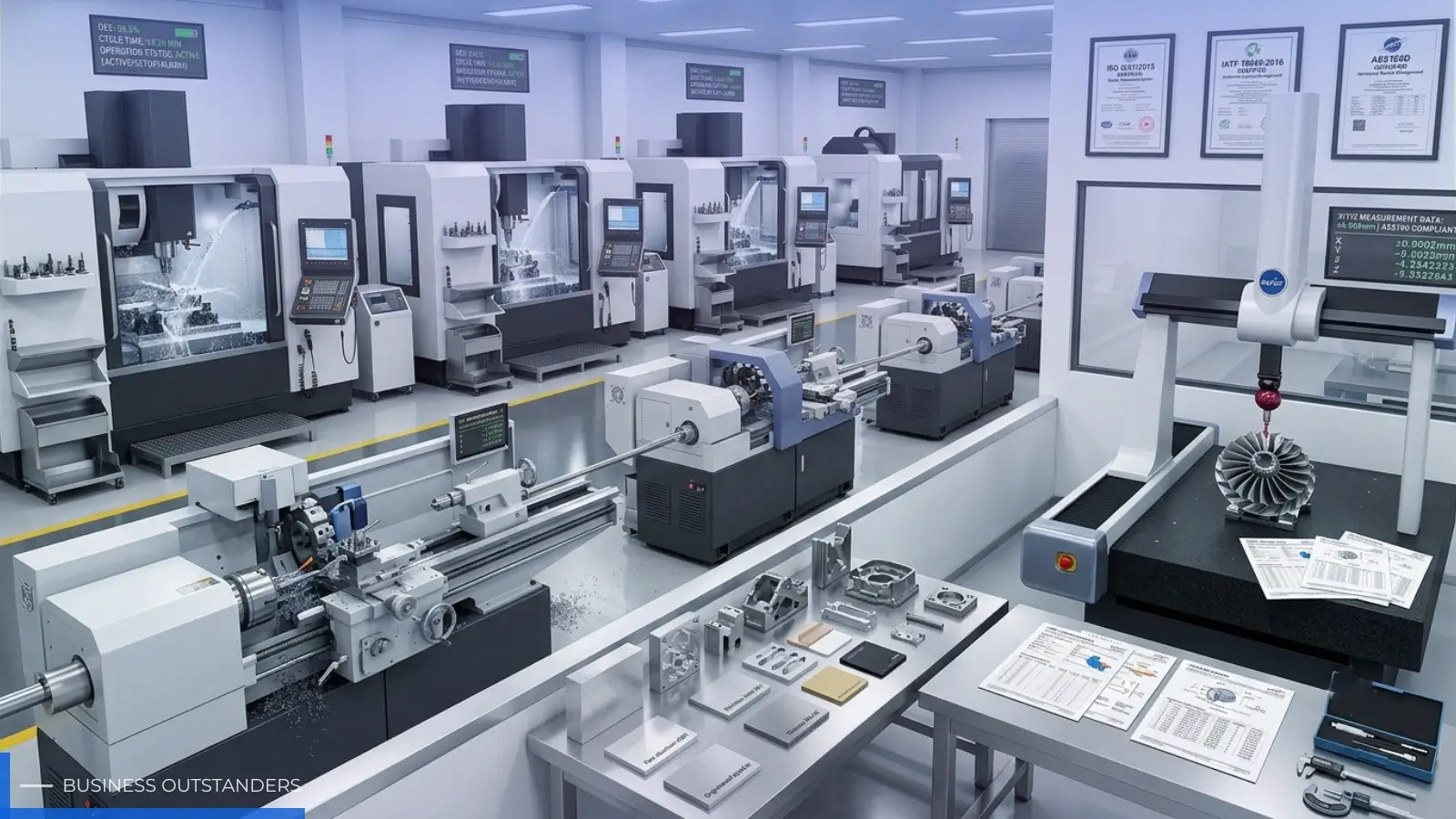
The landscape of industrial material handling continues to evolve rapidly. In April 2026, we observe a heightened demand for systems that are not only robust and efficient but also highly adaptable to specific operational nuances. Modern industrial processing facilities are characterized by complex workflows, diverse material properties, and an ever-present need for seamless system integration and optimal operational efficiency. The shift towards custom-engineered solutions reflects a deeper understanding that off-the-shelf equipment, while cost-effective for generic tasks, often introduces compromises that can lead to inefficiencies, increased maintenance, and even safety concerns in specialized applications.
Today, successful bulk material handling hinges on precise control, minimal material degradation, and the ability to operate reliably under challenging conditions. This necessitates a move beyond standardized approaches, embracing bespoke designs that cater to the unique demands of each material and process. The focus is no longer just on moving material, but on moving it optimally – ensuring product integrity, maximizing throughput, and minimizing energy consumption.
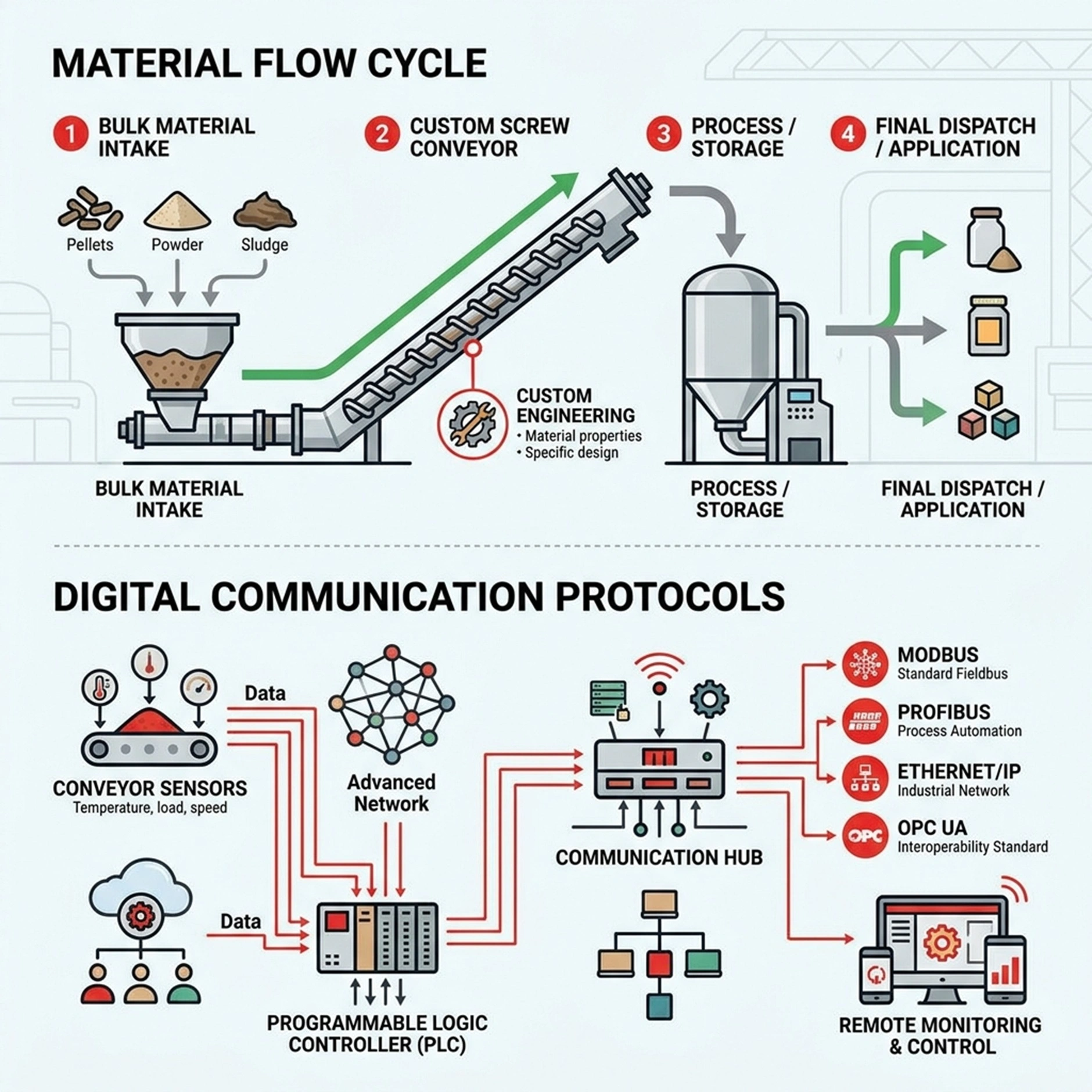
Optimizing Bulk Solids Flow with Custom Screw Conveyors
Choosing a custom screw conveyor over a standard one offers a multitude of benefits, primarily centered around enhanced performance, reliability, and cost-efficiency over the equipment's lifespan. Standard screw conveyor kits, while offering immediate availability and lower initial costs, come with fixed dimensions and component specifications. This "one-size-fits-all" approach rarely aligns perfectly with the diverse requirements of industrial bulk material handling.
A custom screw conveyor is engineered from the ground up to meet the exact demands of a specific application. This means addressing critical factors such as the material's unique properties, precise throughput requirements, and any spatial or environmental constraints. For example, Conveyor Engineering & Manufacturing highlights its capability to fabricate single screws up to 60 inches in diameter and 50 feet in length, far exceeding standard kit limitations, demonstrating the scale of customization possible.
The primary benefits of custom designs include:
- Optimized Performance: Tailored screw pitch, flighting, and trough design ensure efficient material flow, preventing blockages, material degradation, or excessive wear. This is crucial for maintaining product quality and maximizing throughput. For insights on feeder screw design, including comparisons between standard and cone screws, technical resources can provide valuable information. Feeder Screw Comparison: Standard vs. Cone Screw
- Reduced Downtime and Maintenance: By selecting appropriate materials of construction and designing for specific stresses, custom conveyors minimize wear and tear, leading to fewer breakdowns and lower maintenance costs. Understanding and preventing common issues like pipe failure due to deflection or bolt-in-bearing failure are key to long-term reliability.
- Enhanced Safety: Custom designs can incorporate specific safety features or integrate seamlessly into existing safety protocols, reducing risks associated with material handling.
- Space Optimization: Custom solutions can be designed to fit into challenging or restricted spaces, an essential consideration in many industrial facilities.
- Longevity: Equipment built to exact specifications with appropriate materials will generally outlast and outperform standard alternatives in demanding applications.
Factors that necessitate a custom screw conveyor design are often rooted in the inherent variability of bulk materials and operational environments. These include:
- Material Properties: Abrasiveness, stickiness, friability, density, moisture content, temperature, and corrosiveness all dictate specific design choices for flights, troughs, and construction materials.
- Application Specifics: Required throughput, conveying distance and angle, discharge points, and whether the conveyor also needs to mix, heat, or cool the material.
- Space Constraints: Limited headroom, narrow pathways, or the need to navigate around existing infrastructure often demand unique conveyor geometries or drive configurations.
- Environmental Conditions: Extreme temperatures, corrosive atmospheres, or sanitary requirements (e.g., CEMA standards, 3-A Dairy for food applications) necessitate specialized materials and finishes.
Key components of a screw conveyor that can be customized extensively include:
- Conveyor Screws/Flighting: This is perhaps the most customizable element. Options range from standard flights to short pitch, long pitch, variable pitch, ribbon, cut, cut and folded, double, and paddle flights. These variations are chosen based on material flow characteristics, mixing needs, and conveying angle. For example, IBT Industrial Solutions highlights various flighting options to handle specialized materials or increase capacity.
- Shafts and Bolts: Shaft diameter, material, and coupling types are customized for torque requirements and to prevent issues like coupling shaft failure. Coupling bolts, which often act as a failsafe, can be specified in different grades.
- Troughs: Designs can be 'U'-shaped, tubular, rectangular, or flared, and can include features like jacketed walls for temperature control, perforated bottoms for draining, or specialized liners for abrasive materials.
- Hangers and Hanger Bearings: These support the screw and can be customized in terms of material (e.g., wood, UHMW, bronze, graphite, hard iron) and design to suit material properties and operating conditions, minimizing hanger bearing failure.
- Inlets and Discharge Spouts: Custom configurations ensure efficient material entry and exit, preventing bottlenecks and spillage.
- Drive Systems: Motor horsepower, gearbox ratios, and drive configurations (e.g., direct drive, chain drive) are selected to match the required torque and speed.
- Covers and Seals: Designed to contain dust, prevent contamination, and protect operators, with various fastening mechanisms.
Addressing Material Characteristics in industrial equipment
The characteristics of the material being handled are the primary drivers of custom screw conveyor design choices. Each material presents unique challenges that standard equipment often fails to address effectively.
- Abrasive Materials (e.g., fly ash, sand, minerals): These materials cause rapid wear on flights and troughs. Custom designs might incorporate hardened steel alloys, wear-resistant liners (e.g., UHMW, ceramic), or hard-surfaced flights. The flight thickness and pitch may also be adjusted to minimize friction and wear.
- Sticky or Sluggish Materials (e.g., sticky sludge, wet clay): These materials tend to build up on surfaces, leading to blockages and reduced capacity. Solutions include ribbon flights, cut and folded flights for agitation, specialized non-stick coatings, or larger clearances between the screw and trough.
- Friable or Delicate Materials (e.g., friable protein blends, cereals): To prevent particle degradation, designs focus on gentle handling. This can involve slower operating speeds, specialized flight designs like double flights for smoother flow, or reduced pitch to minimize shearing forces.
- High-Temperature Solids: Materials handled at elevated temperatures require high-temperature resistant alloys (e.g., stainless steel, special steels), expansion joints in troughs, and specialized bearings and seals capable of withstanding the heat.
- Corrosive Chemicals: Stainless steel (various grades), Hastelloy, or other corrosion-resistant alloys are selected for all wetted parts, and appropriate seals are crucial to prevent leakage.
- Materials Requiring Moisture Control: Jacketed troughs can be used for heating or cooling to maintain specific moisture levels or prevent caking.
- Materials with Varying Flowability: For materials that can range from free-flowing to non-free-flowing, flexible screw conveyors offer a versatile solution. Flexicon flexible screw conveyors, for instance, are designed to handle a wide range of bulk materials, from large pellets to sub-micron powders, preventing separation of blended products. These can range from 2-1/2 inches to 8 inches in diameter, with lengths up to 40 feet, and capacities to 29 cubic feet per minute.
By meticulously considering these material characteristics, engineers can specify the optimal screw geometry, material of construction, surface finishes (e.g., comparing weld and surface finishes Weld & Surface Finish Comparison), and operational parameters to create a custom screw conveyor that performs flawlessly.
Advanced industrial equipment for Thermal Processing and Mixing
Beyond simple conveyance, custom screw conveyors can be engineered to perform complex thermal processing and mixing operations. This transformation elevates them from mere transport mechanisms to integral process equipment. Jacketed thermal mixers, for example, are specialized screw conveyors enclosed within a jacketed trough, allowing for precise temperature control of the material as it's conveyed. This is critical in industries where maintaining a specific temperature profile is essential for chemical reactions, drying, cooling, or pasteurization.
Heat transfer within these systems is optimized through the design of the jacket, which can circulate heating or cooling media, and the screw itself, which continuously exposes new material surfaces to the thermal exchange. This ensures temperature consistency across the entire batch, preventing hot spots or uneven processing. For applications requiring thorough mixing alongside thermal treatment, paddle or cut-and-folded flights can be incorporated to agitate the material effectively. These systems offer an alternative to fluid bed dryers or batch processing, providing continuous, controlled processing within a compact footprint.
Engineering Precision in industrial equipment Design
The design and manufacturing of custom, large-scale, or high-stress screw conveyors demand an exceptional level of engineering precision. Finite Element Analysis (FEA) plays a pivotal role in this, serving as a sophisticated computational tool that simulates real-world conditions to predict how a design will perform before physical construction begins.
What role does FEA (Finite Element Analysis) play in the design of custom, large-scale, or high-stress screw conveyors? FEA allows engineers to:
- Identify Stress Concentrations: It pinpoints areas where stress might accumulate, such as at welds, coupling points, or transitions in shaft diameter. This is particularly important for large screws, where deflection due to added weight and span length can be significant.
- Predict Deflection and Deformation: For long or heavy screws, FEA accurately models how the shaft and flighting will deform under load, ensuring that critical clearances are maintained and preventing contact with the trough. This is vital, especially when considering materials like stainless steel, which has lower fatigue resistance than carbon steel and thus requires lower deflection limits.
- Optimize Material Usage: By understanding stress distribution, engineers can select the most appropriate materials and thicknesses, avoiding over-engineering (which adds unnecessary cost and weight) or under-engineering (which leads to premature failure).
- Analyze Fatigue Life: FEA can predict how many cycles a component can withstand before fatigue failure, crucial for equipment operating continuously under dynamic loads.
- Validate Weld Integrity: For components like spliced pipes in large screws, FEA can assess the stresses around welds, guiding the application of post-weld treatments like shot peening, needle peening, or thermal treatment to relieve stress and confirm quality through methods like X-ray examination.
This level of detailed analysis ensures that custom screw conveyors are not only fit for purpose but are also robust, reliable, and safe for their intended lifespan, even under the most demanding industrial conditions.
Table: Comparing Standard Mixers and Jacketed Thermal Mixers
Feature Standard Mixer (Batch/Continuous) Jacketed Thermal Mixer (Screw Conveyor) Primary Function Blending, Homogenizing Blending, Thermal Processing (Heat/Cool) Temperature Control Limited/External Precise, Integrated Heat Transfer Indirect, often inconsistent Direct, Uniform, Continuous Process Type Batch or Continuous Primarily Continuous Material Contact Impellers, paddles, vessel walls Screw flights, jacketed trough Complexity Simpler design More complex due to thermal elements Applications Dry blending, liquid mixing Drying, cooling, reaction, pasteurization Footprint Can be large for batch Often compact for continuous flow Engineering Considerations for Large-Scale System Integration
Integrating custom screw conveyors into existing systems or facilities requires meticulous planning and engineering to ensure seamless operation and maximize overall efficiency. It's not just about the conveyor itself, but how it interacts with upstream and downstream equipment, the facility's layout, and operational logistics.
What are the considerations for integrating custom screw conveyors into existing systems or facilities?
- Space Constraints and Layout: Often, the most significant challenge is fitting new equipment into an existing footprint. Custom designs can optimize dimensions, conveying angles, and drive configurations (e.g., top-mounted drives to save headroom) to navigate tight spaces. Footprint optimization might involve tubular conveyors or U-trough conveyors that can be routed around obstacles.
- Inlet and Discharge Configurations: Precise alignment with existing hoppers, feeders, or processing equipment is crucial. Custom inlets can be designed to prevent material bridging or spillage, while discharge gates (manual, electric, hydraulic, or pneumatic) can be tailored for controlled material flow to the next stage.
- Throughput and Capacity Matching: The custom conveyor must match the throughput rates of connected equipment to avoid bottlenecks or underutilization. This involves careful calculation of screw diameter, pitch, and rotational speed.
- Structural Support and Foundation: Large or heavy custom conveyors require adequate structural support. Existing facility structures must be assessed for their load-bearing capacity, and new foundations or supports may be necessary.
- Utility Connections: Integration involves connecting power for drives, and for thermal conveyors, plumbing for heating/cooling media. These connections must be planned for accessibility and safety.
- Control System Integration: The new conveyor's control system needs to communicate seamlessly with the existing plant control system (e.g., SCADA, DCS) to ensure synchronized operation, safety interlocks, and data logging.
- Material Compatibility: Ensuring the custom conveyor's materials of construction are compatible with the conveyed material and the surrounding environment is vital to prevent corrosion, contamination, or wear.
- Maintenance Access: Despite space constraints, sufficient access must be maintained for routine maintenance, cleaning, and inspections to minimize future downtime.
- Modular Assembly and Retrofitting: Custom conveyors can be designed for modular assembly, allowing for easier installation in sections, especially when retrofitting into an operational facility. This minimizes disruption to ongoing production. Custom Conveyor Corporation (CCC), for instance, has designed, manufactured, and installed over 3,000 material handling systems worldwide since 1983, showcasing experience in complex integrations.
By addressing these considerations comprehensively, custom screw conveyors can be seamlessly integrated, leading to improved overall system performance and efficiency.
Frequently Asked Questions about industrial equipment
What are the primary benefits of choosing a custom screw conveyor over a standard kit?
Custom designs address specific material challenges such as abrasiveness or stickiness that standard kits cannot handle. They optimize throughput and reduce maintenance by matching the screw pitch and flighting to the exact density and flow characteristics of the bulk solid. Unlike standard options, a custom conveyor can be precisely tailored to fit unique space constraints, integrate seamlessly with existing equipment, and meet specific sanitary or environmental requirements, ultimately leading to higher operational efficiency, reduced material degradation, and a longer service life. This bespoke approach minimizes the compromises inherent in off-the-shelf solutions.
How does Finite Element Analysis (FEA) improve the reliability of large-scale conveyors?
FEA allows engineers to simulate complex stresses on shafts and flighting before manufacturing begins. This process identifies potential failure points due to deflection or fatigue, ensuring the equipment can withstand the high torque and heavy loads of industrial applications. By predicting how components will react under various operating conditions, FEA helps optimize material selection, refine structural designs, and validate weld integrity, preventing costly failures, extending the conveyor's lifespan, and significantly enhancing its overall reliability and safety.
Why is temperature consistency critical in industrial thermal mixing?
In processes involving chemical reactions or food-grade protein blends, uneven heating can lead to product spoilage or inconsistent quality. Jacketed thermal mixers provide uniform heat distribution across the entire batch, preventing hot spots and ensuring process repeatability. This consistency is vital for achieving desired chemical reactions, preventing material degradation (e.g., scorching), ensuring product safety (e.g., pasteurization), and maintaining the physical properties (e.g., moisture content, texture) of the final product. Without precise temperature control, batch-to-batch variability and product waste can become significant issues.
Conclusion
In the dynamic industrial landscape of April 2026, achieving operational excellence in bulk material handling is more critical than ever. Custom screw conveyors stand out as a strategic investment, offering unparalleled advantages over standard solutions. They are not merely components but engineered systems designed to address the unique challenges of specific materials, processes, and environments.
What are the advantages of working with a full-service screw conveyor company for custom solutions? Partnering with a full-service screw conveyor company brings comprehensive expertise from design to installation and ongoing support. Such companies offer a deep understanding of material science, advanced engineering capabilities (including FEA), and extensive manufacturing experience. This ensures that every aspect of the custom conveyor, from material selection to flight design and drive integration, is optimized for peak performance. They provide end-to-end project management, reducing client burden and ensuring accountability, ultimately delivering a solution that is precisely tailored and fully supported.
How can custom screw conveyors improve efficiency, reduce downtime, and enhance safety in bulk material handling operations? Custom screw conveyors improve efficiency by optimizing material flow, reducing energy consumption, and minimizing product loss or degradation. By precisely matching the conveyor's design to the material's characteristics, issues like blockages, excessive wear, and material hang-up are significantly reduced, leading to less downtime. Enhanced safety is achieved through designs that prevent material spillage, integrate seamlessly with safety interlocks, and offer ergonomic maintenance access. The result is a more reliable, productive, and safer operation.
What are the typical lead times and costs associated with custom screw conveyor projects compared to standard options? Custom screw conveyor projects generally have longer lead times than standard options due to the engineering, design, and fabrication processes involved. While standard kits might be available for immediate shipment, custom solutions require a detailed design phase, material procurement, and specialized manufacturing. Consequently, the initial investment for custom conveyors is typically higher than for standard kits. However, this upfront investment is often offset by significant long-term savings through reduced maintenance, increased efficiency, lower operational costs, and extended equipment lifespan, leading to a superior long-term return on investment (ROI).
Strategic equipment selection, particularly the choice of custom-designed solutions, is a cornerstone of sustainable manufacturing and long-term ROI. By investing in engineering partnership and process optimization, businesses can ensure technical reliability and maintain a competitive edge.
If your operations demand precision, efficiency, and reliability that standard equipment simply cannot deliver, we encourage you to explore the transformative potential of custom screw conveyor solutions. Our team is ready to provide an engineering consultation to discuss your specific needs and design a system that fuels your operational excellence.
Business Outstanders brings you sharp insights on tech, business, entrepreneurship, law, crypto, and more. We uncover what’s next. Stay updated, sign up for our newsletter and be part of the future!