For decades, the ceiling was treated as an afterthought in architecture — a surface to hide wiring and ductwork, painted white and forgotten. That era is quietly ending. Across airports, hospitals, transit hubs, and shopping centers worldwide, metal ceiling systems have become one of the fastest-growing categories in the building materials sector, and the manufacturers behind them are being forced to rethink how they design, produce, and scale.
A Market Outgrowing Its Old Playbook
The shift is driven by a simple reality: modern public infrastructure is being built faster, bigger, and under tighter performance requirements than ever before. Airports need ceiling systems that support acoustic control and easy access to fire suppression lines. Hospitals require materials that are corrosion-resistant, easy to sanitize, and quick to install without disrupting ongoing operations. Transit authorities want finishes that will still look clean after a decade of heavy foot traffic.
Traditional materials — mineral fiber, gypsum, wood — struggle to meet all of these demands at once. Metal ceiling systems, particularly aluminum-based ones, have moved into that gap because they check multiple boxes simultaneously: lightweight structural performance, corrosion resistance, a wide range of surface finishes, and — critically — modular installation that shortens project timelines.
That combination has turned what used to be a niche category into a fast-scaling global industry.
From Custom Fabrication to Industrial-Scale Production
The manufacturers leading this shift aren't simply making more of the same product. They're redesigning their production models around customization at scale — a balance that used to be considered a contradiction in the building materials world.
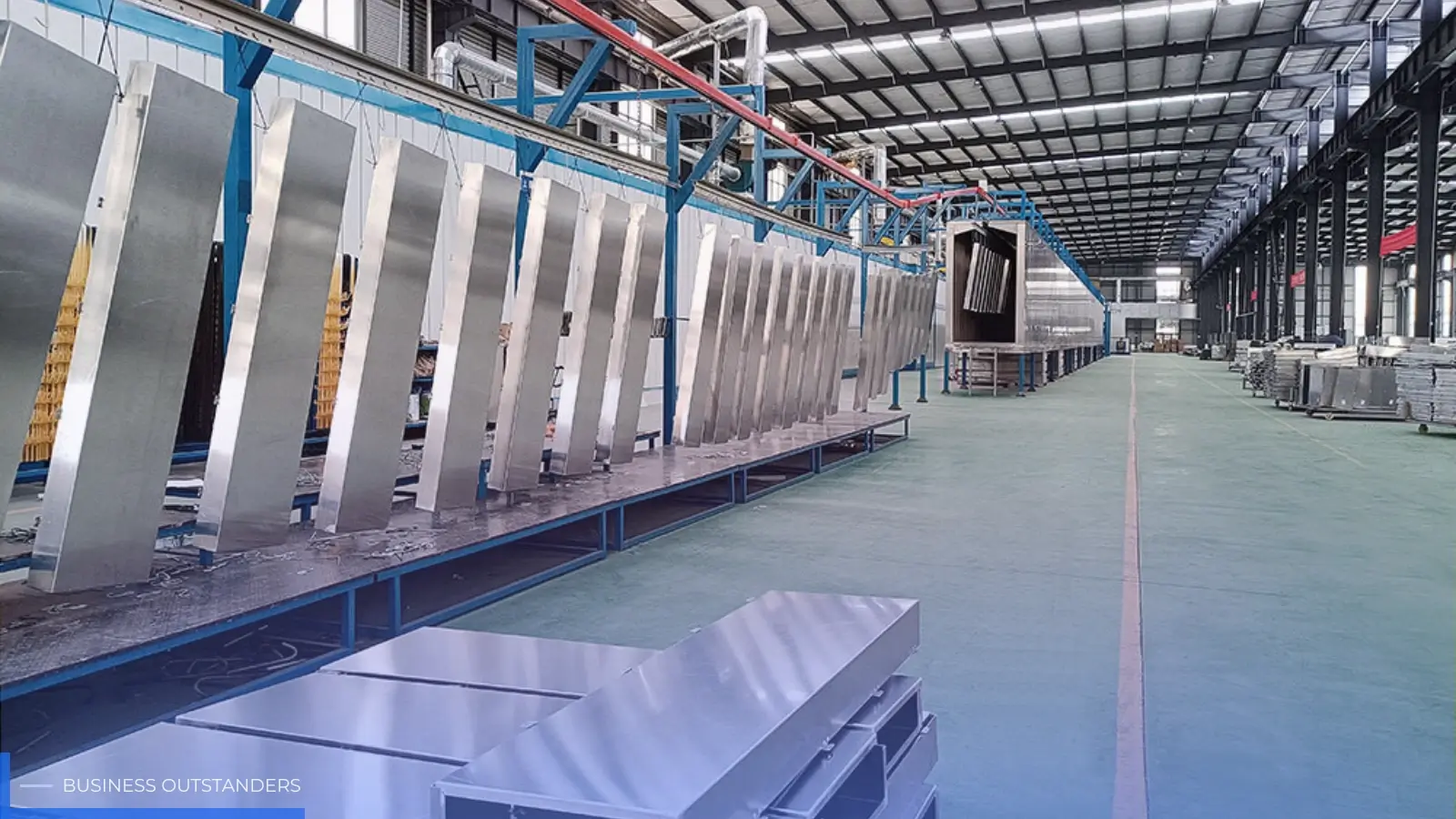
CNC-driven fabrication now allows manufacturers to produce highly specific panel dimensions, perforation patterns, and edge profiles without the cost penalty that used to come with custom orders. Surface finishing technology has advanced just as quickly: PVDF coatings, anodized finishes, wood-grain textures, and stone-look surfaces are now standard offerings rather than premium add-ons, giving architects design flexibility that didn't exist a decade ago.
This is where the real competitive advantage is emerging. Manufacturers that can move a project from architectural drawing to finished, delivered panels — while still allowing late-stage design changes — are winning contracts that would have gone to slower, less flexible suppliers just a few years ago.
Manufacturers such as Guangzhou Dingchengzun have built their growth strategy around this exact model — combining CNC precision manufacturing with project-based customization for airports, hospitals, and transit infrastructure worldwide.
Infrastructure Projects Are Rewriting the Demand Curve
Large-scale public projects are accelerating this trend rather than following it. Airports expanding to handle rising passenger volumes, metro systems being built out across emerging urban centers, and hospital networks modernizing aging infrastructure are all driving simultaneous demand for ceiling and wall cladding systems that can be specified once and replicated across dozens of similar facilities.
This is pushing manufacturers to build genuine international supply capability — not just export capacity, but the technical support infrastructure to serve architects and contractors across different regulatory environments, climates, and design standards. Companies able to support a hospital project in one region and an airport terminal in another, using the same manufacturing base but adapted specifications, are positioning themselves as long-term infrastructure partners rather than one-off suppliers.
What's Next for the Category
The next phase of growth in this space looks less like a product story and more like a systems story. Manufacturers are increasingly expected to deliver not just panels, but complete solutions — covering structural framing, acoustic performance, maintenance access, and coordination with lighting, HVAC, and fire safety systems within the same ceiling or facade package.
That shift favors manufacturers with strong in-house engineering and project support capability over those simply supplying raw material. It also means the competitive landscape is consolidating around companies that can prove a track record across large, complex public builds rather than smaller commercial fit-outs alone.
For an industry once considered a quiet, commoditized corner of construction, metal ceiling and cladding manufacturing has become a genuine growth story — one being written project by project, in airports, hospitals, and transit hubs around the world.
Business Outstanders brings you sharp insights on tech, business, entrepreneurship, law, crypto, and more. We uncover what’s next. Stay updated, sign up for our newsletter and be part of the future!