The Economic Impact of Portable Sanitation and Infrastructure
Portable restroom trailers are a vital part of modern events and job sites. They offer much more than basic sanitation. These advanced units combine comfort, hygiene, and cutting-edge design.
For organizers and project managers, understanding their true cost is essential. We know that investing in quality infrastructure pays off.
This extensive guide will break down how much a portable restroom trailer costs. We will explore the many factors that influence pricing, from size to luxury features. We will also dig into the engineering innovations that make these units durable and efficient. This knowledge helps us make informed decisions about our overall Portable sanitation infrastructure costs.
The decision to procure portable restroom trailers, whether through purchase or rental, carries significant economic implications. These units represent a substantial investment, but they also provide an indispensable service, impacting everything from event success to construction project efficiency. Understanding the underlying costs and potential returns is crucial for effective budgeting and strategic planning.
When considering a purchase, we observe a wide spectrum of pricing. A basic, single-unit restroom trailer can cost anywhere from $10,000 to $30,000. These are often robust, functional units designed for utility rather than luxury. As we move up the scale, larger, more luxurious trailers can command prices upwards of $100,000 or even more. For instance, specific 8-station models like the Coastal Series might be priced around $103,940, the Calypso Series at $101,540, and the Luxury Series at $106,740. Specialized units, such as an 8-station portable shower trailer, can reach $123,640, or even $137,740 for a private configuration with a 4-season package. Lang Specialty Mobile Restroom Trailers, for example, average anywhere from $30,000 for standard models up to and above $80,000 for larger luxury models, with their Eco Series starting at $32,300, Pro Series at $41,800, and Luxury Series at $46,500.
For those not ready for a capital investment, renting offers flexibility. The average daily rental cost for a basic, single-unit restroom trailer can range from $200 to $800. Larger, more luxurious trailers can cost upwards of $1,000 or more per day. For a one-day or weekend rental, luxury restroom trailers typically fall within the $1600 – $3800 range. For special events like weddings or festivals, a basic 2-stall restroom trailer usually costs $1,799 to $2,499 per day. Luxury porta potties, a step below full trailers, range from $400 to $800 daily.
The table below provides a general comparison of different series, illustrating how features and capacity influence the starting purchase price.
Series Type Starting Purchase Price Key Features (General) Intended Use Eco Series $32,300 Basic, functional, compact Small events, construction, budget-conscious Pro Series $41,800 Enhanced finishes, comprehensive amenities Medium events, long-term projects, general use Luxury Series $46,500 Upscale interiors, premium finishes, advanced comfort Weddings, VIP events, corporate, high-end venues ADA Series $75,500 Wheelchair accessible, spacious, compliance-focused Public events, any venue requiring accessibility
This capital investment, whether in purchasing or long-term rental, is driven by market demand for improved sanitation solutions. As events grow in scale and public expectations for comfort and hygiene rise, the market for portable restroom trailers continues to expand, justifying the diverse range of offerings and pricing.
Cost Drivers in Portable Sanitation and Infrastructure
The cost of a portable restroom trailer, whether purchased or rented, is not a fixed figure. It's a dynamic sum influenced by a multitude of factors, each contributing to the final price tag. Understanding these cost drivers is essential for making informed decisions and budgeting effectively.
1. Size and Number of Stalls: This is perhaps the most straightforward factor. More stalls generally mean a larger trailer and a higher cost. * A 2-stall restroom trailer typically costs $1,799 to $2,499 per day for events. * Four-stall units increase to $2,499-$2,799 daily. * Larger trailers with 6-10 stalls can range from $2,799-$3,999 per day. * For purchase, the difference is also significant, with a basic single-unit trailer (likely 1-2 stalls) costing $10,000-$30,000, while multi-stall luxury units can exceed $100,000. The number of stalls directly correlates with the trailer's guest capacity; a 2-stall unit serves 50-75 guests comfortably, while an 8-stall unit can handle 250+ attendees without long lines.
2. Material Quality and Construction: The durability and aesthetics of a trailer are heavily dependent on the materials used. High-grade, resilient materials for the frame, interior finishes, and plumbing systems will increase the initial cost but can offer better longevity and a more premium experience. This includes everything from solid surface countertops and hardwood cabinets to robust waste tanks and freshwater systems.
3. Amenities and Luxury Features: This is where the "luxury" in luxury restroom trailers comes in. Basic units offer essential functionality, but premium amenities significantly lift the user experience and, consequently, the price. * Climate Control: Features like air conditioning and heating are highly sought after, especially for events in extreme weather. These can add $200-$400 to rental costs. * Running Water and Flushing Toilets: These are standard in most restroom trailers, but the quality of fixtures (e.g., porcelain toilets, stainless steel sinks) can vary. * Interior Aesthetics: Upgraded lighting, mirrors, flooring (e.g., plank-rolled flooring), and decorative elements contribute to a more upscale feel, much like a home bathroom. * Sound Systems: Premium sound systems, sometimes with Bluetooth connectivity, are common in luxury trailers. * Connectivity: Modern trailers may include features like Starlink for internet access or Smart Restroom Apps for monitoring.
4. Delivery Logistics and Setup Fees: Getting the trailer to and from your location is a significant cost factor. * Delivery fees are typically free within a certain radius (e.g., 25 miles) of the rental facility. * Beyond that, mileage-based fees apply, often around $2.99-$3.99 per mile. For a site 50 miles away, this could mean an additional $75-$100 in delivery fees each way. * Setup and installation costs are usually factored into the overall rental fee by reputable companies, meaning they are not charged separately. However, complex site requirements (e.g., remote locations, difficult terrain, specific placement needs) can influence the overall delivery and setup cost.
5. Rental Duration: The length of time you need the trailer dramatically impacts the per-day cost. * Daily/Weekend Rentals: These are typically the most expensive per day. A luxury trailer might cost $1,600-$3,800 for a weekend. * Weekly Rentals: Offer better value than daily rates. * Monthly Rentals (28 days): Provide the most significant savings. A 2-stall trailer that costs $1,799 daily might drop to approximately $2,999 for 28 days (about $107 per day), representing substantial savings compared to daily rates. Long-term rentals can range from $2,999–$6,999 per 28 days for larger units.
6. Seasonal Surcharges and Demand: Demand fluctuations throughout the year can affect pricing. * Peak Season (May-October): High demand for events like weddings and festivals can increase rental costs by 15-30%. Booking 6-12 months in advance is recommended. * Off-Season (November-March): Lower demand can lead to discounts of 10-20%. Booking 6-8 weeks in advance might suffice. * Shoulder Season (April, October-November): Offers a balance between availability and pricing.
7. Location of Event and Delivery Distance: Geographic location impacts not just delivery fees but also regional pricing variations, labor costs, and fuel prices. Events in busy metropolitan areas might incur higher delivery fees.
8. Additional Fees and Utilities: * Servicing: For multi-day or long-term rentals, scheduled waste removal, cleaning, and restocking are essential. These service calls are usually included in long-term rental agreements but can be an additional fee for extended event rentals. * Generator Rental: If on-site power is unavailable, a generator will be needed, costing $150-$300 per day. * Water Delivery: If a steady water hookup isn't available, water delivery and tank filling can cost $100-$250 per service. * Damage Fees: For trailers returned in poor condition. * Fuel Surcharges: Can apply depending on fluctuating fuel costs.
By carefully evaluating these cost drivers, we can better understand the investment required for a portable restroom trailer and ensure it aligns with our specific needs and budget.
Long-term Value of Portable Sanitation and Infrastructure
Investing in portable sanitation infrastructure, whether through purchase or extended rental, offers substantial long-term value that extends beyond immediate convenience. The durability and thoughtful engineering of modern restroom trailers contribute significantly to their asset lifespan, potential resale value, and overall operational efficiency.
Asset Lifespan and Resale Value: High-quality restroom trailers are built to last. Constructed with robust materials and designed for frequent transport and use, they can maintain their structural integrity and functionality for many years. This durability translates into a strong asset lifespan, making them a wise investment for businesses that frequently require temporary sanitation solutions. Furthermore, well-maintained units often retain a good portion of their value, offering a viable resale option should needs change. For example, purchasing a previously owned restroom trailer can be incredibly beneficial for first-time buyers or companies looking to expand their fleet quickly without paying the full retail price, as these units still offer the same quality craftsmanship after inspection and testing.
Maintenance Schedules and Operational Overhead: While rentals typically include maintenance and servicing, ownership requires a proactive approach. Regular maintenance is key to maximizing a trailer's lifespan and ensuring continuous, hygienic operation. This includes routine cleaning, waste tank pumping, freshwater tank refills, and checks of plumbing, electrical, and HVAC systems. For rental services, a meticulous 10-point service plan is often factored into the cost, ensuring units are inspected, cleaned, and sanitized between uses. For owners, establishing a similar schedule is vital.
List of Essential Maintenance Tasks for Portable Restroom Trailers:
- Waste Tank Management: Regular pumping and deodorizing to prevent odors and blockages.
- Freshwater System: Refilling tanks, checking pump functionality, and ensuring water quality.
- Interior Cleaning: Daily or as-needed cleaning of all surfaces, fixtures, and mirrors.
- Exterior Cleaning: Washing the trailer exterior to maintain appearance and prevent corrosion.
- Consumables Restocking: Ensuring toilet paper, hand soap, paper towels, and hand sanitizer are always available.
- HVAC System Checks: Verifying heating and air conditioning units are functioning efficiently.
- Electrical System Inspection: Checking lighting, outlets, and power connections for safety and functionality.
- Plumbing Inspection: Looking for leaks, clogs, and proper flushing action.
- Structural Integrity Check: Inspecting ramps, stairs, doors, and chassis for wear and tear.
- Winterization/Summerization: Preparing the unit for extreme temperatures to prevent damage (e.g., antifreeze in winter, increased ventilation in summer).
Rental Duration Impact: For those who choose to rent, the duration significantly impacts the overall cost-effectiveness. As highlighted earlier, long-term rentals offer substantial savings per day compared to short-term or event-based rentals. This tiered pricing structure makes long-term rentals an attractive option for construction projects, extended events, or temporary facility needs. For example, a 2-stall trailer that costs $1,799 daily might drop to approximately $2,999 for 28 days, showcasing the dramatic value increase with longer commitments. This flexibility allows businesses to manage operational overhead more efficiently, aligning costs with project timelines.
By considering these long-term aspects, we can appreciate that the initial investment in a portable restroom trailer is not just a cost, but a strategic decision that contributes to sustained value, reliability, and positive user experience.
Technological Advancements in Mobile Restroom Design
The evolution of portable sanitation has moved far beyond the basic porta-potty. Today's mobile restroom trailers are marvels of engineering and design, incorporating advanced technologies to improve user comfort, operational efficiency, and environmental responsibility. These innovations are not mere luxuries; they are integral to providing a high-quality, reliable, and accessible service. From sophisticated waste management systems to smart monitoring, these advancements redefine what we expect from temporary restroom facilities.
Enhancing User Experience with Climate Control and Connectivity
Modern portable restroom trailers are designed to offer an experience comparable to, or even exceeding, that of a permanent indoor restroom. This focus on user comfort and convenience is a key differentiator and a significant driver of cost and value.
HVAC Systems: Climate control is perhaps the most appreciated amenity, especially in regions with extreme temperatures. Integrated heating, ventilation, and air conditioning (HVAC) systems ensure a comfortable environment year-round. This means guests at a summer wedding won't suffer from stifling heat, and workers on a winter construction site can find warmth. These systems are crucial for maintaining interior air quality and preventing odors.
Running Water and Flushing Mechanisms: Gone are the days of non-flushing units for most restroom trailers. Modern designs feature full-flush porcelain toilets, providing a hygienic and familiar experience. Coupled with sinks offering hot and cold running water, users can maintain proper hand hygiene, a critical public health consideration. The water is often supplied by onboard freshwater tanks or direct hookups, with waste directed to discreet holding tanks.
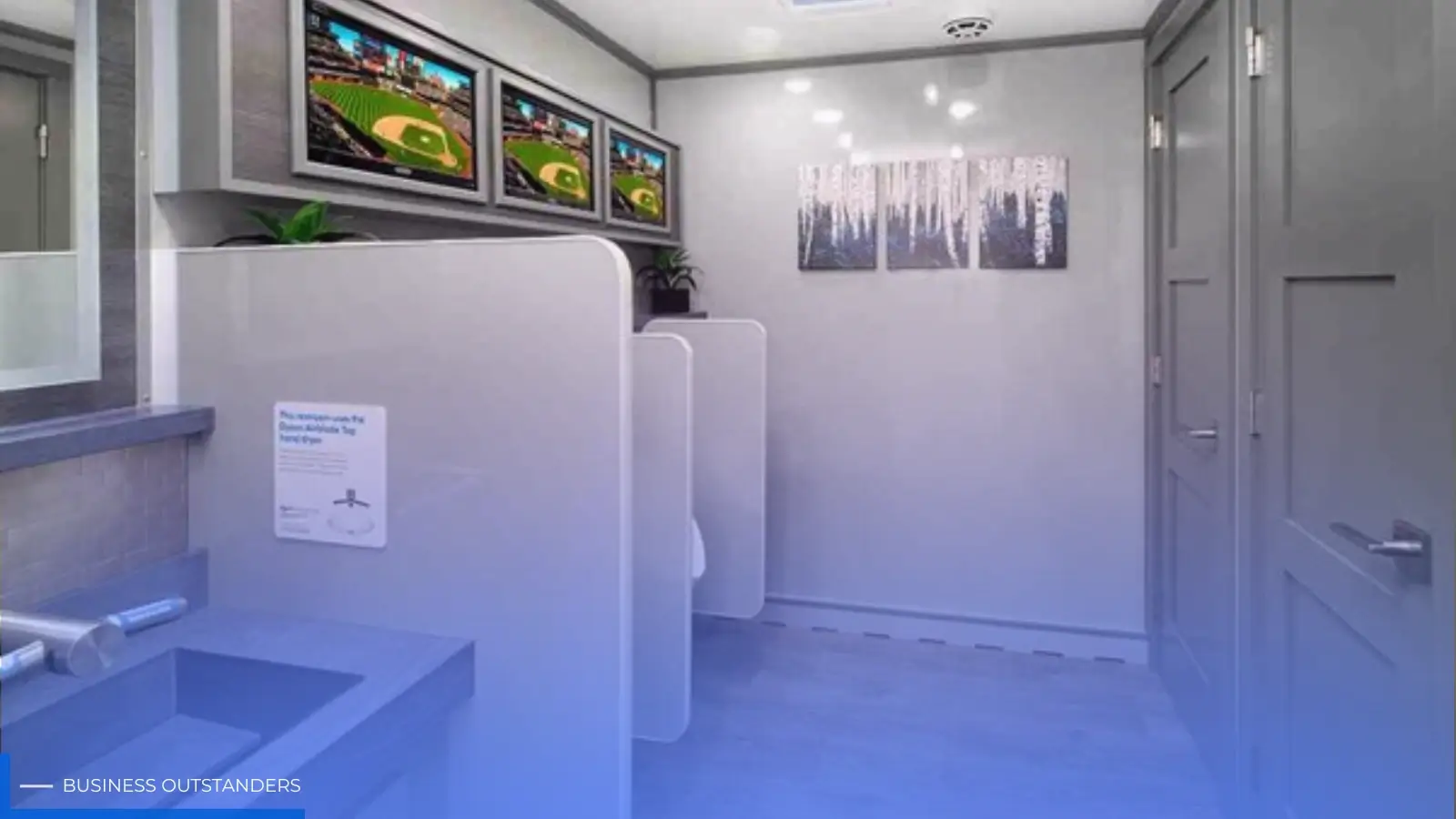
Premium Audio and LED Lighting: The ambiance inside a restroom trailer can be dramatically enhanced by thoughtful design elements. Premium sound systems, sometimes with Bluetooth capabilities, allow for background music or announcements, contributing to a more pleasant atmosphere. LED lighting provides bright, energy-efficient illumination, improving visibility and safety, particularly during evening events. These details lift the interior aesthetics, often featuring full-size mirrors, neat fixtures, and attractive wall and floor finishes that mimic high-end permanent facilities.
Connectivity: In an increasingly connected world, some advanced restroom trailers are even integrating features like Starlink for internet access or smart apps for users. While not universal, these innovations highlight the push towards making temporary facilities as convenient and feature-rich as possible.
These enhancements collectively create a "5-star experience" that makes portable restroom trailers the VIPs of outdoor bathrooms, changing any event or job site from basic to brilliant.
Engineering for Accessibility and Compliance
Ensuring accessibility is not just a matter of good practice; it's often a legal requirement, particularly for public events and venues. Portable restroom trailer manufacturers have made significant strides in engineering designs that meet and exceed ADA (Americans with Disabilities Act) standards, promoting inclusive design for all users.
ADA Standards and Inclusive Design: ADA-compliant restroom trailers are specifically designed to accommodate individuals with disabilities, including those using wheelchairs. This involves more than just a wider door; it encompasses a comprehensive approach to space, maneuverability, and support. * Spacious Interiors: ADA units feature larger interior dimensions to allow for a full 360-degree turning radius for wheelchairs. * Wheelchair Ramps and Lowering Frames: A key engineering innovation is the hydraulic lowering system for the trailer frame. This allows the entire unit to be lowered to ground level, eliminating the need for steep, cumbersome ramps and providing a smooth, accessible entry. Alternatively, sturdy, low-gradient ramps are integrated into the design. * Safety Rails and Grab Bars: Strategically placed grab bars and safety rails within the stall and around the sink area provide essential support and stability. * Accessible Fixtures: Sinks, soap dispensers, and hand dryers are installed at accessible heights. Toilets often feature higher seats and appropriate clearance. * Floor Plan Optimization: The internal layout is carefully optimized to ensure ease of movement and use for individuals with mobility challenges.
Cost Implications of ADA Compliance: The specialized design, larger footprint, and additional features required for ADA compliance significantly impact the cost of these trailers. For instance, while a standard luxury trailer might start around $46,500, an ADA-compliant trailer can start at $75,500. Specific models like the ADA Bathroom Trailer + 6 Station | Oahu Series are priced around $104,980.00. The Park ADA Series, designed for semi-permanent installations with integrated ramps, starts at $43,200. This increased cost reflects the complex engineering, additional materials, and specialized components necessary to meet stringent accessibility guidelines.
Regulatory Permits: Many jurisdictions require a certain percentage of portable restrooms at public events to be ADA-compliant. Event organizers must be aware of these regulatory permits and factor the cost and availability of ADA trailers into their planning. By prioritizing accessible design, manufacturers ensure that temporary sanitation solutions are available to everyone, reflecting a commitment to inclusivity and compliance.
Operational Efficiency through Smart Monitoring
The operational efficiency of portable restroom trailers has been revolutionized by smart monitoring technologies. These advancements allow for proactive management, reducing downtime, optimizing service routes, and ultimately lowering operational costs.
Waste Levels and Water Usage Monitoring: Modern restroom trailers can be equipped with sensors that continuously monitor waste tank levels and freshwater usage. This data can be transmitted wirelessly to a central management system or a mobile app. Instead of relying on fixed service schedules, operators can service units only when necessary, preventing overflows and ensuring a consistent supply of freshwater. This "smart servicing" approach minimizes unnecessary trips, saving fuel, labor, and resources.
Remote Diagnostics and App Integration: The integration of remote diagnostics allows for real-time troubleshooting. If a system component (e.g., pump, HVAC unit) malfunctions, an alert can be sent to technicians, often with diagnostic codes. This enables quicker response times and more efficient repairs, minimizing the impact on users. App integration provides managers with a comprehensive overview of their fleet's status, location, and service history, all from a mobile device.
Power Requirements: While some smaller, basic units might run on solar power or a single standard 20-amp (110 volt) outlet, larger and more luxurious trailers with extensive amenities (HVAC, hot water, multiple flushing toilets) have more substantial power requirements. They often need multiple dedicated 120 Volt-20 amp circuits, or even higher voltage connections. If on-site power is unavailable, a generator rental becomes necessary, adding $150-$300 per day to the operational cost. Similarly, if a continuous water hookup isn't feasible, water delivery and tank filling services can cost $100-$250 per service. These power and water considerations are critical for maintaining the high functionality of advanced trailers.
4-Season Packages and Winterization Technology: For regions experiencing diverse climates, specialized engineering ensures year-round functionality. 4-season packages include enhanced insulation, heated tanks, and robust heating systems designed to prevent freezing and maintain comfort even in sub-zero temperatures. For example, an 8-station portable shower trailer with a 4-season package might be priced at $117,770.00. This winterization technology is vital for construction sites or events that operate through colder months, preventing costly damage from freezing and ensuring continuous service.
By leveraging these smart technologies, we can achieve unparalleled operational efficiency, ensuring that portable restroom trailers are not only comfortable and accessible but also economically managed and environmentally responsible. These innovations underscore the commitment to engineering durability and advanced functionality in the portable sanitation industry.
Business Outstanders brings you sharp insights on tech, business, entrepreneurship, law, crypto, and more. We uncover what’s next. Stay updated, sign up for our newsletter and be part of the future!