Water is a critical resource for any business, whether in manufacturing, hospitality, healthcare, or food services. The quality of water directly affects operations, product quality, equipment longevity, and overall safety. Implementing commercial water treatment ensures that businesses have access to clean, safe, and reliable water that meets operational and regulatory standards.
Contaminated water can cause machinery breakdown, scaling, corrosion, and health hazards for staff and customers. In commercial settings, these issues can lead to significant financial losses, reputational damage, and regulatory penalties. By investing in a comprehensive commercial water treatment system, businesses can mitigate these risks and improve efficiency.
What is Commercial Water Treatment?
Commercial water treatment refers to the process of purifying and conditioning water to meet the specific needs of a business. Unlike residential systems, commercial setups handle higher volumes of water and often require more robust treatment solutions. These systems remove contaminants, minerals, sediments, chemicals, and microorganisms to deliver water suitable for industrial processes, food and beverage production, healthcare applications, and more.
The process can involve multiple stages, including filtration, chemical treatment, reverse osmosis, UV disinfection, and water softening. The choice of treatment method depends on water source quality, volume requirements, and the intended application. Commercial water treatment ensures compliance with health and safety standards, protects equipment, and supports sustainable operations.
Benefits of Commercial Water Treatment
The advantages of a well-designed commercial water treatment system are extensive:
- Health and Safety: Removing harmful bacteria, viruses, chemicals, and heavy metals safeguards employees and customers from waterborne illnesses.
- Operational Efficiency: Treated water prevents scaling, corrosion, and buildup in pipes, boilers, and machinery, reducing maintenance costs and downtime.
- Product Quality: In industries such as food processing, pharmaceuticals, and hospitality, water quality directly affects taste, consistency, and safety of products.
- Cost Savings: Reducing water wastage, minimizing equipment repairs, and avoiding fines from regulatory non-compliance result in significant long-term savings.
- Environmental Impact: Proper treatment and recycling of water reduce waste and promote sustainable business practices.
By implementing commercial water treatment, businesses not only protect health but also optimize performance and enhance profitability.
Common Commercial Water Treatment Methods
Commercial water treatment systems use advanced methods to address specific water challenges. Some of the most widely used methods include:
- Filtration: Removes sediments, suspended particles, and impurities through sand, media, or membrane filters.
- Reverse Osmosis (RO): Removes dissolved salts, heavy metals, and contaminants, providing high-purity water for sensitive applications.
- Water Softening: Reduces hardness caused by calcium and magnesium, preventing scale buildup in pipes and boilers.
- UV Disinfection: Uses ultraviolet light to destroy bacteria, viruses, and other pathogens without chemicals.
- Chemical Treatment: Includes the addition of chlorine, ozone, or other chemicals to disinfect or condition water for specific industrial requirements.
- Ion Exchange: Eliminates specific ions that cause scaling, corrosion, or other operational issues.
Many commercial systems combine multiple methods to ensure comprehensive water treatment that meets regulatory standards and operational needs.
Industries That Benefit from Commercial Water Treatment
Hospitality Industry: Hotels, restaurants, and catering services require clean, safe water for drinking, cooking, and cleaning. High-quality water ensures customer satisfaction and prevents plumbing and appliance damage.
- Healthcare Facilities: Hospitals, clinics, and laboratories rely on pure water for patient care, sterilization, laboratory testing, and equipment operation. Contaminated water can pose serious health risks.
- Food and Beverage Industry: Water quality directly affects the taste, consistency, and safety of food and beverages. Bottling plants, breweries, and restaurants benefit from commercial water treatment to meet regulatory standards.
- Manufacturing and Industrial Operations: Factories and plants use water in boilers, cooling systems, and production lines. Proper treatment prevents scaling, corrosion, and machinery failure.
- Educational Institutions: Schools and universities require safe water for students and staff, as well as for cafeteria operations and laboratory use.
- Commercial Offices: Providing clean water in offices ensures employee health, satisfaction, and productivity.
By addressing the specific requirements of each industry, commercial water treatment solutions optimize performance and safety across diverse applications.
Components of a Commercial Water Treatment System
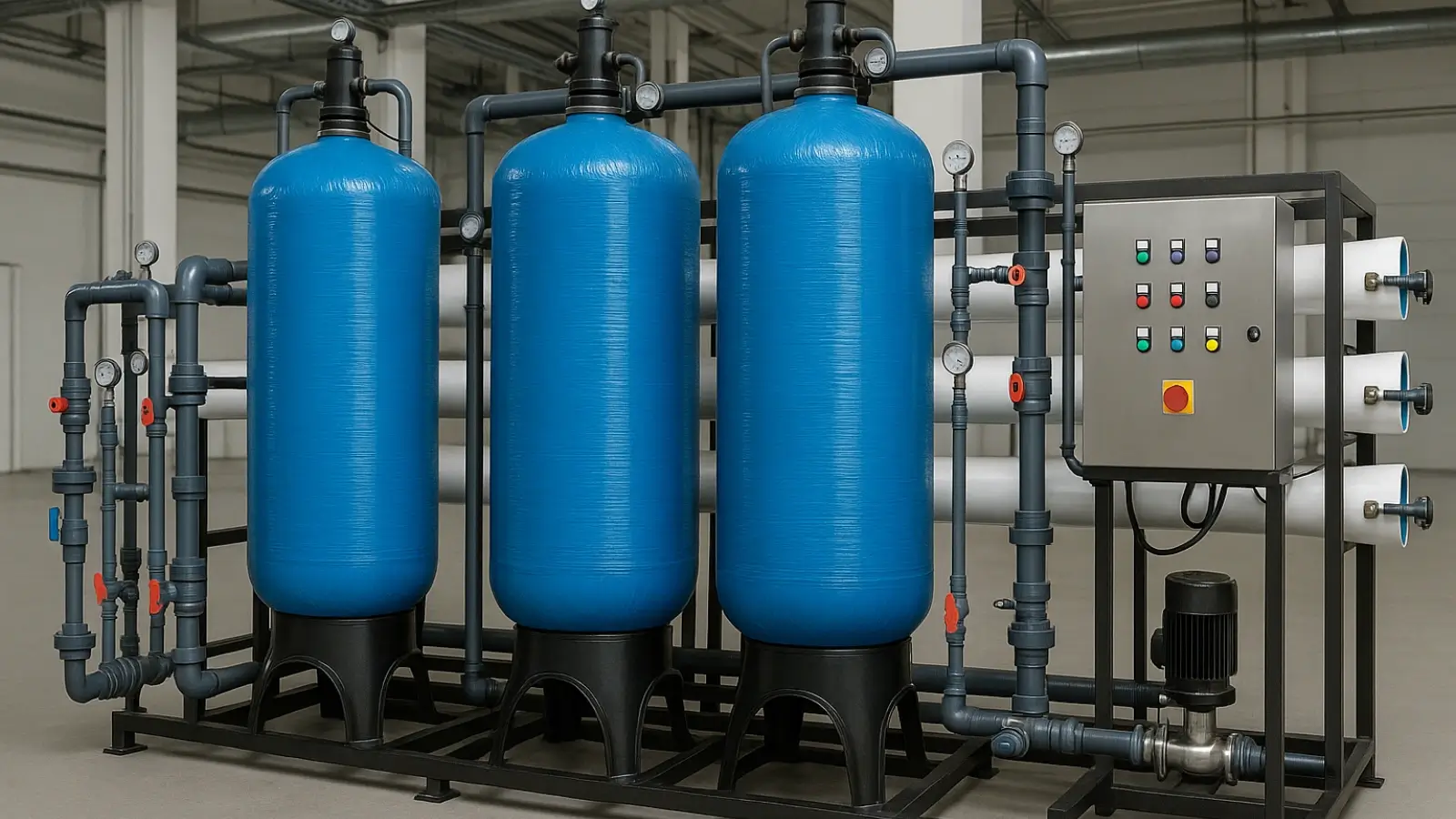
A typical commercial water treatment system may include the following components:
- Pre-Filters: Remove large particles, sediments, and debris to protect the main filtration system.
- Reverse Osmosis Membranes: Purify water by removing dissolved solids, chemicals, and impurities.
- Carbon Filters: Eliminate chlorine, odors, and organic compounds, improving taste and water quality.
- Water Softeners: Reduce hardness and prevent scale buildup in pipes, boilers, and industrial equipment.
- UV or Ozone Disinfection Units: Destroy bacteria, viruses, and other microorganisms without harmful chemicals.
- Storage Tanks: Store treated water to ensure a consistent supply for commercial use.
- Monitoring Systems: Track water quality, pressure, and flow, allowing timely maintenance and ensuring optimal performance.
Proper integration of these components ensures that commercial water treatment systems deliver safe, high-quality water reliably and efficiently.
Maintenance and Monitoring
Maintenance is critical for all commercial water treatment systems. Filters, membranes, UV lamps, and chemical dosing units must be checked regularly and replaced when necessary. Failure to maintain the system can result in reduced water quality, equipment damage, and potential health hazards.
Monitoring water quality through regular testing is essential. Parameters such as pH, total dissolved solids (TDS), hardness, microbial content, and chemical levels are measured to ensure compliance with safety standards. Automated monitoring systems can alert operators to potential issues, allowing preventive action. Well-maintained commercial water treatment systems operate efficiently, reduce downtime, and extend the lifespan of equipment.
Regulatory Compliance in Commercial Water Treatment
Businesses that implement commercial water treatment must comply with local, national, and international regulations regarding water quality and safety. Regulatory bodies set standards for chemical composition, microbial content, and physical characteristics of water used in commercial operations.
Compliance ensures that businesses avoid fines, lawsuits, and reputational damage. It also safeguards public health and maintains customer trust. Adhering to regulations requires proper system design, routine monitoring, documentation, and reporting. Partnering with professional water treatment providers ensures that commercial systems meet or exceed regulatory requirements.
Cost and Return on Investment
The cost of a commercial water treatment system varies depending on the industry, water quality, system complexity, and capacity. While initial investment may be significant, the long-term benefits often outweigh the cost.
Businesses save money by reducing equipment maintenance, preventing downtime, avoiding regulatory fines, and improving product quality. Treated water can also reduce energy costs in heating, cooling, and boiler systems by preventing scale buildup. For industries with high water usage, the return on investment can be achieved within a few years, making commercial water treatment a practical and profitable choice.
Sustainable Practices in Commercial Water Treatment
Sustainability is a growing priority in commercial water management. Modern commercial water treatment systems can reduce chemical usage, minimize water waste, and promote recycling and reuse.
Businesses can implement water reclamation programs, greywater recycling, and rainwater harvesting in conjunction with treatment systems. Efficient water management not only reduces operational costs but also demonstrates environmental responsibility, supporting corporate social responsibility initiatives and sustainable business practices.
Choosing the Right Commercial Water Treatment Solution
Selecting the appropriate commercial water treatment solution requires understanding water source quality, intended use, regulatory requirements, and budget. Water testing is critical to identify contaminants and determine the required treatment method.
Businesses should evaluate system capacity, scalability, maintenance requirements, and vendor support when choosing a solution. Partnering with experienced water treatment providers ensures that the system meets operational needs, delivers consistent water quality, and complies with regulations.
Conclusion:
Commercial water treatment is essential for maintaining health, operational efficiency, and product quality in businesses of all sizes. From restaurants and hotels to industrial plants and healthcare facilities, clean and safe water is a foundation of success.
A properly designed and maintained commercial water treatment system ensures compliance with regulations, reduces costs, and supports sustainability initiatives. Investing in high-quality water treatment is not only a practical business decision but also a commitment to employee safety, customer satisfaction, and environmental responsibility.
By prioritizing commercial water treatment, businesses can secure a reliable supply of safe water, protect critical equipment, and enhance their operational performance while promoting a sustainable future.
Business Outstanders brings you sharp insights on tech, business, entrepreneurship, law, crypto, and more. We uncover what’s next. Stay updated, sign up for our newsletter and be part of the future!