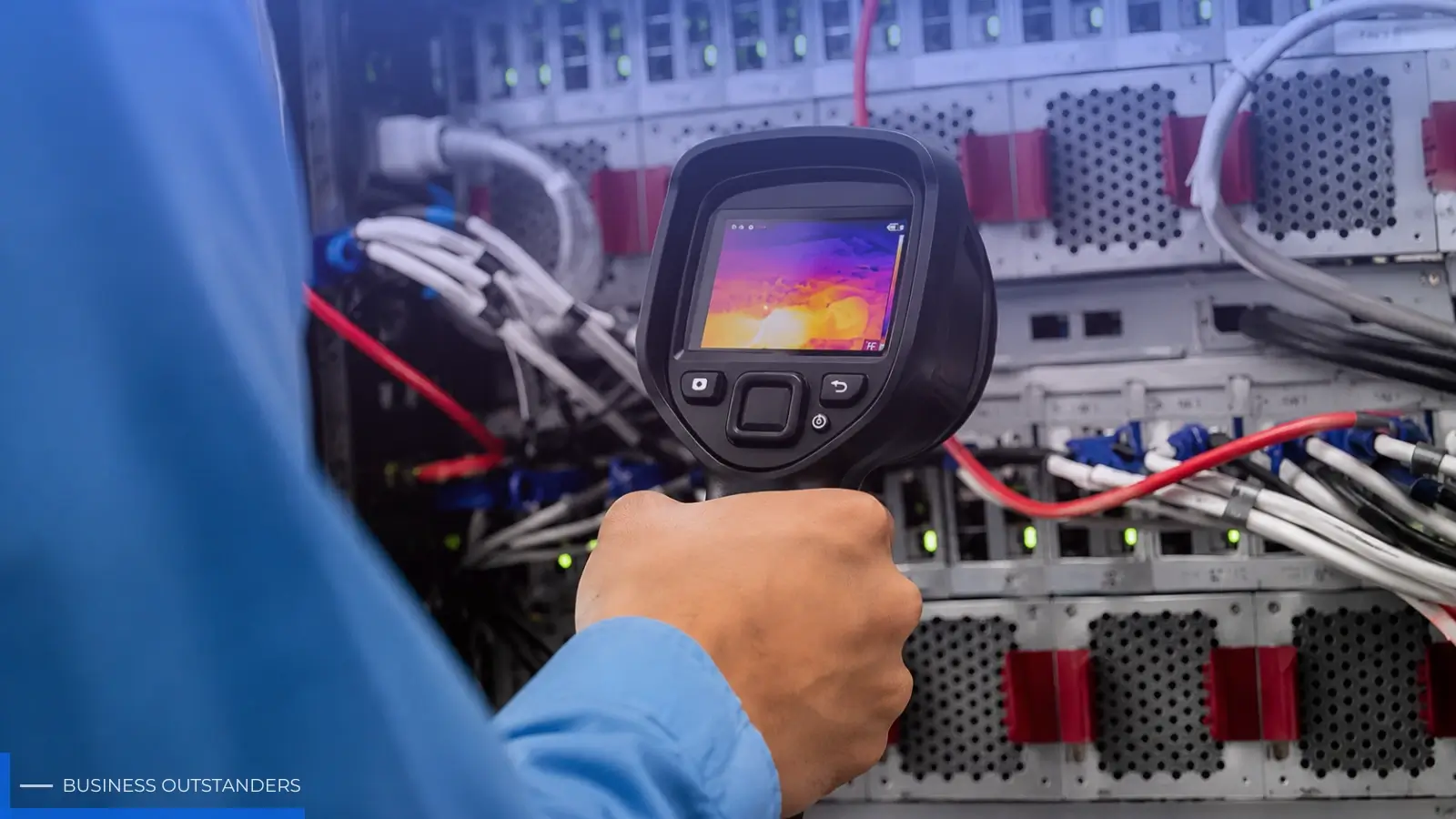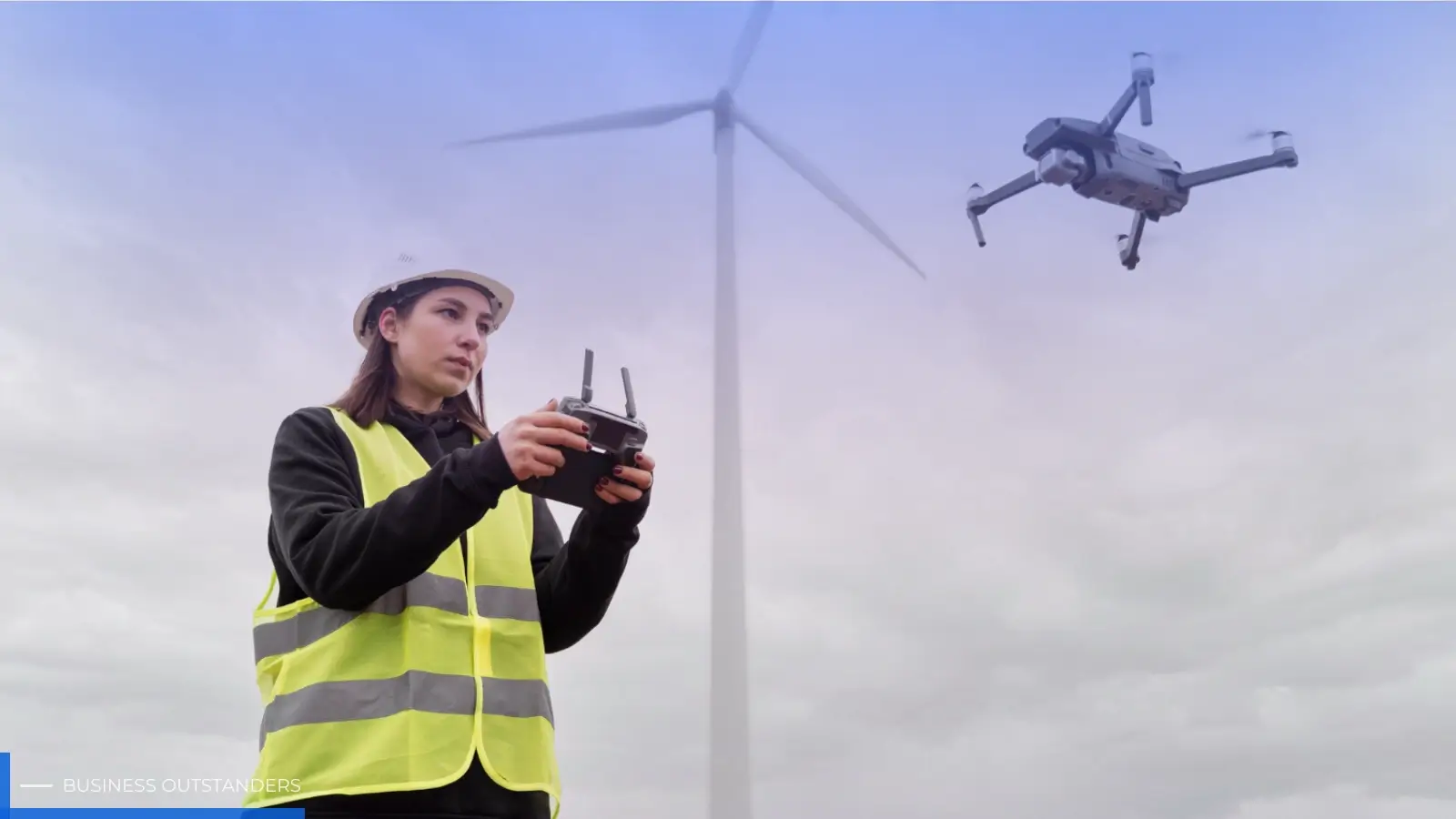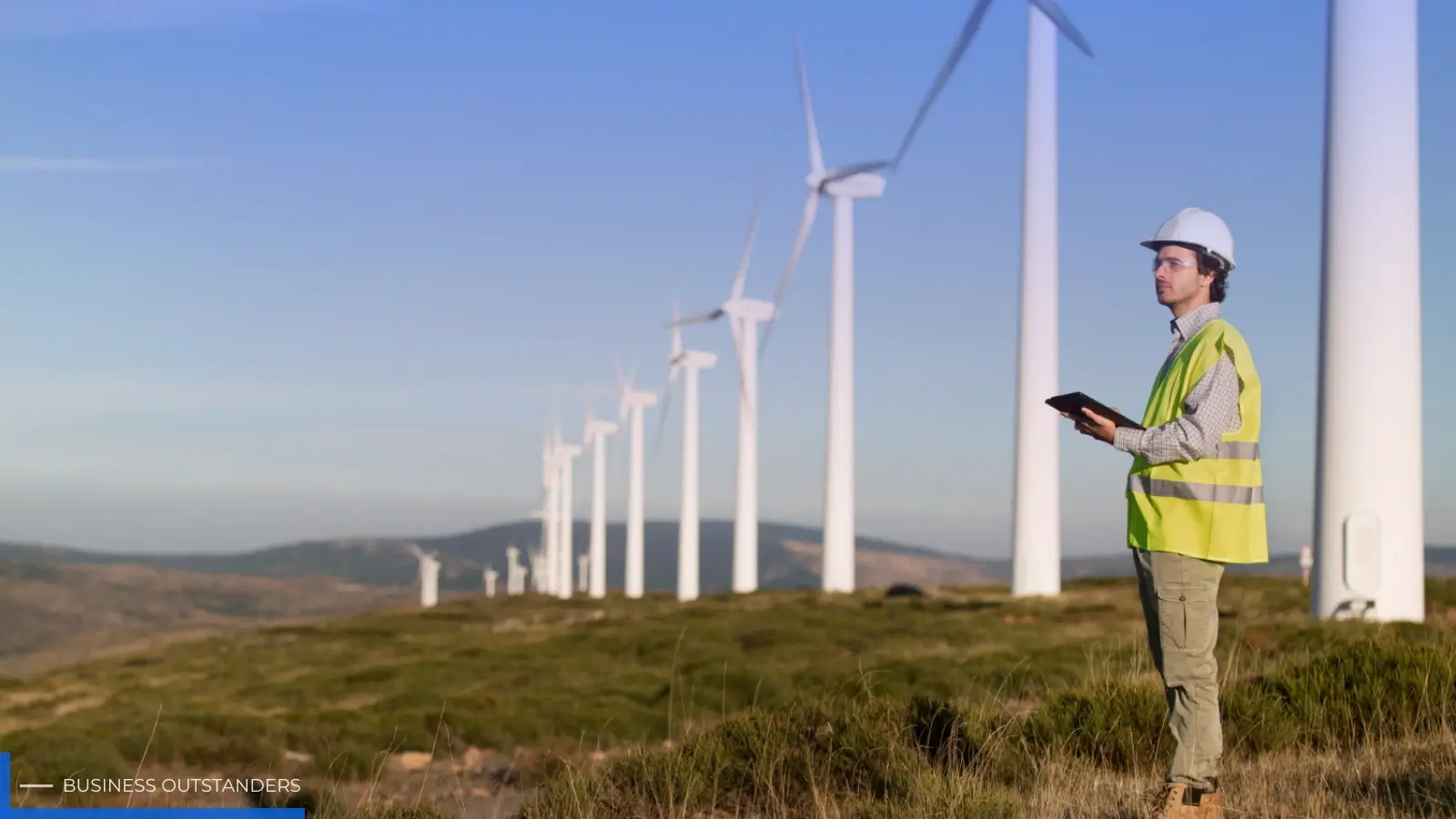
Wind turbine mapping is becoming a more strategic category than standard drone inspection. For years, drone programs in wind were mainly judged by how safely and quickly they could capture blade images. That still matters, but it is no longer enough. In 2026, wind operators need digital visibility that helps them understand turbine condition, track damage progression, plan repairs, reduce downtime, support insurance and warranty claims, and make better decisions across both onshore and offshore portfolios.
This is where drone mapping software becomes different from basic aerial inspection. Inspection answers the question: “What does the turbine look like right now?” Mapping should go further. It should help teams understand where damage sits on the blade, how it changes between inspection cycles, whether it affects operational risk, and how that information should influence maintenance planning.
For utility-scale wind operators, this shift is significant. Turbines are larger, fleets are more distributed, offshore assets are harder to access, and maintenance windows are expensive. A single delayed repair decision can affect production, workforce planning, and component health. In that context, drone mapping software becomes part of the operational decision chain, not just a way to replace rope access.
Why Drone Mapping Matters More in Wind Than Basic Inspection
Wind assets are not static inspection targets. Blades age, surface damage expands, weather events leave marks, and offshore conditions make repeat access expensive. A drone inspection can document damage once. Drone mapping software should help operators build a condition history.
That distinction matters because many blade issues are not binary. Leading-edge erosion, coating damage, cracks, lightning marks, and surface wear can change gradually. Operators need to know whether a finding is stable, accelerating, or moving toward a repair threshold. Without that context, teams often either overreact to low-priority findings or delay repairs until costs increase.
Drone mapping also supports decisions outside maintenance. During commissioning, operators need evidence that assets meet expectations. During M&A, buyers need confidence in component condition. During repowering or refinancing, asset health documentation can influence planning assumptions. During insurance or warranty claims, structured visual evidence can be more valuable than scattered inspection notes. This shift also reflects how drone technology is becoming central to operational planning, risk management, and long-term asset visibility.
This is why the category is moving toward digital asset intelligence. The map is not valuable because it looks impressive. It is valuable because it gives teams a consistent way to understand turbine condition and act with less uncertainty.
Best 7 Drone Mapping Software for Wind Turbines in 2026
1. vHive
vHive is the strongest overall drone mapping software for wind turbines because it connects aerial capture, blade intelligence, and operational workflows into a scalable system for utility-scale wind operators. Its value is not limited to inspection. The platform supports proactive damage assessment, anomaly monitoring over time, operational performance optimization, workforce optimization, cost reduction, and documentation for insurance, warranty, commissioning, M&A, repowering, and refinancing workflows.
What makes vHive stand out is its ability to treat turbine mapping as a continuous operational layer. Wind operators do not only need to know whether a blade has damage today. They need to know how that damage is evolving, whether it affects maintenance timing, and how the information should influence fleet-level planning. vHive is well aligned with that need because it supports structured, repeatable workflows across both onshore and offshore environments.
The platform is also a strong fit for in-house operations. This matters because many operators want more control over inspection cadence, data continuity, and workforce planning. By reducing dependency on fragmented external cycles, vHive helps wind teams build a more consistent asset intelligence program.
Its broader workflow coverage is also important. Mapping data can support immediate defect review, but it can also inform commissioning acceptance, weather damage response, warranty claims, asset transactions, and long-term performance optimization. That makes vHive especially valuable for operators that want one platform to support more than blade imagery.
Key features
- Drone-based turbine mapping for onshore and offshore assets
- High-resolution blade inspection and damage visibility
- Proactive damage assessment workflows
- Monitoring of anomaly evolution over time
- Support for in-house inspection operations
- Workforce optimization and reduced field dependency
- Outputs for insurance, warranty, commissioning, M&A, and repowering workflows
2. SkySpecs
SkySpecs is one of the best-known wind inspection and blade analytics platforms, particularly for operators that want structured blade visibility at scale. The company has built a strong reputation around automated blade inspection workflows and recurring turbine condition assessments.
Its main strength is focus. SkySpecs is highly relevant when operators need consistent blade inspections, organized defect data, and analytics that help maintenance teams understand turbine condition across a fleet. It is especially useful for wind organizations that already have mature blade inspection programs and want to improve review consistency.
SkySpecs is strongest in environments where blade condition is the primary concern. Its workflows help teams capture turbine data, review defects, and prioritize follow-up actions. This makes it valuable for operators seeking a reliable blade inspection and analytics platform rather than a broader lifecycle intelligence system.
Compared with vHive, SkySpecs is more narrowly centered on blade inspection analytics. That is not necessarily a weakness. For teams focused mainly on recurring blade review, that specialization can be a strong advantage. However, operators looking for wider use across commissioning, M&A, repowering, workforce optimization, and in-house lifecycle programs may need broader platform coverage.
Key features
- Automated blade inspection workflows
- Structured defect detection and review
- Recurring turbine condition analysis
- Blade-focused analytics for maintenance teams
- Support for fleet-level inspection programs
- Improved consistency across inspection cycles
- Useful visibility into damage patterns
3. ONYX Insight
ONYX Insight is a strong choice for operators that want mapping and inspection data to support predictive maintenance and long-term turbine reliability. It is less of a pure drone mapping platform than some companies on this list, but it is highly relevant because wind operators increasingly want drone-derived findings to connect with broader asset health strategies.
The platform is strongest where the goal is not only to identify blade defects, but to understand how inspection data fits into turbine performance, component health, and maintenance forecasting. This makes ONYX Insight particularly valuable for reliability teams that think in terms of predictive operations rather than isolated inspection cycles.
Wind operators often struggle when inspection findings remain separated from condition monitoring and maintenance planning. ONYX Insight helps address that gap by positioning inspection data as part of a larger reliability framework. This is useful for operators that want to move from periodic damage detection toward more informed asset health management.
Compared with vHive and SkySpecs, ONYX Insight is less centered on drone mapping execution itself. Its strength is the connection between inspection intelligence and predictive maintenance strategy.
Key features
- Predictive maintenance orientation
- Turbine health and reliability workflows
- Integration of inspection data into asset health planning
- Support for maintenance forecasting
- Long-term condition intelligence
- Performance-focused operational analysis
- Useful framework for reliability teams
4. Nearthlab
Nearthlab is a strong option for operators that prioritize automation, especially in offshore or difficult-access environments. Its value comes from reducing the manual burden of turbine inspection and making drone operations more repeatable at scale.
This focus is important because offshore wind creates a very different inspection environment than onshore fleets. Access is harder, weather windows are limited, and field mobilization is expensive. In those conditions, autonomous execution becomes more than a technical feature. It becomes a practical requirement for scalable inspection programs.
Nearthlab is particularly useful for operators that want to standardize drone flights and reduce coordination complexity. Its workflows are designed around efficient capture, repeatable inspection execution, and AI-supported review. That makes it attractive for teams trying to inspect large numbers of turbines with less operational friction.
The platform is narrower than vHive in terms of broader lifecycle and commercial workflows, but it remains one of the most relevant competitors in the wind drone space because automation is increasingly central to the category.
Key features
- Autonomous drone inspection workflows
- Strong relevance for offshore operations
- AI-supported defect visibility
- Reduced manual coordination
- Repeatable turbine survey execution
- Efficient inspection scaling across fleets
- Reduced field dependency
5. Sulzer & Schmid
Sulzer & Schmid is one of the strongest blade-focused specialists in the wind market. Its value comes from deep blade inspection expertise and structured workflows for identifying, reviewing, and managing blade defects.
The company is especially relevant for operators that want high-quality blade visibility rather than a broad operational platform. In other words, Sulzer & Schmid is not trying to be everything across the wind asset lifecycle. It is strongest when the job is to understand blade condition in detail and support decisions around blade maintenance.
That specialization can be valuable. Blade damage is one of the most important inspection categories in wind operations, and operators often need precise, reliable data to determine what should be repaired, monitored, or escalated. Sulzer & Schmid fits that use case well.
Compared with vHive, it is less broad in terms of operational performance optimization, in-house lifecycle workflows, and strategic use cases such as M&A or refinancing. But as a blade inspection specialist, it remains a highly credible platform.
Key features
- Specialized blade mapping workflows
- Detailed blade damage visibility
- High-quality inspection review
- Structured blade analytics
- Support for recurring blade condition programs
- Strong focus on rotor blade health
- Useful defect documentation workflows
6. Zeitview
Zeitview is relevant in wind turbine mapping because of its broad drone operations model and ability to support distributed inspection programs. The company is not as wind-specialized as SkySpecs or Sulzer & Schmid, and it is not as lifecycle-oriented as vHive, but it can be useful for operators that prefer outsourced or hybrid inspection execution.
This model works well for companies that do not want to build a full internal drone program immediately. Zeitview can help operators coordinate survey work across multiple locations while maintaining structured reporting and execution support.
Its strength is reach and flexibility. For wind portfolios spread across regions, an outsourced or hybrid model can reduce internal operational burden. The tradeoff is that operators may have less direct control over inspection cadence, data continuity, and internal process ownership compared with platforms designed for in-house operations.
Zeitview is therefore best understood as an execution-focused option. It is useful where coverage and service delivery matter more than deep wind-specific lifecycle intelligence.
Key features
- Broad drone inspection service coverage
- Hybrid service and software model
- Support for distributed wind portfolios
- Structured reporting workflows
- Flexible deployment options
- Useful outsourced inspection execution
- Practical recurring survey support
7. Averroes
Averroes plays a smaller role in the wind drone mapping market, but it can be relevant for operators that need a more lightweight inspection and mapping workflow. Not every organization requires a large enterprise platform, advanced lifecycle intelligence, or offshore-scale automation.
For smaller teams or targeted inspection programs, a simpler system can be easier to deploy and manage. Averroes fits that segment by offering practical defect review and turbine visibility without the complexity of broader platforms.
Its limitation is scope. It is not positioned as a major leader in utility-scale lifecycle optimization, and it does not have the same market weight as SkySpecs, ONYX Insight, Nearthlab, or Sulzer & Schmid. Still, smaller players can be useful when the operational requirement is narrow and the team wants a more direct workflow.
Key features
- Lightweight turbine mapping workflows
- Practical defect visibility
- Simpler inspection review processes
- Reduced implementation complexity
- Support for targeted inspection programs
- Useful fit for smaller operational teams
- Basic maintenance visibility support
How Wind Operators Use Drone Mapping Data
Drone mapping software creates value across several operational moments. The strongest use cases are not limited to annual inspections.
Blade condition programs
Blade teams use mapping software to document defects, assign severity, compare inspection cycles, and decide when intervention is needed. This is the most obvious use case, but it is also where quality matters most. Poorly structured findings create review delays and inconsistent repair decisions.
Offshore inspection planning
Offshore wind operations rely heavily on timing, access, and weather windows. Drone mapping software helps operators reduce unnecessary mobilization and prioritize which turbines need closer attention. Platforms with stronger autonomous workflows are especially valuable in these environments.
Weather damage assessment
After major weather events, operators need fast visibility into possible blade or surface damage. Mapping software helps create structured evidence across affected turbines and supports faster triage.
Insurance and warranty workflows
When damage needs to be documented for claims, operators benefit from consistent imaging, clear location data, and historical comparison. This reduces ambiguity and supports stronger communication with insurers, OEMs, and service partners.
Repowering, refinancing, and M&A
Wind assets increasingly need reliable condition records for investment decisions. Drone mapping data can support technical due diligence, asset valuation, and long-term maintenance planning.
What Strong Wind Drone Mapping Software Should Deliver
The best platforms are not simply those that capture the clearest images. Image quality is only one layer. Wind operators should evaluate software based on how well it supports the full condition-management workflow.
A strong platform should deliver accurate blade visibility, but it should also help teams interpret that visibility. It should support recurring inspections, not only one-off reports. It should allow operators to compare damage over time and understand whether anomalies are becoming more serious.
It should also reduce operational friction. If drone mapping data requires too much manual cleanup or separate analysis before anyone can act, the platform becomes another bottleneck. The strongest systems shorten the path from capture to maintenance decision.
Key evaluation criteria include:
- Can the platform support repeatable inspections across large fleets?
- Does it help classify and prioritize blade damage?
- Can it track anomaly evolution across inspection cycles?
- Does it reduce dependence on rope access and manual review?
- Is it suitable for offshore workflows?
- Can outputs support insurance, warranty, commissioning, and M&A needs?
- Does it help operations teams act faster?
How to Choose Wind Turbine Drone Mapping Software
Choosing the right platform starts with the operating model. A wind operator running a large offshore portfolio has very different needs from a smaller onshore operator looking for periodic blade review. The platform should match how the organization actually manages inspections, repairs, and asset intelligence.
Start with the inspection strategy
If inspections are still reactive, a lightweight tool may be enough in the short term. If the goal is proactive damage assessment and lifecycle visibility, the platform needs stronger tracking, prioritization, and operational workflow support.
Separate blade analytics from lifecycle intelligence
Some platforms are excellent blade inspection tools. Others are broader operational systems. Buyers should be clear about whether they need blade-level precision, predictive maintenance integration, in-house operational control, or all of these together.
Evaluate offshore readiness honestly
Offshore capability should not be treated as a checkbox. Operators should assess whether the platform can handle weather constraints, access limitations, repeatable inspections, and fleet-scale execution in real offshore conditions.
Look at what happens after detection
The most important question is not whether the software finds damage. It is whether the software helps teams decide what to do next. Strong platforms shorten the path from mapping to maintenance action.
Drone mapping software for wind turbines is moving from inspection support to operational intelligence. The best platforms help operators understand turbine condition, monitor damage progression, optimize maintenance timing, reduce downtime, and support broader lifecycle decisions.
FAQs About Drone Mapping Software for Wind Turbines
What is drone mapping software for wind turbines?
Drone mapping software for wind turbines uses aerial capture, blade imaging, and digital reconstruction workflows to help operators monitor turbine condition remotely. These platforms support recurring inspections, damage tracking, and operational analysis across wind fleets. Modern systems go beyond simple image collection by helping operators compare inspection cycles, assess anomaly progression, and improve maintenance planning for both onshore and offshore assets.
How is drone mapping different from basic wind turbine inspection?
Basic inspections typically focus on identifying visible defects during a specific inspection cycle. Drone mapping software creates structured digital visibility that operators can compare over time. This allows teams to monitor how damage evolves, support predictive maintenance, and build longer-term asset intelligence. Mapping platforms are therefore more operationally valuable because they help operators understand turbine condition continuously rather than through isolated inspection snapshots.
Why is drone mapping important for offshore wind farms?
Offshore wind farms are difficult and expensive to inspect using traditional methods. Drone mapping reduces dependence on rope-access teams and repeated offshore mobilization while improving visibility into turbine condition. Operators can run inspections more efficiently, compare findings across fleets, and prioritize maintenance with better information. As offshore wind expands globally, scalable drone mapping workflows are becoming increasingly important for operational efficiency and downtime reduction.
What types of turbine damage can drone mapping platforms detect?
Drone mapping platforms can help identify leading-edge erosion, cracks, lightning strike damage, coating degradation, surface wear, and other blade-related defects. Advanced systems also support historical comparison, allowing operators to track whether anomalies are stable or worsening over time. This helps maintenance teams make more informed repair decisions and reduce the risk of larger operational failures developing unnoticed.
How do drone mapping platforms help reduce wind turbine downtime?
Drone mapping platforms reduce downtime by helping operators detect damage earlier and prioritize maintenance more effectively. Continuous visibility into turbine condition allows teams to intervene before defects expand into larger operational problems. Better planning also improves workforce allocation and reduces unnecessary field mobilization. Over time, this leads to faster repairs, improved turbine availability, and stronger operational performance across the fleet.
What should wind operators look for in drone mapping software?
Wind operators should evaluate platforms based on operational scalability, offshore readiness, anomaly tracking, maintenance workflow support, and repeatable inspection capability. Strong systems should not only capture turbine imagery but also help teams prioritize repairs and monitor condition over time. Platforms that support insurance claims, commissioning, M&A workflows, and performance optimization often create more long-term operational value than inspection-only tools.
Can drone mapping software support predictive maintenance?
Yes. Many modern wind mapping platforms support predictive maintenance by helping operators monitor damage progression and identify trends across inspection cycles. Instead of reacting only after visible deterioration becomes severe, teams can use recurring mapping data to schedule earlier interventions and improve maintenance forecasting. This reduces operational uncertainty and supports more proactive asset management strategies.
Are wind operators moving toward in-house drone mapping operations?
Many operators are increasing in-house drone capabilities because they want more control over inspection timing, data continuity, and operational workflows. Internal programs allow teams to inspect turbines more frequently and integrate mapping data more closely into maintenance planning. However, some organizations still prefer outsourced or hybrid models depending on fleet size, geographic distribution, and operational maturity.
Business Outstanders brings you sharp insights on tech, business, entrepreneurship, law, crypto, and more. We uncover what’s next. Stay updated, sign up for our newsletter and be part of the future!