Most small business owners have never thought about where their carbon dioxide comes from. The ones who run breweries, restaurants, food processors, and medical facilities are about to wish they had. Here is what is actually happening in the CO2 market, why it keeps catching operators off guard, and what the smart ones are doing about it.
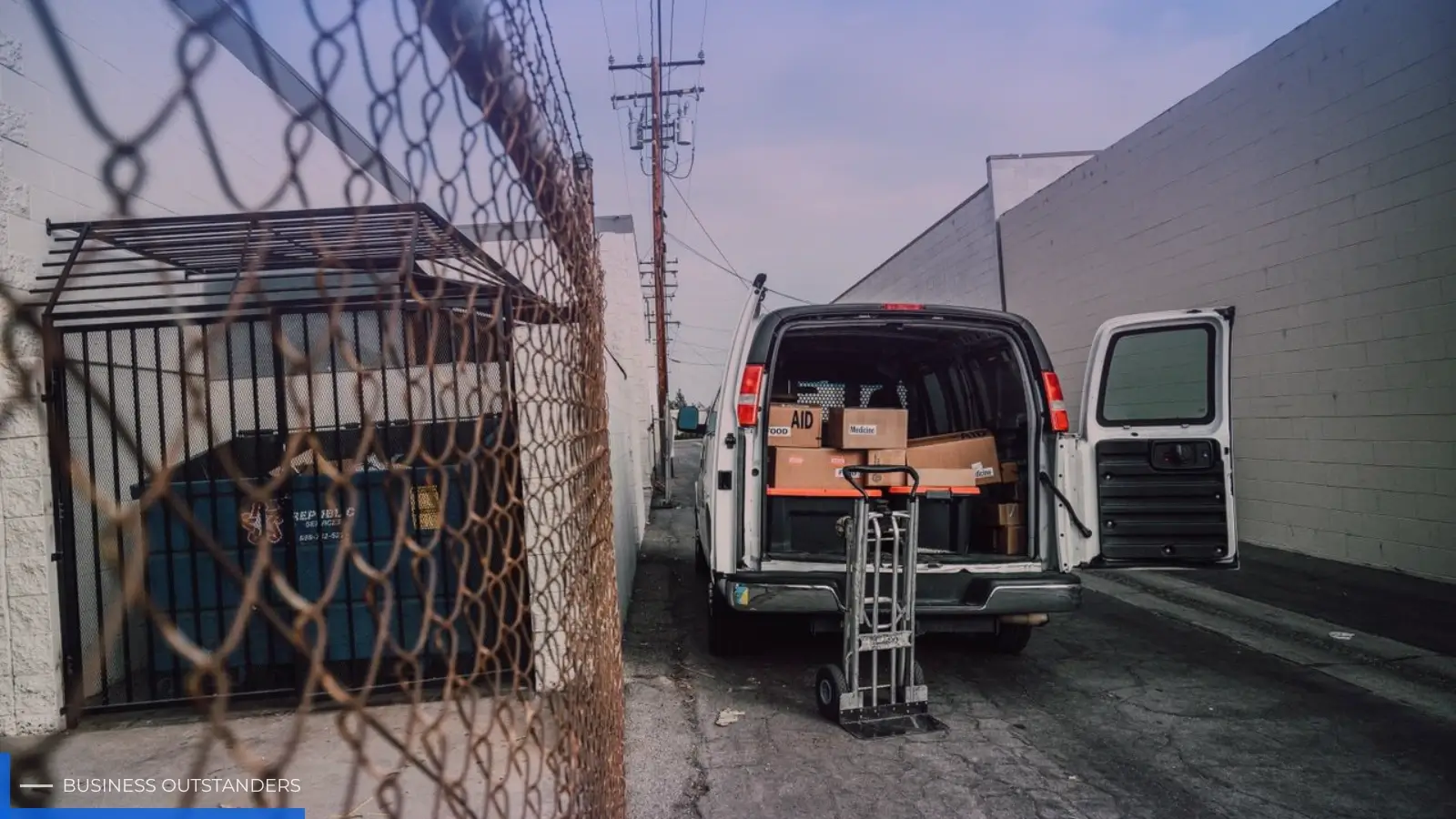
In the autumn of 2025, a craft brewery in California called Almanac Beer Co. had to shut down operations for two days. The reason had nothing to do with their beer, their staff, their equipment, or their customers. The CO2 shipments that they relied on to carbonate their beer and purge their tanks simply did not arrive. They could not can. They could not sell. Their brewing schedule backed up. To catch up later, they added a third shift and worked staff until midnight.
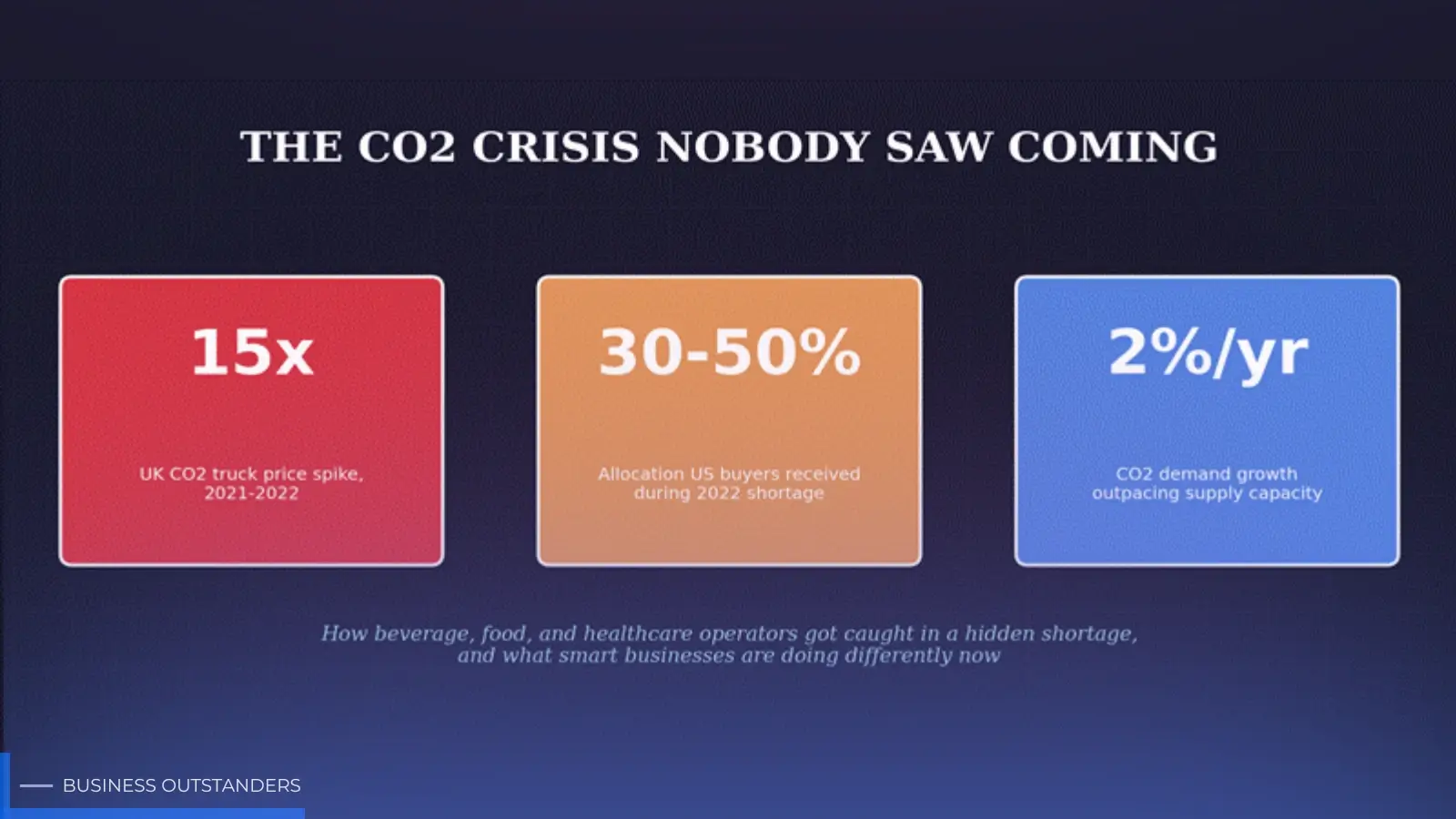
This story is becoming common. In May 2026, the UK government had to step in to restart an ethanol plant called Ensus specifically to safeguard the national supply of CO2, because the food and beverage sector, the healthcare sector, and the nuclear sector were all at risk of running out. In 2022, the price of a single truckload of CO2 in the UK jumped from £5,000 to £75,000 in twelve months. That is a 15x cost spike on something most operators had treated for decades as a cheap, boring, always-available input.
If you own or operate any business that uses CO2, and that is a much longer list than most people realise, this is a story you need to understand.
Who Actually Uses CO2
Before going further, it is worth establishing the size of the affected universe, because most people underestimate it dramatically.
Restaurants and bars use CO2 for soda dispensing, draft beer carbonation, and wine preservation. Coffee shops use it for cold brew nitro taps. Craft breweries use CO2 to carbonate beer, purge fermenters, and push beer through canning lines. Wineries use it to inert tanks against oxidation. Soft drink bottlers use it to carbonate. Food processors use it for modified atmosphere packaging that extends the shelf life of meat, salads, fresh fish, and bagged produce. Greenhouses use CO2 enrichment to boost crop yields. Indoor cannabis growers use it for the same reason. Dispensaries and clinics use medical-grade CO2 for cryosurgery, laparoscopy, and certain laboratory procedures. Welding shops use CO2 (often blended with argon) as a shielding gas. Pharmaceutical companies use dry ice for cold-chain shipping. Cell therapy companies, biotech labs, and clinical research organisations all depend on it.
If you run any of those businesses, you are exposed to CO2 supply risk. Most operators do not realise this until the day their supplier calls to say allocation is being cut.
The Weird Thing About Industrial CO2
Here is the part of the story that most operators have never been told. Almost nobody actually makes CO2 on purpose. Roughly all of the merchant CO2 sold in North America today is a byproduct of other industrial processes. When those processes slow down, CO2 supply collapses, often overnight.
The four primary EPA-certified sources of US industrial CO2 are all byproducts. When upstream demand falls or plants go down for maintenance, CO2 production falls with them.
The largest single source category is ammonia and fertilizer production. Ammonia plants pull CO2 out of the air as part of making fertilizer, capture it, purify it, and sell it. According to the Compressed Gas Association, this single source accounts for roughly 23% of US CO2 supply. The catch is that ammonia plants schedule their major maintenance shutdowns in the warm months, typically April through July, right when CO2 demand peaks because hot weather drives beverage consumption.
The second-largest source is ethanol production. Ethanol is made by fermenting corn, which releases huge amounts of CO2 as a byproduct. That CO2 is captured and sold to industrial buyers. The catch is that ethanol is also blended into gasoline, so when gasoline demand falls (as it did during COVID), ethanol production falls with it, and CO2 supply takes a major hit. In 2020, 34 out of 45 US ethanol plants that sold CO2 paused operations. The supply did not fully recover for years.
The third source is oil refineries and natural gas processing. Same problem. CO2 captured as a byproduct of an upstream process. When refineries cut throughput or natural gas prices spike, downstream CO2 supply tightens.
The fourth and most unusual source is Jackson Dome, an extinct volcano in Mississippi that has been producing CO2 from underground reservoirs for decades. Jackson Dome alone supplies roughly 15% of US merchant CO2. In 2022, the volcano began producing CO2 contaminated with hydrocarbons (ethane, benzene, and others) at concentrations the industry's scrubbing equipment could not fully handle. That triggered one of the worst US CO2 shortages in living memory. Some businesses received only 30 to 50% of their normal allocations for months.
A Decade of Quiet Crises
Once you understand how the supply chain works, the pattern of disruptions over the last decade stops looking random and starts looking inevitable.
Most operators using CO2 have lived through one or more of these events without ever understanding the underlying mechanism. The next disruption is a matter of when, not which season.
The 2018 UK CO2 crisis was triggered by simultaneous ammonia plant shutdowns across Europe, and it nearly stopped commercial beer brewing nationwide for weeks. The 2020 COVID collapse in ethanol production cut US CO2 supply for years. The 2022 Jackson Dome contamination produced shortages that the gas industry described as the worst in decades. In 2024, summer demand met another round of ammonia plant outages, and small US businesses were rationed again. In May 2026, the UK government had to intervene to restart an ethanol producer specifically to keep CO2 flowing to beer brewers, food packagers, hospitals, and nuclear plants ahead of FIFA World Cup demand.
Industry analysts at Beroe, gasworld, and Intelligas all share roughly the same view of the next five years. Demand for industrial CO2 is growing at about 2% per year, driven by data centres, dry ice for biotech and pharma cold chain, cannabis cultivation, and food packaging. Supply capacity is shrinking or flat, with US nameplate CO2 capacity falling from 36.7 thousand tons per day in 2024 to 36.0 thousand tons per day in 2025. The trajectory is clear. The next disruption will not be the last.
What a CO2 Disruption Actually Costs a Business
Most operators have never run the math on what a CO2 outage costs them, so it is worth doing here in concrete terms.
For a restaurant or bar, a CO2 outage during peak service means soda dispensing systems go down, draft beer cannot be poured, and customers get turned away. A single Friday or Saturday night of lost sales for a mid-volume restaurant can run from $5,000 to $20,000 in revenue, plus the brand damage from social media reviews. For a craft brewery, a CO2 outage can lose an entire fermentation batch worth $30,000 to $150,000 depending on volume. It can also force production to back up by days or weeks, which cascades through packaging, distribution, and retail commitments.
For a food processor, a CO2 outage means modified atmosphere packaging stops working, which means product shelf life drops from seven to ten days down to two or three days. Beroe's 2026 research explicitly noted that during current European CO2 constraints, fresh packaged salads, ready meals, and fresh fish were facing exactly this kind of shelf life collapse. For a commercial greenhouse or indoor cannabis operation, losing CO2 enrichment can cut yields by 20% to 30%.
For healthcare facilities, the stakes are higher. CO2 is used in laparoscopy, cryosurgery, and some MRI applications. Hospitals are generally prioritised during shortages, but smaller medical facilities and outpatient clinics have been pushed back in the queue during recent crises. Veterinary practices have reported being unable to source CO2 for routine surgeries during peak shortage periods.
There is also a price dimension separate from availability. During the 2022 US shortage, beverage CO2 contract prices jumped by 30 to 40%. Some spot prices doubled. Operators who were locked into single-supplier contracts had no negotiating leverage. Operators who had cultivated relationships with backup suppliers had options.
What Smart Operators Are Actually Doing
The good news in this story is that operators who have lived through one of these crises tend to come out the other side with a real playbook. Here is the framework that recurs across the most resilient businesses.
First, build a dual-supplier relationship before you need one. The single biggest mistake small operators make is single-sourcing CO2 to whoever quoted the cheapest price at startup. The Brewers Association's CO2 supply guidance explicitly recommends cultivating relationships with backup suppliers during non-crisis times, even if those suppliers are slightly more expensive, by giving them some of your business in advance. The cost of a slightly higher monthly invoice is trivial compared to the cost of being shut down for a week with no alternative.
Second, ask your supplier where their CO2 actually comes from. A supplier sourcing from three or four different upstream producers across multiple regions is materially more resilient than one sourcing from a single ammonia plant or a single ethanol facility. The largest national distributors often have better geographic diversity. The best regional distributors usually know exactly which plants they pull from and can explain their backup arrangements in detail. Suppliers who get evasive on this question are telling you something.
Third, evaluate cylinder vs bulk economics honestly. Cylinder supply is more flexible but vulnerable to delivery disruption. Bulk tank installation requires capital but gives you on-site reserves and telemetry monitoring that triggers automatic refills. For any business consuming more than a few hundred pounds of CO2 per month, bulk usually wins on cost and reliability. Switching from cylinders to bulk typically pays back in 12 to 24 months for a mid-volume restaurant or brewery.
Fourth, understand your CO2 quality requirements. Food and beverage operators need ISBT or food-grade purity (99.9% or higher). Medical applications need medical-grade. Welding can use industrial-grade. Knowing exactly what grade you need protects you in two directions. It stops you from overpaying for premium purity you do not need, and it stops a supplier from quietly substituting a lower grade during a shortage. Request a Certificate of Analysis with deliveries if your operation is purity-sensitive.
Fifth, watch the upstream signals. Operators who follow agricultural commodity news (because it predicts ammonia demand and therefore CO2 supply), refinery turnaround announcements, and gasoline demand trends can usually see CO2 supply tightness coming three to six months out. The information is public and free. Most operators never look.
What to Look For in a CO2 Supplier
Choosing or evaluating a CO2 supplier is one of the highest-leverage operational decisions most SMB owners never give serious attention to. Here is the practical checklist that the most resilient operators apply.
- Multiple upstream sources. The supplier should pull from more than one production facility across more than one feedstock category (ammonia plus ethanol, for example, not just one).
- Local or regional presence. Geographic proximity reduces delivery risk and usually improves response times during regional disruptions.
- Telemetry monitoring for bulk customers. Modern bulk tanks come with automated level monitoring that schedules deliveries before you run out, rather than after you call to say you have.
- Documented Certificate of Analysis on deliveries. This protects you on quality and gives you a paper trail if a supplier substitutes a different grade.
- Emergency service capability. Ask explicitly about 24/7 emergency delivery during disruptions. Get the answer in writing.
- Multiple package options. The best suppliers offer cylinders, microbulk, and bulk so you can scale supply mode as your business grows without changing relationships.
- Transparency about pricing. Suppliers who can clearly explain cylinder rental fees, delivery surcharges, fuel surcharges, and unit pricing are usually the ones who can be trusted on the operations side too.
- Track record through previous shortages. Ask how their customers fared in 2022 and 2024. Operators who got allocated through previous crises are gold.
Regional industrial gas distributors often score better than the national majors on most of these dimensions, particularly response time and account-level service. Texas-based businesses, for example, increasingly evaluate regional suppliers such as Southwest Gases, which provides CO2 cylinder and bulk supply across Dallas, Houston, Austin, San Antonio, and Fort Worth, precisely because regional distributors with multi-source sourcing and emergency service capability have outperformed national contracts during recent disruptions. The pattern is repeating across most US regional markets.
The Five-Year Outlook
Three things are going to shape the CO2 market for the rest of this decade, and operators who understand the trajectory will make better decisions than operators who do not.
The first is that traditional supply is getting tighter, not looser. The Inflation Reduction Act's 45Q tax credit pays significantly more for CO2 that gets sequestered underground than for CO2 that gets sold to merchant buyers. Over the next five years, some producers will pull CO2 out of the merchant market and redirect it to geological storage. The merchant pool will shrink even as demand grows.
The second is that direct air capture is starting to become a real alternative for some buyers. A brewery in California has already become the first commercial business in the world to carbonate beer using CO2 pulled directly out of the atmosphere by on-site Aircapture equipment. The economics are still difficult, but for businesses where supply security matters more than unit price, on-site CO2 generation is a genuinely new option that did not exist five years ago.
The third is that in-house CO2 recovery is becoming viable at smaller scales. Craft breweries are increasingly installing fermentation CO2 recovery systems that capture the CO2 their own yeast produces during brewing and reuse it. Companies like Dalum, Earthly Labs, GEA, and Pentair now offer systems sized for breweries producing as little as 5,000 to 10,000 barrels per year. Payback periods of two to three years are common, and one-year paybacks are possible for breweries in high-CO2-cost regions.
All of these alternatives are real, but most operators will continue to depend on merchant CO2 for the foreseeable future. The next CO2 crisis is going to hit somebody. The question is just whether it hits the people who built backup relationships, diversified suppliers, and switched to bulk before they needed to, or whether it hits the ones who treated CO2 as a boring background line item right up until the day their delivery did not show up.
The Bottom Line
CO2 is not a sexy topic. Most founders, operators, and small business owners will never spend a single board meeting discussing their carbon dioxide procurement strategy. That is exactly the problem, and that is exactly what the resilient operators are doing differently.
The CO2 supply chain is more fragile than almost anyone outside the industry realises. The disruptions of the last decade are not anomalies. They are leading indicators of a structural mismatch between byproduct-driven supply and growing demand. The operators who treat CO2 procurement as a serious operational discipline (multi-supplier relationships, transparent contracts, bulk infrastructure where it pencils out, and active monitoring of upstream signals) are the ones who will be open for business during the next crisis while their competitors are calling around for emergency cylinders.
That competitive advantage starts with the supplier conversation you have not had yet. The best time to have it is when there is no crisis happening.
Sources & Further Reading
gasworld, 2025 US Merchant CO2 Report. | C&EN (American Chemical Society), "US faces CO2 shortage," 2022. | Brewers Association, Understanding and Ensuring CO2 Supply Quality for Brewery Use, 2026. | KQED, Bay Area Brewery Pulls CO2 From the Air to Keep Beer Flowing, 2026. | Food Ingredients First, Carbon dioxide supply shortage threatens Europe's beer and beverage sectors, 2026. | Compressed Gas Association industry briefings.
Business Outstanders brings you sharp insights on tech, business, entrepreneurship, law, crypto, and more. We uncover what’s next. Stay updated, sign up for our newsletter and be part of the future!