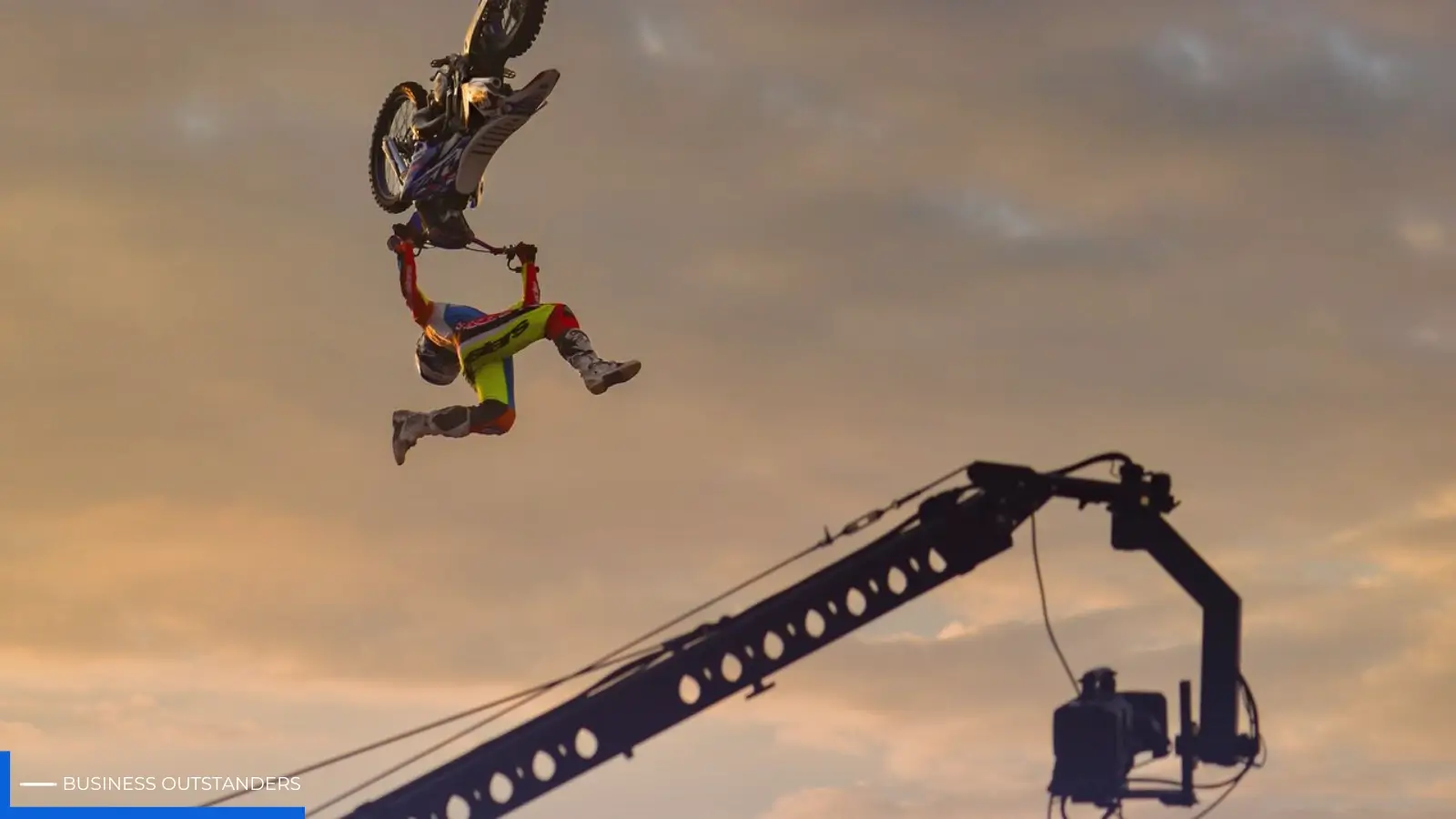
Stunt work looks thrilling from the outside. A body flies through glass, rolls across pavement, drops from a roof, or takes a hit that makes the whole theater flinch. The audience sees the moment. The camera catches the impact. Then the story moves on.
But the body remembers.
For stunt performers, pain is not some rare accident that appears once in a while. It can become part of the job’s daily weather. A sore shoulder after a fight scene. A stiff neck after a car hit. Bruised ribs from a wire gag that looked smooth on screen but landed wrong in real life. Even when everything goes according to plan, the body still pays rent.
That is where things get complicated. Stunt doubles are trained to manage risk, not avoid it completely. They know how to fall, how to roll, how to protect the head, how to make danger look bigger than it is. Still, training does not make them invincible. It only gives them a better chance of walking away.
And walking away is not always the same as being fine.
The quiet deal between pain and performance
Here’s the thing: stunt performers work in a business where toughness is almost part of the uniform. Nobody wants to be seen as careless, but nobody wants to be seen as fragile either. That quiet pressure can sit in the room even when no one says it out loud.
A stunt performer may feel pain and still keep moving because the set is burning money by the hour. A delay affects the actor, the director, the crew, the location, the light, the schedule, and the next scene waiting in line. So the performer makes a quick private calculation: Is this bad enough to stop? Can I finish the take? Will I lose work if I speak up?
That calculation is heavy.
Pain in stunt work is not always dramatic. It’s not always a broken bone or a stretcher. Often, it’s smaller and more stubborn. A knee that swells after every jump. A back that locks up after long days in pads. Hands that ache from repeated grabs, pulls, punches, and falls. The kind of pain that follows someone home, sits with them at dinner, and wakes them up at 3 a.m.
Honestly, that’s the part audiences rarely think about. The movie ends. The body doesn’t.
Repeat injuries change the way people think
One injury can be frightening. Repeat injuries can change a person’s whole relationship with their body.
Stunt performers often build careers on trust: trust in coordinators, riggers, other performers, equipment, timing, and their own instincts. But when pain keeps returning, doubt can creep in. A move that once felt natural starts to feel risky. A fall that once felt clean starts to feel like a question.
That does not mean the performer loses skill. It means they become aware of the cost.
There is also a strange emotional side to being hurt in a job built around physical ability. When your body is your tool, pain can feel personal. It can feel like betrayal. A singer worries about the voice. A carpenter worries about the hands. A stunt performer worries about the whole machine.
Some performers push through because they love the craft. Some push through because the next booking matters. Some push through because they have spent years becoming the person other people call when a scene looks impossible.
You know what? That kind of pride is not simple. It can protect a career, but it can also hide a problem.
Pain management is not just “take something and rest”
From the outside, pain management sounds simple. Rest. Ice. Physical therapy. Medication. Sleep. Repeat.
But stunt work does not always fit into a neat recovery plan. Production schedules shift. A performer may have several jobs in a row. Insurance and access to care can vary. The body may need a week, while the calendar gives it a day.
That gap creates risk.
Some performers rely on physical therapy, massage, stretching, strength work, compression gear, heat packs, ice baths, and careful conditioning. Many treat recovery like a second job because, in a way, it is. They learn which muscles protect old injuries. They learn when to tape a joint and when tape is just wishful thinking. They learn the difference between soreness and a warning sign.
But the line can blur when pain becomes normal.
Painkillers, alcohol, and sleep aids can enter the picture, especially when the goal is not pleasure but basic function. Someone may start by trying to sleep after a rough stunt day or calm the body after a hard landing. The intent can look practical at first. Then the pattern grows teeth.
This is why conversations about physical injury sometimes overlap with substance use and mental health. Resources such as Alcohol addiction treatment in Alabama sit within a much wider discussion about how people cope when stress, pain, and pressure begin feeding each other.
That does not mean every stunt performer is at risk of addiction. That would be unfair and lazy. But it does mean the industry should be honest about the conditions that make unhealthy coping easier to hide.
Safety talk is finally getting louder
Stunt performers have always talked about safety among themselves. The difference now is that the wider industry is paying closer attention. SAG-AFTRA’s focus on stunt safety has helped bring more public weight to issues that performers have raised for years: better planning, stronger protections, clear reporting, proper rest, qualified coordinators, and respect for the people taking the hits.
That matters because safety is not only about the big accident.
It is also about the small choices that stack up. Was the performer given enough rehearsal? Was the surface checked? Was the padding right? Was the reset rushed? Did someone feel safe enough to say, “This does not feel right”?
A good stunt team knows that bravery and planning are not enemies. The best work often comes from precision, not recklessness. A clean fall, a smart rig, a well-timed reaction, a coordinator who listens, these things protect both the performer and the scene.
Still, film and television can carry an old-school myth: the tougher the stunt, the tougher the person. That myth makes good posters. It makes bad recovery plans.
The healthier view is more practical. A stunt performer is not replaceable equipment. They are a trained specialist with a body that needs care, limits, and time.
The mental side sneaks in quietly
Pain is physical, yes. But anyone who has lived with it knows it does not stay in one lane.
Chronic pain can make people irritable, tired, anxious, or withdrawn. It can shrink patience. It can make sleep shallow. It can turn ordinary tasks into little negotiations. Do I climb the stairs? Do I carry that bag? Do I tell someone I’m hurting again?
For stunt performers, there is another layer: identity. If they cannot perform, who are they on set? If they admit pain, will they still be trusted? If they rest, will someone else take the job?
These questions are not dramatic. They are practical, and that makes them harder.
The entertainment industry loves the image of the fearless body. But real courage often looks quieter. It looks like telling the coordinator that a setup needs another pass. It looks like reporting an injury before it becomes permanent. It looks like letting recovery count as work, not weakness.
There is also the social side. Stunt performers often work in tight communities. People know each other. They trade jobs, referrals, stories, warnings, and trust. That can create support. It can also create pressure. Nobody wants to be the person who “couldn’t handle it,” even when handling it means pretending pain is no big deal.
When luxury and pain share the same set
There is something odd about the contrast in entertainment work. A production may have high-end trailers, expensive cameras, custom costumes, and polished catering, while the person taking the hardest physical hit is quietly wondering if their shoulder will survive another take.
That contrast can feel almost absurd.
The screen business is built on illusion. It makes fake punches look real, fake danger look wild, and controlled chaos look spontaneous. But the pain behind that illusion is not fake. It may be managed, reduced, and planned around, but it is still real.
For some performers, the hard part is not the stunt itself. It is what happens after. The ride home. The long shower. The next morning. The moment they realize the ache has become a regular companion.
In some cases, people with demanding careers seek private, structured care when substance use or emotional strain becomes part of the picture. Services like Luxury drug rehab in New Jersey reflect how recovery support can exist even for people whose lives look successful from the outside.
And that point matters. A polished career does not cancel pain. A strong résumé does not cancel risk. A person can be respected, skilled, and booked, while still struggling behind the scenes.
The future of stunt work needs more than applause
Stunt performers deserve applause, sure. They also deserve systems that do not treat pain as an invisible fee for doing the job.
Better safety planning helps. So does honest reporting. So does access to medical care, mental health support, and recovery time that does not punish people for being human. The industry has made progress, but the culture around pain still needs work.
Because pain can teach useful things. It can tell someone to slow down, adjust, train differently, or speak up. But when pain becomes background noise, people stop hearing it. That is where danger grows.
Stunt work will always involve risk. That is part of the craft. The goal is not to remove every bruise from the business, because that is not realistic. The goal is to stop confusing silence with strength.
A great stunt should make the audience gasp. It should not leave the performer alone with pain they felt forced to hide.
The body remembers. The industry should remember too.
Business Outstanders brings you sharp insights on tech, business, entrepreneurship, law, crypto, and more. We uncover what’s next. Stay updated, sign up for our newsletter and be part of the future!