Understanding the Scope of Industrial Transport
When we consider the vast world of logistics, our thoughts often drift to everyday deliveries and retail shipments. However, a much more specialized and critical sector operates tirelessly behind the scenes: industrial transport. This isn't just about moving goods; it's about the precision movement of massive, often irreplaceable, components that form the backbone of our modern world.
This highly specialized field is essential for relocating heavy machinery, sensitive equipment, and even entire production facilities. Without reliable industrial transport, vital infrastructure projects, energy plants, and advanced manufacturing operations would simply halt. By June 2026, this sector continues to be a cornerstone of economic stability and growth.
We will explore the nuances of industrial transport, distinguishing it from standard freight services. We will delve into the specific types of cargo it handles, the specialized equipment required, and the rigorous safety and compliance measures that govern every move. We will also examine the challenges faced, the technological innovations driving efficiency, and the significant economic impact this sector has on global supply chains. From complex relocations to routine heavy hauls, the demands on specialized industrial transport are immense. We will also look at the future trends expected to shape this vital industry through 2035.
Industrial transport represents a distinct and highly specialized segment of the logistics industry, diverging significantly from standard freight or general logistics services. While conventional freight typically involves the movement of packaged goods, consumer products, or raw materials in standard containers or trailers, industrial transport focuses on out-of-gauge, oversized, overweight, or high-value cargo that requires bespoke solutions. This often includes heavy machinery, large structural components, sensitive equipment, or entire production lines. The complexity involved in these movements necessitates meticulous planning, specialized equipment, and stringent safety protocols, setting it apart from the more routine operations of standard freight carriers. Our commitment to specialized logistics means we understand the critical differences, ensuring each project receives the tailored attention it demands. To learn more about the breadth of services in this sector, exploring industrial transport for repair can provide further context on comprehensive industrial solutions.
Unlike standard carriers that might handle thousands of smaller shipments daily, industrial transport providers often manage fewer, but vastly more complex, projects. These projects can span weeks or months in planning and execution, involving multiple stakeholders, regulatory bodies, and engineering teams. The goal is not just to move an item from point A to point B, but to ensure its safe, compliant, and efficient relocation, often to or from challenging industrial environments. This critical distinction underscores why industrial transport is a cornerstone of modern infrastructure and manufacturing.
Key Industries Served by Industrial Transport
The specialized nature of industrial transport means it primarily serves sectors with unique logistical demands, where the cargo is often non-standard, critical, and requires an elevated level of expertise. These industries are the backbone of modern economies, and their continued operation and expansion rely heavily on competent industrial transport services.
One prominent sector is nuclear facilities, which require the transport of highly specialized and often radioactive components, spent fuel, or critical infrastructure for power generation. These movements are among the most regulated and sensitive, demanding the highest levels of certification and security. Similarly, power plants, whether conventional, renewable, or nuclear, frequently need oversized turbines, generators, transformers, and other heavy equipment moved for construction, maintenance, or upgrades.
Data centers, the digital nerve centers of our world, also rely heavily on industrial transport. The relocation or installation of massive server racks, cooling units, and uninterruptible power supply (UPS) systems requires precision and careful handling to prevent damage to sensitive electronics. The rapid growth of cloud computing and AI in recent years has only amplified the demand for these specialized logistics. Furthermore, the military and defense sectors frequently utilize industrial transport for moving large vehicles, specialized equipment, and tactical gear, often under tight security and operational constraints.
Beyond these, the sector supports various heavy industries, including manufacturing, oil and gas, mining, and construction. This involves moving everything from colossal stamping presses and industrial furnaces to massive drilling rigs and bridge sections. The intricate process of setting up or relocating heavy industrial equipment often involves specialized lifting and positioning, known as millwrighting. For complex projects that demand precise alignment and installation of heavy machinery, specialized Rigging Millwright Services are indispensable.
Specialized Equipment and Fleet Capabilities
The successful execution of industrial transport projects hinges on the availability and expert operation of highly specialized equipment. Unlike the standard tractor-trailers seen on highways, industrial transport fleets feature a diverse range of heavy-duty vehicles and trailers designed to handle extreme weights, dimensions, and unique cargo characteristics.
These fleets often include multi-axle trailers that distribute immense loads over many wheels, minimizing pressure on roads and bridges. Steerable dollies are crucial for navigating tight turns and confined spaces, allowing operators to precisely maneuver oversized cargo. Lowboys, with their low deck height, are essential for transporting tall equipment while staying within height restrictions. Their design allows for easy loading and unloading of heavy machinery.
For specific industrial needs, specialized equipment like tank cars are vital. These are purpose-built for transporting bulk liquids and gases, including petroleum products, chemicals, and agricultural commodities. Companies like American Industrial Transport (AITX) specialize in providing and managing these critical assets, with AITX alone leasing and managing over 16,000 tanks and covered hopper cars across North America. Their expertise in AITX Railcar Leasing highlights the importance of rail-based solutions for certain types of industrial cargo, especially for long-distance, high-volume movements of bulk materials.
Other specialized equipment includes extendable trailers for exceptionally long items, modular transporters that can be configured to almost any size and weight, and pneumatic dry bulk tankers for granular materials. The capacities of these trailers are staggering, with some able to handle hundreds of tons. For instance, equipment lists often include 19-axle steerable trailers with 150-ton capacity, 14-axle steerable dollies rated for 125 tons, and various multi-axle double drop and step-deck configurations designed for loads ranging from 40 to 75 tons. This diverse and powerful fleet ensures that virtually any industrial component, no matter how large or heavy, can be moved safely and efficiently.
Safety, Compliance, and Risk Management in Heavy Hauling
In the realm of industrial transport, safety, regulatory compliance, and robust risk management are not merely considerations; they are foundational pillars. The movement of oversized, overweight, or hazardous industrial loads presents inherent risks that, if not meticulously managed, can lead to catastrophic consequences, including environmental damage, infrastructure destruction, and severe injury or loss of life. Therefore, every aspect of an industrial transport operation is governed by a strict adherence to established safety protocols and regulatory frameworks.
Central to this framework are certifications from governmental bodies. The U.S. Department of Transportation (D.O.T.) provides broad oversight for commercial transportation, setting standards for vehicle safety, driver qualifications, and hours of service. For industrial transport, D.O.T. certification is a baseline requirement, ensuring that carriers meet federal safety regulations. However, for highly specialized cargo, particularly those related to defense or nuclear materials, Department of Defense (D.O.D.) standards become paramount. These certifications involve even more rigorous security clearances, specialized training, and equipment specifications, reflecting the sensitive nature of the cargo.
Risk mitigation strategies are embedded into every phase of a project, from initial planning to final delivery. This includes comprehensive route surveys to identify potential hazards, detailed engineering analyses of load distribution and structural integrity, and contingency planning for unforeseen events. Insurance policies for industrial transport are also far more extensive than standard freight, covering potential damages to cargo, infrastructure, and third-party liabilities. The commitment to safety is paramount, and understanding the best practices is crucial for every operation. For detailed insights into safe handling procedures, reviewing Machinery Moving Rigging Safety offers valuable guidance.
Overcoming Infrastructure and Permitting Challenges
One of the most significant challenges in industrial transport is navigating the existing infrastructure and securing the necessary permits. Moving an oversized load is rarely a simple point-to-point journey; it's a complex logistical puzzle that requires intricate planning and coordination with numerous authorities.
Route planning for heavy haul projects is an art and a science. It involves detailed surveys to identify suitable roads, bridges, and underpasses that can accommodate the load's weight, height, width, and length. Bridge heights and load capacities are critical factors, often necessitating detours or even temporary structural reinforcements. Utility coordination is also essential, as power lines, traffic signals, and other overhead obstructions may need to be temporarily raised or removed to allow passage. This often requires working closely with local utility companies, adding another layer of complexity and scheduling.
Permit acquisition is a bureaucratic maze, often involving local, state, and federal agencies. Each jurisdiction may have its own set of rules, fees, and lead times for issuing permits for oversized or overweight loads. The process can be time-consuming and requires a deep understanding of varying regulations. For cross-state or international movements, the complexity multiplies, demanding expertise in multi-jurisdictional compliance. This is where specialized logistics providers excel, leveraging their experience and relationships to streamline the permitting process. For those engaged in such intricate operations, ensuring proper Industrial transport for repair and related services is crucial for maintaining operational continuity.
Rigging and Millwright Services for Secure Transit
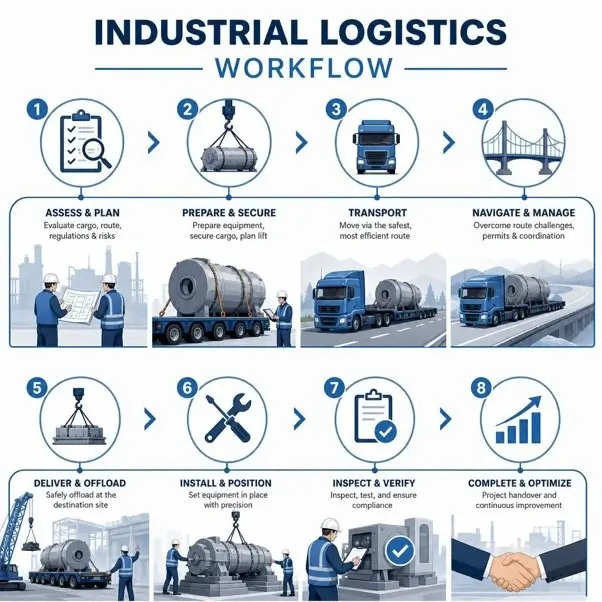
Beyond the transport itself, the safe and secure handling of industrial loads often requires specialized rigging and millwright services. These services are critical for the initial loading, securement, and final offloading and placement of heavy and sensitive equipment.
Precision rigging involves the use of specialized lifting equipment such such as cranes, gantry systems, and hydraulic jacking and sliding systems, combined with expert planning, to safely lift, move, and position heavy machinery. This is particularly vital when dealing with delicate components or operating within confined spaces, where even a slight miscalculation can lead to significant damage or safety hazards. Riggers must possess extensive training and experience, often working with engineering teams to develop detailed lift plans that account for weight distribution, center of gravity, and structural integrity.
The securement of cargo for transit is equally important. Industrial loads are often lashed, chained, and blocked onto trailers using methods far more robust than those used for standard freight, ensuring they remain stable and secure throughout the journey, regardless of road conditions. Upon arrival, millwright services come into play, handling the precise placement, alignment, and often the assembly or disassembly of machinery. This can involve anything from setting a new production line to relocating an entire factory. The meticulous planning required for these operations is paramount to their success. To understand the depth of planning involved in such operations, reading Machine Rigging Millwright Services: Why Informative Planning Is Essential provides invaluable insights into the critical role of foresight and expertise.
Technological Innovations Transforming the Sector
The industrial transport sector, traditionally reliant on brute force and experience, is increasingly being reshaped by technological innovations. These advancements are not only enhancing efficiency and safety but also paving the way for more sustainable practices. From sophisticated planning software to advanced equipment, technology is driving significant evolution in how heavy and oversized loads are managed.
One of the most impactful innovations is in route optimization. Advanced software uses real-time data, including traffic conditions, weather forecasts, infrastructure limitations (like bridge clearances and weight limits), and permitting requirements, to calculate the most efficient and safest routes. This reduces transit times, fuel consumption, and the likelihood of costly delays or unforeseen obstacles. Coupled with GPS tracking and telematics, fleet managers can monitor shipments in real-time, providing greater visibility and control over complex movements.
Advanced rigging techniques and equipment are also transforming operations. This includes remote-controlled gantry systems, hydraulic platforms, and specialized lifting tools that enhance precision and reduce the need for manual intervention in hazardous situations. These technologies improve safety by keeping personnel out of harm's way and increase efficiency by allowing for faster, more accurate positioning of heavy components. Furthermore, the development of specialized protective coverings, such as Australian industrial transport tarps, ensures that valuable cargo is shielded from environmental elements and damage during transit, regardless of its size or destination.
The push towards sustainable fleets is another major trend. Manufacturers are developing more fuel-efficient heavy-duty trucks, and there's a growing interest in alternative fuel sources, including electric and hydrogen-powered vehicles, for certain applications. While fully electric heavy-haul trucks are still nascent, hybrid technologies and improved engine designs are already contributing to reduced emissions and lower operating costs.
The Role of Automation and Sustainable Industrial Transport
Automation and sustainability are becoming intertwined forces shaping the future of industrial transport. The sector is actively exploring ways to reduce its environmental footprint while simultaneously improving operational efficiency through smart technologies.
In terms of sustainability, many industrial transport companies are adopting stringent environmental standards. For example, a significant portion of commercial vehicle fleets are now Euro6 compliant, meeting strict European emission standards that significantly reduce nitrogen oxides and particulate matter. Furthermore, operational adjustments like speed limiting all commercial vehicles to 62 mph (100 kph) are common practices to reduce fuel consumption and emissions.
The integration of electric or LPG-powered lifting equipment, such as forklifts and gantry cranes, for loading, unloading, and internal movements, is another step towards greener operations. These machines produce zero or minimal emissions, making them ideal for indoor use or in environmentally sensitive areas.
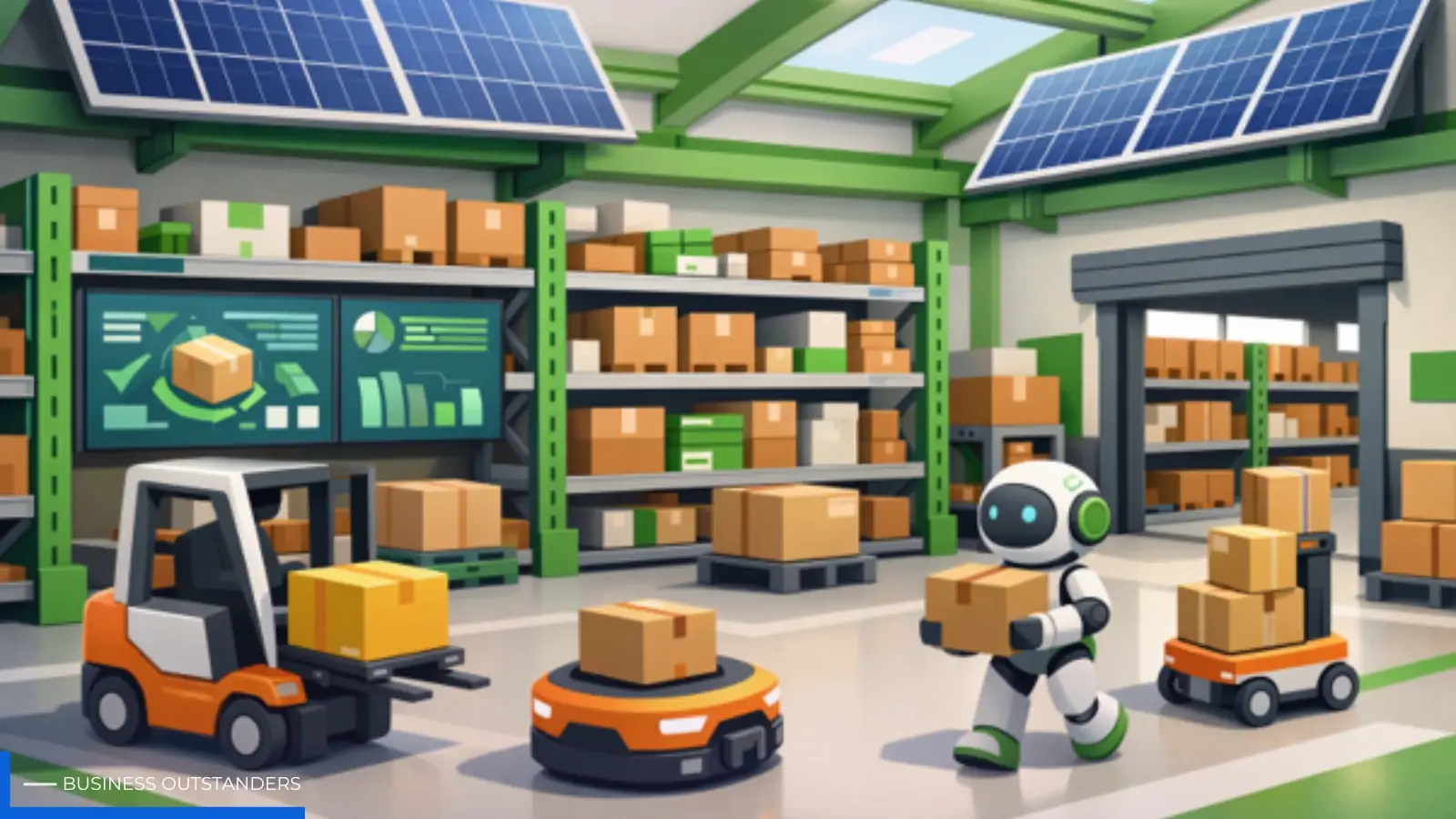
Automation is also making inroads, particularly in intralogistics – the internal movement of materials within a facility. Systems like the Industry Train load train exemplify this trend. These modular load carrier systems are designed for safe and efficient internal material flow, often integrating with existing production lines and warehousing systems. They can operate autonomously or semi-autonomously, optimizing routes, reducing manual labor, and enhancing safety within industrial complexes. This kind of automation streamlines operations, minimizes human error, and contributes to a more sustainable and productive industrial environment.
Policy, Advocacy, and the American Trucking Associations (ATA)
Industry associations play a crucial role in shaping the landscape of industrial transport, advocating for policies that support growth, safety, and innovation. The American Trucking Associations (ATA) stands as a leading voice for the entire U.S. trucking industry, including its specialized industrial transport segment.
The ATA actively engages with lawmakers on Capitol Hill, pushing for legislation that addresses critical industry needs. Their advocacy efforts cover a wide range of issues, from infrastructure funding to regulatory reforms. For instance, the proposed House FY27 Transportation Appropriations bill includes a significant $200 million for truck parking and other industry priorities, a direct result of such advocacy. Adequate truck parking is a persistent challenge that impacts driver safety, hours of service compliance, and overall supply chain efficiency.
The ATA also provides vital economic forecasts and research. Their U.S. Freight Transportation Forecast projects freight volumes to grow by an impressive 22% by 2035. This forecast underscores the increasing demand for all forms of freight, including specialized industrial transport, and highlights the need for continued investment in infrastructure and workforce development. By providing data-driven insights, the ATA helps policymakers and industry stakeholders make informed decisions about future planning and investment.
Beyond policy, the ATA fosters innovation by promoting best practices, technology adoption, and workforce development initiatives. They host conferences, publish studies, and facilitate collaboration among members to address common challenges. Their role is indispensable in ensuring that the industrial transport sector remains robust, compliant, and capable of meeting the evolving demands of the economy. Furthermore, they support advancements in cargo protection, recognizing the importance of durable and reliable coverings. This includes advocating for standards related to materials like heavy-duty transport covers, which are essential for protecting valuable industrial equipment during transit.
Workforce Management and Economic Impacts
The industrial transport sector, despite its technological advancements, remains heavily reliant on a skilled and dedicated workforce. Managing these human resources, particularly in the face of persistent challenges like driver shortages, is critical to the industry's sustained success.
The driver shortage is a perennial issue plaguing the entire trucking industry, and industrial transport is no exception. In fact, the problem is often exacerbated in this specialized niche, as industrial transport drivers require additional certifications, training, and experience beyond a standard Commercial Driver's License (CDL). They must be proficient in handling oversized loads, navigating complex routes, and understanding the nuances of specialized equipment. This demand for highly skilled professionals makes recruitment and retention particularly challenging.
To combat this, companies are investing heavily in specialized training programs that go beyond basic CDL requirements. These programs often include training in heavy haul operations, hazardous materials handling, defensive driving for oversized vehicles, and the operation of specific rigging and loading equipment. Emphasizing a positive work environment, competitive compensation, and opportunities for professional development are also key strategies for attracting and retaining talent. For those interested in a career in this vital sector, exploring options like Truck Driving Jobs in Dallas, TX - Industrial Transport Services can provide a pathway into specialized industrial logistics.
Supply Chain and Manufacturing Contributions
The reliable and efficient operation of industrial transport has profound economic and supply chain impacts, serving as a critical enabler for manufacturing, energy, and infrastructure projects. Without specialized transport, the movement of large-scale industrial components, from factory to installation site, would be impossible, bringing major projects to a halt.
In manufacturing, industrial transport facilitates everything from the delivery of raw materials for large-scale production to the relocation of entire factory facilities. When a company decides to move its operations, the complex process of dismantling, transporting, and reassembling machinery is entirely dependent on specialized logistics providers. This capability for plant commissioning and relocation allows businesses to optimize their operations, access new markets, and respond to economic shifts, driving economic growth and creating jobs.
For the energy sector, industrial transport is indispensable for the construction and maintenance of power plants, oil refineries, and renewable energy installations. The massive components of wind turbines, solar arrays, and nuclear reactors require expert handling and precise delivery. Similarly, major infrastructure projects, such as bridge construction, tunnel boring, and large-scale public works, rely on industrial transport for the movement of heavy structural elements and construction machinery.
The U.S. trucking industry, which includes industrial transport, moves approximately 72.6% of the nation’s freight by weight, underscoring its foundational role in the national economy. The efficiency and reliability of these services directly impact project timelines, costs, and overall productivity across multiple sectors. Delays in industrial transport can ripple through the supply chain, causing significant financial losses and project setbacks. Therefore, investing in and supporting this sector is an investment in the broader economic health and competitiveness of the nation.
Here’s a comparison highlighting the key differences between standard freight and industrial transport:
Feature Standard Freight Industrial Transport Cargo Type Packaged goods, consumer products, general cargo Oversized, overweight, high-value, sensitive machinery Equipment Used Standard dry vans, reefers, flatbeds Multi-axle trailers, lowboys, steerable dollies, modular transporters Route Planning Standard routes, GPS navigation Detailed route surveys, infrastructure analysis, utility coordination Permitting Minimal, standard commercial permits Extensive, multi-jurisdictional oversized/overweight permits Loading/Unloading Forklifts, pallet jacks, standard docks Precision rigging, cranes, gantry systems, hydraulic jacking Driver Skill CDL required, general driving experience Specialized CDL endorsements, extensive heavy haul experience, safety training Risk Profile Moderate, cargo insurance High, specialized insurance, extensive risk mitigation plans Project Timeline Days to weeks Weeks to months (planning and execution) Economic Impact Consumer goods supply, retail logistics Infrastructure, manufacturing, energy sector enablement.
Frequently Asked Questions about Industrial Transport
As industrial transport continues to evolve, many questions arise regarding its operational complexities, regulatory landscape, and future trajectory. Here, we address some common inquiries that shed light on this specialized sector.
What certifications are required for transporting industrial cargo?
Transporting industrial cargo, especially oversized, overweight, or hazardous materials, demands a range of specialized certifications beyond a standard Commercial Driver's License (CDL). Primarily, carriers and drivers must adhere to U.S. Department of Transportation (D.O.T.) certification requirements, which encompass vehicle safety standards, driver hours of service, and general operational compliance. For cargo related to national security or sensitive government projects, adherence to Department of Defense (D.O.D.) standards is mandatory. This often involves rigorous security clearances, specialized equipment, and highly specific handling protocols. Additionally, drivers typically require specific CDL endorsements, such as those for hazardous materials (HazMat) or double/triple trailers, depending on the cargo. Many operations also necessitate specialized training in areas like heavy haul operations, rigging, load securement, and emergency procedures, often provided by industry-specific organizations or in-house programs.
How do logistics providers plan routes for oversized loads?
Planning routes for oversized loads is a highly intricate process that begins long before a wheel turns. Logistics providers undertake comprehensive route surveys, which involve physically inspecting potential routes to identify and document all possible obstructions. This includes checking bridge heights and load capacities, tunnel clearances, road widths, overhead utility lines, and potential traffic bottlenecks. Based on these surveys, detailed engineering plans are developed.
Crucially, extensive permit acquisition is required from every state, county, and municipality through which the load will pass. Each jurisdiction has its own regulations, fees, and processing times for oversized/overweight permits. Furthermore, utility coordination is a significant aspect, as power companies, telecommunication providers, and other utilities may need to temporarily raise or remove lines to allow for the safe passage of exceptionally tall loads. This multi-layered planning ensures that the route is not only feasible but also compliant with all local, state, and federal regulations, minimizing risks and avoiding costly delays.
What is the projected growth for the industrial transport sector by 2035?
The outlook for the industrial transport sector through 2035 is robust, driven by continued economic expansion, infrastructure development, and manufacturing growth. According to the ATA U.S. Freight Transportation Forecast, overall freight volumes are projected to grow by 22% by 2035. This significant increase will undoubtedly translate into heightened demand for specialized industrial transport services, as large-scale projects in energy, manufacturing, and infrastructure continue to proliferate.
Key drivers include the ongoing modernization of energy grids, the construction of new data centers, the expansion of manufacturing capabilities (particularly in sectors like electric vehicles and semiconductors), and major government-funded infrastructure initiatives. These projects inherently require the movement of oversized and heavy components, ensuring a steady demand for specialized carriers. The sector is also expected to benefit from technological advancements that improve efficiency and sustainability, further solidifying its critical role in the national and global supply chains.
Conclusion
As we look towards the horizon of 2035, the industrial transport sector stands as an indispensable pillar of global commerce and infrastructure. From the precision movement of nuclear components to the seamless relocation of entire manufacturing facilities, this specialized field ensures that the foundational elements of our modern world are where they need to be, when they need to be there. The journey of industrial transport is one of continuous evolution, marked by an unwavering commitment to safety, an embrace of technological innovation, and a strategic approach to overcoming complex logistical challenges.
The industry's future outlook is bright, fueled by projected growth in freight volumes and ongoing investment in critical infrastructure. However, this growth is not without its demands. Strategic planning will be paramount, particularly in addressing workforce needs like driver shortages and ensuring that specialized training keeps pace with technological advancements. Operational safety and stringent regulatory compliance will remain non-negotiable, guiding every decision and action.
Industrial transport is more than just moving heavy objects; it's about enabling progress, supporting economic vitality, and building the future. As technology advances and global supply chains become more interconnected, the precision, expertise, and reliability offered by specialized industrial transport services will only grow in importance. For complex logistical needs and bespoke solutions that drive progress, engaging in Special Projects with experienced partners is the strategic choice for industries worldwide.
Business Outstanders brings you sharp insights on tech, business, entrepreneurship, law, crypto, and more. We uncover what’s next. Stay updated, sign up for our newsletter and be part of the future!