We rarely think about them. They don't move, make noise, or have screens or buttons. Yet quietly, in factories, hospitals, data centers, automobiles, and HVAC systems worldwide, the humble air temperature sensor is working around the clock—keeping systems safe, efficient, and within tolerance.
Understanding what these devices do, how they work, and why they matter is increasingly relevant not just for engineers, but for business leaders and operations managers who depend on accurate environmental data to make better decisions.
What Is an Air Temperature Sensor?
An air temperature sensor is a device that measures the temperature of the surrounding air and converts that measurement into a readable signal—typically an electrical output that a control system, display, or data logger can interpret.
At its most fundamental level, the sensor relies on a physical property that changes predictably with temperature. The most common types include:
- Thermistors—resistors whose electrical resistance changes with temperature. They're highly sensitive and commonly used in precision applications.
- RTDs (Resistance Temperature Detectors)—use pure metals (often platinum) to measure changes in resistance. Known for stability and accuracy over wide ranges.
- Thermocouples—generate a small voltage based on the temperature difference between two metal junctions. Rugged and capable of measuring extreme temperatures.
- Semiconductor-based sensors—integrated circuit devices that output a linear voltage or digital signal, often used in consumer electronics and HVAC systems.
Each type has its own sweet spot: accuracy, cost, response time, operating range, and durability all vary significantly between technologies.
Where Air Temperature Sensors Are Used
From factory floors to hospital wards, air temperature sensors are deployed across a remarkable range of environments—each with its own demands for accuracy, durability, and response time. The applications below illustrate just how central temperature sensing has become to modern operations, and why choosing the right sensor for each context matters.
Automotive Systems
Modern vehicles contain dozens of sensors, and temperature is one of the most critical variables to monitor. Air temperature sensors help manage engine intake, cabin climate control, battery thermal management in EVs, and exhaust systems. Incorrect temperature readings in an engine control unit can lead to poor fuel efficiency, increased emissions, or engine damage.
In electric vehicles, especially, battery temperature management has become a major engineering focus. A pack that gets too hot degrades faster and poses safety risks. One that's too cold delivers reduced range and performance. Sensors feeding real-time data into the battery management system (BMS) make the difference between a safe, long-lasting battery and a compromised one.
HVAC and Building Automation
Heating, ventilation, and air conditioning systems rely on accurate air temperature sensing to maintain comfort and energy efficiency. A well-calibrated sensor ensures the system responds to actual conditions rather than running on fixed timers or guesswork.
In commercial buildings, the stakes are even higher. Data from temperature sensors feeds into building management systems (BMS) that control energy use across entire floors or campuses. Overheating a server room by even a few degrees can cause equipment failure. Under-cooling a pharmaceutical storage area can compromise product integrity.
Smart building technology—including automated blinds, zoned heating, and demand-based ventilation—all depends on reliable temperature inputs.
Medical and Laboratory Environments
In healthcare settings, environmental control is a patient safety issue. Operating rooms, pharmaceutical storage, blood banks, and neonatal units all have strict temperature requirements. Here, sensor drift or failure isn't just a maintenance issue—it can have serious consequences.
Laboratory instruments such as incubators, centrifuges, and PCR machines also incorporate precision temperature sensing to ensure reproducibility of results. Researchers depend on these readings being accurate and consistent.
Agriculture and Food Processing
Temperature monitoring has become integral to precision agriculture. Greenhouses, cold storage facilities, and food processing lines all use air temperature sensors to protect crop yields, extend shelf life, and meet food safety regulations.
HACCP (Hazard Analysis and Critical Control Points) compliance, required in many countries for food manufacturers, specifically mandates monitoring at critical points, which includes ambient temperature in processing and storage areas.
Data Centers and Electronics Cooling
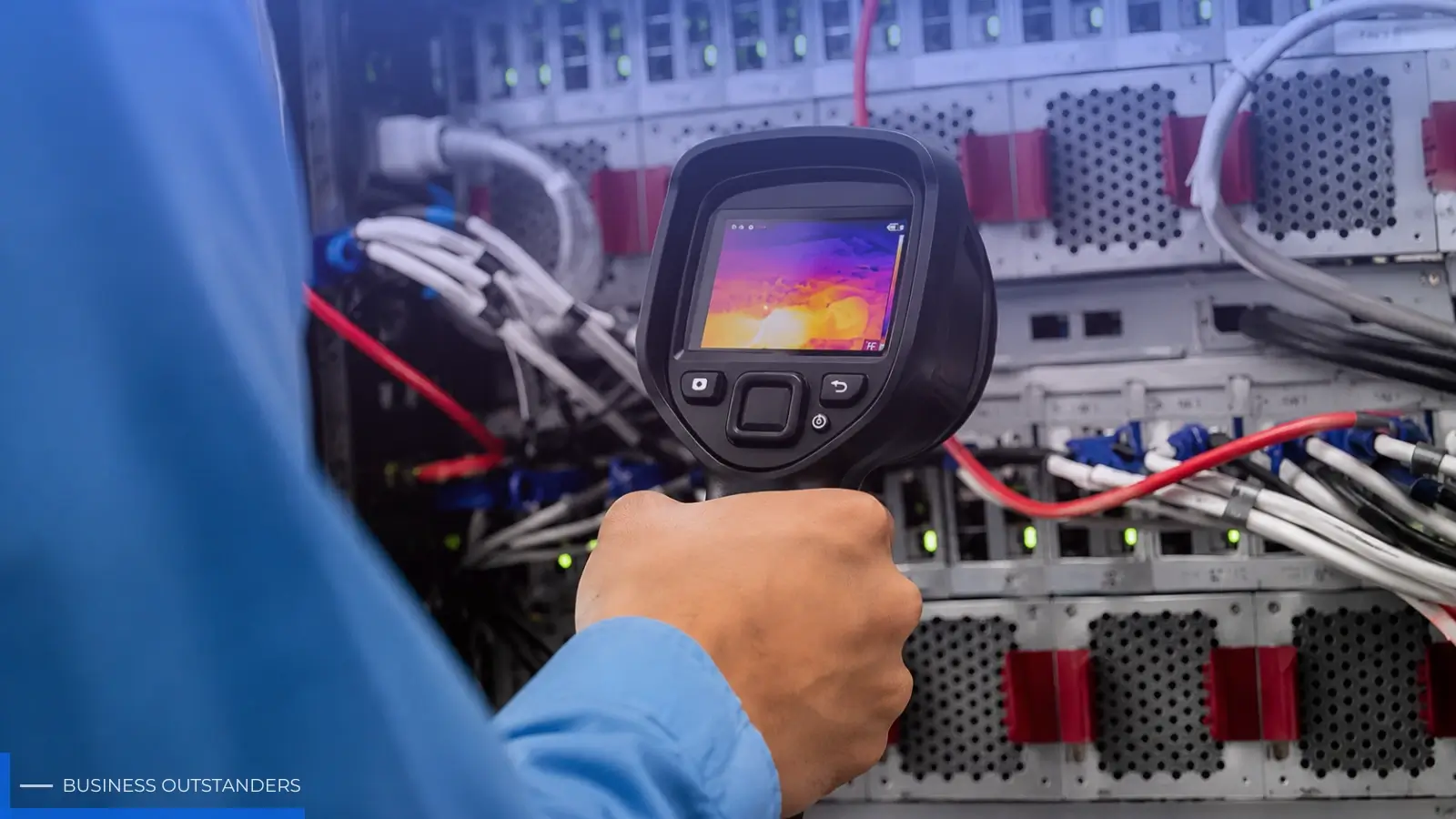
Servers generate enormous heat. Modern data centers are essentially high-stakes thermal management problems. Air temperature sensors help monitor intake air, exhaust air, and hotspots at the rack level. When temperatures rise beyond set thresholds, cooling systems ramp up and alerts are triggered before hardware failures can occur.
With energy costs being a major operational expense, temperature data is also used to optimize cooling efficiency—reducing costs without compromising uptime.
What Makes a Good Air Temperature Sensor?
Not all sensors are created equal. Choosing the right one for an application involves evaluating several key characteristics:
Accuracy and Repeatability
Accuracy refers to how close the measurement is to the true value. Repeatability means getting the same result when measuring the same temperature multiple times. Both matter enormously in precision applications.
Response Time
Some applications need a sensor that reacts in milliseconds. Others can tolerate a slower response. Sensor mass, encapsulation, and the thermal conductivity of the materials involved influence response time.
Operating Range
A sensor designed for HVAC use might be calibrated for -20°C to 60°C. One in an industrial kiln may need to handle 1000°C or more. Selecting a sensor outside its rated range leads to inaccurate readings—and potentially a damaged or failed sensor.
Environmental Durability
Is the sensor exposed to moisture, vibration, chemicals, or electromagnetic interference? Ingress protection ratings, robust connectors, and appropriate housing materials all play a role in ensuring longevity in harsh environments.
Output Type
Analog sensors output a voltage or current that varies with temperature. Digital sensors communicate via protocols like I²C, SPI, or one-wire. The right choice depends on the control system and the distance between the sensor and receiver.
The Growing Importance of Calibration and Drift
Even the best air temperature sensor isn't immune to drift—a gradual change in output over time due to aging of components, contamination, mechanical stress, or repeated thermal cycling.
For critical applications, periodic calibration against a traceable standard is not optional—it's a regulatory and safety requirement. Many industries, including aerospace, pharmaceuticals, and defense, mandate documented calibration schedules.
Calibration doesn't always mean a sensor is "wrong." It's a process of determining how much drift has occurred and adjusting readings—or replacing the sensor if the drift exceeds acceptable limits.
Industry Trends: Smarter, Smaller, More Connected
Integration and connectivity define the next generation of air temperature sensors. Several trends are reshaping the landscape:
Wireless Sensing
IoT-enabled temperature sensors transmit data wirelessly, eliminating cabling costs and enabling monitoring in locations where running wires is impractical. Battery life and communication range continue to improve with each product generation.
Multi-Parameter Sensing
Combining temperature with humidity, pressure, or CO₂ in a single device reduces cost and simplifies installation. These combo sensors are becoming common in smart buildings and agricultural applications.
Edge Processing
Rather than just sending raw data, modern sensors increasingly include onboard processing—filtering noise, averaging readings, detecting anomalies, and only transmitting relevant events. This reduces bandwidth requirements and enables faster local responses.
Miniaturization
As electronics shrink, so do sensors. MEMS (Micro-Electro-Mechanical Systems) technology has enabled temperature sensing in chips so small they can be embedded directly into circuit boards, wearables, and implantable medical devices.
What Businesses Should Know
For operations and procurement teams, a few principles stand out when evaluating air temperature sensing needs:
- An industrial-grade thermocouple is overkill for an office HVAC system. A low-cost thermistor is inadequate for a medical refrigeration unit. Match the sensor to the application.
- A cheaper sensor that drifts quickly or requires frequent replacement can cost more over time than a higher-quality option with a longer service life.
- In food, regulation often mandates sensor accuracy and documentation for the pharma, medical, and aerospace sectors. Know the requirements before specifying hardware.
- When temperature control is critical, dual sensors and alarm systems provide a safety net. The cost of a second sensor is minor compared to the cost of a failure.
- As facilities move toward connected, data-driven operations, choosing sensors compatible with existing BMS, SCADA, or IoT platforms can save significant integration work down the line.
Conclusion
The air temperature sensor rarely gets a moment in the spotlight, but it is foundational to the safe and efficient operation of systems we rely on every day. As automation deepens, as electrification expands, and as data-driven operations become the norm across industries, accurate environmental sensing will only grow in strategic importance.
Whether you're designing a next-generation EV thermal management system, upgrading building controls, or ensuring cold chain compliance in food logistics, understanding the principles and options behind air temperature sensing is a worthwhile investment in technical literacy—and ultimately, in the reliability of everything that depends on knowing exactly how warm or cold the surrounding air truly is.
Business Outstanders brings you sharp insights on tech, business, entrepreneurship, law, crypto, and more. We uncover what’s next. Stay updated, sign up for our newsletter and be part of the future!