By Sajid Ullah
Introduction:
Every household needs hot water every day. Hot water is a necessity for every household. Water heating systems that use electricity or gas are more expensive and have a greater environmental impact. Solar water heaters are a sustainable and cost-effective alternative.Solar water heating helps reduce energy usage while providing hot water to your home. Modern solar hot water systems have improved in efficiency, durability, and suitability for use in residential climates.
What is a Solar Water Heater?
Solar water heaters are designed to heat water using the sun's energy, making them an ideal energy-efficient hot water system for modern homes. Solar heating is used to heat water for domestic use instead of electricity or gas.
Solar hot water heaters are typically made up of:
- Solar collectors
- A storage tank
- Pipes and tubing
- Pump or passive circulation system
- A backup heating element
Solar water heaters are used for residential buildings. They can also be installed in homes or businesses with a higher demand for hot water.
Solar Water Heating: How it Works
Solar water heating is efficient and straightforward.
- The solar collectors on the roof are designed to absorb the sunlight.
- The heat collected warms water or a liquid inside the collector.
- Heat exchangers circulate the heated fluid.
- Heat transfer to water in the storage tank.
- Heat water is ready and waiting to be used when required.
Solar water heaters are used in many systems to pre-heat water before it is heated by a conventional heater. This ensures that the water will be available even when there is little sunlight.
Solar Water Heating System Components
1. Solar Collector
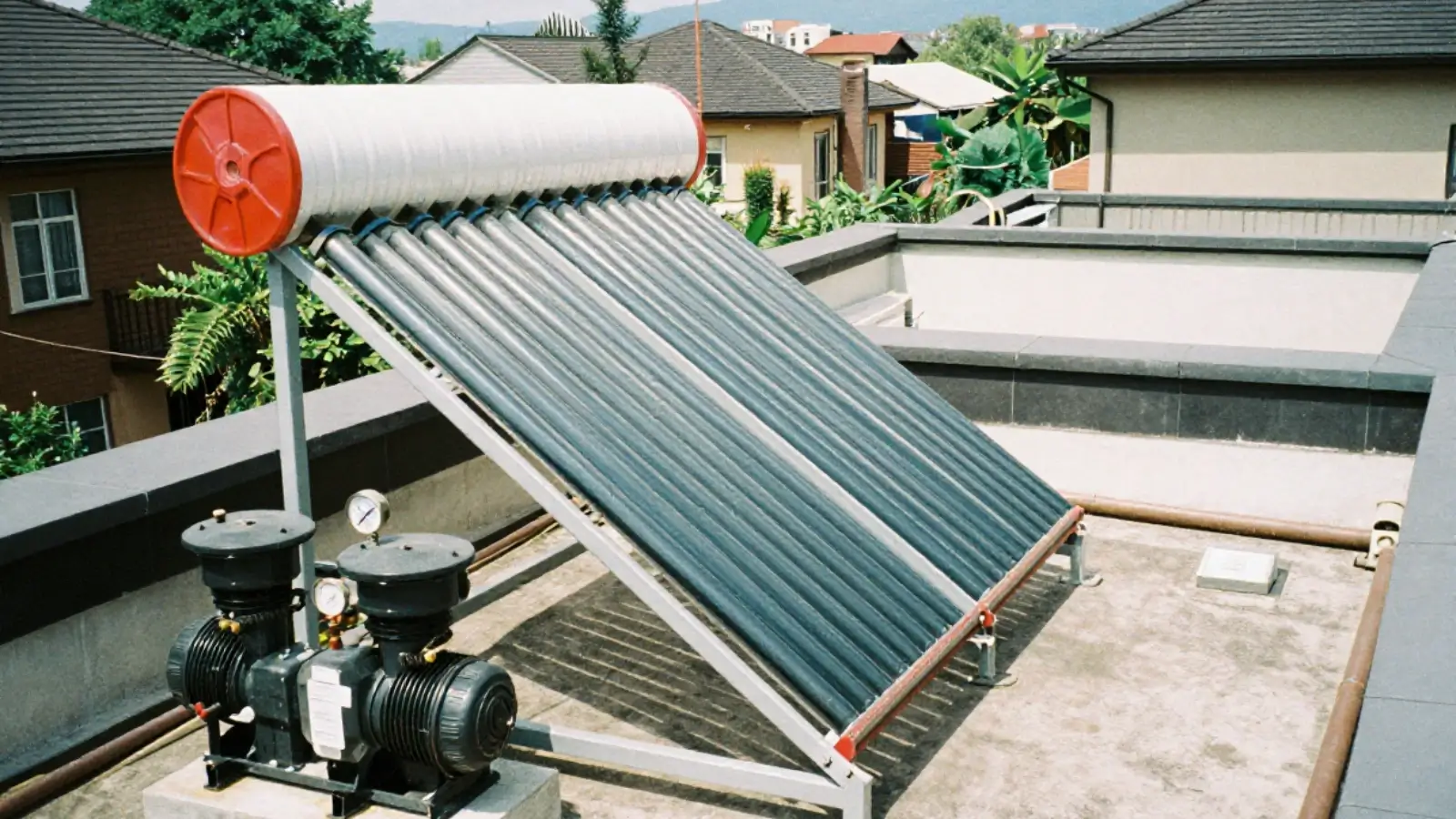
Solar collectors convert solar energy into thermal energy by absorbing solar radiation. Collector types include:
- Flat-plate collectors
- Evacuated tube collectors
2. Storage Tank
The tank holds heated water until needed. Solar storage tanks with sound insulation reduce heat loss and increase efficiency.
3. Pump and Controller
Active systems use a solar controller and pump to circulate fluids between the collectors and the tanks.
4. Pipes and tubing
Insulated pipes and tubing systems are designed to transfer heat efficiently, preventing energy loss.
There Are Many Types of Solar Water Heaters:
Active Solar Water Heating Systems
Active systems require electricity to operate pumps and controllers. Sub-types
- Direct circulation systems
- Direct circulation systems (with antifreeze liquid)
Passive Solar Water Heating Systems
The passive solar water heater relies on gravity and natural convection. These systems:
- Use no electrical components
- Simpler and more cost-effective
- Designed correctly, they can be used in any weather.
Passive vs Active Solar Water Heating
|
Features |
Passive System |
Active System |
|
Pump Required |
No, |
Yes, |
|
Complexity |
Low-cost |
Moderate |
|
Efficiency |
Moderate |
High-quality |
|
Maintenance |
Minimal |
You can also read about our Regular |
|
Climate Adaptability |
Good |
Excellent |
Residential Solar Water Heater Packages
The typical package for a residential home includes:
- Two or more collectors
- Storage tanks of 40 gallons or more are available.
- Insulated piping
- Mounting Hardware
- Warranty and certification
The systems can be designed in the following ways:
- One-tank systems
- Two-tank systems with backup heating
Installing the System and Important Considerations
Installation Steps
- Roof Inspection and Structural Assessment
- Installing the solar collector
- Installing a storage tank
- Plumbing and plumb connections
- Set up of electrical and controllers
- Tests and Insulation of Systems
The Key Factors To Consider
- Roof tilt and orientation
- Local climate and freezing risk
- Available sunlight
- Use of hot water in the home
- Insulation is essential to reduce heat loss.
Installation by a professional contractor is highly recommended to ensure system safety and certification.
Efficiency, performance, and climate suitability
Solar systems are highly efficient and convert solar energy into thermal energy. Modern technology, such as evacuated tube collectors, allows systems to function even in colder areas.
Properly designed systems
- Heat water with less energy
- Supporting heating and cooling efficiency
- Are cost-effective long-term
Solar Water Heater and Conventional Water Heater
|
Aspect |
Solar Water Heater |
Conventional water heater |
|
Energy Source |
Solar energy |
Electricity/Gas |
|
Operating Cost |
Low-cost |
High-quality |
|
Environmental Impact |
Minimal |
High emissions |
|
Reliability |
High with Backup |
High-quality |
|
Utility Dependence |
Low-cost |
High-quality |
Cost, Tax Credit and Long-Term Savings
Solar systems are more affordable for many homeowners who qualify for federal tax credits.
The following benefits are included:
- Reduce your monthly utility bills
- Electricity demand is reduced
- Long-term system lifespan
- Saving money is possible over time
Important Note
Solar water heaters are not meant to replace existing heaters. They work in colaboration with them, reducing energy consumption and improving efficiency all year round.
Conclusion:
Solar water heaters are an efficient and practical solution for the modern household. They also help to reduce energy costs. Solar energy can be used to heat water for homeowners, resulting in reliable hot water and reduced utility bills. Solar water heating systems are an excellent investment for homeowners with the proper installation, climate conditions and quality components.
Like, Share and Subscribe
Subscribe to our blog and share this article if you find it useful. We will continue to provide expert insight on energy-efficient water heating solutions and technologies.
FAQs (Frequently Asked Questions)
1. How long will a solar-powered water heater last you?
With proper maintenance and service, most systems can last between 20 and 25 years.
2. Can a solar-powered water heater be used on cloudy or rainy days?
Yes. If the systems have power backup/ storage ability to compensate for low sun conditions.
3. How much hot water can a solar panel provide?
Small to medium homes can benefit from a standard 40-gallon system.
4. Professional installation is required?
Yes. Installation by a certified contractor ensures safety, efficiency and warranty validity.
Business Outstanders brings you sharp insights on tech, business, entrepreneurship, law, crypto, and more. We uncover what’s next. Stay updated, sign up for our newsletter and be part of the future!