Warehouse space is expensive. Expanding a facility is even more expensive. For many operations managers and plant directors, the challenge is not demand. It is space.
Industrial mezzanines offer a practical way to increase usable square footage without moving locations or expanding the building footprint. Instead of building outward, businesses build upward.
In this guide, we’ll break down what mezzanines are, how they work, what they cost, and when they make sense for growing operations.
What Is an Industrial Mezzanine?
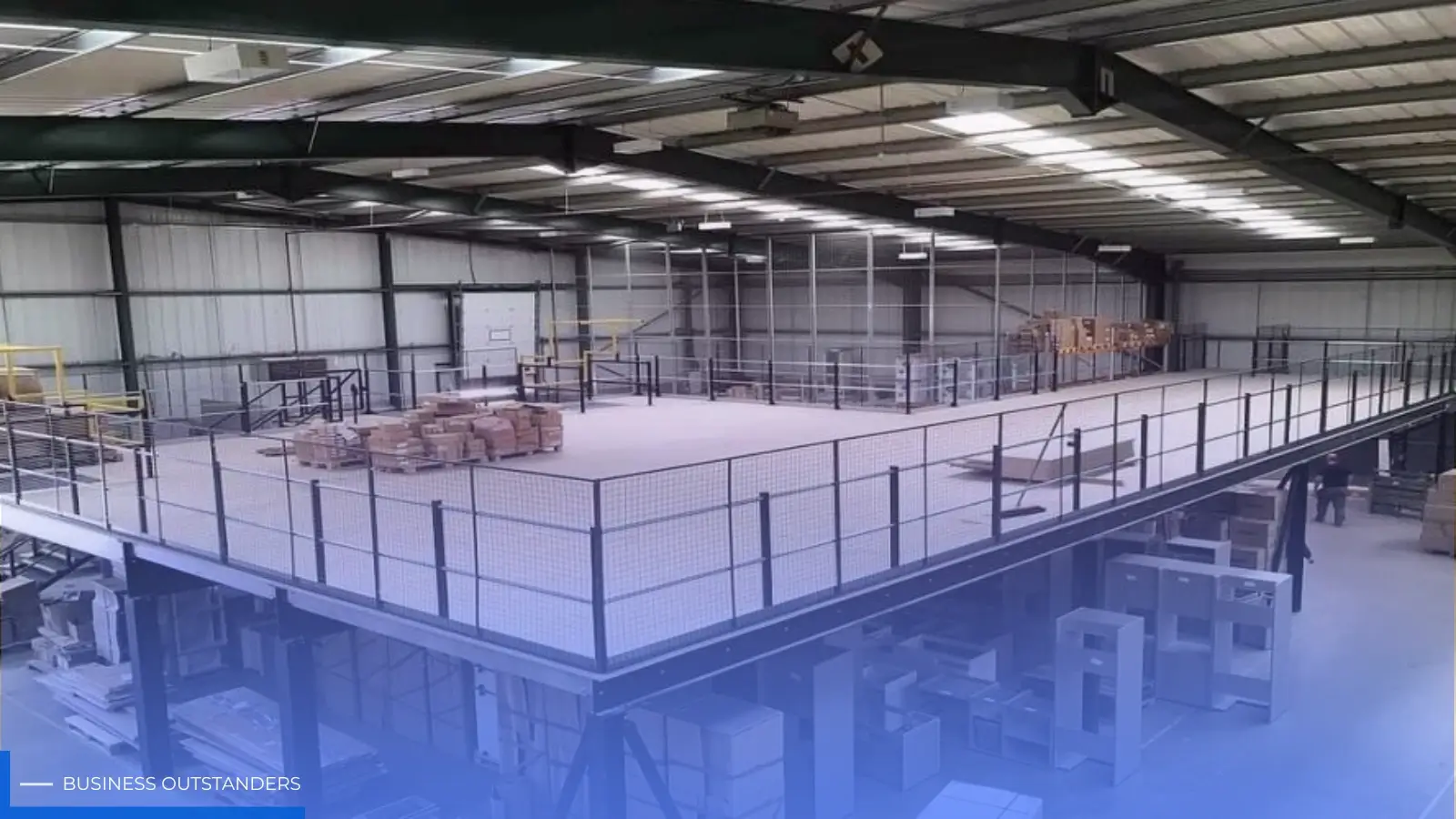
An industrial mezzanine is a raised platform installed between the floor and ceiling of a facility. It creates additional usable space within an existing building.
Unlike permanent structural floors, mezzanines are typically free-standing steel systems that can be installed without major structural modifications.
Common uses include:
Additional storage space
Order picking platforms
Equipment support structures
Production workflow separation
Office space above warehouse floor
Why Businesses Install Warehouse Mezzanine Systems
Most companies consider mezzanines when they face one of these issues:
1. Space Constraints
Inventory is growing, but the building isn’t.
2. Rising Real Estate Costs
Relocating or expanding often costs far more than installing a mezzanine.
3. Operational Inefficiency
Poor vertical space usage leads to cluttered aisles and slower picking times.
Instead of leasing a larger building, many businesses use vertical space that already exists, integrating mezzanine systems with warehouse racking and shelves to maximize storage density and improve organization.
How Much Does a Mezzanine Cost?
This is one of the most common questions.
The cost of steel mezzanines varies depending on:
Size and square footage
Load capacity requirements
Decking type
Stairs, guardrails, and safety features
Engineering complexity
On average, industrial mezzanine systems can range from moderate to significant investment levels depending on structural specifications.
However, compared to:
Facility expansion
New construction
Long-term lease upgrades
Mezzanines often provide a lower total cost of ownership.
Mezzanine Load Requirements: What You Need to Know
Not all mezzanines are built the same.
Load capacity is critical and depends on intended use:
Light storage: lower load requirements
Heavy pallet storage: higher load ratings
Equipment platforms: concentrated load design
Office mezzanines: uniform distributed loads
Engineering teams calculate:
Live load
Dead load
Point load
Deflection tolerance
Failing to properly design for load capacity can create safety risks. This is why custom mezzanine design matters.
Are Mezzanines OSHA Compliant?
Another common concern.
Industrial mezzanines must meet safety and building standards, including:
Guardrail height and strength
Stair design and angle
Handrails and toe boards
Fire protection requirements
Load signage and labeling
OSHA compliance is non-negotiable in industrial environments.
Properly engineered mezzanines are designed to align with local building codes and federal safety regulations.
Mezzanine vs Facility Expansion: A Cost Comparison
Let’s consider a simple scenario.
A distribution center needs 5,000 additional square feet of usable space.
Option 1: Relocate
Lease termination costs
New build-out expenses
Operational downtime
Option 2: Expand Building
Construction permits
Structural changes
Long project timelines
Option 3: Install a Mezzanine
Faster installation
Lower disruption
Use existing footprint
In many cases, mezzanines allow companies to double usable floor area within weeks rather than months.
Key Design Considerations Before Installing a Mezzanine
If you're evaluating mezzanines, consider:
1. Ceiling Height
Clear vertical space determines feasibility.
2. Column Spacing
Open spans may require structural reinforcement.
3. Access Points
Stairs, lifts, and material flow must align with operations.
4. Fire Suppression Systems
Sprinkler adjustments may be required.
5. Workflow Optimization
A mezzanine should improve movement, not complicate it.
The most successful installations are planned around operational efficiency, not just square footage gain.
Real-World Use Case Example
A mid-sized logistics company faced growing e-commerce demand. Inventory turnover increased, but available warehouse space did not.
Instead of relocating, they installed a two-level warehouse mezzanine platform.
Results included:
40% increase in usable storage
Improved picking speed due to organized zones
Reduced clutter on main warehouse floor
Avoided six-figure relocation expense
The mezzanine became a long-term infrastructure upgrade, not a temporary fix.
When Should You Install a Mezzanine?
Consider installation if:
Your warehouse ceiling height exceeds 18–20 feet
You are nearing storage capacity
Leasing additional space is financially inefficient
Expansion timelines are too long
Workflow needs vertical separation
Mezzanines are especially effective for distribution centers, manufacturing facilities, and growing logistics operations.
Final Thoughts: Is a Mezzanine the Right Move?
Industrial mezzanines are not just storage platforms. They are strategic infrastructure investments.
For companies operating in high-cost industrial real estate markets, maximizing vertical space can significantly improve operational efficiency and cost control.
When engineered correctly, mezzanines offer:
Increased capacity
Improved workflow
Long-term ROI
Code-compliant safety
For businesses exploring engineered mezzanine systems or custom steel platforms, understanding design, load requirements, and compliance standards is essential before moving forward.
If vertical expansion is an option in your facility, a mezzanine may be the most practical path to growth without relocation.
Business Outstanders brings you sharp insights on tech, business, entrepreneurship, law, crypto, and more. We uncover what’s next. Stay updated, sign up for our newsletter and be part of the future!