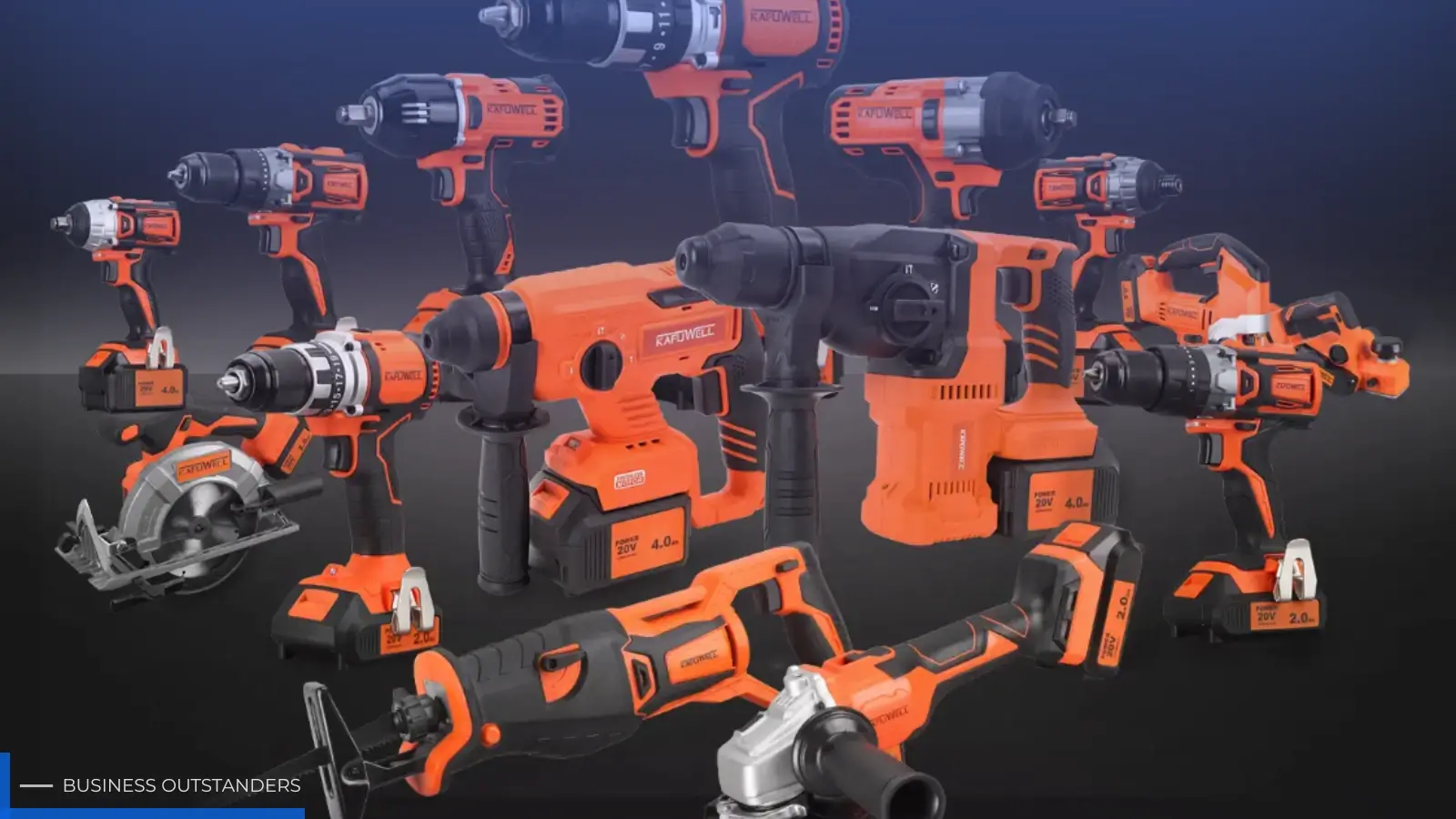
A profitable power tool assortment is not built by carrying the widest possible range. For hardware retailers, the real goal is to stock the right mix of products that can generate stable demand, healthy margins, and repeat purchases over time. The strongest assortments are practical, scalable, and closely matched to the needs of local buyers.
What Makes a Power Tool Assortment Profitable for Hardware Retailers?
Profitability in power tools is about more than sales volume. A tool may sell quickly, but if the margin is too thin, the return rate is high, or the sale does not lead to any follow up purchases, it may contribute far less value than expected.
A profitable assortment usually has three characteristics. First, it includes products with consistent demand that keep traffic flowing. Second, it contains items with enough margin to support sustainable growth. Third, it creates repeat purchase opportunities through batteries, chargers, accessories, consumables, or adjacent tools in the same system.
Retailers also need to plan around real local demand rather than broad assumptions. In some markets, sales are driven mainly by home renovation and repair. In others, contractors, electricians, installers, mechanics, and workshop buyers shape the category. The closer the assortment matches actual customer behavior, the better the sell through and the lower the inventory risk.
Which Power Tool Categories Should Be Included in a Core Assortment?
A core assortment should begin with categories that have broad practical demand across different customer groups.
1. Drills and impact drills as everyday traffic drivers
Cordless drills and impact drills are usually the foundation. They are widely used in installation, maintenance, construction, furniture assembly, and general repair work. For many retailers, these are the products that attract the most regular customer interest and provide a reliable starting point for the category.
2. Angle grinders as versatile essentials
Angle grinders also deserve a place in most core assortments because they serve many common jobsite needs. They are used for cutting, grinding, polishing, and surface preparation, which makes them relevant for buyers in metalworking, construction, maintenance, and renovation.
3. Cutting tools for renovation and fabrication demand
Retailers should also include selected cutting tools based on local demand. Circular saws, reciprocating saws, jigsaws, and cut off tools can all play important roles depending on whether the store mainly serves builders, installers, metal shops, or general users.
4. Garden power tools in suitable markets
In markets with strong outdoor maintenance demand, selected garden power tools can strengthen the assortment. Grass trimmers, hedge trimmers, blowers, and chainsaws can create seasonal sales opportunities and help the store reach a broader customer base.
5. Hand tools and accessories as supporting categories
A profitable power tool assortment should not stand alone. Drill bits, cutting discs, blades, sanding materials, sockets, batteries, chargers, and hand tools often improve basket size and increase the value of each sale. In many cases, these supporting categories are just as important to overall profitability as the main tools themselves.
How Should Retailers Balance Fast Moving Products and Higher Margin Products?
One of the biggest assortment planning mistakes is focusing too heavily on only one kind of product. A healthy assortment needs balance.
1. Entry level products bring customers in
Entry level tools often move faster because they solve basic needs and are easier for price sensitive buyers to accept. They help generate store traffic and can play an important role in attracting first time customers.
2. Mid range products often create the strongest commercial balance
For many retailers, mid range products offer the best combination of price acceptance, feature value, and margin structure. They tend to provide stronger profitability than entry level products while still remaining accessible to a wide range of buyers.
3. Industrial grade tools attract trade demand
Industrial grade tools may sell in lower volume, but they can bring in more serious trade customers who care about durability, output, battery performance, and long term jobsite reliability. These products can also lift average order value and strengthen the store's professional image.
4. A healthy assortment should not rely on one price tier
If a retailer only stocks low priced tools, margin pressure can become severe. If it only stocks premium tools, turnover may slow. The strongest assortment usually includes a practical opening price point, a commercially strong mid range, and a selective professional tier.
How Many SKUs Should a Hardware Retailer Start With?
The right SKU count depends on store size, purchasing capacity, and customer type, but more is not always better.
If the assortment is too broad from the start, slow moving inventory ties up cash and makes replenishment more difficult to manage. If the assortment is too narrow, the retailer may miss key use cases and lose upsell opportunities.
For many small and mid sized hardware retailers, the better starting point is a focused assortment built around proven demand categories. This means carrying enough depth to cover common needs while avoiding unnecessary duplication across similar models.
Expansion should be based on actual sales performance. Once a product family has shown stable sell through, that is the right time to deepen the range with related models, kits, or accessories.
Why Does Battery Platform Strategy Matter in Assortment Planning?
For cordless tools, battery platform strategy is not just a technical issue. It is also a retail growth strategy.
A shared battery system increases repeat purchase potential. Once customers own one battery and charger, they are more likely to buy additional compatible tools. This lowers the barrier to future purchases and raises long term customer value.
Battery platform logic also helps retailers simplify the shelf. Instead of carrying multiple disconnected cordless systems, they can build around one ecosystem that is easier to explain, easier to sell, and easier for customers to understand.
When assessing suppliers, retailers should look beyond the first few cordless tools. A strong platform should extend into drills, grinders, impact tools, saws, garden tools, lighting, and other adjacent products. The broader the system, the stronger the long term cross selling and retention potential.
How Can Retailers Reduce Inventory Risk When Adding a New Tool Brand?
Retailers do not need to treat a new brand launch as an all or nothing decision. A more practical approach is to start with core demand SKUs, validate local response, and expand based on real sales evidence.
Mixed opening orders can be especially useful. When retailers can test multiple SKUs in one manageable first order, they gain flexibility without taking on excessive stock pressure. Replenishment speed matters as much as opening price, because faster supply can reduce the need for heavy safety stock and improve cash flow control.
This is also why some suppliers build their dealer programs around practical entry conditions rather than large opening commitments. For example, Kafuwell’s power tool distributor program is built around flexible opening orders, broad product coverage, and dealer support, which are all relevant factors for retailers trying to reduce inventory risk.
Retailers should also remember that a low unit cost does not always mean lower business risk. If delivery is slow, product quality is inconsistent, or after sales support is weak, the cost of holding and managing the assortment can rise quickly. A manageable opening structure, steady replenishment, and reliable supplier coordination often matter more than headline pricing alone.
What Support Should Retailers Expect from a Power Tool Supplier?
A strong assortment becomes much easier to grow when the supplier relationship goes beyond shipment alone.
Product consistency should come first. Retailers need confidence that tool performance, specifications, packaging, and availability will remain stable over time. If product quality fluctuates, sell through becomes harder and customer trust can erode quickly.
Marketing support also matters. Product catalogs, display materials, posters, shelf presentation assets, and basic sales tools can improve how the brand performs in store. Training is equally important, because staff sell better when they understand product differences, use cases, and battery compatibility.
After sales support is another key factor. Warranty handling, spare parts availability, and service response can strongly influence whether customers buy the same brand again.
In practice, this is where suppliers begin to separate clearly from one another. Retailers often need more than a product catalog. They need a reliable power tool supplier that can support day to day selling, category development, and long term channel growth.
How Can Retailers Build a Product Mix That Encourages Repeat Purchases?
The most profitable assortments are rarely built around one time sales. They are built around connected product demand.
Cordless tools are especially useful in this respect. A customer who buys a drill today may return later for an impact wrench, grinder, reciprocating saw, or garden tool within the same battery family.
Accessories and consumables also support repeat business. Blades, discs, drill bits, sanding materials, replacement batteries, and chargers may be lower ticket items, but they increase store traffic and add to basket value over time.
When retailers structure the assortment as a product family instead of a collection of unrelated tools, cross selling becomes easier and long term customer retention improves.
What Mistakes Do Hardware Retailers Make When Planning a Power Tool Assortment?
Many assortment problems come from short term thinking.
One common mistake is choosing products based only on low purchase cost. Low cost may help at the buying stage, but if the products have unstable quality, weak packaging, poor performance, or limited after sales support, the total commercial cost can become much higher.
Another mistake is carrying too many slow moving models. Assortment depth only works when demand has already been proven. Otherwise, it creates unnecessary stock pressure and makes category management more difficult.
Some retailers also underestimate local trade demand. Contractors, installers, workshop operators, and service professionals often influence which tools move most consistently. If the assortment is built only around casual consumer demand, important sales opportunities may be missed.
A final mistake is overlooking spare parts and service needs. In power tools, the after sales experience often shapes brand reputation as much as the tool itself.
How Should Retailers Expand Their Assortment Over Time?
The best assortment strategy is progressive.
Start with the categories that solve the most common customer needs. Then track what sells steadily, what leads to repeat purchases, and what drives accessory attachment. Once the core range proves itself, retailers can expand into adjacent categories that fit the same customer base.
For example, a retailer that performs well with drills, grinders, and impact tools may later expand into saws, rotary hammers, work lights, or outdoor power equipment. Expansion should follow sales patterns and customer demand rather than guesswork.
Store level feedback is also valuable. Customer questions, staff observations, repeat purchase behavior, and service issues all provide useful signals about where the assortment should grow and where it should remain tight.
Final Thoughts
A profitable core power tool assortment is built on demand, margin, and repeat purchase potential. Hardware retailers do not need the biggest range. They need the right range, supported by the right supplier and aligned with the real needs of their market.
When the assortment is structured around core demand categories, balanced price coverage, scalable battery platforms, and reliable replenishment, it becomes much easier to grow sales without losing control of inventory. That is what turns a power tool section into a real profit driver. This is also where broader retail planning decisions come into play, especially when considering retail marketing strategies, as assortment strength and marketing effectiveness often work hand in hand to drive consistent sales growth.
Business Outstanders brings you sharp insights on tech, business, entrepreneurship, law, crypto, and more. We uncover what’s next. Stay updated, sign up for our newsletter and be part of the future!