Defining Industrial Manufacturing and Its Economic Impact
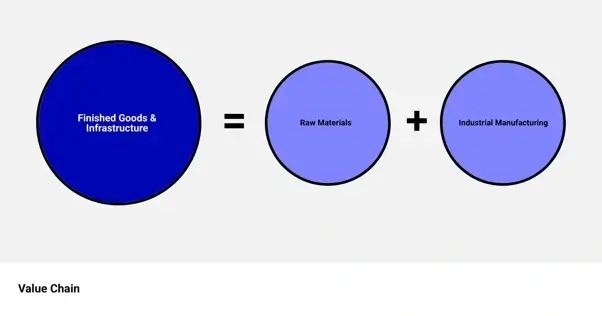
Industrial manufacturing is the foundational process by which raw materials are transformed into finished goods on a large scale, primarily for use by other industries rather than direct consumer consumption. This sector is the backbone of the global economy, providing the machinery, components, and infrastructure necessary for virtually every other industry to function. It involves complex processes, advanced technologies, and a highly skilled workforce, operating at a scale that differentiates it significantly from smaller-scale production.
At its core, industrial manufacturing is about efficiency, precision, and converting basic resources into high-value products. It represents the secondary sector of the economy, taking inputs from the primary sector (raw materials) and preparing them for the tertiary sector (services) or for further manufacturing. This intricate web of activity creates immense value, driving innovation and economic growth worldwide.
Industrial Manufacturing vs. General Production
While all manufacturing involves creating goods, industrial manufacturing distinguishes itself through its focus and scale. General production might encompass a wide array of consumer goods, from clothing to electronics, often produced in high volumes for direct retail. Industrial manufacturing, however, is dedicated to producing items that are themselves used in production or infrastructure. This includes heavy equipment, specialized machinery, intricate tooling, and industrial components that are critical inputs for other businesses.
The products of industrial manufacturing are often robust, engineered for durability and performance in demanding environments. They range from standard equipment, such as pumps and valves, to highly custom-built machinery designed for specific applications. The complexity and precision required for these products often necessitate advanced manufacturing techniques and a deep understanding of engineering principles. Regions like Michigan, for example, have long been at the forefront of advanced manufacturing initiatives that showcase the sector's commitment to innovation and specialized production.
Economic Contributions and Workforce Requirements
The economic impact of industrial manufacturing is profound and far-reaching. It is a major driver of job creation, capital investment, and export revenue. Consider the robust manufacturing landscape in Kentucky, which, in the past five years alone, has seen approximately 800 facility location or expansion projects. These initiatives represent a staggering $28 billion in capital investment and have generated over 37,000 additional jobs. By 2024, Kentucky-made products accounted for a record $47.7 billion in exports globally, underscoring the sector's international significance. With over 6,000 manufacturing-related facilities and more than 250,000 Kentuckians employed in the sector, it's clear that industrial manufacturing is a cornerstone of regional and national economies.
This sector demands a diverse, skilled workforce, including engineers and designers, technicians, and machine operators. The continuous evolution of technology means that skills requirements are constantly changing, emphasizing the need for ongoing training and development. Leading manufacturing companies, such as those found in hubs like Michigan, are always seeking talent to sustain their operations and drive future growth. The industrial manufacturing sector not only produces goods but also fosters a culture of innovation and contributes significantly to a nation's economic resilience and global competitiveness.
The Historical Evolution Toward Industry 4.0
The journey of industrial manufacturing is a testament to human ingenuity, evolving from rudimentary craft to highly automated, interconnected systems. This progression has fundamentally reshaped societies, economies, and the very nature of work.
From the pre-industrial era, where skilled artisans crafted goods by hand, to the transformative Industrial Revolution, the sector has continually adapted. The introduction of innovations like the steam engine and the concept of interchangeable parts laid the groundwork for mass production. Visionaries like Henry Ford further revolutionized manufacturing with the assembly line in the early 20th century, dramatically increasing efficiency and output. Today, we stand at the precipice of the digital era, often called Industry 4.0, where the physical and digital realms merge to create smart factories and intelligent production systems. This evolution highlights a constant drive towards greater efficiency, precision, and adaptability, as explored in various industrial manufacturing analyses by industry leaders.
From Manual Labor to Mechanization
Before the Industrial Revolution, manufacturing was largely characterized by the guild system, in which master craftsmen, journeymen, and apprentices produced goods by hand using basic tools. Production was slow, localized, and often expensive. The late 18th century marked a pivotal shift with the advent of the Industrial Revolution, which brought about mechanization. Water and steam power replaced human and animal labor, leading to the development of machine tools capable of higher precision and speed.
The concept of interchangeable parts, pioneered by figures like Eli Whitney, allowed for standardized components that could be easily replaced, simplifying repairs and enabling true mass production. Henry Ford's innovation of the moving assembly line in the early 1900s further refined these principles, dramatically reducing production times and costs, making manufactured goods accessible to a wider population. This era solidified the principles of efficiency and standardization that remain central to industrial manufacturing today.
The Rise of Cyber-Physical Systems
The current phase of industrial manufacturing, known as Industry 4.0, signifies a profound transformation driven by the integration of cyber-physical systems. This paradigm shift fuses physical production processes with digital technologies, creating intelligent, interconnected factories. Smart factories leverage advanced sensors, data analytics, and machine learning to monitor and optimize every stage of production in real-time.
Key components of Industry 4.0 include the Internet of Things (IoT), which connects machines and devices; artificial intelligence (AI), which enables predictive maintenance and process optimization; and cloud computing, which provides the infrastructure for data storage and analysis. This physical-digital fusion allows for unprecedented levels of automation, flexibility, and efficiency, enabling manufacturers to respond rapidly to changing market demands, customize products, and operate with greater sustainability. The result is a highly adaptive and resilient manufacturing ecosystem, poised for continuous innovation.
Core Processes and Technologies in Industrial Manufacturing
Modern industrial manufacturing relies on a sophisticated array of processes and technologies to achieve the precision and scale required for its diverse products. From shaping raw metals to assembling complex machinery, each step is critical.
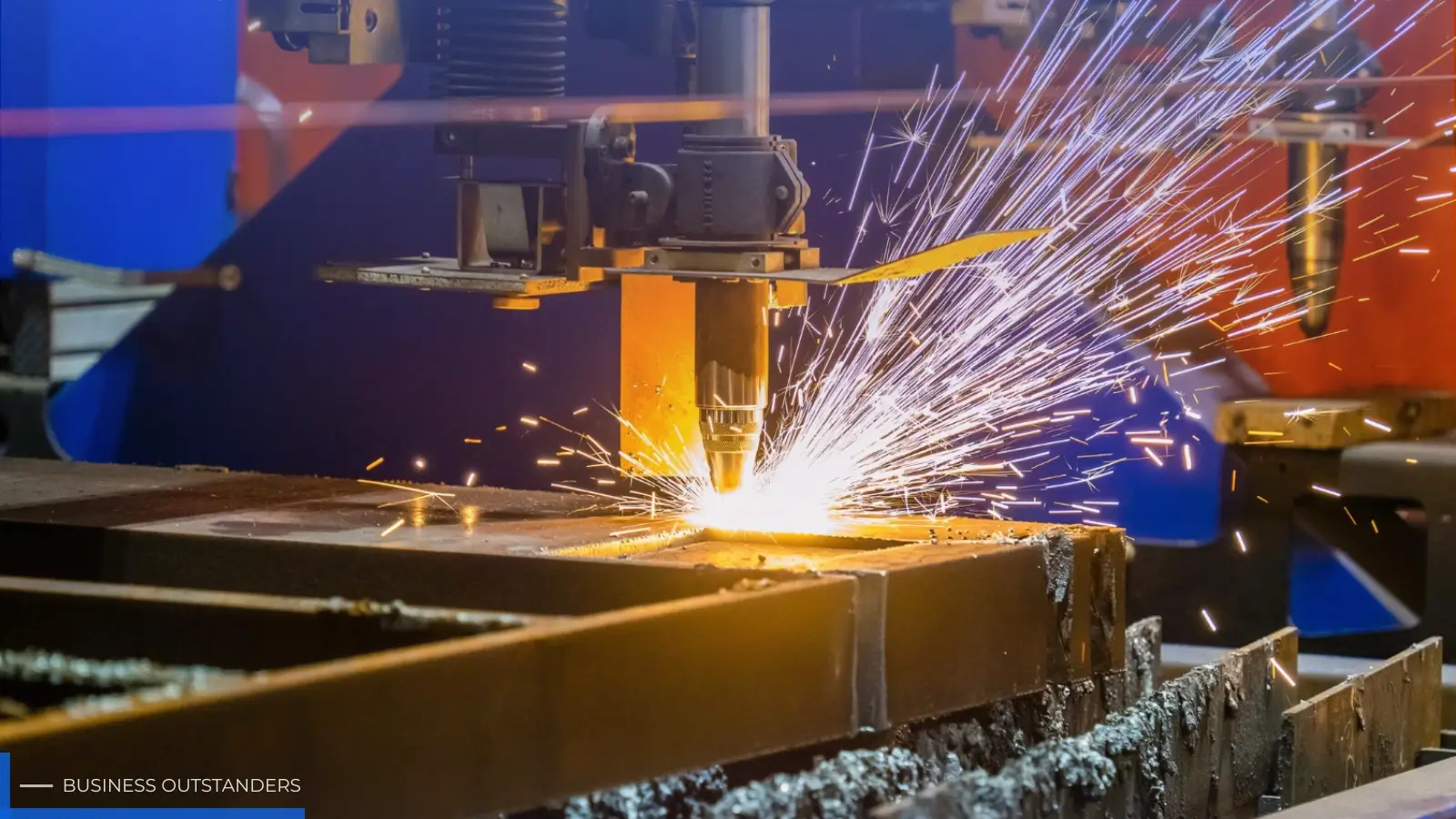
Central to many operations are techniques like CNC machining, which uses computer-controlled tools to precisely cut, drill, and shape materials. Fabrication involves constructing products from various components, often through processes like welding, which joins materials using heat. Companies like Baker Industries exemplify this, offering leading solutions in large-scale manufacturing by combining advanced CNC capabilities with comprehensive fabrication and welding services for complex projects. Ensuring the quality and efficiency of these processes often involves specialized Industrial manufacturing CB current transformers, which are essential for monitoring electrical loads in power-intensive machinery and helping maintain stable, safe operations.
Feature Subtractive Manufacturing Additive Manufacturing Method Material removed from a solid block Material added layer by layer Waste High (chips, shavings) Low (only necessary material used) Complexity Limited by tool access and material properties High (complex geometries, internal structures possible) Speed Generally faster for high volume, simple parts Slower for individual parts, faster for complex prototypes Materials Wide range (metals, plastics, wood) Growing range (polymers, metals, ceramics) Cost Lower per part for mass production, higher setup cost Higher per part for mass production, lower setup cost Applications Mass production, high-precision parts, large components Prototyping, custom parts, complex designs, lightweighting Precision Instrumentation and Industrial Manufacturing
Precision instrumentation is indispensable in industrial manufacturing, serving as the eyes and ears of the production floor. Sensors are deployed throughout facilities to monitor critical parameters, including temperature, pressure, flow rate, pH levels, and vibration. These devices convert physical measurements into electrical signals, providing real-time data on machine performance and process conditions.
Panel meters display these measurements in an accessible format so operators can quickly assess system status. Signal conditioning equipment refines and amplifies these raw signals, ensuring accuracy and reliability before they are sent for data acquisition and analysis. This continuous feedback loop is crucial for maintaining product quality, optimizing processes, and preventing costly downtime. For instance, Genpact highlights how the application of IoT, data analytics, and AI enhances core manufacturing processes, emphasizing the role of robust instrumentation in achieving these efficiencies. The ability to accurately measure and control these variables is a hallmark of quality and precision in industrial manufacturing.
The Role of Research and Development
Research and Development (R&D) is the lifeblood of innovation in industrial manufacturing. It's where new ideas are born, tested, and refined, ultimately leading to advancements in materials, processes, and products. R&D teams are constantly engaged in developing engineered solutions that address specific industrial challenges, conducting application analysis to understand how new technologies can be best utilized, and to provide custom design recommendations to meet unique client needs.
This commitment to R&D drives continuous improvement and ensures that manufacturers remain at the cutting edge. Companies like RB Industrial Manufacturing LLC emphasize their state-of-the-art machining and fabrication capabilities, a direct result of ongoing investment in R&D and a dedication to quality. By fostering an environment of innovation, industrial manufacturers can enhance product performance, reduce costs, improve efficiency, and maintain a competitive edge in a rapidly evolving global market.
Digital Transformation and the Race to 2030
The industrial manufacturing sector is in the midst of a profound digital transformation, a race towards 2030 that promises to redefine how goods are made, distributed, and consumed. This shift is characterized by an unprecedented surge in tech enablement and automation.
According to PwC's 2026 Global Industrial Manufacturing Sector Outlook, the sector is at a historic inflection point, with predictions of a 2.6x rise in tech enablement and a 2.8x anticipated surge in automation levels by 2030. This PwC 2030 outlook underscores the urgency for manufacturers to integrate advanced technologies to remain competitive. As factories become smarter and more connected, the need for clear and effective Industrial signage manufacturing also grows, ensuring safety and efficiency in increasingly complex environments. This digital evolution isn't just about adopting new tools; it's about orchestrating integrated technologies on shared data platforms to unlock new levels of efficiency and value.
Future Trends in Industrial Manufacturing
The landscape of industrial manufacturing is being reshaped by several key technological trends:
- Robotics and Cobots: Traditional industrial robotics continue to automate repetitive tasks, while cobots (collaborative robots) are designed to work safely alongside human operators, enhancing productivity and flexibility.
- Artificial Intelligence (AI) and Machine Learning: AI is being deployed for predictive maintenance, quality control, process optimization, and even generative design, allowing systems to learn and adapt.
- Digital Twins: Virtual replicas of physical assets, processes, or systems enable manufacturers to simulate, analyze, and optimize operations in a risk-free environment.
- 5G Connectivity: The rollout of 5G connectivity provides ultra-low latency and high bandwidth, crucial for real-time data exchange between machines and cloud systems, enabling more agile and responsive manufacturing.
- Edge Computing: Processing data closer to its source (edge computing) reduces latency and enhances security, enabling more efficient real-time decision-making on the factory floor.
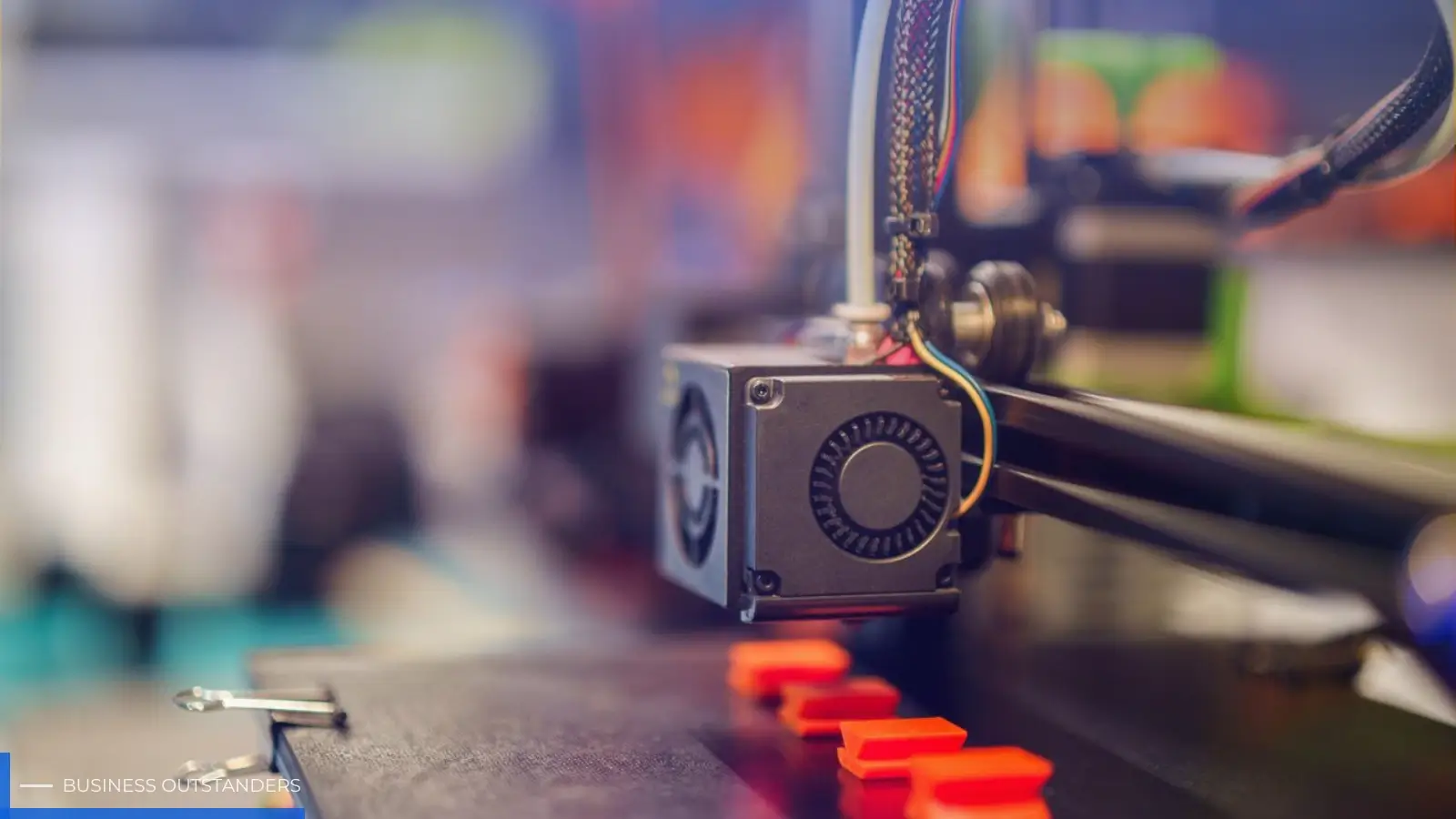
- Additive Manufacturing: Also known as 3D printing, additive manufacturing allows for the creation of complex geometries, rapid prototyping, and on-demand production of specialized parts, reducing waste and lead times.
These trends collectively contribute to a more agile, efficient, and intelligent manufacturing ecosystem, capable of addressing the complex demands of the future.
Sustainability and Smart Ecosystems
Beyond technological integration, sustainability has emerged as a critical imperative for industrial manufacturing. Manufacturers are increasingly focused on achieving decarbonization and implementing comprehensive ESG strategies (Environmental, Social, and Governance) to reach net-zero impact goals. This involves optimizing processes for energy efficiency, reducing waste, and adopting circular economy principles.
The drive for sustainability often goes hand-in-hand with the development of smart ecosystems. These involve collaborative relationships across the supply chain, leveraging digital platforms to share data, optimize logistics, and ensure responsible sourcing. Companies like Walchandnagar Industries demonstrate this commitment through their focus on quality systems and versatile manufacturing facilities, capable of handling exotic materials while adhering to stringent standards. By building these connected and sustainable ecosystems, industrial manufacturers can not only reduce their environmental footprint but also enhance their resilience, reputation, and long-term profitability.
Quality Control, Calibration, and Regulatory Compliance
In industrial manufacturing, quality control, precise calibration, and strict regulatory compliance are not merely operational aspects but fundamental pillars of success. They ensure that products meet specified standards, operate safely, and fulfill their intended purpose without fail.
Adherence to standards like ISO 9001 is paramount, signifying a commitment to consistent quality management. Furthermore, the accurate pH measurement in various processes, from chemical production to wastewater treatment, is a critical example of how precise calibration directly impacts product integrity and environmental safety. Companies like Central Industrial Manufacturing, which are ISO 9001 CERTIFIED, exemplify this dedication to excellence. Maintaining high standards also extends to fostering strong customer relationships, as trust is built on the consistent delivery of reliable, high-quality products. Even local manufacturers, such as Olsen Manufacturing Co in Royal Oak, MI, demonstrate the importance of these principles in their operations.
Ensuring Precision through Calibration and Repair
The operational integrity of industrial manufacturing relies heavily on the accuracy and reliability of its instrumentation. This necessitates rigorous instrumentation maintenance and regular pressure calibration to ensure that sensors, gauges, and control systems provide precise readings. Accurate calibration is vital for maintaining equipment uptime, preventing costly errors, and ensuring that products are manufactured to exact specifications.
Beyond calibration, prompt repair services are crucial to minimize downtime and maintain continuous operation. Adherence to stringent safety standards is also intrinsically linked to well-maintained and calibrated equipment, as faulty instruments can lead to hazardous conditions. Companies that prioritize these aspects, like many best manufacturing companies to work for in Royal Oak, MI, understand that precision in measurement directly translates to safety, efficiency, and product quality.
Quality Management Systems in Industrial Manufacturing
Robust quality management systems are the framework that underpins the reliability of industrial manufacturing. These systems encompass comprehensive procedures, documentation, and practices to ensure consistent product quality and process efficiency. Compliance with ASME standards (American Society of Mechanical Engineers), for instance, is often mandatory for pressure vessels and other critical components, guaranteeing their structural integrity and safety.
Modern facilities often utilize advanced non-destructive testing (NDT) capabilities, such as NDT facilities for ultrasonic or X-ray inspections, to detect internal flaws without damaging the product. Collaborating with independent inspection agencies like Lloyds or Bureau Veritas provides external validation of quality. Furthermore, specialized techniques like precision welding are meticulously controlled and inspected to meet the highest standards, particularly in demanding sectors. Companies like IMA (International Manufacturing Alliance) exemplify this commitment to high-volume, high-quality production across various materials, demonstrating how integrated quality systems are essential for complex manufacturing operations.
Frequently Asked Questions about Industrial Manufacturing
What are the primary sectors served by industrial manufacturing?
Industrial manufacturing serves a vast array of sectors, providing the essential components and machinery that enable these industries to operate and innovate. Key sectors include:
- Aerospace: Manufacturing components for aircraft, spacecraft, and defense systems.
- Defense: Producing specialized equipment, vehicles, and weaponry.
- Automotive: Supplying parts, tools, and assembly line machinery for vehicle production.
- Energy: Creating equipment for power generation (e.g., turbines, boilers), oil and gas extraction, and renewable energy infrastructure.
- Agriculture: Manufacturing farm machinery, irrigation systems, and processing equipment.
- Heavy Equipment: Producing construction machinery, mining equipment, and industrial vehicles.
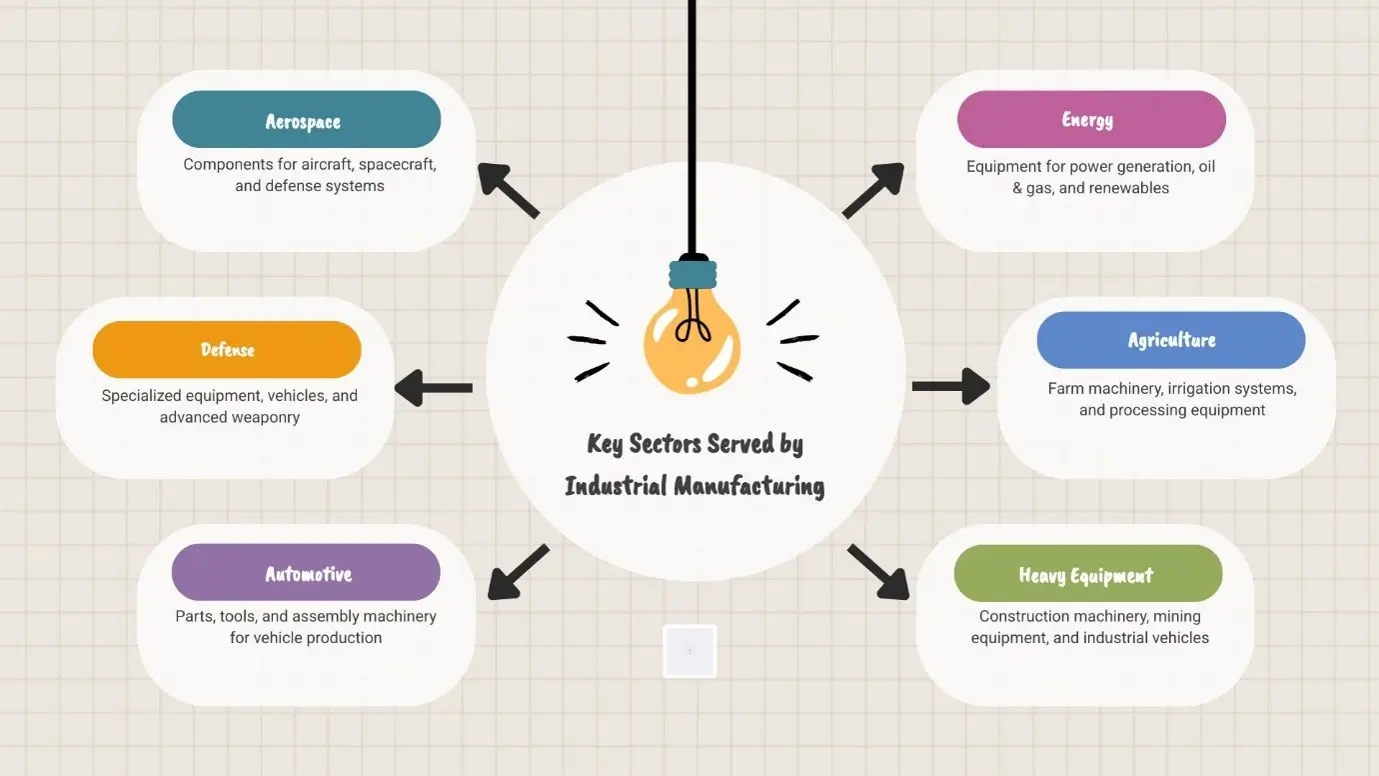
These sectors rely on industrial manufacturers for their foundational needs, highlighting the critical, interconnected nature of the global economy.
How is AI currently used in industrial facilities?
Artificial Intelligence (AI) is rapidly transforming industrial facilities, bringing unprecedented levels of efficiency, precision, and predictive capabilities. Some key applications include:
- Predictive Maintenance: AI algorithms analyze sensor data to predict when machinery is likely to fail, enabling proactive maintenance and minimizing downtime.
- Real-time Defect Detection: AI-powered vision systems can identify defects on production lines faster and more accurately than human inspection, improving product quality.
- Process Optimization: AI analyzes vast datasets to identify inefficiencies in manufacturing processes, suggesting adjustments to improve throughput, reduce waste, and optimize energy consumption.
- Generative AI Change Management: AI can assist in designing new products or optimizing existing ones, suggesting innovative solutions and streamlining the design phase. It also helps manage the organizational changes associated with implementing new technologies.
What skills are required for the modern manufacturing workforce?
The modern manufacturing workforce requires a blend of traditional technical skills and new competencies driven by digital transformation. Key skills include:
- Digital Literacy: Fundamental understanding of digital tools, software, and data interfaces.
- Data Analysis: Ability to interpret and act upon data generated by smart factories, using analytics tools.
- Robotics Programming: Proficiency in programming and operating robotic systems and cobots.
- Systems Engineering: A holistic understanding of complex interconnected systems, from design to implementation and maintenance.
- Internal Capability Development: A proactive approach to continuous learning and upskilling, as technology evolves rapidly. Manufacturers increasingly recognize that developing capabilities internally is their top approach to accessing growth opportunities, fostering a culture of lifelong learning.
Conclusion
Industrial manufacturing is a dynamic and indispensable sector that continuously evolves to meet the demands of a complex world. From its humble beginnings to the sophisticated smart factory environments of today, the pursuit of quality and precision has remained constant.
The current era, defined by Industry 4.0, emphasizes technology orchestration, where integrated digital solutions like AI, IoT, and automation drive operational excellence. This transformation is not just about efficiency; it's about fostering sustainable growth through responsible practices and ensuring global competitiveness through relentless innovation. As we look ahead, the industrial manufacturing sector will remain a cornerstone of economic progress, shaping our future through its unwavering commitment to producing the highest-quality goods that power the world.
Business Outstanders brings you sharp insights on tech, business, entrepreneurship, law, crypto, and more. We uncover what’s next. Stay updated, sign up for our newsletter and be part of the future!