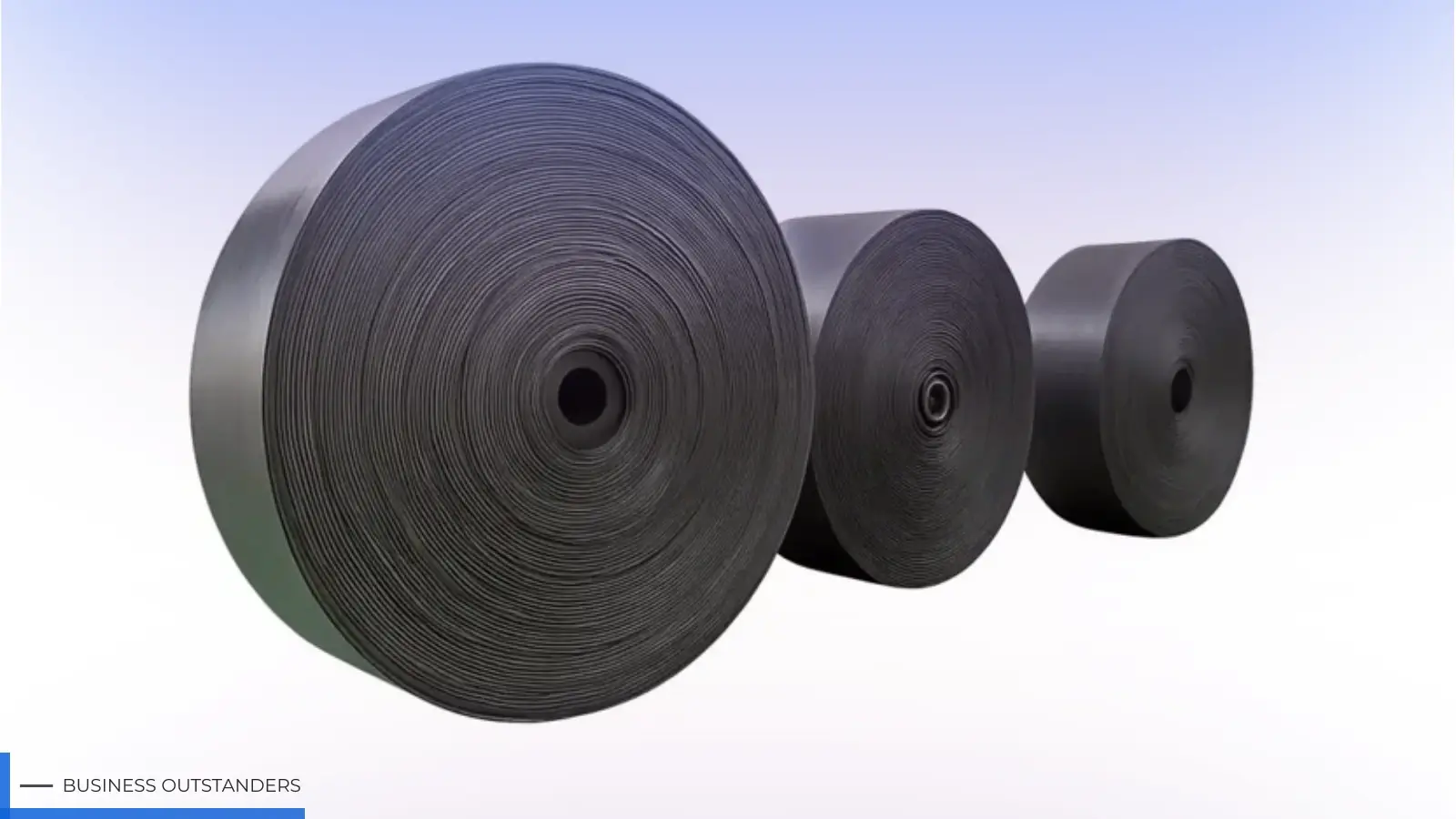
Around the world, there are countless applications for conveyor belts. Mining and construction rely on conveyor belts to move excavated and construction materials quicker. Food processing utilizes conveyor belts to move food products to and from processing stations. Conveyor belts use less manual labor. Despite these benefits, various rubber types comprise the conveyor belt.
Different rubber types come with different properties. Some rubber types are more beneficial in higher and lower temperature environments. Some rubber types are more beneficial when in contact with oil and chemicals or when enduring heavy impacts. Selecting the best fit rubber type can help improve the efficiency of the conveyor belt, help reduce downtime, and help prolong the belt’s lifespan.
This article will cover commonly used rubber types in conveyor belts and how each rubber type can satisfy specific requirements for various industries.
Why Rubber Matters in Conveyor Belts
Rubber used in the construction of conveyor belts comprises the outer layer of the belt. Rubber is protective and enables friction to move materials. The best rubber compound also helps reduce the damage of abrasion and moisture as well as chemical and temperature extremes.
For more details of Rubber Used in Conveyor Belts, the best solutions for your operations can be found after understanding the systems and materials.
Natural Rubber
Natural rubber is sourced from the latex of rubber trees and is renowned for its adaptability and high tensile strength.
Advantages of Natural Rubber:
Natural rubber has:
- Superb strength
- High elasticity
- Excellent impact absorption
- Resiliency (excellent) to abrasion
- Exceptional performance under great stresses
Because of these, natural rubber is useful in mining, quarrying, and bulk materials. Natural rubber excels at carrying rocks, gravel, sand, and other abrasives.
Natural rubber can not be used in areas that are exposed to oils, chemicals, or high temperatures.
Styrene Butadiene Rubber (SBR)
Styrene Butadiene Rubber, referred to as SBR, is an economical option of synthetic rubber that is used in many conveyor belts.
Advantages of SBR:
- Good abrasion resistance
- Affordable price
- Reliable aging properties
- General industrial suitability
SBR is found in many warehouses, manufacturing plants and agriculture. It is especially useful for the dry materials that do not come into contact with oils or chemicals.
Nitrile Rubber (NBR)
Nitrile rubber was designed to resist oil and greases. This makes it a great choice for any of the industries that deal with oily products or materials made from petroleum.
Advantages of Nitrile Rubber:
- Superior oil resistance
- Chemicals resistance
- Excellent durability and service life
Nitrile rubber conveyor belts are used in recycling, automotive manufacturing, and food processing because of their constant exposure to oils and fats.
Neoprene Rubber (CR)
Neoprene rubber has excellent resistance to weathering. This makes it a great choice for outdoor environments that conveyor belts are exposed to the sunlight, moisture and extreme temperature changes.
Advantages of Neoprene:
- Weatherproof
- Fireproof
- Moderate chemical resistance
Neoprene is tough and can withstand the elements.
Because of these properties, neoprene is used in ports, shipping facilities, and construction sites.
EPDM Rubber
Ethylene Propylene Diene Monomer, or EPDM, has great resistance to heat, ozone, and sunlight.
Advantages of EPDM:
- Great heat resistance
- Excellent UV resistance
- Does not age easily
- Good flexibility
Because of these properties, EPDM conveyor belts are used in the cement industry, steel industry, and power generation due to the high operating temperatures of these processes.
However, EPDM does not have good resistance to oil or products that are oil based.
PVC and Rubber Combinations
There are conveyor belts that are a combination of rubber and PVC. These belts provide a smooth surface and a durable belt.
Common Uses:
- Packaging lines
- Distribution centers
- Airport baggage systems
- Light manufacturing
These belts are easier to clean and can meet the hygiene requirement of the food industry and pharmaceutical industry.
Heat Resistant Rubber
Some industrial processes use very hot materials. Standard rubber can crack and lose strength in these situations.
Heat resistant rubber can be used in these situations.
Common Industries:
- Steel manufacturing
- Glass production
- Cement processing
- Foundries
These belts help prevent premature wear and help improve reliability of production.
Oil Resistant Rubber
Oil resistant rubber belts are used in situations in which belts are exposed to oils, fuels, or lubricants.
Standard rubber can swell and soften and fail in these situations without protection.
Industries that utilize oil-resistant belts include: recycling plants, wood processing, automotive manufacturing, and grain handling. Over time, the performance of belts is affected by the type of rubber compounds used.
Flame Resistant Rubber
In safety-conscious industries such as underground mining, the use of flame resistant rubber helps reduce the risk of fire spreading across the conveyor systems.
These belts also comply with stringent safety requirements of the industry and help safeguard employees and equipment.
In most cases, flame resistant conveyor belts are used in mining.
Abrasion Resistant Rubber
Conveyor belts are continuously in contact with heavy materials. Over time, constant contact wears off the rubber.
Abrasion resistant rubber is designed to minimize the effects of contact and increase the lifespan of the belt.
It is used extensively in the transport of:
- Crushed stone
- Coal
- Iron ore
- Gravel
- Sand
These belts help reduce the cost of maintenance and increase the efficiency of operations.
How to Choose the Right Rubber
Choosing the right rubber is dependent on a number of factors.
The following points should be considered prior to determining which conveyor belt to purchase:
- What is being transported on the conveyor belt?
- What is the operational temperature?
- Is there exposure to oil/chemicals?
- Is it used indoors or outdoors?
- What is the weight of the load?
- What is the anticipated lifespan of the belt?
The right supplier can help you make the right choice based on your requirements.
To get High-Quality EP Conveyor Belts, choose a manufacturer with a track record and strong Quality Control, which also allows customization of rubber compounds.
Conclusion
Rubber plays a vital role in any conveyor belt. Different types of rubber present various benefits for diverse working conditions. Natural rubber is highly resistant to wear, while nitrile rubber withstands exposure to oil. EPDM and neoprene, on the other hand, are preferable in high temperature and rainy weather conditions respectively.
It is important to select the right rubber to improve productivity, reduce maintenance, and expand the usable life of your conveyor system. Always analyze your circumstances before buying and choose a conveyor belt that best addresses the needs of your specific industry.
By taking advantage of the knowledge of the different rubber compounds, companies can buy a conveyor belt that works better, lasts longer, and costs less to maintain.
Business Outstanders brings you sharp insights on tech, business, entrepreneurship, law, crypto, and more. We uncover what’s next. Stay updated, sign up for our newsletter and be part of the future!