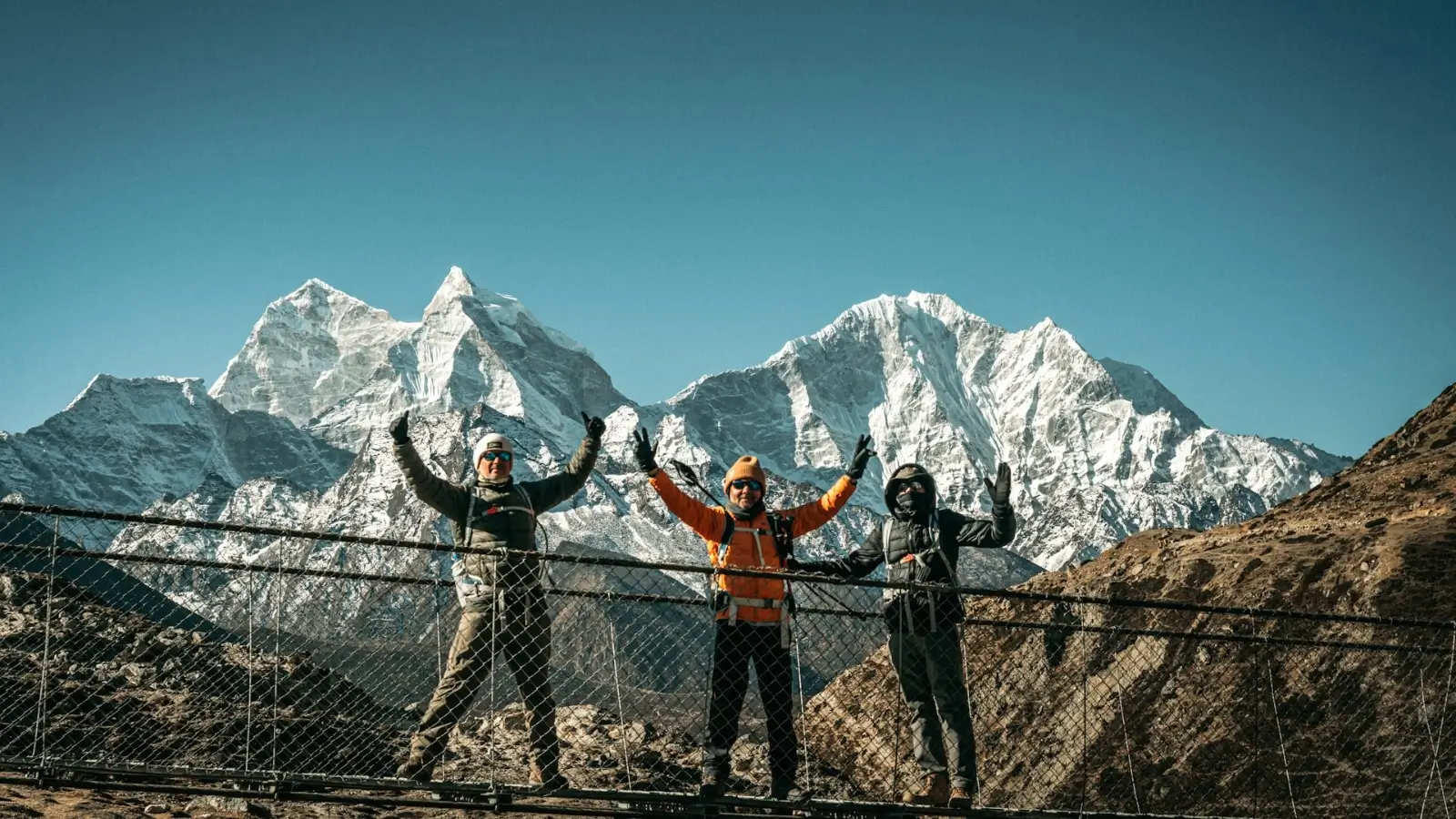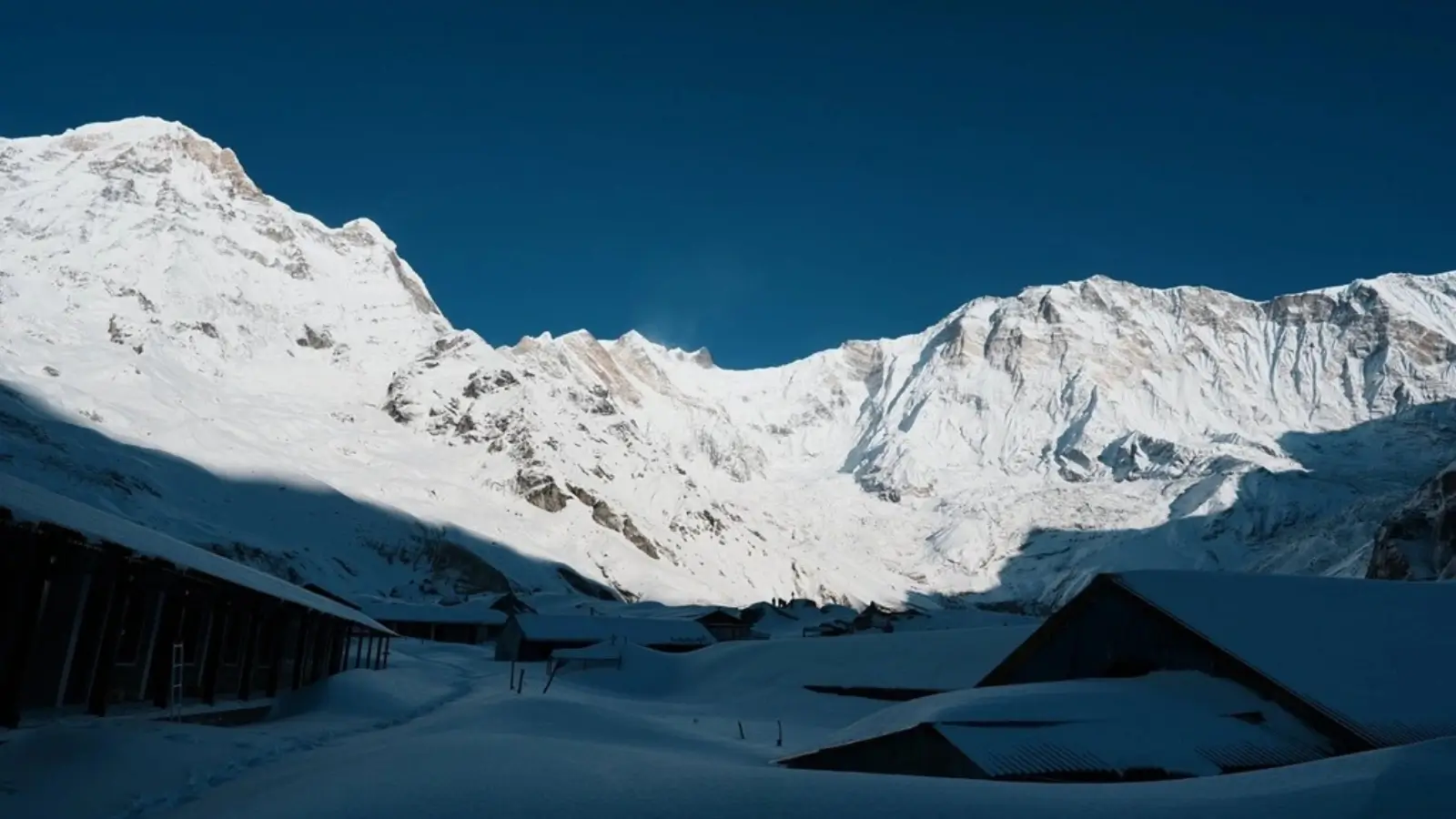
For most trekkers, the summit of the highest mountain in the world seems to be a reward in itself. The days and nights of trekking through rhododendron forests, crossing suspension bridges, and finally reaching at the dramatic glacier fields of the Everest Base Camp will be remembered forever. But there is one more magic that people miss when viewing the Khumbu region with their eyes closed, and it is the magic of viewing the region with closed eyes.
By opting to go to the Everest Base Camp Trek with Helicopter Return, you get to see the Himalayas in their two-dimensional format: the slow, immersive trekking and the breathtaking aerial view on your way back.
Trails of the Khumbu.
A trip to the Everest Base Camp is a rite of passage. You pass slowly through villages alive with prayer flags and yak bells. You share trails with Sherpa guides and porters, drink butter tea in teahouses, and hear stories of mountaineers who have left a legacy on Everest.
But the journey back is usually a revisit of the same valleys and passes. This is where companies such as Himalayan Masters add an extra layer to the experience. Rather than walking the same route back, you fly and discover a perspective of the Khumbu that few have the privilege to see.
What the Helicopter Shows That Your Pair of Boots Cannot.
1. Peaks at Eye Level
From the air, giants like Ama Dablam, Lhotse, and Pumori no longer loom from afar—they rise beside you at eye level. The jagged ridges and knife-blade peaks seem nearly near enough to touch, providing a point of view that is not possible at the valley floor.
2. Glaciers in Motion
On foot, crossing the Khumbu Glacier is like doing battle on a battlefield covered with ice. From above, it transforms into a massive river of ice, sweeping and pounding its way through valleys. The crevasses and moraine ridges are painted into white and gray patterns.
3. Villages in Miniature
Namche Bazaar, Tengboche, and Pangboche shrink into small heaps of rooftops. You have a feel of how they are located relative to cliffs, rivers, and trails, which you never fully understand as you hike through them. The monasteries, which are usually concealed in forests or on ridges, burst out like jewels in the scenery.
4. Rivers Like Silver Threads
On the way, the Imja Khola and the Dudh Koshi rivers are noisy companions vowing past you with white water. From the air, they are silver threads picking and prodding life into all the villages and terraces.
5. The Sheer Scale of Everest
No matter how close you get on foot, you will always find that Everest conceals part of itself behind ridges. The helicopter exposes its entire splendor. You can see how high it rises above all the rest of the peaks adjacent to it, a giant protector of the Himalayas.
6. Hidden Valleys and Remote Trails
When you fly, you get a glimpse of some undisturbed valleys and side roads that many trekkers would never explore. Suddenly appear small settlements, scant grazing pastures, and high-altitude lakes that remind you the vastness of the Khumbu.
The Beauty of Perspective
Flying the Himalayas changes the perspective of the Himalayas. The mountains are walls to be tried by foot. From the air, they become part of a sweeping panorama, a map of not only valleys and rivers, but also ridges, which extend forever in all directions.
You also see the tremendous variations of the area within a single frame: the green forest at the lower level, the rocky upland near Namche, and the frozen barren wilderness near Everest. It is the whole adventure in one panoramic sight.
Comfort and Practicality of a Helicopter Return
After more than a week of trekking, you get tired. The helicopter tour means that you not only leave with sore legs but with a rush of adrenaline, the roar of rotor blades, the snow being covered by your helicopter's shadow, and the experience you will never forget of Everest in its entirety.
There is a practical component also. The weather in the Khumbu is also known to be erratic, and flight delays in Lukla are common. A helicopter flight directly to Kathmandu will help you save time and avoid the possibility of being trapped, and enjoy a comfortable conclusion to your trip.
Two Adventures in One
More than just convenient, the Everest Base Camp Trek with Helicopter Return is about finishing your Himalayan story with a style. On the ground, you do not receive any sight without your own walking. You can get a glimpse of all this in the air, of the glaciers, the rivers, and the villages that make the Khumbu come alive.
The combination of hiking and flying gives an equal measure of closeness and magnificence, hardship and fulfillment. You get the closeness of the trail and the panoramic view of the sky.
Final Thoughts
Finally, trekking is as much about the destination as it is about perspective. When you walk to Everest Base Camp, you become a part of the land and people. The bigger picture, the Himalayas in totality, is visible with helicopter return.
Look farther than the trail when you are planning your adventure in the Himalayas. When you do the Everest Base Camp Trek with Helicopter Return, you get to do not one but two adventures.
Business Outstanders brings you sharp insights on tech, business, entrepreneurship, law, crypto, and more. We uncover what’s next. Stay updated, sign up for our newsletter and be part of the future!