In an ever-evolving job market, career coaching has become an invaluable resource for professionals seeking to advance, transition, or redefine their careers. Whether you’re navigating career changes, aiming for a promotion, or seeking work-life balance, the right career coaching strategies and methodologies can make all the difference. Below, we explore some of the most successful career coaching methodologies and how they help individuals achieve their professional goals.
1. What is Career Coaching?
Definition and Purpose of Career Coaching
Career coaching is a collaborative process where a trained career coach works with an individual to explore, define, and achieve their career goals. The primary purpose of career coaching is to empower individuals to make informed decisions about their career path, enhance their professional development, and improve their overall job satisfaction. Through structured conversations, active listening, and open-ended questioning, career coaches help individuals identify their strengths, values, and interests. This process not only clarifies career aspirations but also provides a roadmap for achieving them, ensuring that clients are well-equipped to navigate their professional journeys.
Benefits of Career Coaching for Individuals and Organizations
Career coaching offers a multitude of benefits for both individuals and organizations. For individuals, career coaching can lead to increased self-awareness, confidence, and job satisfaction. It helps in developing a clear career vision, setting realistic goals, and creating a personalized plan to achieve them. This structured approach ensures that individuals are not only aware of their career aspirations but also have a concrete strategy to reach them. For organizations, career coaching can significantly improve employee engagement, retention, and productivity. By investing in career coaching, organizations can develop a more skilled and motivated workforce, which in turn enhances overall competitiveness and success. This dual benefit makes career coaching a valuable tool for both personal and organizational growth.
GROW Coaching Model
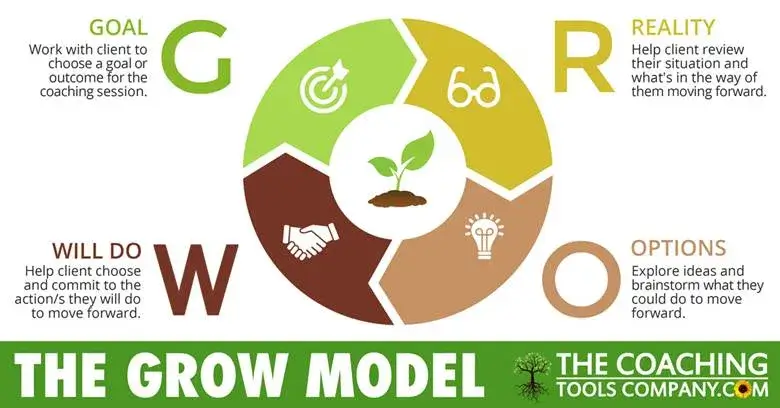
The GROW Model is one of the most widely used coaching frameworks, helping individuals define clear goals and create actionable plans to achieve them. It stands for:
- Goal – Defining what the client wants to achieve
- Reality – Assessing the current situation
- Options – Exploring possible solutions
- Will Do – Committing to specific actions
This method is effective because it structures conversations to facilitate clarity, motivation, and action. Coaches using the GROW model guide clients through self-reflection and strategic planning to ensure progress.
While career coaching is future-focused, career counseling often explores past and present issues to help individuals understand their career challenges. The coaching process involves structured methodologies and various steps, including establishing rapport, setting goals, and continuous evaluation.
A strong coaching relationship built on trust and mutual respect is crucial for effective career coaching.
2. Strengths-Based Coaching
Based on positive psychology, strengths-based coaching focuses on identifying and leveraging an individual’s inherent strengths. Rather than fixing weaknesses, this approach encourages clients to maximize their natural abilities to achieve success. This approach not only boosts confidence but also supports continuous skill development, ensuring clients are well-prepared for their career progress.
A key tool in this methodology is the CliftonStrengths Assessment (formerly StrengthsFinder), which helps individuals understand their top talents and how to apply them in their careers. This method is particularly useful for professionals seeking greater job satisfaction, engagement, and confidence in their roles.
3. Cognitive Behavioral Coaching (CBC)
This method applies Cognitive Behavioral Therapy (CBT) principles to career coaching. It helps clients identify and change limiting beliefs, negative thought patterns, and behaviors that may be holding them back. CBC supports clients throughout their coaching journey, from identifying limiting beliefs to achieving long-term career success.
CBC is especially useful for:
- Overcoming imposter syndrome
- Building confidence
- Managing career-related stress and anxiety
- Enhancing decision-making skills
By working on thought patterns and behaviors, clients develop a growth mindset that supports long-term career success.
4. Narrative Coaching
In narrative coaching, clients explore their career journey through storytelling. This methodology helps individuals reframe their career experiences and uncover patterns that may influence their professional decisions.
By reflecting on past experiences, successes, and failures, clients can:
- Gain insight into their professional identity
- Recognize limiting narratives and rewrite them
- Develop a more empowering career story
By developing a more empowering career story, clients achieve greater clarity and direction in their professional lives.
This approach is particularly effective for career changers and professionals seeking a renewed sense of purpose.
5. Motivational Interviewing (MI)
Originally developed in clinical psychology, Motivational Interviewing is now widely used in career coaching. It is a client-centered approach that helps individuals explore their intrinsic motivation for change. Each coaching session is designed to explore intrinsic motivation and encourage commitment to change.
The key principles of MI include:
- Asking open-ended questions
- Affirming strengths and efforts
- Reflective listening
- Encouraging commitment to change
This method is ideal for individuals struggling with career indecision, procrastination, or a lack of motivation. It empowers clients to take ownership of their careers and move forward with confidence.
6. Design Thinking Approach
Popularized by Stanford University, the Design Thinking Approach applies problem-solving principles from design and innovation to career planning. It encourages a mindset of curiosity, experimentation, and iteration. Design Thinking is one of the many coaching models that apply structured methodologies to career planning.
The core steps include:
- Empathize – Understanding one’s interests, values, and challenges
- Define – Clarifying career goals and constraints
- Ideate – Brainstorming multiple career paths and options
- Prototype – Testing ideas through job shadowing, side projects, or informational interviews
- Test & Iterate – Refining career choices based on real-world feedback
This approach is highly effective for those exploring new career directions or uncertain about their next step.
Mindfulness-Based Career Development Coaching
Mindfulness-based coaching integrates self-awareness and presence into career development. This approach helps clients manage stress, build resilience, and make intentional career decisions. This approach not only supports career alignment but also fosters personal development and overall well-being.
Techniques often include:
- Meditation and breathing exercises
- Visualization techniques
- Reflection on values and purpose
By fostering self-awareness, this methodology supports better career alignment and overall well-being.
9. Coaching Styles and Techniques
Directive Coaching: Providing Guidance and Direction
Directive coaching is a coaching style that involves providing clear guidance and direction to the coachee. This approach is particularly effective when the coachee is new to a role or facing specific challenges that require immediate solutions. In directive coaching, the career coach takes on a more authoritative and instructive role, offering clear instructions and actionable solutions to help the coachee overcome obstacles and improve performance.
The steps involved in directive coaching typically include:
- Identify Goals and Objectives: The coach works with the coachee to clearly define their goals and what they aim to achieve.
- Assess Current Situation: The coach evaluates the coachee’s current situation, identifying any challenges or barriers to success.
- Provide Clear Instructions: The coach offers specific guidance and solutions tailored to the coachee’s needs.
- Offer Support: Continuous support and encouragement are provided to help the coachee implement the solutions.
- Monitor Progress: The coach regularly checks in to monitor progress and provide feedback, ensuring that the coachee stays on track.
Directive coaching is particularly useful for improving employee performance and productivity. However, it may not be suitable for coachees who need to develop their critical thinking and problem-solving skills or who prefer a more collaborative approach. This coaching style is best employed in situations where immediate results are needed, and the coachee requires clear direction to achieve their goals.
Choosing the Right Solution Focused Coaching Methodology
The best career coaching approach depends on an individual’s goals, challenges, and preferences. Some may benefit from structured frameworks like GROW, while others may need Cognitive Behavioral Coaching to overcome internal barriers. Executive coaching specifically targets senior leaders, focusing on leadership development through reflective conversations. Executive coaches work with C-suite managers to foster leadership skills and strategic thinking. Workplace coaching focuses on aligning individual goals with organizational objectives, enhancing employee performance and engagement. The solution focused coaching methodology, such as the OSKAR model, helps individuals tackle complex issues and achieve long-term objectives. Coaching models like CIGAR are effective for individuals facing significant challenges in their personal or professional lives. A skilled career coach often integrates multiple methodologies to provide personalized and effective guidance.
Regardless of the method, successful career coaching empowers individuals to gain clarity, build confidence, and take meaningful action toward their professional aspirations.
Business Outstanders brings you sharp insights on tech, business, entrepreneurship, law, crypto, and more. We uncover what’s next. Stay updated, sign up for our newsletter and be part of the future!