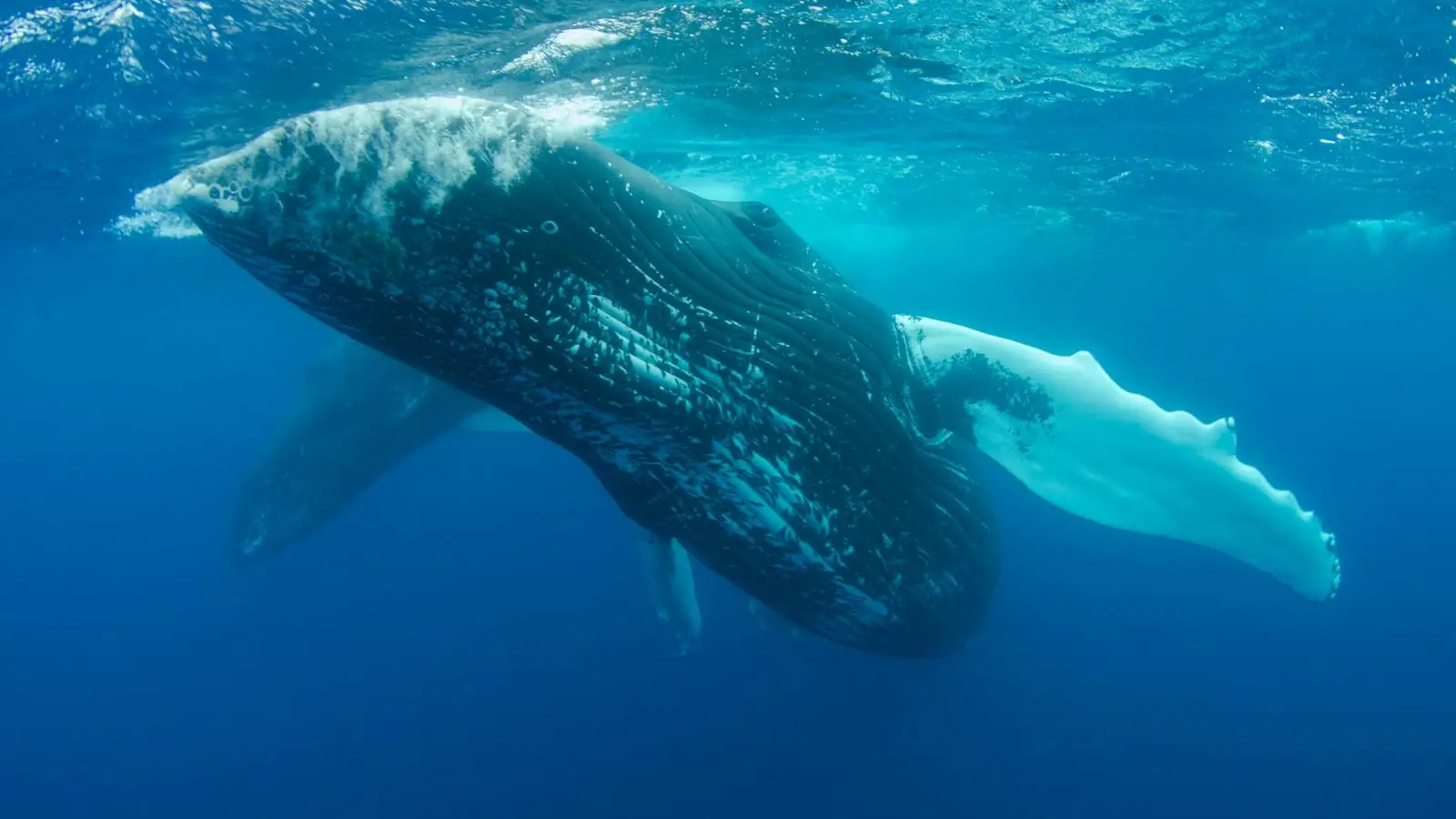
For decades, blue whales have sung across the oceans—deep, resonant calls traveling hundreds of miles to communicate. But scientists are now documenting a dramatic drop in those songs. In many regions, from the South Pacific to the Southern Ocean, whale-music recordings have nearly gone silent for months at a time. This decline in vocal activity is alarming researchers, who see it as a clear signal of broader ecological decline.
Marine biologists report that blue whales are calling less frequently and at lower intensities than in previous years. In the Southern Indian Ocean, tonal frequencies of their songs have dropped steadily since the 1960s. In California waters, vocal activity has declined sharply during marine heatwaves, sometimes by nearly 40 percent.
What’s Causing the Silence?
Noise pollution ranks among the most immediate threats. Oceans have grown far noisier due to increased ship traffic, underwater oil and gas operations, and military sonar. Where once blue whale calls could traverse entire ocean basins, today’s ambient noise often drowns them out entirely. Rather than competing acoustically, whales are now retreating into silence.
Climate-driven heatwaves are another key factor. Prolonged marine heat events have devastated the whales’ primary food source, krill. Researchers have remarked, “trying to sing while you’re starving”: whales facing hunger produce fewer calls. With less energy for mating calls or social interaction, vocal behavior declines.
Why Whale Songs Matter
Blue whale vocalizations aren’t just noise—they’re vital to survival. Males broadcast songs to attract mates; whales also use calls to navigate migration and coordinate feeding. Each blue whale population carries a unique dialect—a cultural memory passed across generations. As the songs fade, so does that living cultural heritage.
Acoustically monitoring whales via hydrophones has become a key tool for marine ecologists. Not only does silence signal trouble for whale populations, but it also reflects larger oceanic stress—from warming waters to chemical pollution. Because blue whales reproduce so slowly, any disruption in their behavior may take years or decades to reverse.
What Can Be Done?
Scientists and conservation groups are advocating for measures like quiet shipping corridors, speed reductions near key whale habitats, and protected "quiet zones" timed to migration seasons. Projects such as the International Quiet Ocean Experiment aim to coordinate global efforts to reduce ocean noise and preserve marine soundscapes.
Business Outstanders brings you sharp insights on tech, business, entrepreneurship, law, crypto, and more. We uncover what’s next. Stay updated, sign up for our newsletter and be part of the future!