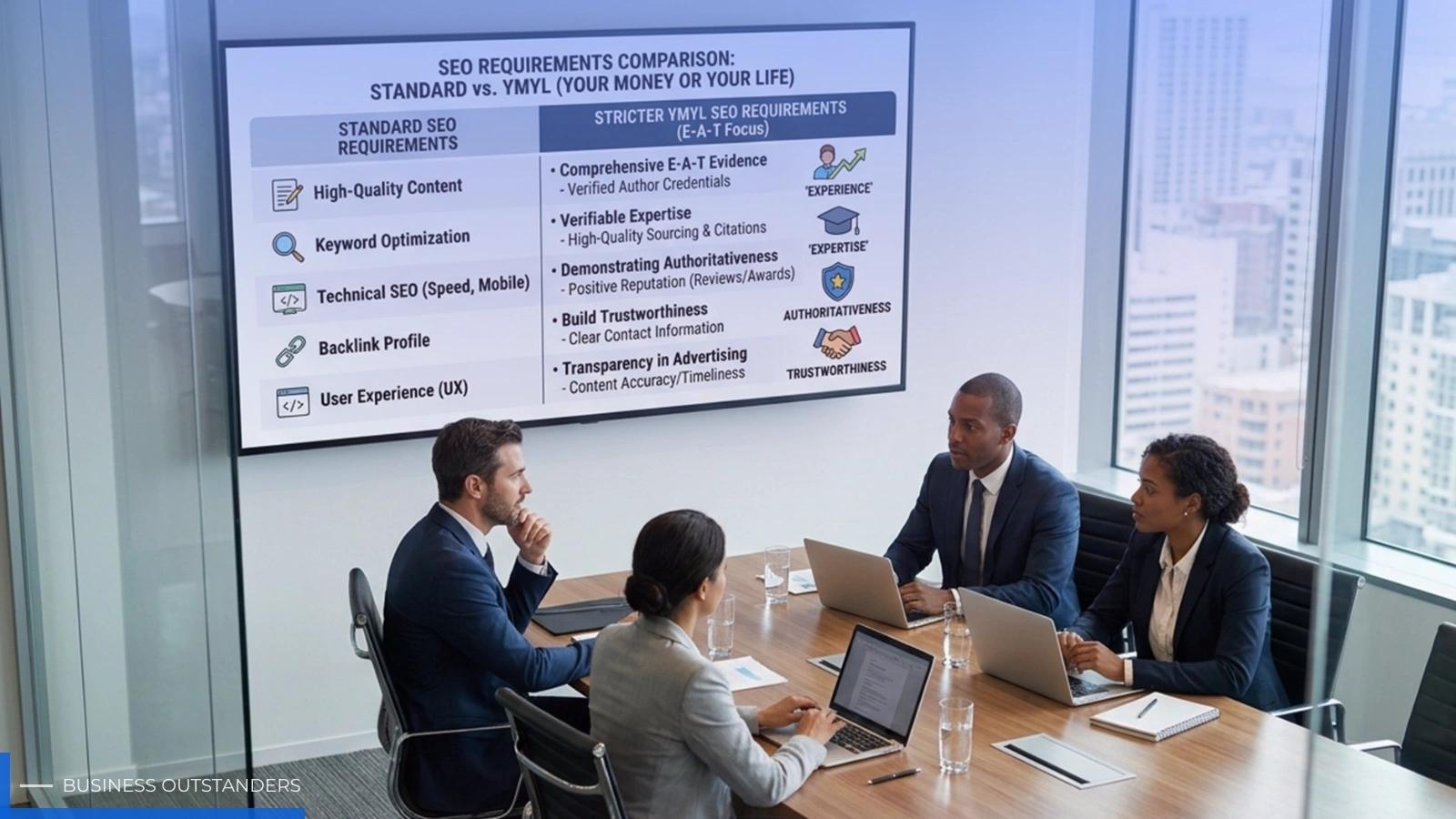
Understanding the "What" and "Why" of SEO
Ever felt like your amazing website is a hidden gem in a vast digital ocean? You are not alone. Many website owners launch their sites with passion. Yet, they wonder why visitors are not showing up. The answer often lies in Search Engine Optimization, or SEO.
SEO might sound complex. But it is simply a set of practices. These help search engines like Google understand your website. This guide will explain basic SEO. We will show you how to make your website more visible.
We believe Google does not bite. In fact, it wants to help users find great content. Our goal is to help you create that great content. We will cover the fundamental steps. These include keyword research and on-page optimization. We will also look at technical SEO and measuring success.
By the end of this guide, you will have a clear roadmap. You will learn how to improve your website's online presence. Let's get started on your journey to better search engine rankings.
TL;DR: SEO is the practice of optimizing your website to rank higher in search engines like Google, which is vital since Google holds over 90% of the search market; always use ethical "white-hat" tactics for sustainable results.
What is Search Engine Optimization (SEO)?
Search Engine Optimization (SEO) is the strategic process of enhancing your website's visibility when people search for products or services related to your business on search engines like Google. Think of it as making your website as appealing and understandable as possible to both search engines and potential visitors. The ultimate goal is to appear prominently on the first page of search results for queries relevant to your business, ideally in the top positions.
When users find your site through these unpaid search results, it's known as "organic traffic." This type of traffic is highly valuable because it comes from individuals actively seeking information or solutions that your website provides. Search engines employ sophisticated algorithms, considering hundreds of factors, to determine which websites are most relevant and authoritative for any given search query. Their primary objective is to deliver the most accurate, helpful, and satisfying results to their users. Therefore, the most effective and sustainable approach to SEO is always a "user-first" one. We aim to satisfy the user's intent, and in doing so, we naturally align with what search engines want to promote. It's also worth noting the sheer dominance of Google in this landscape; it still commands a little more than 90% of the search market worldwide, making optimization for Google's algorithms a top priority for most businesses.
White-Hat vs. Black-Hat: The Good and the Bad of SEO
In SEO, there's a clear distinction between ethical and unethical practices, often referred to as "white-hat" and "black-hat" SEO. Understanding this difference is crucial for building a sustainable and successful online presence.
White-hat SEO refers to strategies and tactics that strictly adhere to search engine guidelines. These are ethical, long-term approaches focused on providing genuine value to users and building a legitimate, authoritative website. Examples of white-hat SEO include:
-
Creating High-Quality, Relevant Content: Producing content that genuinely answers user questions, is well-researched, and engaging.
-
Optimizing Site Speed and User Experience: Ensuring your website loads quickly, is easy to steer, and offers a seamless experience across all devices.
-
Building Natural Backlinks: Earning links from other reputable websites because your content is genuinely valuable and shareable, not through manipulative means.
These methods are sustainable because they align with search engines' goals of delivering the best possible results. For a deeper dive into ethical link building strategies, you can explore resources on white-hat SEO.
On the other hand, black-hat SEO involves unethical and manipulative tactics designed to trick search engine algorithms into ranking a website higher. These methods often disregard user experience and focus solely on exploiting loopholes in search engine ranking factors. Examples include:
-
Keyword Stuffing: Overloading a page with keywords in an unnatural way, making the content unreadable.
-
Buying Links: Purchasing backlinks from low-quality or irrelevant websites solely to boost perceived authority.
-
Cloaking: Presenting different content to search engine crawlers than to human users.
While black-hat tactics might offer short-term gains, they invariably lead to severe penalties from search engines, including significant drops in rankings or even complete removal from search results. This can be devastating for a business. For long-term success and to avoid jeopardizing your website's future, always stick to white-hat SEO practices.
How to Keep Up with SEO Changes
The digital landscape is in constant flux, and SEO is no exception. Search engine algorithms are frequently updated, new technologies emerge, and user behavior evolves. What works today might be less effective tomorrow. Therefore, staying informed and adaptable is paramount for any website owner.
To keep your SEO strategy effective, we recommend following official sources directly from the search engines themselves. The Google Search Central Blog is an invaluable resource, providing updates on Google Search, new Search Console features, and best practices directly from the source. Additionally, Google maintains a running list of major updates to its search algorithms, which can directly impact your site's performance. Reviewing this list periodically can help you understand significant shifts and adjust your strategy accordingly.
Beyond official channels, reputable industry publications and expert forums offer insights and analysis of these changes. Dedicating even a small amount of time each month to reading about SEO trends, algorithm updates, and emerging technologies will keep you ahead of the curve. This proactive approach ensures your website remains optimized and competitive in an changing digital environment.
Mastering On-Page SEO and Content Creation
TL;DR: Great SEO starts with understanding what users are searching for (keyword research) and creating high-quality content that directly answers their questions, optimized with clear titles, descriptions, and headings.

How to Find the Right Keywords for Your Audience
Keyword research is the absolute bedrock of any successful SEO strategy. It's not merely about guessing what terms you want your website to rank for; it's about deeply understanding what your target audience is actually typing into search engines to find information, products, or services. This deep understanding leads to identifying their "search intent"—the underlying goal a user has when they type a query into a search engine.
Here’s a structured approach to finding the right keywords:
-
Brainstorm Topics: Begin by thinking broadly about your business, products, services, and the problems you solve. What are the core themes and topics relevant to your audience? What questions do they frequently ask?
-
Use Keyword Tools: Leverage dedicated keyword research tools to uncover actual search terms and their associated metrics. Tools like Google Keyword Planner are excellent for finding new keywords, analyzing their search volume (how many times they're searched), and assessing their competitiveness. These tools can reveal variations you might not have considered.
-
Focus on Long-Tail Keywords: While broad, high-volume keywords might seem appealing, they are often highly competitive. Long-tail keywords are longer, more specific phrases (e.g., "how to do basic seo for a new website" instead of just "SEO"). These typically have lower search volume but also lower competition and a much higher conversion rate, as they indicate a more specific user intent. Targeting these can bring highly qualified traffic to your site.
-
Map Keywords to Pages: Once you have a list of relevant keywords, strategically assign them to specific pages on your website. Each important page should target one primary keyword phrase. It is very difficult for a single webpage to achieve strong search engine rankings for multiple, dissimilar keyword phrases. If your goal is to rank for various distinct topics, you will need to create separate, optimized webpages for each keyword phrase you are targeting. This ensures each page has a clear focus and provides comprehensive information for its specific topic.
Optimizing Your On-Page Elements: A Checklist
On-page SEO refers to all the optimizations you make directly on your website pages to improve their search engine rankings and user experience. By fine-tuning these elements, you make it easier for search engines to understand what your content is about and for users to find and engage with it.
Here’s a checklist of the most important on-page elements to focus on:
-
Title Tags: This is the title of your page that appears in the browser tab and, most importantly, as the clickable headline in search engine results. It's one of the strongest signals to search engines about your page's content.
-
Best Practice: Keep it between 50-60 characters to ensure it displays fully in search results. Always include your primary keyword, ideally towards the beginning, and make it compelling enough to encourage clicks.
-
Meta Descriptions: This is the short summary that appears directly under your title tag in search results. While not a direct ranking factor, a well-written meta description significantly influences a user's decision to click on your link.
-
Best Practice: It should be a concise and compelling summary of the page's content, between 50-300 characters. Include your primary keyword naturally and craft it to entice users to visit your page.
-
Headings (H1, H2, H3): Headings provide structure to your content, making it easier for both users and search engines to read and understand.
-
Best Practice: Use only one H1 tag for your main page title or the primary headline of your content. This signals the main topic of the page. Use H2s for major subsections and H3s (and H4s, etc.) for sub-subsections, maintaining a logical hierarchy. Incorporate keywords naturally into your headings where appropriate.
-
URL Slugs: The URL (Uniform Resource Locator) is your page's address on the web. A clean, descriptive URL is user-friendly and SEO-friendly.
-
Best Practice: Make your URLs short, concise, and descriptive. Include your primary keyword and use hyphens to separate words (e.g., your-site.com/basic-seo-guide). Avoid long strings of numbers or irrelevant characters. If you ever change the URL slug on a page on your site, it is critical to create URL redirects to forward visitors who go to the old URL to the correct, new page. This prevents broken links and preserves any SEO value the old URL had.
-
Image Alt Text: "Alt text" (alternative text) is a written description of an image on a webpage. It's crucial for accessibility and SEO.
-
Best Practice: Add descriptive alt text to all images. This helps search engines understand the image content and its relevance to your page. It also provides context for visually impaired users who rely on screen readers. Use keywords naturally when describing the image.
By diligently optimizing these on-page elements, you lay a strong foundation for your website's visibility and user engagement in search results.
Why Content is King in the World of SEO
If keyword research is the foundation, then high-quality content is the structure built upon it. There is simply no substitute for great content when it comes to SEO. Search engines, especially Google, are constantly refining their algorithms to prioritize content that genuinely helps users and provides the best possible answers to their queries.
At the heart of creating truly valuable content is the concept of E-E-A-T: Experience, Expertise, Authoritativeness, and Trust. This framework, outlined in Google's search quality rater guidelines, emphasizes that content should be created by individuals with demonstrable experience and expertise in the topic, establishing them as an authoritative source, and ultimately building trust with the audience. When your content embodies E-E-A-T, it signals to search engines that your website is a reliable and valuable resource.
To ensure your content remains effective and relevant:
-
Focus on User Needs: Create content that directly addresses the questions, problems, or interests of your target audience. Aim to be comprehensive, accurate, and easy to understand.
-
Regularly Update Content: Search engines view regularly updated content as a strong indicator of a site's relevancy and freshness. Go through your older posts and pages periodically. Update statistics, add new insights, refresh examples, and ensure all information is current. This not only keeps your content valuable to users but also signals to search engines that your site is active and maintained.
-
Prioritize Readability and Engagement: Even the most expert content won't succeed if it's difficult to read or disengaging. Use clear language, break up text with headings and subheadings, incorporate visuals, and ensure a logical flow.
By consistently producing and maintaining high-quality, E-E-A-T-driven content, you establish your website as a trusted authority, which is invaluable for long-term SEO success.
The Essential Guide to Brand911 Website SEO Basics: Technical Health
TL;DR: A technically sound website is fast, secure, and easy for both users and search engines to steer; prioritize mobile-friendliness, an SSL certificate, and a clear site structure.
1) Getting Technical: Site Speed, Mobile-Friendliness, and Security
Technical SEO focuses on optimizing your website's infrastructure to improve its crawlability, indexability, and overall user experience. These behind-the-scenes elements are critical because even the most compelling content won't rank if search engines can't access or properly understand your site, or if users abandon it due to poor performance.
-
Mobile-Friendliness: In today's mobile-first world, this is non-negotiable. Google primarily uses the mobile version of your site for indexing and ranking its search results – a practice known as "mobile-first indexing." This means your website must not only look good but also function perfectly on smartphones and tablets. A responsive design that adapts to various screen sizes is key. You can easily test your website's mobile-friendliness and performance using tools like Google's Lighthouse testing tool, which provides comprehensive reports and actionable suggestions.
-
Page Speed: Users have little patience for slow-loading websites. Research consistently shows that a delay of even a few seconds can drastically increase bounce rates. Page speed is also a direct ranking factor for search engines. To ensure your pages load quickly, we recommend keeping individual images under 500 KB and the overall page size under 5 MB. Strategies include compressing images without sacrificing quality, minifying CSS and JavaScript files, and leveraging browser caching.
-
SSL Certificate: Security is paramount for both users and search engines. An SSL (Secure Sockets Layer) certificate creates an encrypted connection between a user's browser and your website's server, ensuring that all data transmitted is private and secure (indicated by "HTTPS" in the URL and a padlock icon). Google explicitly uses HTTPS as a ranking signal, and sites without SSL may be penalized in search rankings. Most reputable hosting providers offer free SSL certificates, making this an easy and essential technical optimization to implement.
By prioritizing these technical aspects, you create a robust foundation that supports your content and ensures a positive experience for every visitor and search engine crawler.
2) Building a User-Friendly Website Structure for Brand911 Website SEO Basics
A well-organized and logical website structure is like a clear roadmap for both your users and search engine bots. It helps visitors find the information they need quickly and efficiently, and it allows search engines to crawl and understand the hierarchy and relationships between your pages more effectively.
Your website's navigation should be intuitive, making it easy for anyone to move from one section to another. We recommend a hierarchical structure where your most important pages are easily accessible, ideally within a few clicks, from your homepage. Think of it like a pyramid: your homepage at the top, leading to main category pages, which then lead to individual product or service pages.
Internal links—hyperlinks that point from one page on your website to another page on the same domain—are a critical component of this structure. They serve several vital purposes:
-
User Navigation: They guide users to related content, keeping them engaged on your site longer.
-
Distribute Link Equity (PageRank): Internal links help spread "link juice" or authority throughout your site, boosting the SEO value of deeper pages.
-
Contextual Understanding: They help search engines understand the thematic relationship between different pages on your site.
By thoughtfully interlinking your content, you not only improve the user experience but also provide clear signals to search engines about the importance and relevance of your various pages. For those looking to refine their website's SEO foundation and structure, exploring resources that dig into the core principles of a strong online presence, such as the Brand911 website SEO basics, can offer valuable insights. This comprehensive approach ensures that every part of your site contributes to its overall findability and authority.
3) How to Ensure Search Engines Can Find Your Site
For your website to appear in search results, search engines must first be able to "crawl" its content (find new and updated pages) and then "index" it (store and organize that content in their vast databases). Even with the best content and technical setup, if search engines can't find and understand your pages, they won't rank.
Here are the essential steps to ensure search engines can effectively find and process your site:
-
Create an XML Sitemap: An XML sitemap is a file that lists all the important pages, videos, and other files on your website, along with their relationships. It acts as a guide for search engine crawlers, ensuring they don't miss any crucial content. Most modern website builders and content management systems (CMS) automatically generate an XML sitemap for you. If yours doesn't, there are many online tools available to create one.
-
Submit Your Sitemap: Once you have your XML sitemap, the next crucial step is to submit it directly to search engines. The primary tool for this is Google Search Console. Submitting your sitemap here helps Google find your content more efficiently and informs it about any changes or new pages on your site. It's a proactive step that can significantly speed up the indexing process.
-
Check Your Robots.txt File: The robots.txt file is a simple text file that lives in your website's root directory. Its purpose is to tell search engine crawlers which parts of your site they should or shouldn't access. While it doesn't prevent a page from being indexed if it's linked from elsewhere, it can guide crawlers away from unimportant or sensitive sections of your site. It's vital to ensure that your robots.txt file isn't accidentally blocking search engines from crawling important pages that you do want to appear in search results. Regularly review this file to confirm it aligns with your SEO goals.
By taking these steps, you actively assist search engines in finding and understanding your website's content, laying the groundwork for improved visibility and rankings.
Building Authority, Measuring Success, and Navigating AI
TL;DR: Build your site's credibility with backlinks from other reputable sites, measure your performance with tools like Google Analytics, and adapt your strategy for an AI-driven search landscape.
How to Build Authority with Link Building
Beyond your website's internal structure and content, its authority and credibility in the wider web are paramount for SEO. This is where link building comes into play. Link building is the strategic process of acquiring hyperlinks from other websites back to your own. These links, often referred to as "backlinks" or "inbound links," are essentially votes of confidence from one website to another.
When a reputable, authoritative site links to your content, it signals to search engines that your page is trustworthy, valuable, and a reliable source of information. Think of it as a recommendation: the more high-quality recommendations your site receives, the more authoritative search engines perceive it to be. This increased authority can significantly boost your rankings.
The most effective and sustainable way to earn these valuable backlinks is to create truly exceptional, high-quality, and original content. Content that:
-
Provides Unique Insights: Offers data, research, or perspectives not easily found elsewhere.
-
Solves Problems: Directly addresses user needs and provides actionable solutions.
-
Is Highly Shareable: Naturally encourages other website owners, bloggers, and influencers to reference and link to it.
Avoid black-hat link-building tactics, such as buying links or participating in link schemes, as these can lead to severe penalties. Instead, focus on building genuine relationships and producing content so valuable that others want to link to it. This organic approach ensures long-term authority and SEO success.
The Future is Here: SEO in the Age of AI
The landscape of search is undergoing a significant change, driven by advancements in Artificial Intelligence. AI-powered "answer engines" and features like ChatGPT and Google's AI Overviews are fundamentally changing how users find and consume information. These platforms often summarize answers directly within the search results, sometimes even before a user clicks through to a website.
This shift doesn't diminish the importance of SEO; rather, it evolves it. It makes it even more critical for your content to be clear, factual, well-structured, and easily digestible for both human readers and AI models. AI systems are designed to extract and synthesize information, so content that is well-organized with clear headings, concise paragraphs, and accurate data is more likely to be featured in these AI-generated summaries.
The value of appearing prominently in this new AI-driven search environment is immense. A single visitor arriving through an AI-powered search platform is estimated to be 4.4 times more valuable than one from conventional organic search. This is because users interacting with AI are often further along in their research or decision-making process, having already filtered and processed information within the AI interface. By the time they land on your website, they are often better informed and more likely to convert. Adapting your content strategy to cater to these new search behaviors is crucial. Learning the core principles of a strong online presence and how they apply to evolving search environments, such as those covered in Brand911 website SEO basics, is a great starting point for adapting to this new environment. Ensure your content is not just optimized for keywords, but also for clarity, factual accuracy, and comprehensive answers that AI can confidently cite.
How to Measure Your SEO Performance
You can't effectively improve what you don't measure. Tracking your SEO performance is essential for understanding what's working, identifying areas for improvement, and demonstrating the return on investment of your efforts. Fortunately, there are powerful and free tools available to help you monitor your website's health and visibility.
Here are the essential tools we recommend setting up:
-
Google Search Console: This is Google's free service that helps you monitor your site's performance in Google Search results. It provides invaluable data on which keywords you rank for, your average position, click-through rate (CTR), and any technical issues Google encounters when crawling or indexing your site. It's your direct communication channel with Google regarding your website's health.
-
Google Analytics: Another free and indispensable tool, Google Analytics tracks website traffic and user behavior. It tells you where your visitors come from (e.g., organic search, social media, direct), which pages they visit, how long they stay, and what actions they take on your site. By integrating it with Google Search Console, you get a holistic view of your SEO efforts.
SEO is not an instant fix; it's a long-term strategy that requires patience and consistent effort. While minor adjustments might show quick changes, significant and sustainable results take time to build. Typically, you should begin to see a noticeable increase in your search engine impressions (how many times your site appears in search results) after 4-6 months of consistent optimization. Over the next few months, these impressions should translate into more clicks, leading to increased organic traffic to your website. Regularly reviewing these metrics will help you refine your strategy and continue to grow your online presence.
Frequently Asked Questions about Basic Website SEO
1. What is the single most important part of SEO?
While SEO encompasses many interconnected elements, the single most important part is high-quality, helpful content that directly answers a user's query. All other SEO efforts—technical optimizations, keyword research, and backlink building—exist to support and amplify great content. Without valuable, relevant, and trustworthy content, even a technically perfect site with many backlinks will struggle to maintain high rankings. Google's primary goal is to provide its users with the best possible answer to their search, so creating that answer should always be your top priority. Focus on delivering genuine value, and search engines will reward you.
2. What are the first three things I should do for my website's SEO?
For anyone just starting with SEO, we recommend focusing on these foundational steps:
-
Keyword Research: Before you write a single word or optimize any page, understand your audience. Start by identifying the terms and phrases your target audience uses when searching for information, products, or services like yours. This research will guide your entire content strategy and ensure you're optimizing for what truly matters to potential visitors.
-
On-Page Optimization (Homepage & Key Pages): Begin by crafting a unique, descriptive, and keyword-rich title tag and meta description for your homepage and other critical landing pages. These elements are your first opportunity to attract a click from search results, so make them compelling and accurate summaries of your content.
-
Set up Google Search Console: This free tool is non-negotiable for any website owner. It's the best way to monitor how Google sees your site, track your keyword performance, identify critical technical issues (like crawl errors or security problems), and submit sitemaps. Setting this up early provides essential data and insights for ongoing optimization.
3. How long does it take to see results from basic SEO efforts?
SEO is unequivocally a marathon, not a sprint. It's a continuous process that requires patience and consistent effort. While you might see some minor improvements or fluctuations in rankings relatively quickly (e.g., within a few weeks for specific keyword changes), significant and sustainable results take time to build.
Generally, you can expect to see a noticeable increase in your site's impressions (how many times your site appears in search results) within 4 to 6 months of consistent, white-hat SEO efforts. Over the following months, as your content gains authority and your technical foundation strengthens, these impressions should gradually translate into more clicks, leading to increased organic traffic and, ultimately, more conversions. The key to success is consistency in applying best practices and continuously monitoring your performance to adapt your strategy.
Business Outstanders brings you sharp insights on tech, business, entrepreneurship, law, crypto, and more. We uncover what’s next. Stay updated, sign up for our newsletter and be part of the future!