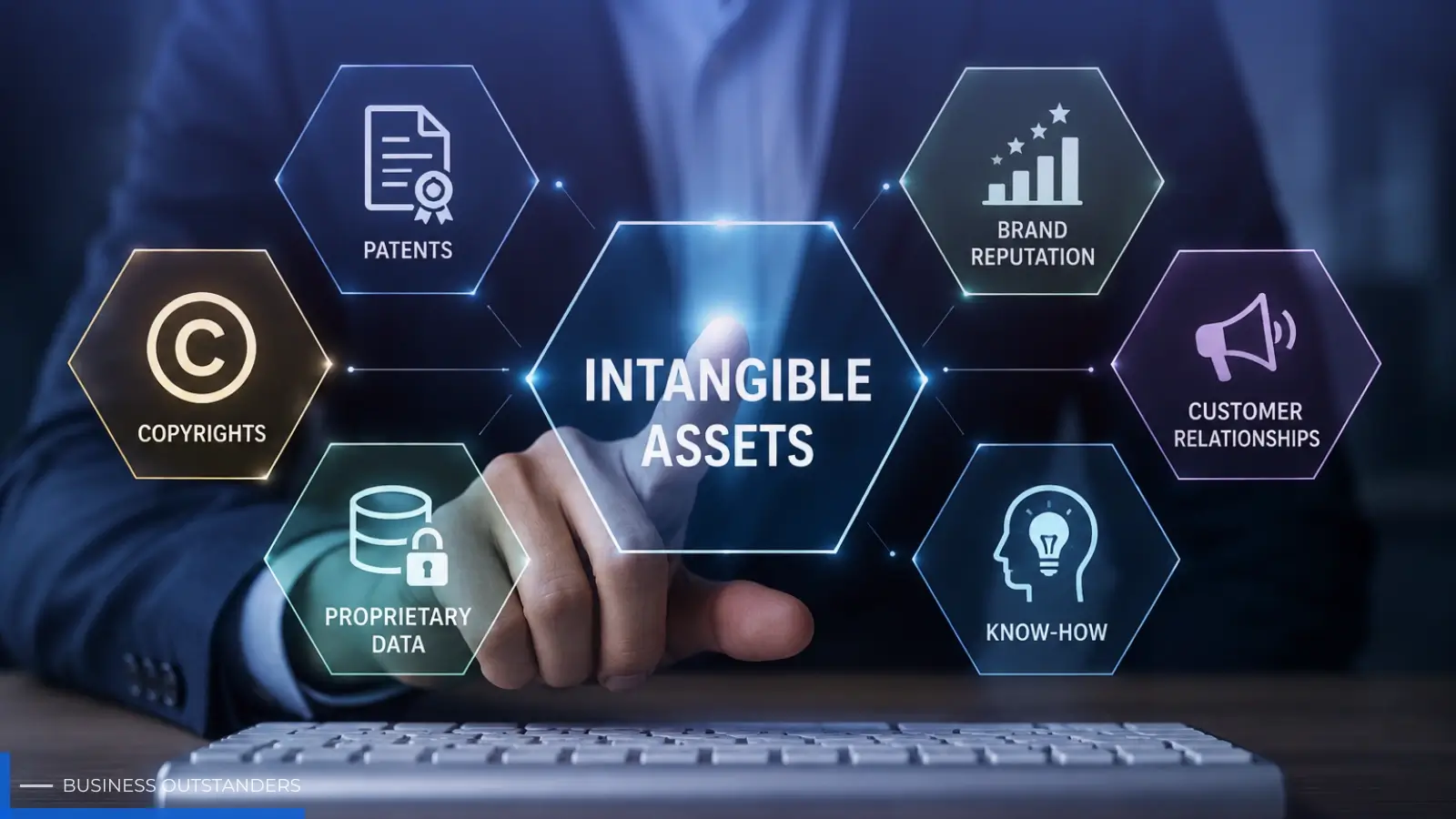
What matters most in business these days isn’t always something you can touch. While machines, stockpiles, and buildings still count, they’re rarely the main source of worth anymore. Since the early 2000s, hidden strengths have quietly taken over as the core drivers of success. Think names people trust, unique inventions, exclusive systems built behind closed doors. Relationships with users matter just as much as ownership of code or data networks. Even entire markets now rise on what’s unseen rather than what sits in warehouses.
Hidden strengths often lie beyond physical property. Buyers now pay closer attention to what cannot be touched when assessing deals. These unseen elements frequently make up the biggest share of a business's total value. Because of that, they shape how deeply people dig before agreeing to terms. What matters most might not sit on shelves or in warehouses.
The Shift from Tangible to Intangible Value
Back then, buying a company meant focusing on things you could touch. Factories, equipment, plots of ground - these defined worth. In eras built on making stuff, what you produced set your power. Strength came from how much you could build.
Still, tech-powered ways of doing business have reshaped how value is measured. Right now, plenty of thriving companies hold little hardware yet carry massive unseen worth. Think software makers, online content creators, drug developers, or internet stores - their strength usually comes from patents, personal information, repeat buyers, or unique internal tools.
Out here, shifts mirror larger financial tides. Firms chase edge via fresh ideas, data smarts, customer touch - less about factory muscle alone. So buyers dig deep into hidden forces shaping lasting gain.
Understanding Intangible Assets in Modern M&A
Intangible assets include a wide range of non-physical resources that contribute to a company’s earnings potential. Common examples include:
- Trademarks and brand recognition
- Patents and proprietary technology
- Copyrights and creative content
- Customer contracts and relationships
- Software and databases
- Trade secrets and confidential processes
- Domain names and digital assets
- Licensing agreements
- Workforce expertise and organizational know-how
These assets often create sustainable competitive advantages that cannot easily be replicated by competitors. For instance, a recognized brand can reduce customer acquisition costs, while proprietary software may improve operational efficiency or create entry barriers within a market.
In acquisition scenarios, identifying and quantifying these assets is essential because they can significantly impact the purchase price and future revenue expectations.
Why Buyers Prioritize Intangible Assets
Today’s customers aren’t just buying systems to keep things running. They’re investing in future expansion, where a company stands in the marketplace, along with long-term edge. What matters now is less about maintenance - more about momentum.
Some companies grow fast when they own solid patents. Those with devoted customers often see steady income over time. Unique tech inside a firm sometimes leads to higher worth on paper. People pay more for what keeps delivering year after year.
Intangible assets are particularly important because they often influence:
Future Cash Flow Potential
Acquirers evaluate how effectively a company can generate future earnings. Strong intangible assets typically support higher margins, repeat business, and scalable growth models.
Market Differentiation
Brands, patents, and proprietary systems help companies stand apart from competitors. Buyers frequently pay premiums for businesses with defensible market positions.
Strategic Expansion
Some acquisitions are motivated primarily by access to intellectual property or customer relationships rather than operational assets. This is especially common in technology, healthcare, and media sectors.
Risk Reduction
Businesses with established brands or protected technology may offer greater stability and lower competitive risk over time.
The Growing Importance of Accurate Valuation
Hard to pin down, things like patents or a company's reputation make valuing businesses tough today. Not so with buildings or machines - those come with clearer prices. What you see is not always what you get when deals involve software that few understand. Worth? That shifts depending on who is looking. Loyalty from customers doesn’t show up in ledgers. Value hides where numbers fail. Brands carry weight even if they’re invisible.
Because deals keep growing more complex, experts rely heavily on structured ways to judge value. One moment, they might lean on earnings forecasts; another time, comparisons to recent sales guide their view. What matters most changes with what’s being bought - machines, software, brands - affecting whether profit streams, replacement costs, or trading data take center stage.
A single patent’s worth could be tied to how much money it brings in through licenses down the line. On the flip side, putting a number on a brand often looks at how well people know it, along with its expected role in future profits.
During due diligence and purchase price allocation processes, firms specializing in intellectual property valuation help businesses assess the fair value of intangible assets involved in transactions. Companies such as Appraisal Economics are often referenced in discussions surrounding third-party valuation practices because accurate asset assessment has become essential for regulatory compliance, tax reporting, and informed acquisition decisions.
Technology Has Accelerated the Trend
The digital economy has amplified the importance of intangible assets even further. Modern companies increasingly rely on digital ecosystems rather than traditional infrastructure.
For example:
- SaaS businesses depend heavily on software architecture and subscription relationships.
- Social media companies derive value from user engagement and platform effects.
- Pharmaceutical firms rely on research pipelines and patent protection.
- eCommerce brands thrive through customer data and online reputation.
In many cases, these businesses can scale globally without substantial physical expansion. Their intangible assets become the foundation of enterprise value.
Artificial intelligence, automation, and data analytics are likely to deepen this trend in the coming years. Proprietary algorithms, machine learning models, and specialized datasets may soon become some of the most valuable assets within corporate transactions.
Challenges in Valuing Intangible Assets
Although intangible assets are critically important, they also present significant challenges.
Lack of Standardization
Unlike physical equipment, intangible assets often lack universally accepted valuation benchmarks. Two analysts may reach different conclusions depending on assumptions and methodologies.
Legal and Regulatory Complexity
Ownership rights, licensing agreements, and intellectual property protections vary across jurisdictions. Buyers must carefully verify legal enforceability before assigning value.
Rapid Market Changes
Technology and consumer preferences evolve quickly. An asset considered highly valuable today may lose relevance within a short period if market conditions change.
Integration Risks
After a takeover, moving things like reputation or know-how often hits snags. Whether people stay on board depends partly on how well values match up across teams. Trust from clients wavers if shifts feel abrupt or poorly handled.
Uncertainty pushes buyers to lean more on tight-knit review groups - law specialists sit alongside number crunchers, value analysts chime in too.
Intangible Assets and Purchase Price Allocation
After one company buys another, it must split what was paid across the things gained - this matters for bookkeeping and taxes. People call this step purchase price allocation, or PPA for short. Lately, that task weighs heavier because unseen holdings like patents or brand names now make up more of the total cost.
Getting each type of asset right matters since one kind might depreciate faster than another, affecting how numbers show up in reports. What you count first shapes what appears later on statements.
For example:
- Customer relationships may be amortized over several years.
- Patents may have finite legal lives.
- Certain trademarks may be considered indefinite-lived assets.
Improper valuation or classification can create compliance issues, distort financial statements, or impact future tax obligations.
The Future of Business Acquisitions
One reason deals look different now? The shift toward tech and new ideas changes what buyers want. Success ties less to factories, more to know-how, relationships, because minds shape markets today. What gets bought often includes software, brands, networks - since value hides in unseen systems instead of bricks.
Now things look different for investors sizing up deals. Businesses aiming to get bought are adjusting their steps. Valuation experts crunch numbers in new ways.
What if a company guards its hidden strengths well? It could stand out when others are shopping around. Yet buyers move blindly without seeing what really powers success. Missed details here mean paying too much by mistake.
Conclusion
Hidden strengths now shape deals more than ever before. From apps to hospitals, worth comes less from machines and more from what you cannot touch. Though factories still matter, minds and methods pull greater weight today. Value hides inside code, brands, data - places without form. Even in old industries, the real power shifts toward ideas, not inventory.
What gives companies an edge today often can’t be touched. Think trademarks, secret methods, loyal buyers, names people trust - things like that. These matter more now than buildings or machines when judging value down the road. Because of this shift, smart checks on intangible worth must happen before any deal closes. Overlooking them? That risks big mistakes later. How deeply you probe into hidden assets shapes how clear the picture really is.
Picture a world where ideas power progress. Grasping what you can’t touch - like knowledge or creativity - matters deeply now. Skip this insight, and choices lack clarity. To act wisely today means seeing value beyond physical things.
Business Outstanders brings you sharp insights on tech, business, entrepreneurship, law, crypto, and more. We uncover what’s next. Stay updated, sign up for our newsletter and be part of the future!