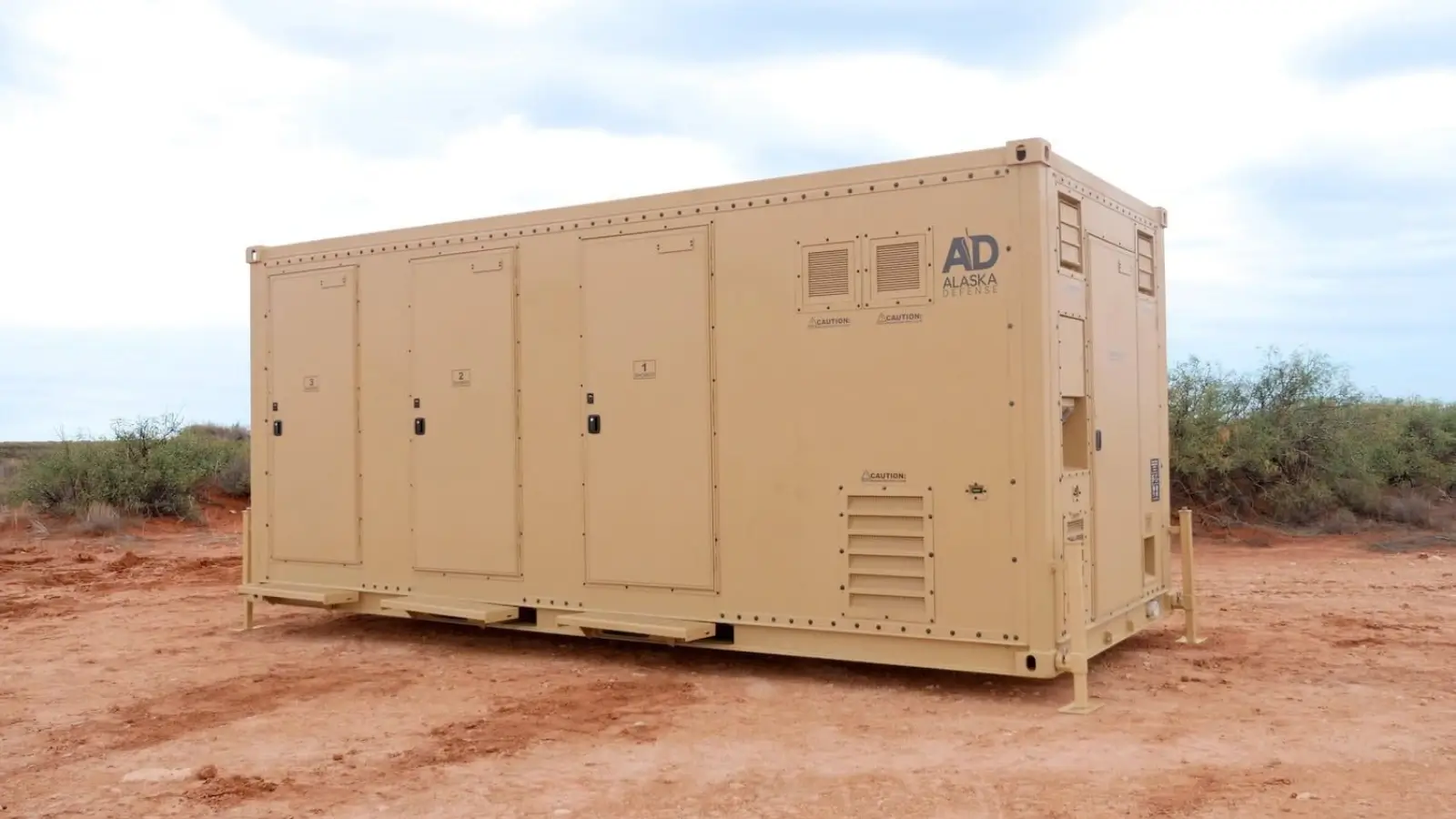
Containerized facilities are rapidly transforming defense infrastructure by providing scalable and adaptable solutions. These facilities offer significant advantages, including ease of transport and customization, making them indispensable for modern military operations. As technology advances, the capabilities of containerized structures are set to expand, further integrating them into defense strategies.
In recent years, the concept of a containerized facility has gained traction within the defense sector. These modular units, which can be easily transported and customized, are increasingly being recognized for their strategic importance. The flexibility and efficiency offered by these facilities make them ideal for deployment in diverse environments, ranging from conflict zones to remote training sites. As defense infrastructure continues to evolve, the role of containerized facilities is expected to grow even more critical.
Current use of containerized structures in military operations
Containerized facilities are already a staple in many military operations around the world. They provide a practical solution for creating temporary command centers, medical units, and barracks in areas where traditional construction methods would be impractical or too slow. The scalability of these facilities allows for quick expansion or reduction based on operational needs, offering a level of flexibility that is unmatched by permanent structures.
The benefits of containerized facilities extend beyond their physical adaptability. They can be equipped with state-of-the-art technology to support communication and logistical operations efficiently. Additionally, their robust design ensures they can withstand harsh environmental conditions while maintaining security standards. This combination of durability and versatility makes them an attractive option for militaries looking to optimize their infrastructure.
Modern military forces have also leveraged containerized facilities for specialized applications such as intelligence gathering, cybersecurity operations, and unmanned vehicle control centers. These units can be rapidly deployed to forward operating bases, providing critical capabilities within hours rather than weeks. The modular nature allows different functional units to be connected together, creating comprehensive operational complexes that can be tailored to specific mission requirements. This approach has proven particularly valuable in joint operations where multiple branches of the military need to coordinate efforts seamlessly while maintaining independent operational capabilities.
Recent technological advancements improving functionality
The integration of new technologies has significantly enhanced the functionality of containerized facilities. Innovations such as improved insulation materials and energy-efficient systems have made these structures more sustainable and comfortable for personnel. Moreover, advancements in modular technology allow for quicker assembly and disassembly, reducing setup times drastically.
Another noteworthy advancement is the implementation of smart technologies within these facilities. Smart systems enable real-time monitoring of internal conditions, such as temperature and humidity, ensuring optimal living and working environments. Furthermore, the incorporation of advanced communication networks enhances coordination across various units, contributing to overall mission success.
Renewable energy integration represents another significant technological leap for containerized facilities. Solar panels, wind turbines, and advanced battery storage systems are now being incorporated into designs, allowing these structures to operate independently of external power grids for extended periods. This energy independence is particularly crucial for remote deployments where fuel supply chains may be vulnerable or logistically challenging. Additionally, water purification and recycling systems are being integrated, further reducing the logistical footprint and enabling sustained operations in austere environments. These green technologies not only enhance operational capability but also reduce the environmental impact of military activities.
Expert predictions on future applications in defense
Looking forward, experts predict that containerized facilities will play an even more prominent role in defense infrastructure. As threats continue to evolve, the need for mobile and adaptable solutions becomes increasingly important. Experts believe that these facilities will become more autonomous, incorporating artificial intelligence to manage operations independently.
The potential applications for containerized facilities in future military strategies are vast. They could serve as mobile research labs or drone deployment bases, adapting quickly to changing mission requirements. Additionally, as environmental concerns become more pressing, the sustainability features of these structures will likely become a significant focus, further integrating them into comprehensive military planning.
Business Outstanders brings you sharp insights on tech, business, entrepreneurship, law, crypto, and more. We uncover what’s next. Stay updated, sign up for our newsletter and be part of the future!