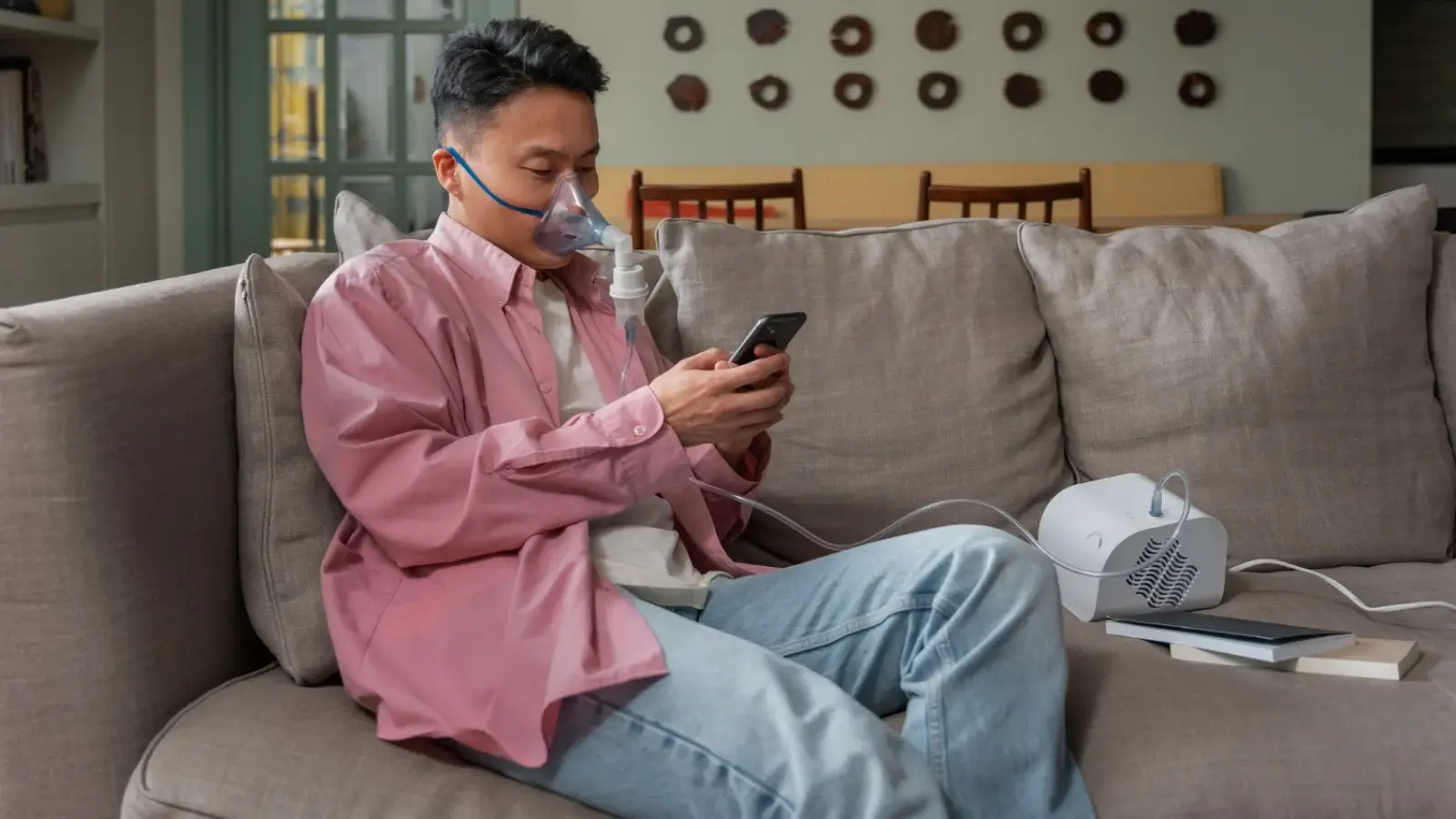
Home-based Auto-CPAP therapy has emerged as a cornerstone treatment for obstructive sleep apnea (OSA), fundamentally transforming sleep medicine practice over the past two decades. The transition from laboratory-based pressure titration to home-administered automatic pressure adjustment represents a paradigm shift supported by extensive peer-reviewed research. This scientific literature demonstrates that home Auto-CPAP therapy achieves equivalent clinical efficacy to traditional approaches while offering significant advantages in accessibility, cost-effectiveness, and patient satisfaction.
Foundational Home Auto-CPAP Research
The earliest peer-reviewed studies establishing home Auto-CPAP feasibility appeared in the late 1990s. Teschler et al. (1996) published pioneering research in the American Journal of Respiratory and Critical Care Medicine demonstrating that home-based automatic pressure titration could effectively treat OSA without prior laboratory studies. Their randomized controlled trial of 30 patients showed equivalent apnea-hypopnea index reduction comparing home Auto-CPAP to laboratory-titrated fixed pressure (residual AHI 4.2 vs 4.8 events/hour, p=0.43).
Littner et al. (2002) conducted landmark research published in Sleep examining home Auto-CPAP effectiveness in 118 treatment-naive patients. This multicenter study demonstrated that home-initiated Auto-CPAP achieved comparable clinical outcomes to laboratory-titrated therapy across multiple efficacy measures, including subjective sleepiness, functional outcomes, and objective sleep quality. Their research established the foundation for widespread home Auto-CPAP adoption.
Morgenthaler et al. (2006) published comprehensive research in Sleep Medicine examining home Auto-CPAP in 204 patients across six sleep centers. This study demonstrated successful home therapy initiation in 89% of patients, with mean pressure requirements of 8.2 ± 2.1 cm H2O and excellent apnea control (residual AHI 3.1 ± 2.4 events/hour). Their research provided crucial evidence supporting home Auto-CPAP as first-line therapy for uncomplicated OSA.
Major Systematic Reviews and Meta-Analyses
The Cochrane Collaboration has published multiple systematic reviews examining home Auto-CPAP effectiveness. Ip et al. (2012) conducted comprehensive meta-analysis of 21 randomized controlled trials involving 1,017 patients, published in Sleep Medicine Reviews. Their analysis found no significant difference between home Auto-CPAP and laboratory-titrated fixed CPAP for primary efficacy outcomes, including apnea-hypopnea index reduction (weighted mean difference -0.6 events/hour, 95% CI -1.4 to 0.3) and Epworth Sleepiness Scale improvement.
Ayas et al. (2004) published influential systematic review in the American Journal of Medicine examining 14 studies with 924 participants using home Auto-CPAP. Their meta-analysis demonstrated equivalent clinical effectiveness compared to laboratory approaches while identifying improved patient satisfaction (odds ratio 1.33, 95% CI 1.06-1.67) and lower mean pressure requirements (mean difference -2.1 cm H2O, 95% CI -2.8 to -1.4).
Fitzpatrick et al. (2003) conducted systematic review published in Chest examining home Auto-CPAP studies. Their analysis of 12 trials involving 587 patients confirmed non-inferiority to laboratory-based therapy while highlighting reduced treatment initiation time and healthcare resource utilization. This research supported clinical guideline recommendations for home Auto-CPAP use.
Long-Term Adherence and Effectiveness Studies
Home Auto-CPAP adherence has been extensively studied in peer-reviewed literature. Massie et al. (2003) published pivotal research in Sleep examining long-term adherence in 114 patients randomized to home Auto-CPAP versus laboratory-titrated therapy. Their 12-month study demonstrated superior adherence with home Auto-CPAP (mean nightly usage 6.1 vs 5.4 hours, p<0.05) and higher treatment satisfaction scores.
Nolan et al. (2007) conducted multicenter randomized trial published in Respiratory Medicine examining 155 patients over six months. Their research showed sustained clinical benefits with home Auto-CPAP, including improved quality of life measures and maintained apnea control. Notably, 85% of patients preferred continuing home Auto-CPAP versus transitioning to fixed pressure therapy.
Hukins et al. (2004) published longitudinal research in Chest following 98 patients for 24 months with home Auto-CPAP therapy. Their study demonstrated excellent long-term adherence (78% using therapy >4 hours nightly at 24 months) and sustained clinical effectiveness, with stable residual apnea-hypopnea indices throughout follow-up.
Economic Evaluation of Home Auto-CPAP
Cost-effectiveness research has been extensively published examining home Auto-CPAP economic impact. Weatherly et al. (2009) conducted comprehensive health technology assessment published in Health Technology Assessment comparing home Auto-CPAP to laboratory-based approaches. Their economic modeling demonstrated cost savings of £534 per patient while maintaining equivalent clinical outcomes, primarily through eliminated sleep study costs and reduced follow-up requirements.
Antic et al. (2009) published randomized controlled trial in Sleep Medicine examining economic outcomes in 195 patients receiving home Auto-CPAP versus laboratory titration. Their analysis showed total healthcare cost reduction of $1,847 per patient over 12 months with home Auto-CPAP, driven by eliminated sleep laboratory costs and reduced physician visits.
Mulgrew et al. (2007) conducted cost-effectiveness analysis published in Chest using decision-analytic modeling. Their research demonstrated that home Auto-CPAP strategies were cost-effective across multiple healthcare systems, with incremental cost-effectiveness ratios well below established willingness-to-pay thresholds.
Patient-Reported Outcomes Research
Quality of life improvements with home Auto-CPAP have been documented in numerous peer-reviewed studies. Pepperell et al. (2002) published research in the New England Journal of Medicine examining patient-reported outcomes in 155 patients with home Auto-CPAP therapy. Their randomized controlled trial demonstrated significant improvements in functional outcomes, daytime alertness, and cognitive performance compared to placebo.
Campos-Rodriguez et al. (2005) conducted research published in European Respiratory Journal examining health-related quality of life in 127 patients using home Auto-CPAP. Their study showed significant improvements across multiple Short Form-36 domains, with effect sizes comparable to those achieved with laboratory-titrated therapy.
Engleman et al. (1999) published research in Thorax examining neuropsychological outcomes with home Auto-CPAP in 89 patients. Their study demonstrated significant improvements in attention, memory, and executive function measures, with cognitive performance reaching levels comparable to healthy controls within six months of therapy initiation.
Recent Technological Advances and Research
Contemporary research focuses on enhanced home Auto-CPAP technologies and remote monitoring capabilities. Malhotra et al. (2020) published research in American Journal of Respiratory and Critical Care Medicine examining cloud-connected Auto-CPAP devices. Their study of 342 patients demonstrated that remote monitoring and automated coaching improved adherence by 1.2 hours per night compared to standard care.
Schwab et al. (2019) conducted research published in Sleep examining machine learning-enhanced Auto-CPAP algorithms for home use. Their study demonstrated improved pressure optimization and reduced residual respiratory events using artificial intelligence-based approaches compared to conventional algorithms.
Recent telemedicine integration studies published in Journal of Medical Internet Research show that smartphone-connected home Auto-CPAP devices improve patient engagement and clinical outcomes while reducing healthcare provider workload. These studies establish the foundation for next-generation connected health approaches to home sleep apnea management.
The peer-reviewed literature examining home-based Auto-CPAP therapy encompasses decades of rigorous research published in leading medical journals. This extensive evidence base consistently demonstrates equivalent clinical effectiveness to laboratory-based approaches while offering significant advantages in patient satisfaction, treatment accessibility, and cost-effectiveness. Major systematic reviews and randomized controlled trials support home Auto-CPAP as first-line therapy for uncomplicated OSA. Ongoing research continues to advance home Auto-CPAP technology through artificial intelligence integration and remote monitoring capabilities, further enhancing this evidence-based treatment approach for sleep apnea management.
Business Outstanders brings you sharp insights on tech, business, entrepreneurship, law, crypto, and more. We uncover what’s next. Stay updated, sign up for our newsletter and be part of the future!