Shilajit is having a moment, and with that mainstream attention has come a flood of product formats all claiming to be the right way to take it. Walk through any supplement section online and you will find raw resin jars, loose powder packets, capsules, drops, and now shilajit supplement gummies competing for attention on the same page. Each format has genuine advocates and real tradeoffs. Knowing what those tradeoffs actually are - rather than accepting the claims of whoever is selling you the product - is the key to getting the most from your investment.
This comparison covers the three major shilajit formats - powder, resin, and gummies - across the dimensions that matter most: bioavailability, potency, convenience, and real-world compliance. Because the best shilajit supplement is ultimately the one you will actually take every day.
What Makes Shilajit Worth Taking in Any Form
Before comparing formats, it is worth establishing why shilajit has earned its reputation as one of the most valuable natural adaptogens available. Formed over millions of years in high-altitude mountain environments as organic matter decomposes and mineralizes under geological pressure, authentic shilajit contains an extraordinarily complex profile of bioactive compounds.
The most studied of these is fulvic acid - a small organic molecule with remarkable cell-permeating properties that may support mitochondrial function, nutrient transport, and the clearance of cellular waste products. Alongside fulvic acid, shilajit carries over 80 trace minerals in ionic form (the most bioavailable mineral form), including zinc, iron, magnesium, selenium, and many others that play critical roles in energy production, hormonal function, and immune response.
The benefits that consistently appear in user reports and research - sustained energy improvement, cognitive clarity, testosterone support in men, faster exercise recovery - are all plausibly explained by these mechanisms. Any format comparison has to evaluate how well each delivery method preserves and delivers these active compounds to the body.
Shilajit Resin: The Traditional Standard
Raw shilajit resin is the closest you can get to how this substance exists in nature. Authentic Himalayan shilajit resin is typically a dark, tar-like material that is minimally processed - usually purified to remove physical contaminants while preserving the full compound profile. Proponents of the resin form argue that minimal processing means minimal disruption to the naturally occurring fulvic acid, humic acid, and mineral matrix.
From a bioavailability standpoint, resin dissolves readily in warm water or milk, and fulvic acid is inherently water-soluble, meaning absorption in the gut is generally efficient. The argument for resin's superiority is less about absorption and more about compound integrity - the concern that processing steps involved in making powder or gummies degrade some of the more delicate bioactive components.
The practical drawbacks are significant for many users. Measuring out the traditional pea-sized serving accurately requires a small scale or careful eyeballing. The flavor is intensely earthy, mineral, and bitter - an acquired taste that many people never warm to. Dissolving it requires warm liquid and a moment of preparation that creates friction for daily routine use. For experienced botanical users who prioritize potency above all else, resin remains the reference standard. For most newcomers, it is a challenging starting point.
Shilajit Powder: Convenient, With Tradeoffs
Shilajit powder is produced by drying resin and grinding it down, often with added excipients like silicon dioxide to prevent clumping. The result is a more shelf-stable, easier-to-package product that can be filled into capsules or mixed into beverages. The dose is more consistent than raw resin and the format is more familiar to supplement users.
The quality concern with powder is that the drying and grinding process involves heat, which has the potential to degrade some temperature-sensitive compounds in shilajit. Whether this is a significant practical issue depends heavily on the specific processing methods used - low-temperature processing preserves compound integrity better than aggressive industrial methods. Brands that are transparent about their processing approach earn more credibility in this regard.
Powder absorbed in capsule form has a slower onset than dissolved resin, since the capsule shell must first break down before the powder is exposed to digestive fluids. Powder mixed directly into liquids behaves more like dissolved resin and absorbs more quickly. Either way, the potency of the final product depends entirely on the quality and concentration of the extract used in the powder.
Shilajit Gummies: The Modern Compliance Winner
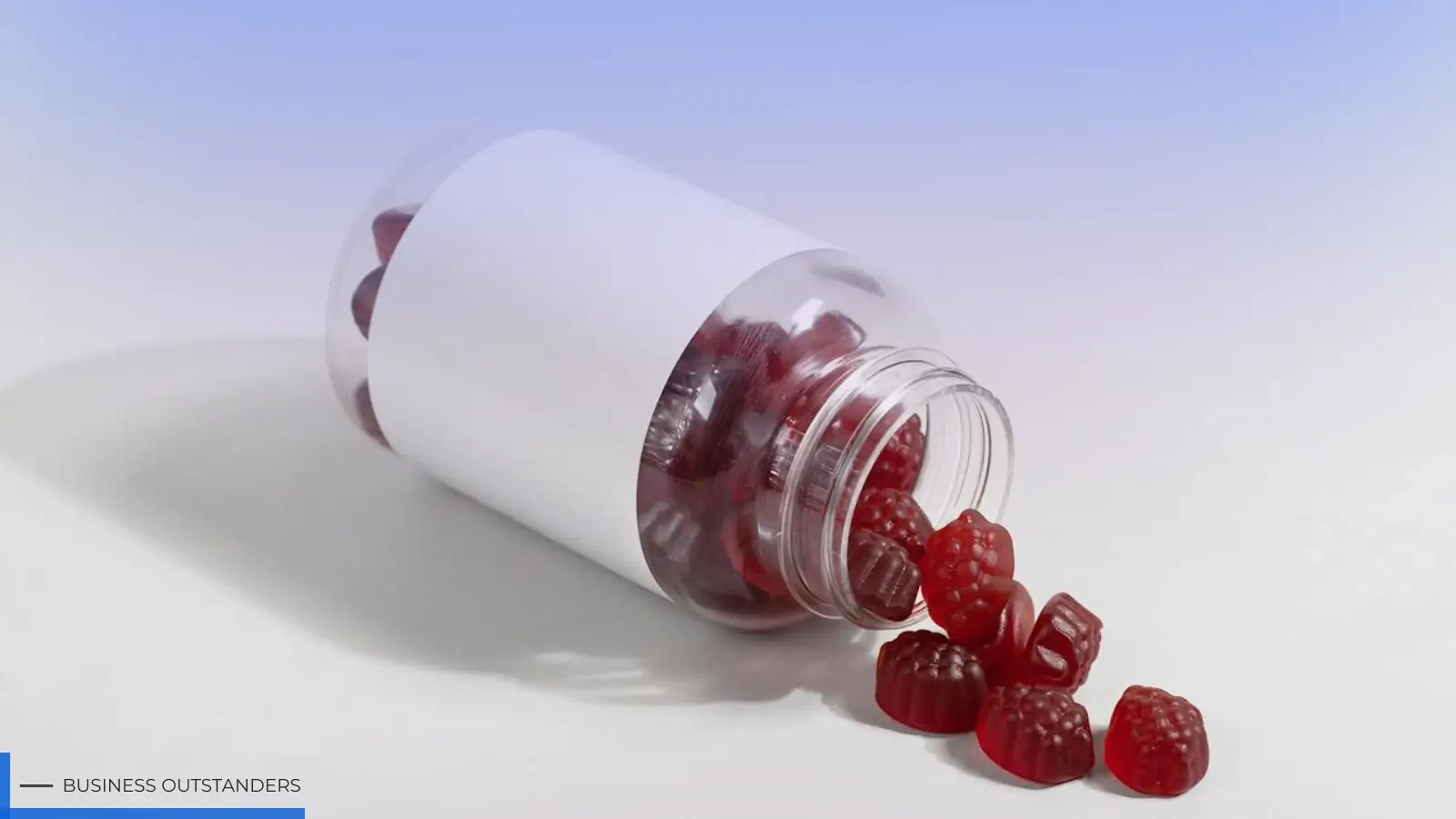
Gummies represent the newest and fastest-growing format for shilajit supplementation - and their popularity is driven by factors that go well beyond aesthetics. A well-formulated shilajit gummy addresses the primary adoption barriers that limit consistent use of resin and powder: taste, preparation, and portability.
The bioavailability argument for gummies centers on the chewing process, which initiates some early breakdown of the gummy matrix and allows some buccal (oral mucosa) absorption before the compound even reaches the stomach. The water-soluble nature of fulvic acid means it absorbs well through gut tissue once the gummy is fully processed. While some experts argue that raw resin may have a modest bioavailability edge in ideal conditions, the real-world picture is different when you account for compliance.
A supplement you take daily in gummy form will almost certainly outperform a superior format that you take sporadically because the preparation is inconvenient or the taste is aversive. The cumulative nature of shilajit's adaptogenic benefits means consistency is the most important variable - and gummies optimize for consistency better than any other format.
The Compliance Advantage That Changes Everything
Every conversation about supplement bioavailability has to include compliance, because the most bioavailable supplement on earth does zero good if you do not take it. And the research on supplement adherence is clear: format and palatability matter enormously for long-term consistency.
Gummies have outperformed other supplement formats in adherence studies across multiple product categories. The format is intuitive, portable, dose-controlled, and - when well-made - genuinely enjoyable to consume. These factors compound over weeks and months into meaningfully better outcomes than a more potent product taken inconsistently.
For shilajit specifically, where the benefits require four to eight weeks of consistent daily use to fully manifest, the format that you will actually stick with for that duration is the format that will work best for you. For most people in modern life, that is gummies.
What to Look For in a Quality Shilajit Gummy
Given that gummies are the format most susceptible to quality shortcuts - because it is easy to hide a small amount of low-grade extract in an otherwise appealing product - knowing what marks a legitimate product is essential.
Look for: disclosed milligrams of shilajit extract per gummy, fulvic acid standardization percentage (minimum 50 percent is a useful benchmark), third-party lab testing with accessible Certificates of Analysis confirming potency and safety, disclosed sourcing region, and a clean carrier formula without unnecessary artificial additives.
A gummy that checks all these boxes is a product worth buying. A gummy that checks none of them - regardless of how attractive the packaging or how compelling the marketing - is not.
Frequently Asked Questions
Which form of shilajit is most potent?
Raw resin is generally considered the most potent and least processed form. However, a high-quality standardized gummy at an appropriate dose can deliver comparable practical benefits, particularly when compliance is considered. The highest-potency product you take inconsistently will be less effective than a well-formulated gummy you take every day.
Does cooking or heat damage shilajit?
Excessive heat can degrade some of shilajit's more sensitive bioactive compounds. For resin users, dissolving in warm (not boiling) water is recommended. For gummies and powders, the heat exposure during manufacturing is more relevant - quality brands use low-temperature processing methods to preserve compound integrity.
Can I mix shilajit powder into coffee?
Many users do mix shilajit powder or dissolved resin into coffee. The mineral and fulvic acid content survives the brief heat exposure of mixing into a hot beverage, though the strong flavor of both coffee and shilajit can make the combination an acquired taste. If you take your coffee black, the flavor combination may be more pronounced.
How long do shilajit gummies stay good?
Most commercially produced shilajit gummies have a shelf life of one to two years when stored in a cool, dry place away from direct sunlight and heat. Check the expiration date on the package and follow storage instructions from the manufacturer for optimal product quality.
Is a shilajit gummy as effective as a capsule?
For equivalent extract quality and dosage, gummies and capsules produce comparable outcomes. Gummies may have a slight onset advantage due to initial breakdown during chewing. The more meaningful difference is typically compliance - gummies tend to be easier to take consistently, which is ultimately the most important performance variable for an adaptogen.
For those who want the science of shilajit without the complexity of resin or powder, Dialed Moods offers thoughtfully formulated shilajit gummies built around genuine potency standards, transparent sourcing, and third-party testing - because the format is only as good as the product inside it.
Business Outstanders brings you sharp insights on tech, business, entrepreneurship, law, crypto, and more. We uncover what’s next. Stay updated, sign up for our newsletter and be part of the future!