Fixing modern circuit boards is a test of extreme patience and precision. Whether you are repairing a smartphone logic board, reviving a vintage gaming console, or building a custom drone, the components you deal with are often smaller than a grain of rice. One wrong move with a soldering iron can instantly ruin an expensive piece of hardware.
For many technicians, the biggest challenge is not the soldering technique itself, but simply being able to see what they are doing.
The Hidden Obstacles in Electronic Repair
When working on surface-mount devices, precision requires a perfect balance of depth perception, lighting, and stability.
Many beginners start out using handheld magnifying glasses or wearable loupes. However, these tools offer a very limited field of view and require you to keep your head perfectly still. If you move slightly, the focus is lost. Another common alternative is a standard USB camera connected to a computer, but these setups often introduce a subtle image delay. A lag of even a fraction of a second makes it incredibly difficult to coordinate your hand movements while holding a hot soldering iron.
Furthermore, hunching over a workbench for hours to stare into a tiny lens causes severe neck strain and physical fatigue, which ultimately leads to costly mistakes.
How an HDMI Setup Solves the Problem
To achieve professional results, you need a display system that eliminates lag and allows you to work in a natural, upright position. This is why a dedicated HDMI Digital Microscope has become a staple on modern tech workbenches.
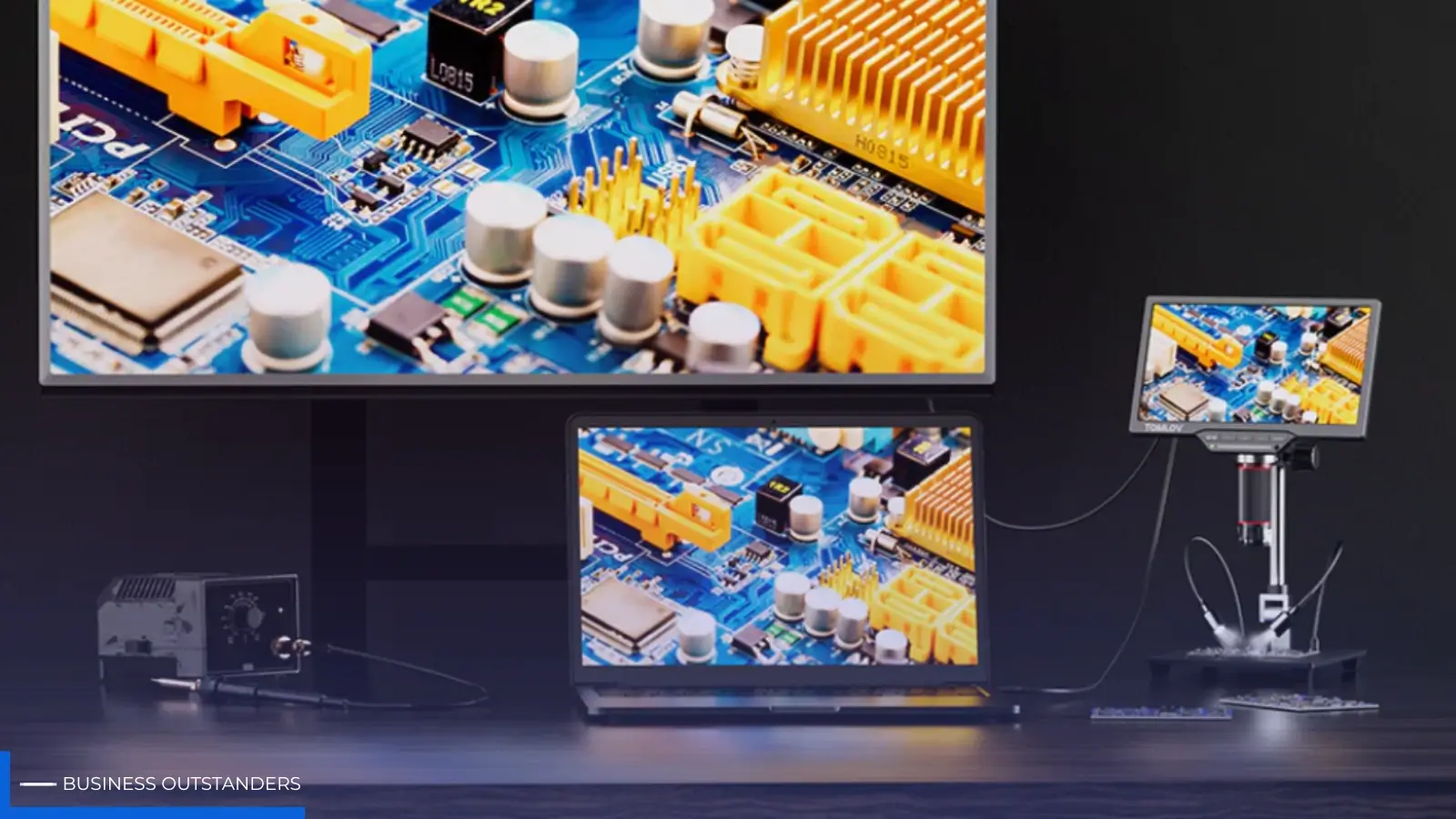
By sending a direct video signal to a monitor, this technology addresses the exact pain points that electronics repairers face:
- Real-Time Responsiveness: The direct HDMI transmission ensures zero latency, allowing you to guide your soldering tip and apply flux with absolute real-time accuracy.
- Ample Working Space: A proper digital setup provides a generous distance between the lens and the circuit board, giving you plenty of room to maneuver your soldering iron, hot air gun, and tweezers.
- Enhanced Component Detection: High-definition magnification makes it easy to spot hidden hairline cracks in solder joints, burnt resistors, and bridged pins that are invisible to the naked eye.
Upgrading Your Workbench for Success
If you want to take your repair skills to a professional level, relying on makeshift magnification will only hold you back. A quality setup with a solid aluminum base will prevent vibrations from ruining your view, while adjustable LED lights will eliminate the harsh shadows that hide tiny circuit pathways.
Final Thoughts
Successful micro-soldering requires a clear view and a steady hand. By upgrading your workspace with a zero-latency HDMI viewing system, you protect your physical health and give yourself the visual clarity needed to tackle the most challenging repairs with confidence.
Business Outstanders brings you sharp insights on tech, business, entrepreneurship, law, crypto, and more. We uncover what’s next. Stay updated, sign up for our newsletter and be part of the future!