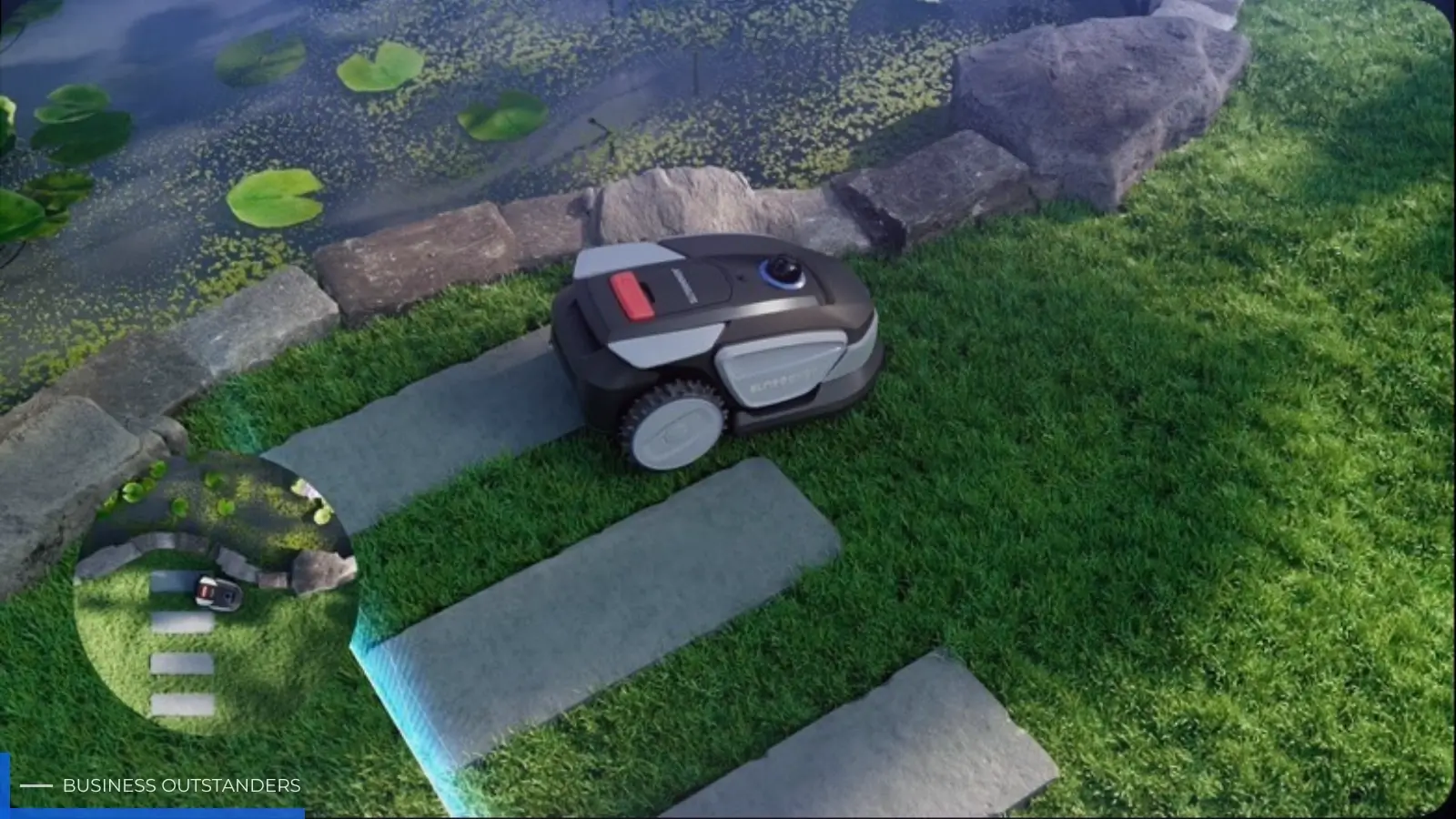
Sunseeker GPS mowers are designed for yards that do not behave as a single rectangle. Many homes have distinct mowing zones such as the front lawn, rear garden, side strip, play area, trees, walkways, or enclosed areas. A multi-zone GPS mower tackles this problem by mapping each feasible portion, allocating routes, and managing coverage using app-based controls rather than hidden perimeter wires. The ideal configuration allows for adequate mowing time in each zone while safeguarding flower beds, pathways, and limited locations. Sunseeker GPS mowing is a cleaner, more organised approach for homeowners with split lawns to automate their daily lawn care tasks.
How Sunseeker GPS Technology Handles Multiple Lawn Zones
RTK navigation and precision mapping across separated areas
Sunseeker Tech GPS robot mowers use the DualFusion Position & Navigation System, powered by full-band RTK + VSLAM positioning, to support accurate wire-free mowing across separated lawn areas. RTK improves location precision through satellite correction, while VSLAM helps the mower interpret visual movement and yard structure. Together, they support smarter route control in gardens with trees, paths, fences, and open spaces. AI-assisted mapping and intelligent path planning help the mower learn the lawn, organize efficient coverage, and reduce wasted movement. Multi-zone support for up to 60 lawn zones and 5 maps gives complex properties more structured mowing control.
Virtual boundaries and zone recognition in real use
Virtual borders allow homeowners to establish mowing areas without burying perimeter wires. In practice, this means that the mower can determine where the front yard stops, where a garden bed begins, and which side walks or play areas require extra attention. Rather of considering the entire yard as one homogeneous space, zone identification ensures that each part receives the appropriate mowing time. A detailed virtual map also facilitates adjustments during landscaping, furniture, or seasonal yard usage transitions. For multi-zone lawns, this flexibility makes automated mowing more practical, tidy, and adaptable over time.
Performance in Real Multi-Zone Lawn Scenarios
Switching between front, back, and side yard zones
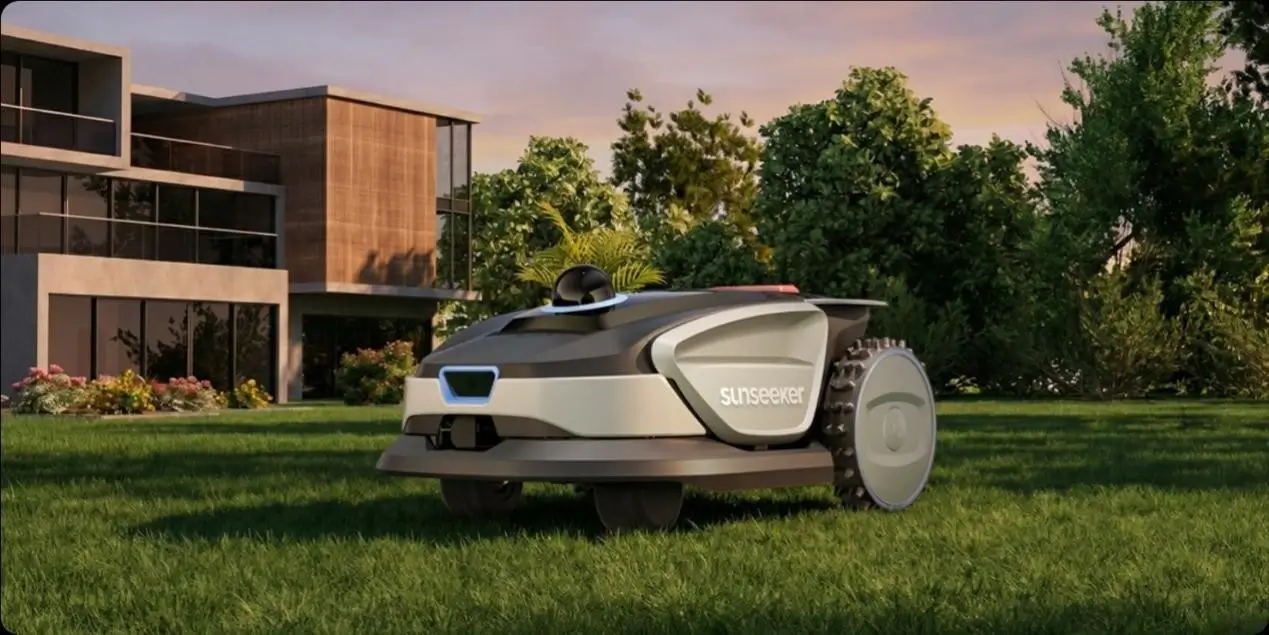
Mowing a multi-zone grass requires various techniques in each zone. The back lawn may have play equipment, patios, or shaded areas, while the front yard may need periodic trimming for kerb appeal. Side yards may need shorter or fewer runs due to their narrowness and poor growth. Mapping zones and app-based scheduling let Sunseeker GPS mowers manage these discrepancies. After defining sections, the mower may follow predetermined paths and serve each sector more efficiently. This reduces missing grass, repetitive passes, and wasteful random movement.
Handling narrow passages, fences, and disconnected lawns
The biggest problems in multi-zone mowing are narrow corridors, fences, and unconnected lawns. Mowers must know how to navigate tight passages, stop at gates or hard barriers, and reach zones outside their automated reach. Connected locations benefit from proper mapping for grass section mobility. The system's supported configuration may need homeowners to manually relocate the mower or generate different maps in unconnected locations. Good zone design saves the mower time searching for inaccessible grass and keeps fences, borders, and limited transitions clean.
Setup Considerations for Multi-Zone Sunseeker Users
Mapping strategy for efficient zone creation and coverage
Begin mapping by dividing the yard into functional working pieces, not simply visual regions. Sort lawns by access route, growth rate, terrain, and mowing priority. A front lawn, rear lawn, side strip, shaded patch, and play zone may all require separate settings. Maintain smooth borders, provide adequate clearance near beds and walks, and avoid driving the mower into impossible curves. Name zones properly in the app so that future schedule modifications are straightforward. After finishing the initial map, do supervised testing in each sector to alter borders, travel routes, and no-go areas before depending on autonomous mowing.
Signal stability, base station placement, and yard layout challenges
Signal stability is required for precise GPS mowing. Place the base station where there is a clear view of the sky, away from thick trees, towering buildings, metal constructions, and restricted corners. Yard layout also influences performance. Long side entrances, walled transitions, covered patios, and dense tree canopies can all compromise positioning or complicate paths. During setup, keep track of where the mower pauses, wanders, or loses confidence, and adjust boundaries and station placement as appropriate. Keep sensors clean and open dock access. Strong placement and a clear layout make each mapped zone more reliable in daily operation.
Conclusion
Sunseeker GPS mowers are ideal for multi-zone lawns because they offer exact location, smart mapping, virtual borders, and app-based management. They enable homeowners to manage front yards, backyards, side strips, play areas, and intricate garden sections without burying perimeter wires. The greatest outcomes are achieved by rigors zone construction, reliable base station placement, precise no-go areas, and realistic mowing schedules for each region. Multi-zone support makes it easier to maintain split yards, although setup quality remains important. Sunseeker GPS mowing, with its clear map and powerful signal, helps keep complicated lawns clean with minimal personal work.
Also Read: Are Robotic Lawn Mowers Ready for Every Backyard?
Business Outstanders brings you sharp insights on tech, business, entrepreneurship, law, crypto, and more. We uncover what’s next. Stay updated, sign up for our newsletter and be part of the future!