Modern products increasingly depend on precise, efficient, and reliable motion. From automated equipment and service robots to smart appliances and mobility systems, manufacturers need more than a motor that simply rotates. They need a complete solution that delivers the required speed, torque, control, efficiency, and service life.
Integrating the motor, gearbox, and driver as one coordinated system creates clear business value. It reduces engineering uncertainty, simplifies sourcing, improves product performance, and helps companies move from prototype to production with fewer delays.
Faster Product Development
When motors, gearboxes, and drivers are selected separately, engineering teams must confirm that every component is electrically and mechanically compatible. Shaft dimensions, mounting points, voltage, current, torque, feedback signals, and communication protocols all need to work together.
A fully integrated solution reduces this burden. The supplier can evaluate the complete operating cycle and recommend a matched combination based on load, movement profile, installation space, and control requirements.
This shortens the design stage and reduces repeated testing. Engineering teams can focus more attention on the product’s main functions instead of solving compatibility problems between motion components.
Better Performance from a Smaller Package
Space is a major constraint in many commercial products. Designers often need higher output without increasing the size or weight of the final assembly.
A coordinated motion system makes it easier to balance motor speed, gearbox reduction, and driver control. For applications requiring high power density and smooth operation, an outrunner BLDC motor may be considered as part of the overall design rather than evaluated as an isolated component.
The gearbox converts motor speed into usable torque, while the driver regulates acceleration, deceleration, current, position, and protection functions. When these elements are engineered together, manufacturers can achieve more stable performance within a compact installation area.
Lower Risk of Design Failure
A motion system may perform well during a short laboratory test but fail under repeated starts, load changes, temperature fluctuations, or long operating cycles. Problems often appear when components are chosen from separate specification sheets without enough system-level testing.
Integration allows the supplier to examine how the components interact under realistic conditions. Excessive current, gearbox backlash, overheating, vibration, unstable speed, and control errors can be identified before mass production.
Reducing these risks has direct financial value. It lowers the chance of tooling changes, delayed launches, field failures, warranty claims, and costly redesigns.
Simplified Procurement and Supplier Management
Buying motors, gearboxes, and drivers from different companies increases purchasing complexity. Procurement teams must manage multiple quotations, lead times, quality standards, technical contacts, and minimum order quantities.
An integrated supplier provides one point of responsibility. Instead of determining which component caused a problem, the buyer can work with one technical team responsible for the complete motion assembly.
This simplifies documentation, incoming inspection, inventory planning, and after-sales communication. It may also reduce the number of parts that need to be ordered and tracked.
More Predictable Manufacturing Costs
The lowest-priced individual components do not always create the lowest-cost system. Extra brackets, couplings, wiring, connectors, programming, assembly labor, and testing can make a fragmented solution more expensive than expected.
Integrated development makes these costs visible earlier. The supplier can optimize component selection, remove unnecessary interfaces, simplify assembly, and design the system around realistic production volumes.
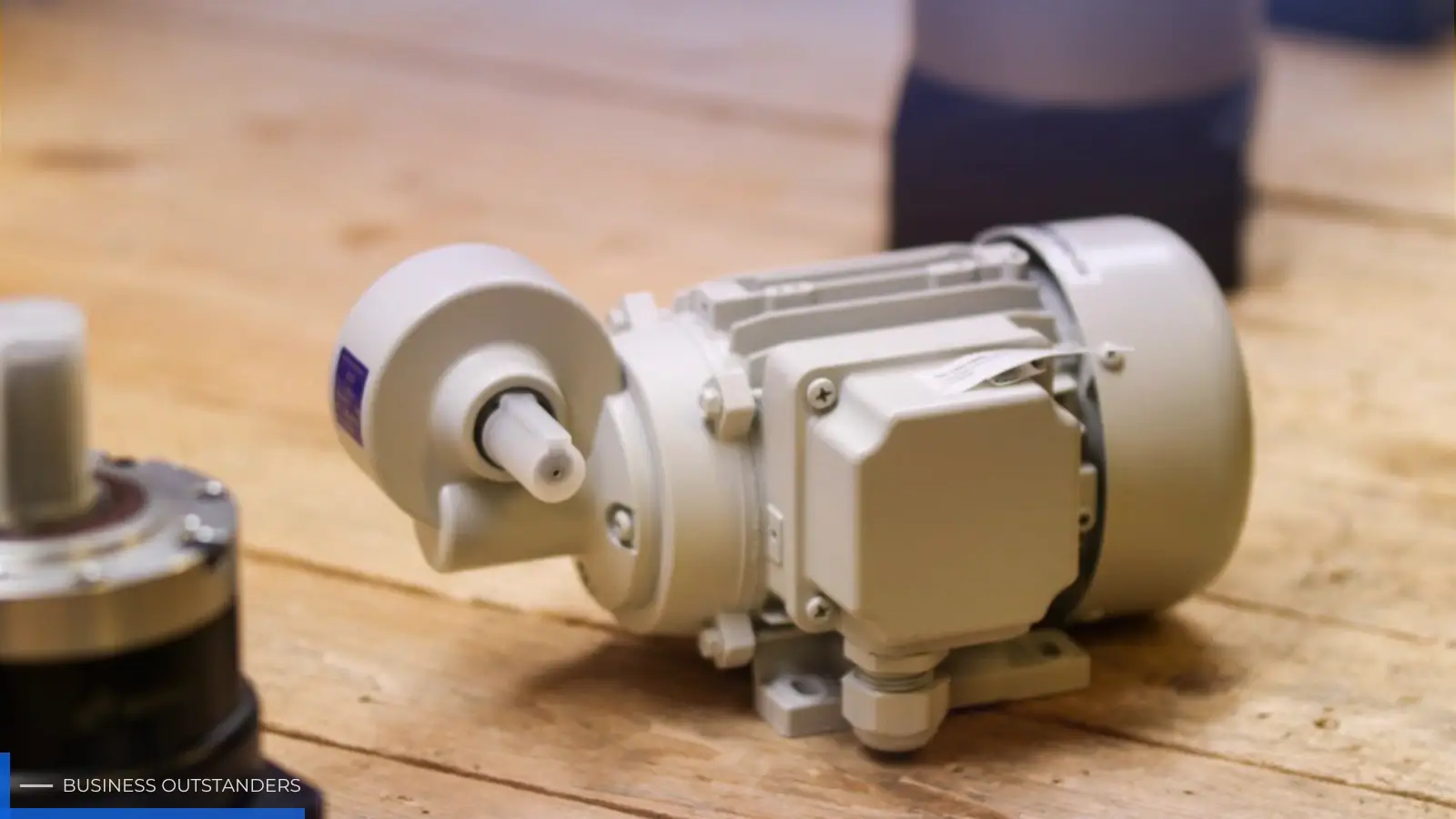
For torque-focused applications, a planetary gear motor can combine compact dimensions with suitable reduction performance, but its commercial value depends on correct matching with the driver, load profile, duty cycle, and target service life.
This system-level approach gives manufacturers a clearer estimate of total production cost rather than only comparing component prices.
Improved Quality and Consistency
A complete motion system can be tested against defined targets before shipment. These may include output speed, torque, noise, current, temperature rise, positioning accuracy, and communication response.
Standardized testing improves consistency between batches and reduces variation during final assembly. It also helps manufacturers establish clearer acceptance criteria for incoming components.
Customers may never see the motor or gearbox, but they notice noise, slow response, unstable movement, and early failure. Better integration therefore supports both product quality and brand reputation.
Easier Product Scaling
A prototype may use readily available components, but mass production requires stable supply, repeatable performance, and controlled costs. Integrated suppliers can support the transition by refining the design for manufacturability.
They may adjust materials, gear ratios, winding specifications, driver settings, connectors, housings, or mounting features. A modular system can also support several product versions with different torque, speed, or control settings.
This gives manufacturers more flexibility when expanding a product family without redesigning the entire motion architecture.
Stronger Long-Term Collaboration
Motion requirements often evolve as products become smarter, smaller, quieter, or more energy efficient. Working with a supplier that understands the complete system creates a stronger foundation for future upgrades.
Instead of purchasing separate components, manufacturers gain access to coordinated mechanical, electrical, and control expertise. This accelerates problem-solving and supports continuous product improvement.
Conclusion
Integrating motors, gearboxes, and drivers is not only an engineering decision. It is a business strategy that can reduce development time, lower technical risk, simplify procurement, improve quality, and create more predictable production costs.
Companies that treat motion as a complete system are better positioned to launch reliable products, scale production efficiently, and respond to changing market requirements.
Business Outstanders brings you sharp insights on tech, business, entrepreneurship, law, crypto, and more. We uncover what’s next. Stay updated, sign up for our newsletter and be part of the future!