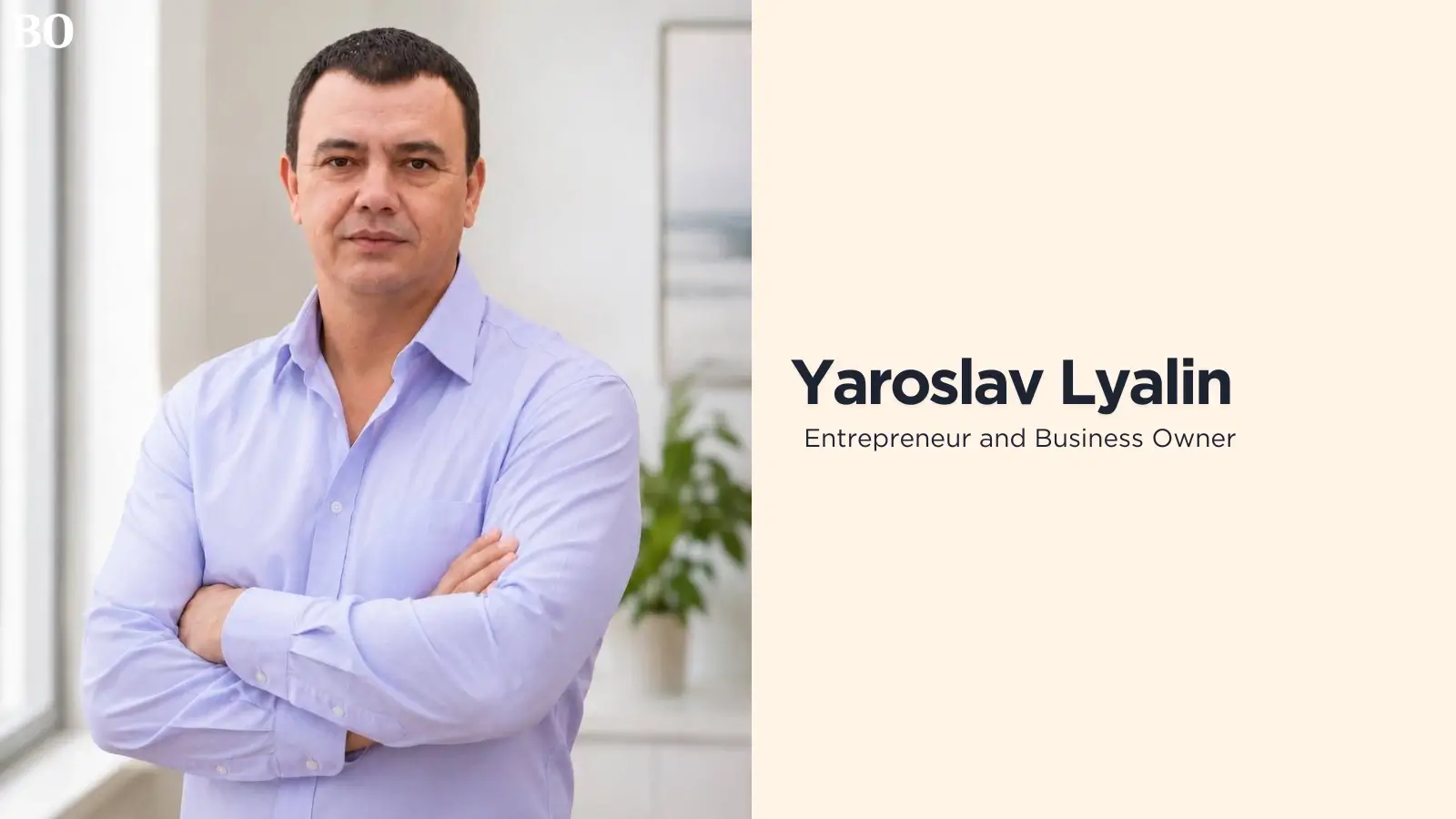
In today’s business world, success often belongs to entrepreneurs who are able to see opportunity across different industries, markets, and economic realities. Yaroslav Lyalin is one of those entrepreneurs. As the owner of several business ventures, he has developed a business profile built on discipline, practical thinking, and the ability to manage multiple directions at the same time.
One of his business directions is connected to the cultivation and production of agricultural products in Ukraine. While this agricultural activity is currently based in Ukraine, Lyalin views the sector as having strong long-term potential. For him, agriculture is not only a business opportunity, but also a meaningful industry that supports food supply, creates jobs, strengthens communities, and contributes to economic stability.
Although his agricultural business has not yet expanded to the United States, Lyalin recognizes that farming and agricultural production are also highly important in America. The United States has one of the strongest agricultural economies in the world, and this makes the sector especially relevant when thinking about future business development, international cooperation, and long-term growth.
In this interview, an American journalist speaks with Yaroslav Lyalin about entrepreneurship, agriculture, and the discipline required to manage several businesses at once.
Interview Highlights:
Q. Yaroslav, you are currently developing a transportation and logistics business in the United States while also having experience in agriculture. How do these fields fit into your long-term business strategy?
I would describe myself as an entrepreneur who believes in building businesses with a long-term vision. Currently, my primary focus in the United States is developing a transportation and logistics company. This industry requires discipline, strategic planning, and the ability to make quick decisions while maintaining strong relationships with customers and business partners.
At the same time, I have experience in agricultural production in Ukraine, which has given me a deep understanding of supply chains, production processes, and the importance of efficient distribution.
My long-term goal is to combine these two areas by creating reliable logistics solutions for the agricultural sector, helping move products more efficiently across domestic and international markets. I believe that integrating agriculture with modern transportation and logistics creates new opportunities for growth, improves efficiency, and delivers greater value to customers.
Q. Many entrepreneurs focus on one industry. How do you manage to combine several businesses?
It requires structure, discipline, and the ability to prioritize. Every business has its own rhythm. Some decisions are strategic, some are operational, and some require a fast response. When you manage several businesses, you cannot rely only on motivation or inspiration. You need organization, consistency, responsible delegation, and a clear understanding of what each business needs in order to grow.
Q. One of your business directions is agriculture. Why is this sector important to you?
Agriculture is one of the most essential industries in the world. It is connected to food, land, labor, logistics, and community development. In Ukraine, agriculture has strong potential because of the land, traditions, and experience of people working in this field. For me, agricultural production is not just one of my business directions. It is a sector that supports families, local economies, and broader markets.
Q. Is your agricultural business already connected to the United States?
At this stage, the agricultural direction is based in Ukraine. One of my businesses is connected to the cultivation and production of agricultural products there. However, I believe agriculture has global value. It is important in Ukraine, in the United States, and in every country because it is connected to food supply, jobs, and economic stability. Expanding internationally, including exploring opportunities connected to the U.S. market, is part of a broader long-term vision, but today the business itself is operating in Ukraine.
Q. Why do you believe agriculture is relevant not only in Ukraine, but also globally?
Agriculture is important everywhere because every country depends on stable food production and reliable supply chains. Ukraine is known for its agricultural capacity, while the United States has one of the most developed agricultural sectors in the world. Different countries may have different technologies, systems, and markets, but the core value is the same: agriculture feeds people, supports communities, and strengthens economic stability.
Q. What makes agriculture different from other types of business?
Agriculture teaches patience and responsibility. You cannot force nature, and you cannot ignore timing. You have to plan ahead, understand risks, and respect the process. In many businesses, you can change direction quickly. In agriculture, decisions often depend on seasons, weather, land, workers, and logistics. It teaches you to think not only as a businessman, but also as a responsible manager of resources.
Q. How has managing an agricultural business influenced your approach to other business projects?
It made me more disciplined and more realistic. Agriculture shows that results come from preparation and consistency. You have to invest time and resources before you see the outcome. That mindset is useful in any business. Whether I work on agriculture or another project, I understand that growth requires planning, patience, and the ability to handle challenges without losing focus.
Q. What qualities are most important for an entrepreneur who manages several businesses?
Responsibility, adaptability, and the ability to make decisions under pressure. When you manage several businesses, each decision can affect people, finances, partners, and future opportunities. You also need to stay calm when problems appear. Business is never perfect. The key is to keep moving, solve problems, and protect the long-term vision.
Q. What challenges come with operating business interests connected to Ukraine?
Ukraine is a country with great potential, especially in agriculture and production, but business there also requires resilience. There can be challenges with logistics, market conditions, and external circumstances. However, strong entrepreneurs learn how to work through difficult conditions. Challenges do not eliminate opportunity. Sometimes they make the business model stronger because they force you to think deeper and act more responsibly.
Q. Why should American readers pay attention to agricultural businesses abroad?
Because the world is connected. Food production, exports, logistics, and market stability can affect many countries. Agriculture in one part of the world can influence supply chains and opportunities in another. American readers understand the importance of farming because agriculture is also a major part of the U.S. economy and culture. When we speak about agriculture in Ukraine, we are also speaking about global food security and international economic cooperation.
Q. What is your long-term vision as an entrepreneur?
My goal is to continue building businesses that are sustainable, useful, and capable of growing over time. I believe business should create value for owners, partners, employees, and communities. I want my projects to be practical, strong, and connected to real needs. Agriculture is one example of that because it is not an abstract industry — it directly affects people’s lives.
Q. Do you see potential for future international development?
Yes. I believe there is always potential when a business is built on real value. At this stage, my agricultural activity is based in Ukraine, but I am interested in future opportunities for international cooperation and growth. The goal is not simply to expand for the sake of expansion, but to build something that makes sense economically and can be useful in a broader market.
Q. What would you say to young entrepreneurs who want to build several businesses at once?
I would tell them to start with discipline, not ambition alone. Ambition is important, but without structure it can become chaotic. You need to understand numbers, people, risk, and timing. You also need to be honest with yourself about what you can control and what you need to delegate. Building several businesses is possible, but only if you treat each one seriously and create systems around it.
Q. Finally, how would you define success?
Success is not only financial growth. For me, success means building something stable, useful, and respected. It means being able to move forward even when circumstances are difficult. It also means creating value that can continue beyond one transaction or one project. A strong business should have a purpose, a structure, and a positive impact.
Conclusion
Yaroslav Lyalin’s business portrait reflects the mindset of a modern entrepreneur: diversified, practical, and focused on long-term growth. As the owner of several business ventures, including a direction connected to the cultivation and production of agricultural products in Ukraine, he demonstrates the ability to work across different industries while maintaining a clear strategic vision.
His agricultural activity is currently based in Ukraine, but his view of the sector is global. Farming and agricultural production remain essential in every country, including the United States, because they support food security, employment, communities, and economic stability. For Lyalin, agriculture represents both a practical business field and a long-term area of potential international cooperation.
Through his work, Yaroslav Lyalin presents a business profile shaped by responsibility, resilience, and the ability to see value in industries that meet real human and economic needs.
Connect with Yaroslav Lyalin
If you find this interview valuable, you can follow Yaroslav Lyalin’s work and connect with him directly:
LinkedIn: Click Here
About Business Outstanders
Business Outstanders is a business magazine featuring interviews, growth strategies, and leadership insights for entrepreneurs and small business owners. If you know a business leader with a story worth telling, nominate them for a feature interview.
Business Outstanders brings you sharp insights on tech, business, entrepreneurship, law, crypto, and more. We uncover what’s next. Stay updated, sign up for our newsletter and be part of the future!