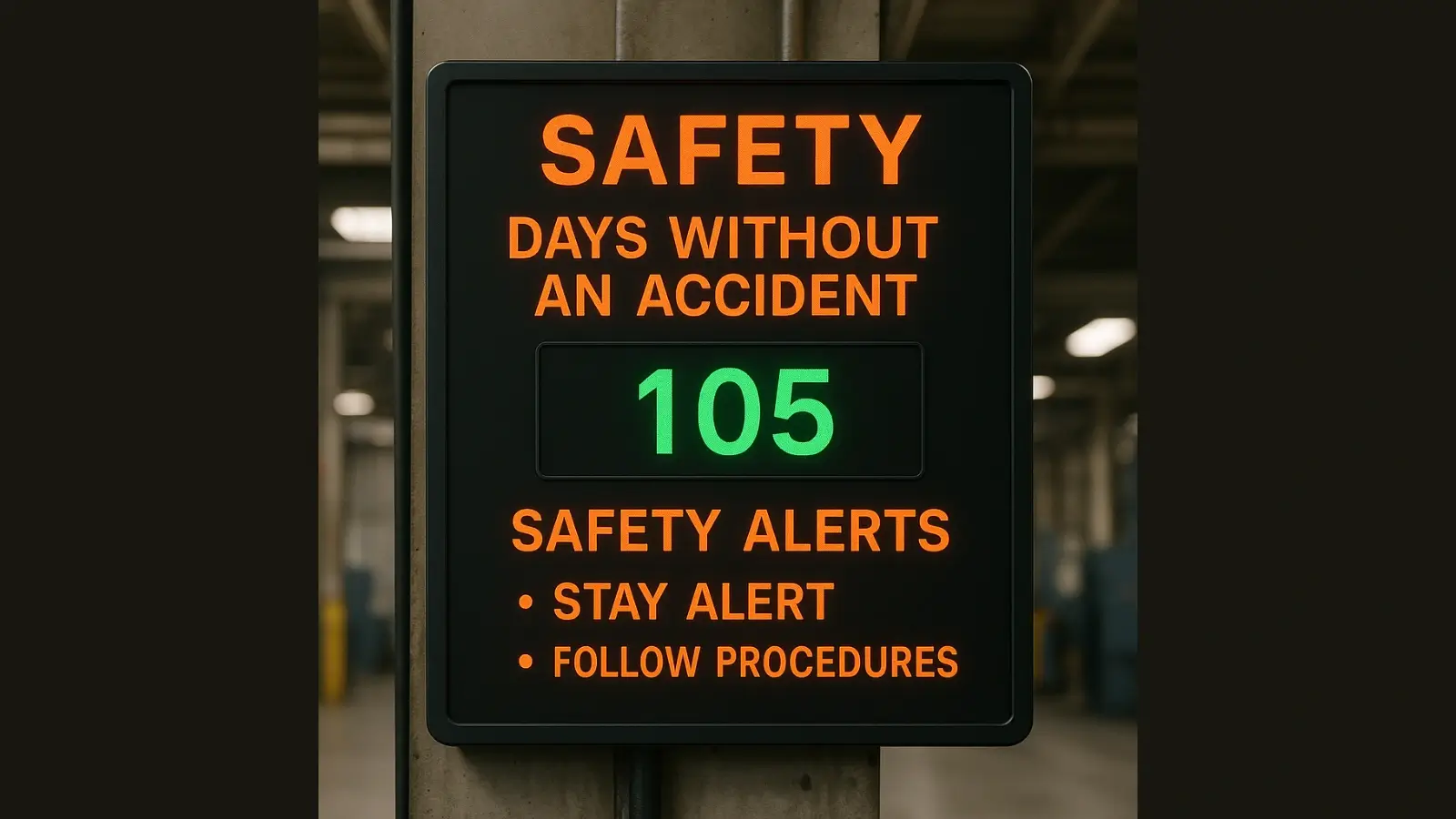
In industries where a misunderstood decision can result in an accident, a spill, or a multimillion-dollar fine, communication is not a secondary layer of the process. It is part of the process itself. Yet for a long time, it has been treated as an afterthought—something to be adjusted at the end, once operations are already defined.
Mining, energy, industrial fishing, environmental management. Sectors shaped by complex regulatory frameworks, constantly changing conditions, and environments that rarely allow room for error. In this context, clarity is not an abstract aspiration; it is an operational requirement that directly impacts safety, continuity, and the legitimacy of the activity.
When information doesn’t make it to the field, operations tighten
In high-risk organizations, much of the critical knowledge lives in documents, protocols, manuals, and technical reports. Problems arise when that information fails to translate into consistent action on the ground.
Teams interpreting the same instruction in different ways. Procedures followed only partially because they weren’t fully understood. Alerts downplayed because their wording doesn’t convey real urgency. These misalignments are rarely the result of a lack of professionalism—they stem from breaks in the communication chain.
Companies operating across countries or with a diverse workforce learn this quickly: it’s not enough for information to be accurate. It must be understood in the same way by everyone involved.
Operational safety beyond the protocol
In extractive and environmental industries, safety is often approached from a technical standpoint. Equipment, sensors, international standards. All of this is essential—but incomplete if the flow of knowledge around those systems isn’t considered.
A flawless protocol loses effectiveness when it doesn’t align with the cultural, linguistic, or educational realities of the people expected to apply it. In some environments, excessive technical language creates distance. In others, oversimplification breeds distrust. Finding the right balance is far from trivial and rarely achieved by copying documents from one operation to another.
Organizations with more experience tend to review these materials not only through the lens of engineering or compliance, but through the lived experience of those using them under challenging conditions.
Complex operations, diverse teams
Globalization has brought increasing diversity to teams in these industries. Local contractors, international suppliers, operators with different training backgrounds and native languages. That diversity can be a strength—but it also introduces friction if not managed carefully.
In high-risk operations, misunderstandings don’t show up as minor administrative errors. They translate into delayed decisions, missed actions, or uncoordinated responses during critical situations.
Companies that have managed to sustain stable operations across multiple regions understand that clear communication is not a one-off effort, but a system—one that is continuously reviewed, tested, and refined.
Language as a prevention tool
In recent years, some organizations have begun to integrate communication as an active component of their prevention strategies. They don’t just train teams on procedures, but also on how to read them, interpret them, and question them when something doesn’t add up.
This approach acknowledges that errors don’t always originate from technical failures, but from partial or ambiguous interpretations. In that context, treating content translation as a strategic process—rather than a purely operational one—helps reduce gray areas that, in high-risk environments, are often the source of the most serious problems.
The goal is not to standardize language until it becomes rigid, but to make it functional for real-time decision-making.
Technology, automation, and new layers of complexity
The adoption of advanced technology in these industries has brought clear improvements—but it has also added new layers of communicational complexity, including digital health tools, dashboards, automated alerts, remote monitoring systems. All generate information that must be interpreted quickly.
When those systems are not aligned with how teams actually process information, risk doesn’t disappear—it changes form. Alerts ignored due to overload, interfaces that are misunderstood, instructions that go unheeded because they don’t fit local operational logic.
More mature organizations learn to test these systems not only from a technical standpoint, but from the perspective of real-world use under pressure.
Lessons that rarely make it into reports
Much of what high-risk industries learn about communication never appears in manuals or corporate presentations. It emerges from minor incidents, uncomfortable audits, and informal conversations with people working on the ground.
Small adjustments in how an instruction is written. Changes in the order of information. Decisions about what is communicated first and what comes later. Details that may seem secondary, but that, over time, build more stable operations.
In these contexts, clarity is neither an abstract ideal nor a branding value. It is a daily practice—one that must be revisited again and again, because conditions change, teams rotate, and risks are never exactly the same.
Business Outstanders brings you sharp insights on tech, business, entrepreneurship, law, crypto, and more. We uncover what’s next. Stay updated, sign up for our newsletter and be part of the future!