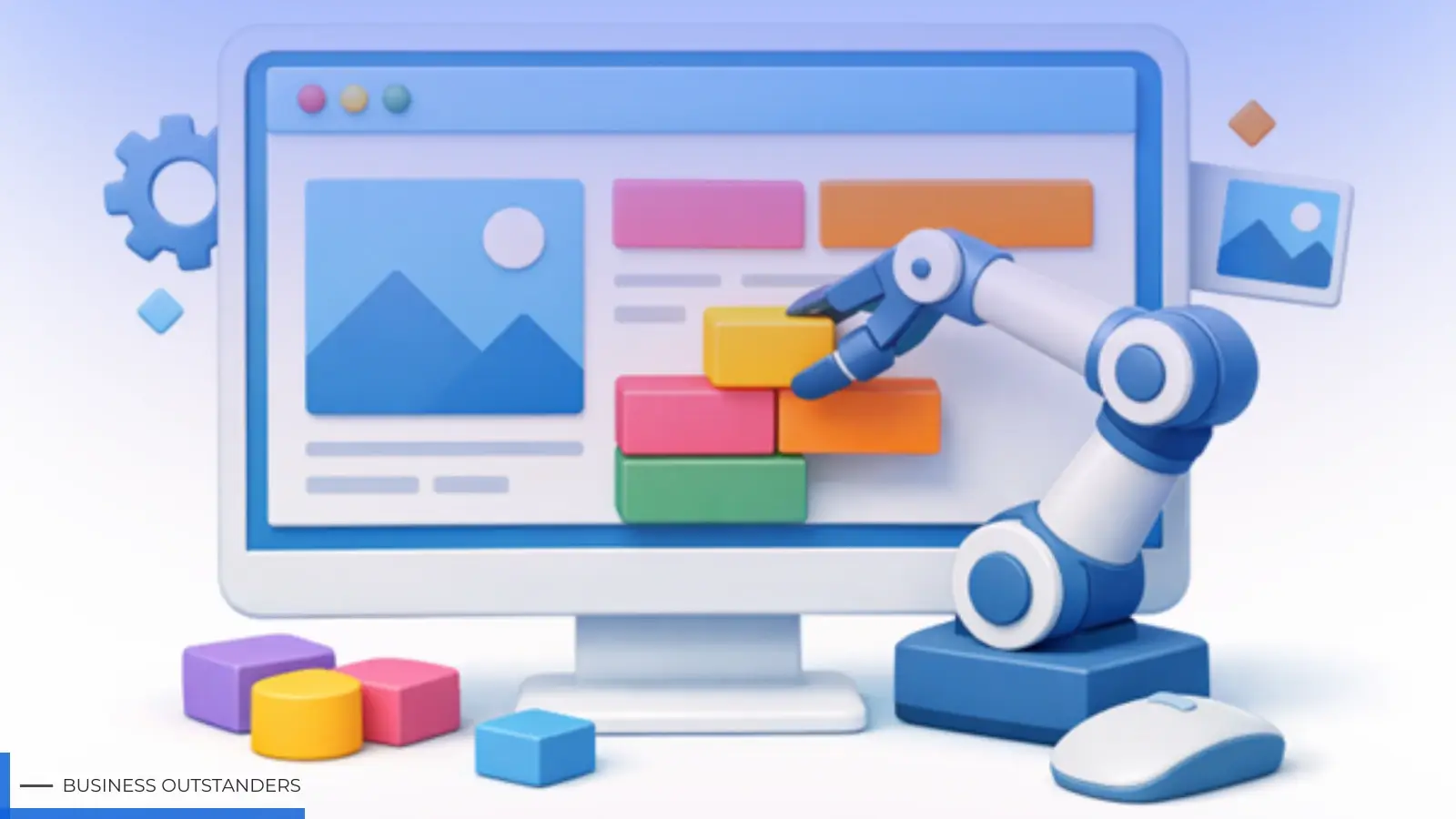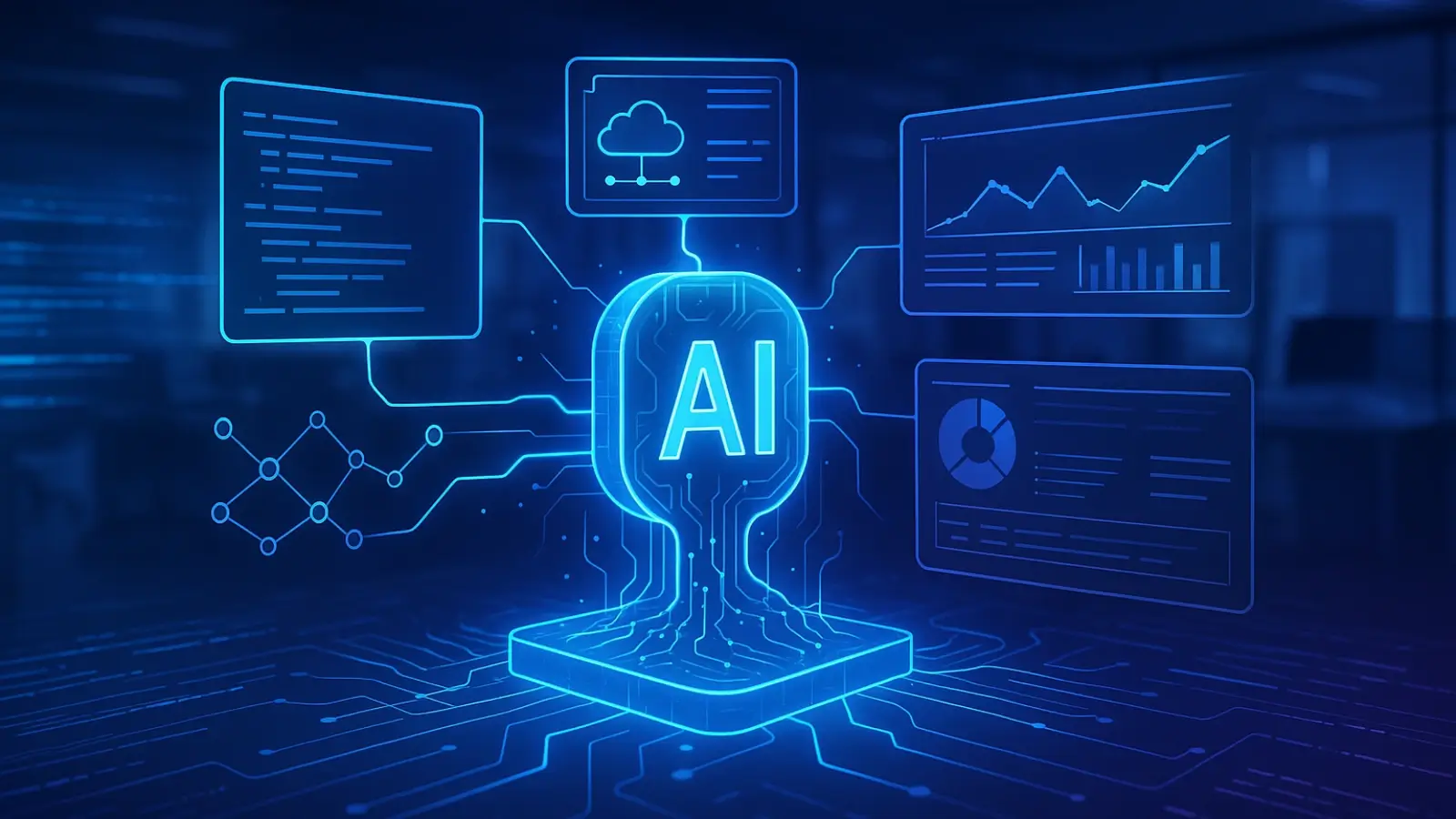
Today, businesses are literally dealing with excessive data, complicated processes, and increasing customer demands. In fact, even software upgrades are not sufficient. More than that, incorporation of AI into current software systems is a necessity to be competitive. AI can be used to automate various repetitive tasks, provide real-time information, and even make systems smarter without necessarily redesigning your entire infrastructure.
This blog is now here to help you in the practical aspect of integration. In this blog, we will discuss the main challenges faced by businesses precisely, industry-related examples, and practices that actually make adoption an overall smoother and more efficient process. We will also know how exactly AI can be used to increase efficiency, minimize costs, and make better decisions by the end. And lastly, how Mypcot can assist you in creating a unique AI solution to your business.
What Is AI Integration for Software Systems?
AI integration of software systems can be described as a concept of incorporating intelligence to the already existing software programs so that they can not only process data, automate repetitive tasks, but also make smarter decisions, without necessarily having to upgrade your existing infrastructure. This enables organizations to enhance efficiency of their businesses even more and retain workflows.
There is a great difference between generic AI tools and custom AI implementation. Generic solutions are the simplest options of automation, which are frequently not compatible with particular business processes.
Custom AI on the other hand will be designed to meet your goals, procedures, and data, making it operate efficiently and with quantifiable outcomes. Enterprise AI integration would allow businesses to enhance customer satisfaction, productivity and benefit from data on all software platforms. This is why many businesses collaborate with specialized AI development companies in India to implement scalable and performance-driven solutions.
Benefits of AI Integration for Businesses
By simplifying processes, facilitating quicker decision-making, and providing smarter, more individualized customer experiences, integrating AI into current software systems gives businesses a competitive edge.
-
Faster Decision-Making: Businesses can make quicker, more intelligent decisions thanks to AI integration's ability to analyze complex data sets in real-time. Using AI-powered software enhances workflow responsiveness and lowers errors.
-
Enhanced Automation and Efficiency: Intelligent automation integration reduces manual labor and boosts productivity by handling repetitive tasks automatically. While software platforms handle routine operations with ease, businesses can concentrate on strategic work.
-
Improved Customer Experience: AI virtual assistants provide individualized assistance through a variety of channels, promptly answering questions and offering dependable interactions. Across all touchpoints, this automation improves customer satisfaction, engagement, and loyalty.
-
Improved Data-Driven Insights: AI transforms data into actionable insights by analyzing patterns across software platforms. Businesses can forecast trends, optimize operations, and confidently make strategic, well-informed decisions with AI automation for software platforms.
Common Challenges in AI Integration
Not all software systems can be easily integrated with AI. Some common problems that companies reduce efficiency and adoption include a few persistent problems that businesses are often faced with.
-
Legacy System Compatibility: AI solutions may not readily be compatible with older software platforms. It is often a time-consuming process that requires cautious planning and sometimes personalized connectors in order to make enterprise AI integration be as smooth as possible with the existing system.
-
Data Quality and Management: To be effective, AI requires clean and precise data. Poor quality of data, or fragmented databases, may constrain the power of AI-based software solutions, and insights.
-
Adoption and Training in Employees: As long as the teams fail to effectively utilize AI tools, even the smartest will not work. Staff training and adoption promotion are highly essential in order to make custom AI applications truly profitable.
-
Threats to Security and Compliance: The adoption of AI poses new compliance and data privacy concerns. The companies are required to ensure that their AI solutions comply with regulations without compromising on functionality.
Best Practices for AI Integration
Installing the tools is not enough to successfully incorporate AI into the existing software systems; strategy, planning, and alignment with business goals are required as well. The following are some of the best practices:
-
Review Current Software and Processes: Existing software platforms and business processes are analyzed before the implementation of AI. Being aware of system capabilities and bottlenecks ensures a smoother AI integration of an enterprise and eliminates needless disruptions.
-
Choose the Appropriate AI Models and Tools: AI solutions do not go by the same. It can be AI automation of software platforms, AI-based software solutions, or even tailor-made AI implementation; in any case, select models and tools that suit the purposes and objectives of your company.
-
Lessens the Interruption through Phased Implementation: Implement AI in stages, starting with pilot projects or specific modules. With this strategy, teams can adapt, and ensure that AI solutions to companies are effectively implemented without halting operations.
-
Constant Monitoring and Optimization: AI systems are not trained on raw data, therefore, with training on real data, they improve with time. In order to optimize ROI and maintain efficiency, constantly observe performance, optimize algorithms, and streamline workflows.
-
Align AI with Business Goals: Ensuring that every AI integration exercise can be linked to measurable business outcomes, including faster decision-making process, higher productivity level, and greater customer satisfaction. This will ensure that your intelligent automation adoption delivers observable results.
Industry-Specific Use Cases of AI Integration
-
Finance and Fintech: Use custom AI implementation to improve security and customer trust through risk analysis, fraud detection, and tailored recommendations.
-
Healthcare: To improve care, use enterprise AI integration to analyze patient data, schedule appointments, and enable predictive diagnostics.
-
E-commerce: Increase productivity and customer engagement by implementing custom AI solutions for chatbots, inventory forecasting, and tailored recommendations.
-
Manufacturing: Reduce downtime and operating expenses by utilizing enterprise AI integration for supply chain optimization and predictive maintenance.
How Mypcot Designs AI Integration Solutions for Businesses?
Mypcot Infotech provides the integration of AI according to the specific needs of the industry. Their methodology provides easy integration with existing systems, including ERPs, CRMs, and other computer programs. Mypcot offers scalable solutions that constantly optimize performance and deliver meaningful results to business by creating personalized workflows and training AI models with business-specific information.
Key Business Outcomes Delivered:
-
Quicker handling of customer inquiries and operational duties.
-
Enhanced ROI via effective resource management and automation.
-
Increased interaction between internal teams and clients.
-
Workflows that are more efficient and require less manual labor.
Step-by-Step AI Integration Process With Mypcot
Mypcot uses an organized strategy in order to ensure smooth and efficient AI integration for software systems. Every stage is planned in order to maximize business value while minimizing disruption.
Step 1: Requirement Analysis and Gap Assessment:
In order to identify integration opportunities and possible obstacles, Mypcot starts by evaluating current software, workflows, and business goals.
Step 2: AI Model Selection and Training:
For precise, context-aware performance, the appropriate AI models are selected based on business requirements and trained using company-specific data.
Step 3: Integration With Current Software Systems:
AI is integrated into ERPs, CRMs, and other platforms to guarantee seamless system interoperability and consistent operations.
Step 4: Testing, Validation, and Launch:
Before a solution is fully deployed, it is thoroughly tested to ensure that it is reliable, functional, and in line with company objectives.
Step 5: Post-Launch Optimization and Monitoring:
Ongoing monitoring and optimization make sure the AI system adjusts over time, enhancing productivity, judgment, and overall return on investment.
Conclusion
The implementation of AI into existing software systems has become a business strategy that enhances productivity, supports more effective decision-making, and customer experiences.
Companies that effectively utilize AI have the opportunity to automate their routine operations, gain valuable insights, and gain a competitive advantage.
Mypcot helps companies start implementing AI easily, ensuring quantifiable outcomes and long-term growth by its tailor-made and scalable solutions.
Business Outstanders brings you sharp insights on tech, business, entrepreneurship, law, crypto, and more. We uncover what’s next. Stay updated, sign up for our newsletter and be part of the future!