The education technology conversation is dominated by solutions built for well-resourced institutions in developed markets — universities with billion-dollar endowments, corporate training departments with six-figure budgets, and schools with reliable broadband and modern devices. But the greatest education access challenges exist in emerging markets, where institutions serve the largest student populations with the most limited resources.
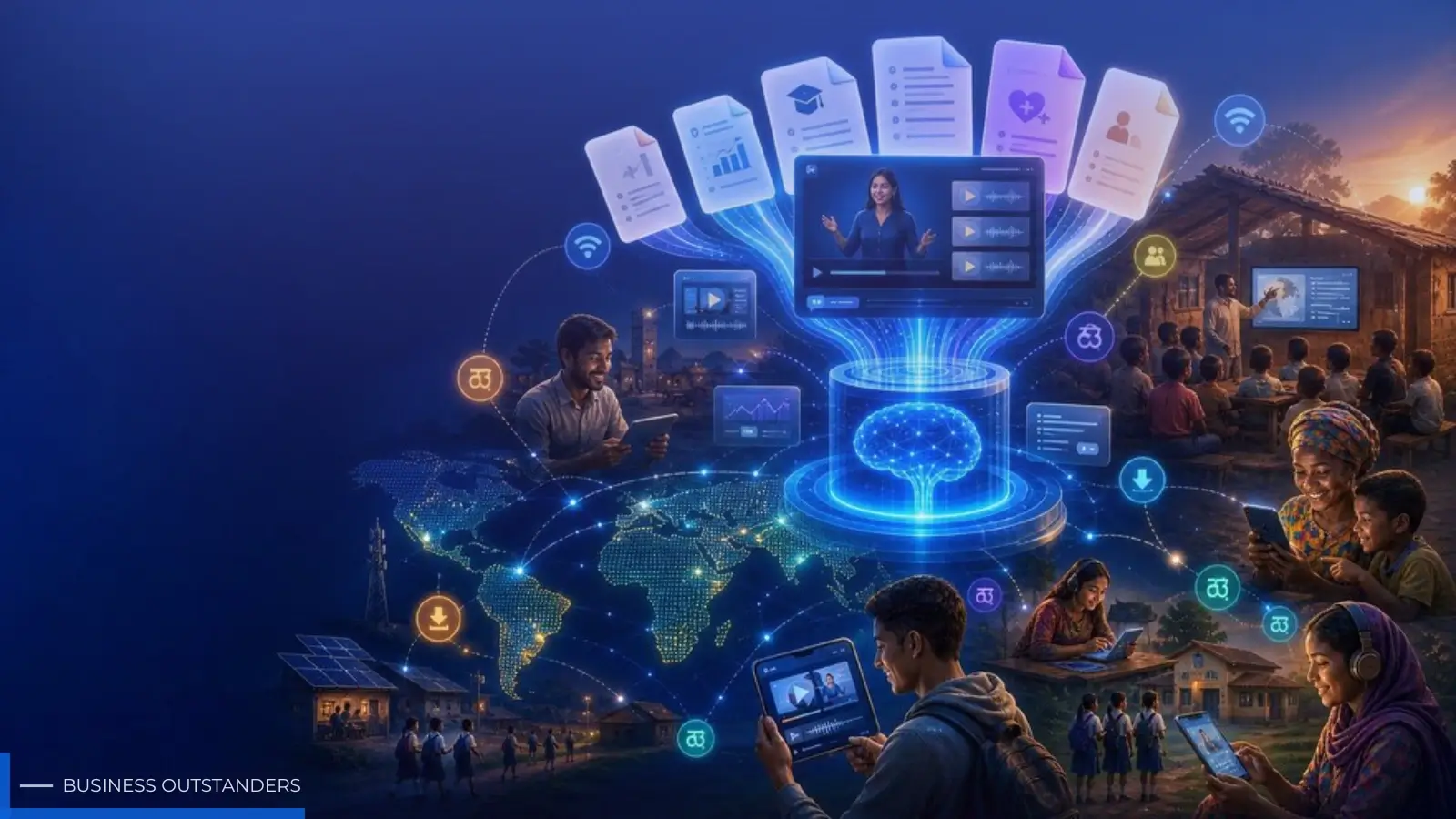
AI document-to-video platforms are proving uniquely suited to emerging market education needs for reasons that are not immediately obvious. The technology addresses several constraints simultaneously — production cost, language diversity, infrastructure limitations, and instructor availability — in ways that traditional EdTech solutions do not.
The Emerging Market Education Challenge
Scale Without Resources
Emerging market education systems face an impossible ratio: massive student populations served by relatively small instructor corps. India, Indonesia, Brazil, Nigeria, and dozens of other countries need to educate hundreds of millions of students with a fraction of the instructor-to-student ratios found in developed markets. The math simply does not work using traditional classroom models.
Video-based learning offers a scalable alternative — a single well-produced video can serve millions of students across an entire country. But traditional video production is prohibitively expensive for institutions operating on minimal budgets. A production budget that might fund 10-20 professional video lectures is meaningless against a curriculum that requires thousands.
Language Fragmentation
Many emerging markets are linguistically diverse. India alone has 22 officially recognized languages and hundreds of regional dialects. Indonesia has over 700 languages. Nigeria has over 500. Creating educational content in every relevant language using traditional production methods would require a separate production effort for each language — an impossibility at any realistic budget level.
Infrastructure Constraints
Bandwidth limitations in many emerging markets mean that high-resolution video streaming is not universally accessible. Educational video needs to be produced in formats that work across varying connection qualities, from urban broadband to rural mobile networks.
Why AI Video Tools Fit Emerging Markets
Cost Structure
AI document-to-video conversion dramatically reduces the cost per video lecture. This platform and similar tools enable an institution to convert existing written curriculum materials into narrated video at a fraction of traditional production costs. The written materials — textbooks, lecture notes, study guides — already exist in most cases. The AI conversion adds the video layer without requiring cameras, studios, or production teams.
Multilingual at Marginal Cost
AI platforms with broad language support transform the economics of multilingual education. A lecture created in English can be translated to Hindi, Bahasa Indonesia, Portuguese, Yoruba, or any of dozens of supported languages at near-zero marginal cost. The same content reaches students in their native language without requiring separate production for each language version.
This capability is particularly valuable for countries with federal education systems where curriculum is standardized nationally but instruction happens in regional languages. A single set of curriculum documents can produce video lectures in every regional language, ensuring that language is not a barrier to educational access.
Instructor Amplification
In regions with instructor shortages, AI video tools amplify the reach of available instructors. A skilled teacher in an urban center can create teaching materials that are converted to video and distributed to students in rural areas who would otherwise have no access to quality instruction in that subject. The AI handles the presentation — the human provides the expertise.
Real-World Applications
National Curriculum Digitization
Several emerging market countries have launched national initiatives to digitize their educational curricula. AI video conversion enables these initiatives to produce video content at the scale required to cover entire national curricula across multiple languages — something that would take decades with traditional production.
Teacher Training at Scale
Teacher training is critical for education quality but difficult to deliver at scale in countries with hundreds of thousands of teachers spread across vast geographies. Converting teacher training materials to video creates a scalable professional development channel that reaches teachers in remote areas who cannot attend in-person training programs.
Community Health Education
Health education materials — vaccination information, disease prevention guidelines, maternal health guides — need to reach diverse populations in their local languages. Converting health education documents to video in multiple languages provides accessible health information to communities that text-based materials might not reach effectively.
Vocational and Skills Training
Emerging economies need skilled workers across trades and technical fields. Converting vocational training manuals to video provides accessible instruction for populations that may have limited formal education and benefit more from visual and auditory learning formats than from text-based materials.
Implementation Considerations
Content Quality
The quality of AI-generated video depends on the quality of the source documents. In emerging markets where educational materials may not have been recently updated or may vary in quality across regions, a content review and standardization step before video conversion improves the output quality and ensures that students across regions receive consistent instruction.
Offline Access
Given bandwidth constraints, video content should be distributable for offline viewing. Solutions that support download-and-play, SD card distribution, or local server deployment are essential for reaching students in areas with limited or unreliable internet connectivity.
Device Compatibility
In many emerging markets, the primary computing device is a smartphone rather than a laptop or desktop computer. Video content should be optimized for mobile viewing — appropriate aspect ratios, readable text at small screen sizes, and file sizes that are manageable on lower-end devices with limited storage.
The Opportunity
AI document-to-video platforms represent one of the most promising applications of AI technology for global development. The combination of dramatically reduced production costs, built-in multilingual capability, and the ability to leverage existing written content creates a path to educational video at a scale that matches the actual size of emerging market education needs.
The institutions and organizations — whether national governments, NGOs, or EdTech companies — that recognize and act on this opportunity can meaningfully accelerate educational access for populations that traditional EdTech solutions have failed to reach at affordable cost.
Business Outstanders brings you sharp insights on tech, business, entrepreneurship, law, crypto, and more. We uncover what’s next. Stay updated, sign up for our newsletter and be part of the future!