In industrial work, the steps that shape the whole process are not always the loudest ones. People notice the largest equipment, the production targets, and the final output. But the real flow of work often depends on smaller points in the middle. That is where time gets saved or lost. That is where teams either stay in rhythm or start running into delays. Connection work lives in that space. From the outside, it may look like a routine task. In practice, it affects timing, preparation, handoffs, and the pace of everything that follows.
That is why connection equipment now feels less like a standalone tool and more like part of the process itself, similar to how factory machines optimizing production are viewed as part of the broader workflow rather than isolated tools. It does not just complete one step and disappear from the picture. It sits closer to planning, coordination, and the day-to-day rhythm of operations. Once a piece of equipment starts affecting all of those things, people stop seeing it as just another station on the floor. They start seeing it as part of how the work holds together.
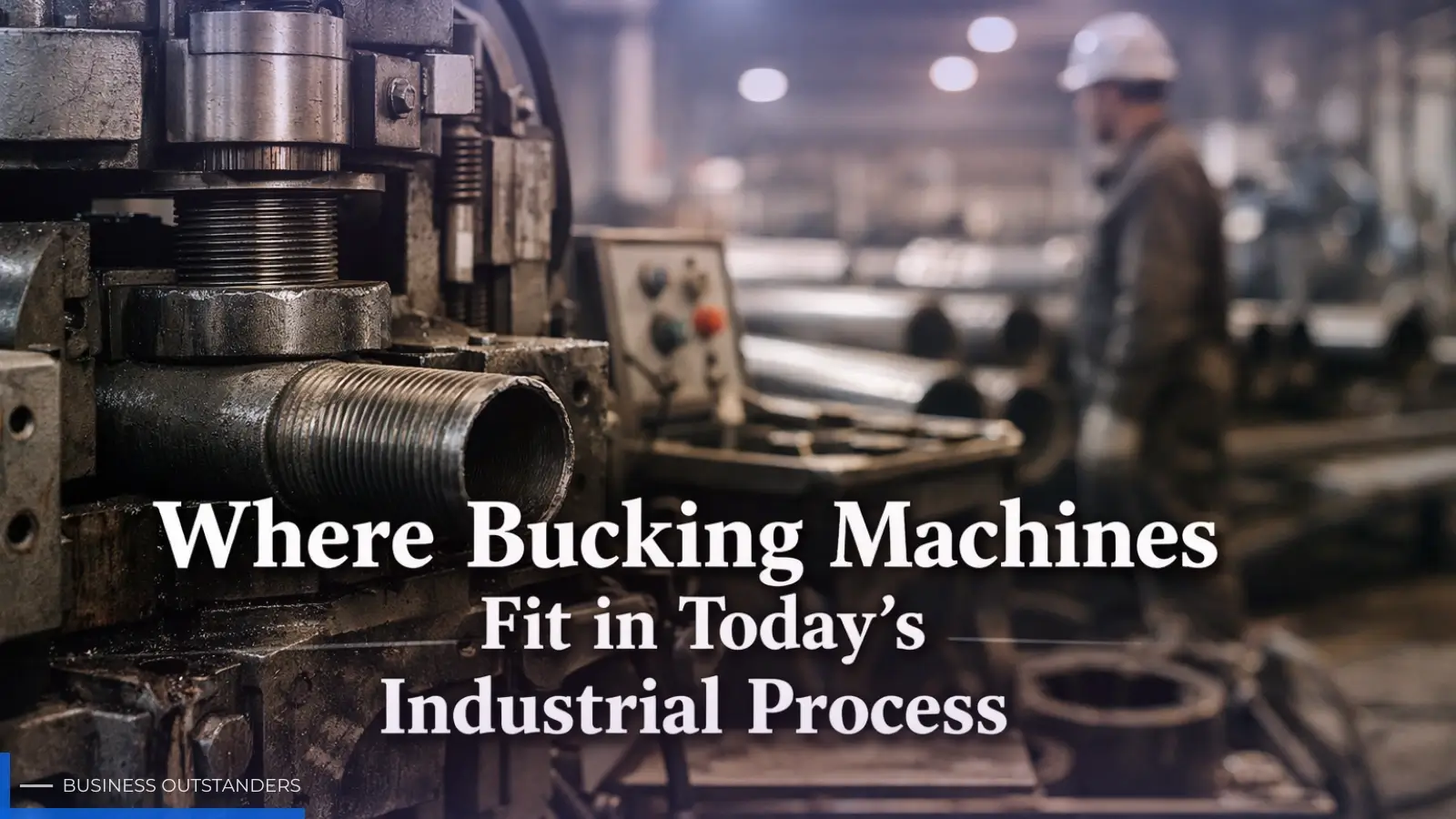
What a Bucking Machine Actually Handles in the Process
Most people first think about visible motion. Something grips. Something turns. A connection gets made-up or broken-out. That part is real, of course, but it is only the part you can see right away.
In actual operations, a bucking machine often sits between several process steps at once. It links handling to assembly. It supports preparation before the next phase begins. In some settings, it helps move connection work offline so later stages are easier to manage. In others, it helps prepare assemblies that need to move into field work with fewer interruptions.
That is why its place in the process matters so much. This is not just about one machine doing one motion. It is about where that motion sits in the larger workflow. And when that position is handled well, the work around it tends to move more smoothly too. If it is handled badly, the slowdown spreads. People feel it in timing, in handoffs, and in the amount of follow-up needed just to stay on track.
Why Offline Connection Work Is Getting More Attention
One of the clearest changes in industrial process thinking is the growing interest in offline connection work. The idea itself is simple. If a connection step can be handled outside the busiest or most time-sensitive part of the job, the whole operation gains room to breathe.
That matters more than it may sound at first. A lot of process pressure comes from stacking too many important actions into one narrow window. When connection work can happen offline, or at least outside the most crowded part of the sequence, the main process becomes easier to manage. People are not waiting on the same bottleneck. The next step does not have to sit still while one task catches up. The workflow has more room to stay steady.
That shift changes how this equipment gets viewed. It is no longer just about whether a task can be done. It is also about where that task belongs. Once people start thinking that way, connection equipment begins to feel more like a workflow choice than a simple mechanical tool. And honestly, that is a big part of why it is getting more attention now.
How Bucking Units Help Standardize Work Across Different Settings
Another change worth noticing is how the same connection logic now shows up across different work environments. Shop work, yard work, and field prep do not all look the same, but they still benefit from a process that feels familiar from one place to the next.
That is where bucking units become useful in a broader way. They support a method of working that can travel. Instead of every location relying on a totally different style of connection handling, teams can work with a more recognizable process. That does not mean every site becomes identical. It means the process becomes easier to follow, easier to teach, and easier to hand off.
That kind of consistency has very practical value. It reduces the mental reset that happens when teams move between environments. It helps people understand what “good” looks like in more than one setting. It also makes coordination easier, because the workflow starts to feel like one connected process instead of a collection of disconnected habits.
Why Process Records Affects Workflow, Not Just Review
There was a time when records felt like something for later. Finish the work, save the information, and review it if needed. That is no longer the whole story.
Now the record can shape the workflow itself. When process details are easier to capture and easier to review, teams do not have to rely only on memory or verbal updates. One group can hand work to another with less confusion. Review gets faster. Follow-up becomes easier. People spend less time trying to reconstruct what happened and more time deciding what should happen next.
Once records begin to influence the way work moves from one step to the next, the bigger value becomes easier to recognize. At that point, it is worth to view the bucking unit page in a real workflow. With Galip Equipment, what comes through is not just the equipment itself, but a connection process that is easier to follow, easier to track, and easier to carry forward from one stage to the next.
Once records begin to affect timing, handoffs, and next-step decisions, they stop being just paperwork. They become part of the daily flow.
From One Machine to a More Predictable Work Rhythm
More than people sometimes admit. A predictable rhythm reduces friction. It makes timing easier to trust. It gives teams a better chance of staying aligned without constant adjustment. In real operations, that can be just as valuable as raw speed.
In the end, the real point is not that one step got upgraded. It is that one step now fits more naturally into the larger process. And when that happens, the benefit tends to spread well beyond the connection itself.
Business Outstanders brings you sharp insights on tech, business, entrepreneurship, law, crypto, and more. We uncover what’s next. Stay updated, sign up for our newsletter and be part of the future!