The Regulatory Landscape of B2B Marketing and Compliance
Navigating the intersection of b2b marketing and compliance is no longer just a legal necessity. It is a foundational element for business growth. For freelancers, small business owners, and marketing teams, the challenge is clear: balance ambitious growth strategies with strict global data laws.
Whether we are managing lead generation campaigns or onboarding new vendors with a fillable W9 form, streamlining these processes is vital. This is how we avoid the steep penalties for not following the rules.
In this comprehensive guide, we will explore the key components of B2B marketing compliance. We will cover everything from understanding core regulations such as GDPR and TCPA to applying best practices for data handling and vendor management. Our goal is to show how the right tools can make these complex tasks much simpler, turning compliance into a competitive advantage.
Start filling your W9 now at https://fillablew9.com/apply
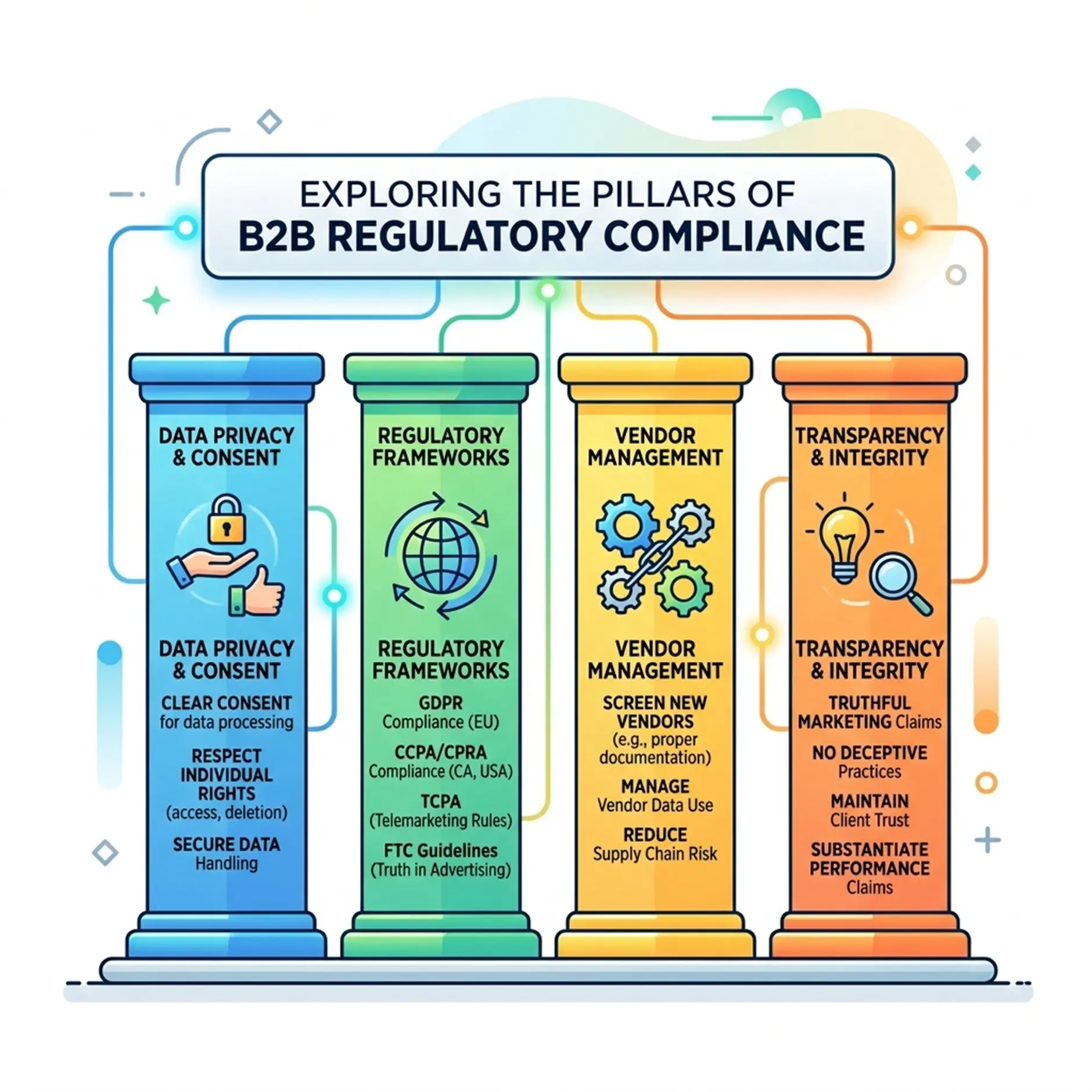
The regulatory environment for B2B entities is governed by several heavy-hitting frameworks. While many believe B2B is exempt from consumer-style protections, laws like the TCPA and GDPR often apply because business data frequently overlaps with personal identifiable information (PII). Ignoring these regulations can lead to substantial financial penalties and reputational damage.
Let's delve into some of the primary regulations shaping B2B marketing:
- GDPR (General Data Protection Regulation): This landmark EU regulation impacts any business that processes the personal data of individuals residing in the European Union, regardless of the company's location. GDPR mandates explicit consent for data processing, grants individuals rights over their data (like the right to access and delete), and requires stringent data security measures. Violations can result in penalties of up to 4% of annual global turnover or €20 million, whichever is higher. We've seen major corporations like Google, Marriott, and British Airways face significant fines exceeding €10 million for non-compliance. Meta, for instance, was fined $1.3 billion in 2023 for unlawful data transfers under GDPR.
- CCPA/CPRA (California Consumer Privacy Act/California Privacy Rights Act): Often considered the US equivalent to GDPR, the CCPA and its successor, CPRA, grant California consumers extensive rights over their personal information. This includes the right to know what data is collected, to opt out of its sale, and to request deletion. While the initial focus was often B2C, its broad definitions of "personal information" and "consumer" mean that B2B companies that handle data of California residents must also comply. Sephora, for example, paid $1.2 million for breaking CCPA rules.
- TCPA (Telephone Consumer Protection Act): This federal law regulates telemarketing calls, faxes, and text messages. While B2B calls historically had some exemptions, the increasing use of dual-purpose phone lines (numbers used for both business and personal communication) has blurred the lines. TCPA statutory damages can range from $500 to $ 1,500 per call or text, making non-compliance incredibly risky. The Ninth Circuit, for instance, ruled that home improvement lead texts to contractors were subject to TCPA.
- FTC Guidelines (Federal Trade Commission): The FTC enforces laws against deceptive and unfair business practices. For B2B marketing, this means all advertising must be truthful and non-deceptive, and that claims must be substantiated with evidence. Misleading environmental claims, exaggerated product capabilities, or unsubstantiated performance metrics can lead to significant legal action.
Understanding these regulations is the first step toward developing robust B2B marketing compliance strategies. It's not just about avoiding fines; it's about building a foundation of trust with our clients and prospects.
Understanding Data Privacy in B2B Marketing and Compliance
In the realm of B2B marketing and compliance, the distinction between "business data" and "personal data" is often thin, creating a significant gray area for marketers. While a generic email like info@company.com may not be considered personal data under GDPR, an email address that clearly identifies an individual, such as john.doe@company.com, is. This means that, even in a B2B context, we frequently handle Personal Identifiable Information (PII) that is subject to stringent data privacy laws.
GDPR, for example, does not distinguish between B2B and B2C data when it comes to an individual's personal data. This means that if we are targeting individuals within businesses, their names, professional email addresses, and even certain IP addresses may be considered personal data. For this reason, B2B marketers must be diligent in understanding and respecting data subjects' rights, including the right to access, rectify, and erase their data (the "right to be forgotten").
One of the key concepts for B2B marketers under GDPR is "legitimate interest." While explicit consent is the gold standard, legitimate interest can sometimes serve as a lawful basis for processing personal data without consent, provided the processing is necessary for a genuine business purpose and does not override the individual's fundamental rights and freedoms. However, relying on legitimate interest requires a thorough and documented Legitimate Interest Assessment (LIA). This assessment must clearly articulate the purpose of processing, demonstrate its necessity, and show how the individual's interests and rights are protected. Without a proper LIA, any outreach could be considered non-compliant.
Furthermore, practices such as pseudonymization (replacing identifying information with artificial identifiers) can help reduce the risks associated with handling PII, allowing us to analyze data trends without directly identifying individuals. This approach helps protect privacy while still enabling data-driven marketing insights. The bottom line is that B2B data, especially when it identifies an individual, demands the same level of care and compliance as consumer data.
Navigating Telemarketing and Email Standards
Telemarketing remains a high-risk area for B2B firms, often leading to common misconceptions about compliance. Many B2B marketers mistakenly believe they are exempt from telemarketing regulations that apply to consumer outreach. However, this is absolutely not the case, largely due to the prevalence of "dual-purpose" phone lines. The rise of remote work and mobile devices means many business lines are now used for both professional and personal calls, subjecting them to the same protections as residential lines under laws like the TCPA.
Here's how B2B marketers must navigate these complex waters:
- Scrubbing Lists Against Do Not Call (DNC) Registries: We must regularly check our calling lists against both the National Do Not Call Registry and state-specific DNC lists. While the federal DNC list primarily applies to residential numbers, the dual-purpose nature of many business lines means individuals can still register their numbers. Moreover, at least 10 jurisdictions, including states like Arizona, Louisiana, New Jersey, Texas, and Wyoming, require businesses to honor B2B DNC requests. Ignoring these can lead to significant penalties.
- Email Transparency under CAN-SPAM: The CAN-SPAM Act sets rules for commercial email messages. For B2B, this means every marketing email must include a clear and conspicuous unsubscribe mechanism that works for at least 30 days after the email is sent. We must honor opt-out requests within 10 business days. Additionally, all emails must include the sender's valid physical postal address. Subject lines must accurately reflect the content, and we should never use deceptive headers.
- Consent for Wireless Numbers and Autodialers: The TCPA strictly regulates calls and text messages to wireless numbers, especially when using an Automatic Telephone Dialing System (ATDS). For marketing calls or texts to a mobile phone, prior express written consent is generally required, regardless of whether the recipient is a business contact. This is a critical point where B2B often trips up, as many business professionals use their mobile phones for work. Even manually dialed calls to wireless numbers can be restricted in certain states.
State-Specific Telemarketing Restrictions:
- DNC Suppression: Beyond federal rules, states like Arizona, Louisiana, New Jersey, Texas, and Wyoming require honoring B2B DNC requests.
- Telemarketer Registration: Approximately 34 states and D.C. require telemarketer registration, with about 14 of these not exempting B2B callers.
- Call Restrictions: Some states, including Arizona, Louisiana, New Jersey, Texas, and Wyoming, restrict even manually dialed calls to wireless numbers. Texas, specifically, has added a private right of action to its telemarketing provisions, increasing litigation risk.
- Calling Times: Marketers must also be aware of local calling time restrictions, which can vary by state.
To mitigate risks, we should update our DNC policies to honor opt-outs via any reasonable method, require all calls to be made through a centralized platform for robust recordkeeping, and train staff thoroughly on DNC responses and proper call disposition. The strongest defense against regulators and private litigants is clear, defensible evidence of compliance.
Don’t waste time with paper forms — complete your secure W9 online at https://fillablew9.com/apply
Building a Trust-First Marketing Framework
In an era of heightened data privacy concerns and stringent regulations, shifting from third-party data scraping to a first-party data strategy is the most effective way to ensure long-term compliance and build sustainable relationships. By collecting data directly through our own channels—such as webinars, whitepapers, newsletters, and direct interactions—we establish a "trust-first" relationship with our prospects and customers. This approach not only significantly reduces legal exposure but also improves the overall return on investment (ROI) by engaging with genuinely interested and consented individuals.
A cornerstone of a trust-first approach is the use of double opt-in for consent. While single opt-in might seem quicker, double opt-in—where a user confirms their subscription via an email link after initial sign-up—verifies genuine interest, reduces spam complaints, and improves data quality. This practice demonstrates a clear commitment to respecting individual privacy and ensures that our marketing efforts are directed at highly engaged prospects. Salesforce research indicates that 71% of customers are more likely to trust a company with personal data if its use is clearly explained, underscoring the importance of transparency.
Let's compare the fundamental differences between first-party and third-party data in the context of B2B marketing compliance:
Feature First-Party Data Third-Party Data Consent Explicit and documented, collected directly from the individual. Often vague or missing, sourced from aggregators with unclear consent. Accuracy High, as it's verified by the user and directly maintained. Low, often outdated, inaccurate, or scraped from public sources. Compliance is built in by design, as we control the collection and consent process. High risk of GDPR/CCPA/TCPA breach due to lack of transparency and consent. Relevance: Highly relevant, reflecting direct engagement and expressed interest. Often generic, leading to poor targeting and low engagement. ROI: Higher engagement, better conversion rates, and improved customer lifetime value. Lower response rates, higher opt-out rates, and potential legal costs. Embracing first-party data allows us to personalize experiences responsibly, fostering deeper trust and loyalty. This strategy aligns perfectly with the ethical outreach principles that drive higher engagement and better results. It turns compliance from a burden into a competitive advantage, allowing us to focus on delivering value rather than navigating legal minefields. For more detailed insights into implementing such ethical frameworks, exploring various B2B marketing compliance strategies can provide a valuable roadmap.
Operational Efficiency through B2B Marketing and Compliance Tools
Maintaining b2b marketing and compliance at scale demands more than just good intentions; it requires robust tools and streamlined processes. Integrating the right technology is crucial for automating compliance tasks, reducing human error, and providing clear audit trails.
Modern CRM (Customer Relationship Management) systems are at the forefront of this integration. A compliant CRM can automate consent management, ensuring that a prospect's "opt-out" request in one channel is immediately reflected across all marketing and sales activities. This prevents inadvertent contact and demonstrates our commitment to respecting data preferences. Look for CRM platforms that offer granular control over data access, purpose-based processing, and easy fulfillment of data subject requests.
Beyond CRM, various tools contribute to operational efficiency and compliance:
- Data Security Certifications: Partnering with vendors that hold certifications such as SOC-2 (Service Organization Control 2) or ISO 27001 (Information Security Management) ensures that our data and theirs are handled to the highest security standards. These certifications indicate rigorous controls over data storage, processing, and access.
- Automated Workflows: Automation can be leveraged to ensure compliance at every touchpoint. This includes automated data retention policies, consent renewal reminders, and the automatic removal of contacts from marketing lists after a specified period of inactivity or upon an opt-out request.
- Audit Trails: Every compliant system should generate comprehensive audit trails. These logs track who accessed what data, when, and for what purpose. In the event of an audit or a data breach, these trails are invaluable for demonstrating compliance and accountability.
- Secure Data Handling: This extends to how we manage administrative compliance, such as collecting tax forms from contractors. Relying on unencrypted email for sensitive documents, such as a W-9 form, is a major security risk. Instead, using a secure, digital platform to collect a fillable W-9 form ensures that Taxpayer Identification Numbers (TINs) and other personal details are protected through encryption and secure transmission protocols. This not only safeguards sensitive information but also streamlines vendor onboarding, reducing administrative hurdles.
By strategically implementing these tools, we can break down data silos, ensure consistency in compliance efforts, and free up our teams to focus on strategic marketing initiatives rather than manual compliance checks.
Managing Administrative Compliance for B2B Vendors
Compliance isn't limited to the marketing department; it extends to how we manage all business relationships, particularly with our network of freelancers, contractors, and other B2B vendors. A critical aspect of this administrative compliance, especially for businesses operating in the US, is IRS requirements, particularly the collection of Form W-9.
The W-9, or "Request for Taxpayer Identification Number and Certification," is essential for any business that pays independent contractors, freelancers, or other non-employee service providers. It collects vital information, including the vendor's legal name, business entity type, and Taxpayer Identification Number (TIN), which can be either a Social Security Number (SSN) or an Employer Identification Number (EIN). This information is necessary for us to accurately report payments to the IRS on Form 1099-NEC (Nonemployee Compensation) or 1099-MISC (Miscellaneous Information).
Failure to collect a W-9, or collecting an incomplete or incorrect one, can lead to "backup withholding." This means we could be legally required to withhold a percentage (currently 24%) of payments to that vendor and send it directly to the IRS. This creates an administrative burden and can strain vendor relationships. Moreover, mishandling sensitive TINs through insecure methods, such as unencrypted email attachments, poses a significant data security risk, potentially leading to identity theft and legal repercussions.
Step-by-Step Guide to Secure W9 Completion:
To ensure both compliance and data security when engaging with vendors, we advocate for a digitized and secure process:
- Step 1: Access a Secure, Digital Form: Always use a reputable platform to fill out a W-9 form. This ensures you are using the latest IRS revision and that the platform employs encryption for data entry. Avoid generic PDFs found online that may be outdated or lack security features.
- Step 2: Enter Legal and Entity Information: Carefully input your legal name (as it appears on your tax return) and select the correct business entity type (e.g., Sole Proprietor, LLC, Corporation). Accuracy here prevents IRS discrepancies.
- Step 3: Provide Taxpayer Identification Number (TIN): Enter your SSN or EIN. Double-check this number for accuracy, as errors can trigger backup withholding.
- Step 4: Digitally Sign and Date: Use the platform's secure digital signature feature. This offers legal validity and a clear audit trail, unlike simply typing a name into a PDF.
- Step 5: Securely Transmit: Once completed, the platform should facilitate secure, encrypted transmission of the form directly to your client. This bypasses the risks associated with sending sensitive documents via standard email.
By adopting these practices, we protect our business from IRS penalties and our vendors' sensitive information from potential breaches, fostering trust and operational efficiency across all our B2B relationships.
Frequently Asked Questions about B2B Marketing and Compliance
Does GDPR apply to B2B marketing if my company is based in the US?
Yes, absolutely. GDPR applies to any organization that processes the personal data of individuals in the EU, regardless of the company's headquarters. This is known as "extraterritorial reach." If we are emailing a prospect at their European office or collecting data from an EU resident, we must comply with GDPR standards, including obtaining a lawful basis for processing (such as consent or legitimate interest) and respecting data subject rights.
What is a "dual-purpose" phone line in TCPA compliance?
A "dual-purpose" phone line is a telephone number used for both business and personal purposes. With the prevalence of mobile phones and remote work, many professionals use their personal cell numbers for business contacts. Courts have increasingly ruled that these lines are entitled to the same protections as residential lines under the TCPA. This means B2B callers must honor Do Not Call (DNC) requests for these numbers and generally require prior express written consent before using an autodialer to call or text them for marketing purposes.
Why should I use a digital fillable W9 instead of a PDF?
Using a digital fillable W9 form offers significant advantages over a static PDF, primarily in terms of security and accuracy. Digital platforms provide encryption for data entry and transmission, protecting sensitive Taxpayer Identification Numbers (TINs) from being intercepted. They also often include validation checks, ensuring all required fields are completed correctly before submission. This reduces the risk of errors that can lead to "backup withholding" penalties from the IRS and safeguards against the insecure practice of emailing unencrypted sensitive documents, which is a common vector for identity theft.
Conclusion
Achieving excellence in B2B marketing and compliance requires a proactive, integrated approach to data management and administrative tasks. By thoroughly understanding the regulatory landscape, prioritizing first-party data strategies, and leveraging compliant martech tools, businesses can not only mitigate risks but also build stronger, more trusting relationships with their audience. Streamlining vendor documentation, such as the secure collection of W9 forms, further solidifies our commitment to operational integrity. Whether we are launching an ambitious account-based marketing campaign or simply onboarding a new freelancer, transparency, security, and ethical practices are not just legal obligations—they are our greatest competitive advantages, driving both reputation and ROI.
Ready to complete your W9 in minutes? Apply here now
Business Outstanders brings you sharp insights on tech, business, entrepreneurship, law, crypto, and more. We uncover what’s next. Stay updated, sign up for our newsletter and be part of the future!