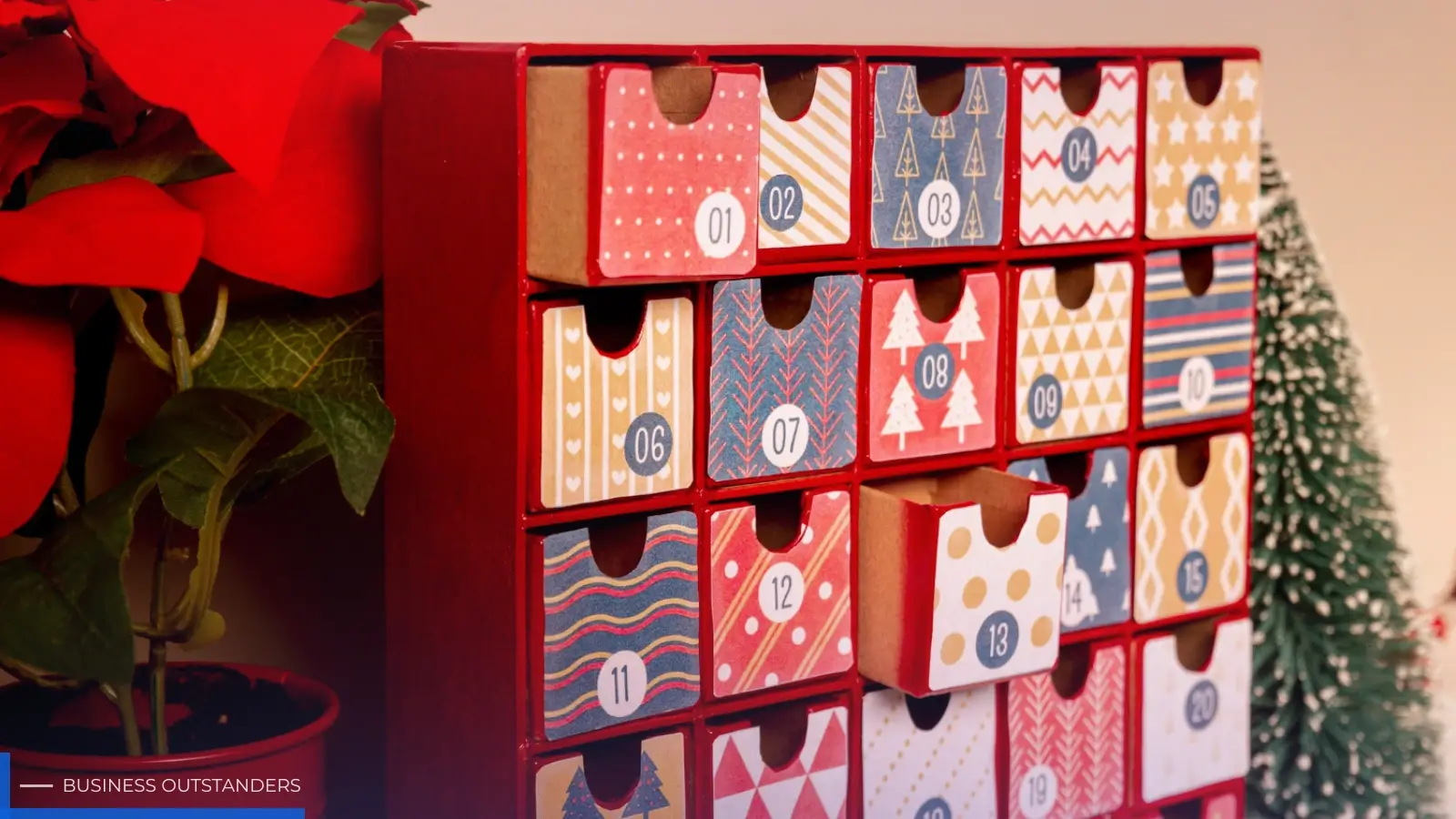
Advent calendars used to be one of the most predictable seasonal products in retail. A simple cardboard structure, usually filled with chocolate or small gifts, opened once a day in December and forgotten shortly after the holidays.
Today, that product category looks completely different.
Companies like DST-Pack, which specialize in structural packaging production, are seeing a clear shift: brands are no longer asking for “a box with 24 windows.” They are asking for something closer to a designed experience — a product that keeps attention for weeks, not seconds.
That change might sound subtle, but in practice it completely redefines what advent calendars are used for in modern marketing.
Advent Calendars Are No Longer Just Seasonal Packaging
The biggest difference between traditional packaging and advent calendars is time.
Most packaging exists for a single moment — unboxing. After that, its job is done. Advent calendars extend that interaction across days or even weeks.
Instead of one impression, the brand gets twenty-four small moments of visibility. The product is not consumed instantly; it is revisited repeatedly. It becomes part of a daily routine.
That repetition creates something most marketing formats cannot replicate: familiarity built without additional advertising spend.
Over time, the calendar stops being just packaging. It becomes part of the customer’s environment.
Why Brands Are Suddenly Investing More in This Format
The growing interest in advent calendars is not limited to traditional retail anymore. It now includes cosmetics, food, lifestyle brands, and increasingly, corporate clients.
For companies, the logic is simple. A single gift or campaign moment is easily forgotten. A structured, multi-day experience is not.
That is why more brands are now moving toward custom corporate advent calendars as a replacement for standard seasonal gifting. Instead of a one-time interaction, the recipient engages with the brand repeatedly over an extended period.
This changes the emotional value of the gift itself. It is no longer just something that is received — it is something that unfolds.
The Hidden Complexity Behind the Design
From the outside, advent calendars look like a creative packaging project. In reality, they are one of the most structurally demanding formats in packaging production.
Each compartment, drawer, or window must align perfectly. Each movement must feel consistent. And unlike traditional packaging, the experience is not judged once — it is judged repeatedly.
This is where production reality becomes critical.
Even small inconsistencies — a drawer that sticks slightly, a door that feels different on day ten than on day one — start to affect the perception of the entire product.
As Stanislav Krykun, CEO of DST-Pack, explains:
“With advent calendars, quality is not defined by the first impression. It is defined by consistency. The product is tested every single day by the user without them even realizing it.”
That perspective is what separates decorative concepts from functional seasonal products.
Why Structure Defines the Entire Experience
Unlike standard packaging, where structure supports the product, advent calendars are the product.
Every interaction — opening, sliding, lifting — is part of the experience itself. That means structural precision becomes more important than visual complexity.
A well-designed calendar does not necessarily need to be complicated. It needs to feel consistent. If the movement is smooth and predictable, the experience feels premium. If it is inconsistent, the illusion breaks immediately.
This is why manufacturers like DST-Pack often focus less on visual design details and more on how the structure behaves during repeated use and mass production.
When Creativity Meets Production Limits
Most advent calendars start as creative concepts. Designers experiment with shapes, layers, and opening mechanisms. On screen, almost anything can look feasible.
But production introduces constraints that are easy to underestimate.
Every additional mechanism increases the risk of misalignment, slows down assembly, and makes scaling more difficult. What works for 50 samples can behave differently at 5,000 units.
At that point, projects usually shift direction. Not because creativity is reduced, but because reliability becomes more important than complexity.
The most successful calendars are often not the most ambitious ones — but the ones where creativity and production reality are properly balanced.
Why Timing Is a Critical Factor Most Brands Underestimate
Advent calendars operate under strict seasonal timing. There is no flexible sales window.
If production is delayed, the product does not simply arrive late — it misses the entire market season.
This makes planning extremely important. Successful brands typically begin development months in advance to allow time for sampling, testing, adjustments, and production ramp-up.
The most common failure point is not design. It is timing.
Why This Format Continues to Grow Every Year
Despite the complexity, demand for advent calendars continues to grow across industries.
The reason is not only seasonal tradition. It is behavior.
People respond strongly to progression-based experiences. Something that unfolds over time naturally creates anticipation. Instead of receiving everything at once, customers engage with a structured sequence.
For brands, this creates a rare advantage. Instead of competing for attention in a single moment, they remain present in the customer’s life for weeks.
That level of sustained engagement is difficult to achieve through any other packaging format.
Conclusion: A Packaging Format That Behaves Like a Marketing Channel
Advent calendars are no longer just seasonal packaging. They have evolved into structured engagement tools that combine product, experience, and storytelling, reflecting the broader shift seen in the custom packaging revolution, where packaging itself becomes a core part of brand marketing.
They require more than design thinking. They require understanding of structure, timing, production limitations, and real-world use over time.
When executed correctly, they do something most packaging cannot: they maintain attention for days without interruption.
And in that sense, they are not just packaging anymore — they are a quiet but powerful marketing channel built into a physical object.
Business Outstanders brings you sharp insights on tech, business, entrepreneurship, law, crypto, and more. We uncover what’s next. Stay updated, sign up for our newsletter and be part of the future!