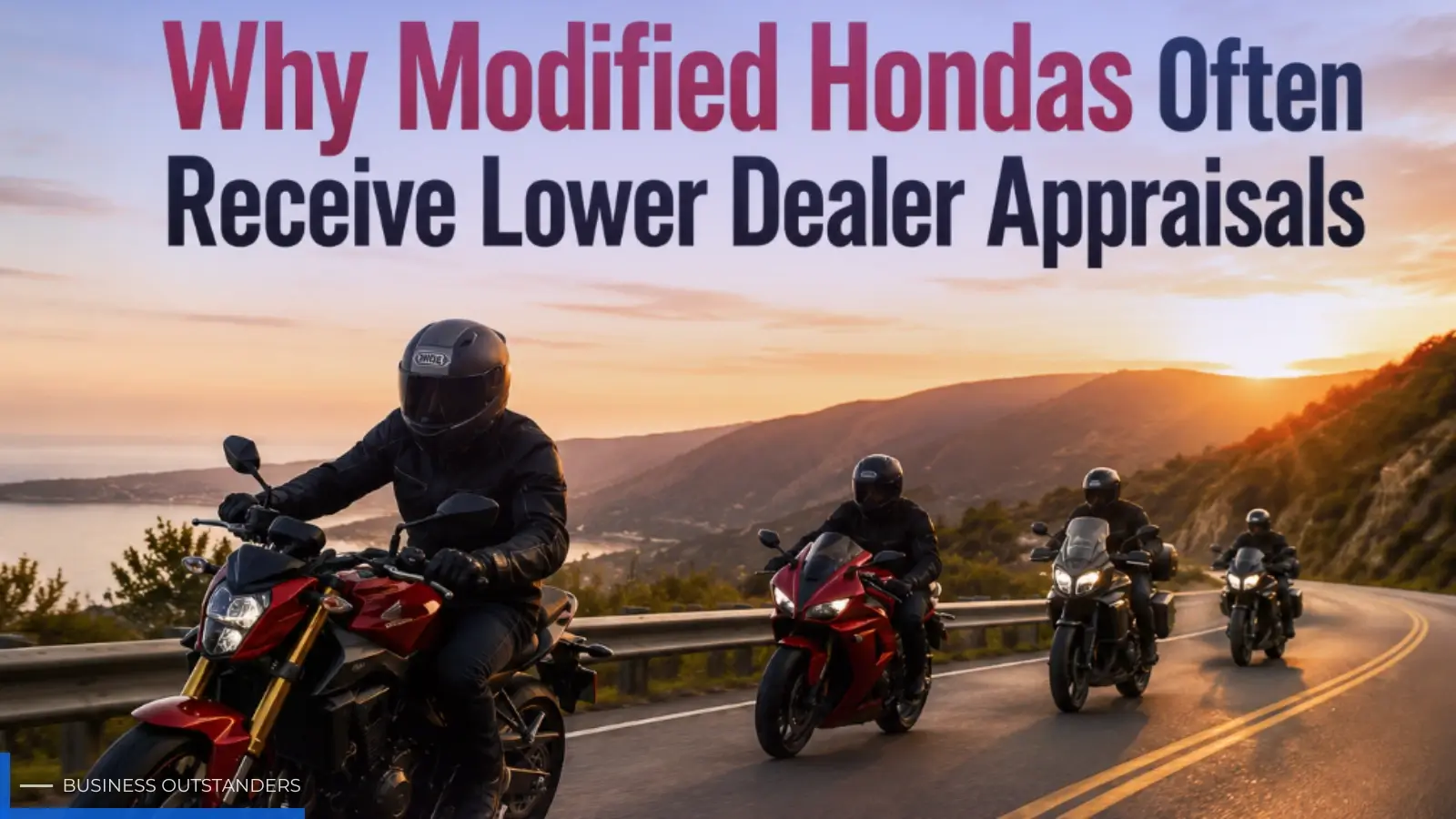
Many motorcycle owners are surprised when they bring in a customized Honda and receive an appraisal that's lower than expected.
The reaction is understandable.
After all, they've invested money in aftermarket exhausts, suspension upgrades, lighting packages, tuning, and accessories. From the owner's perspective, those upgrades should increase the motorcycle's value.
As a motorcycle dealer in Orange Park and Jacksonville, we've had this conversation countless times. The reality is that modifications don't always increase resale value. In some cases, they can actually reduce what a dealership is willing to pay.
If you're planning to sell a motorcycle, here's what you should know before assuming your upgrades will boost your appraisal.
Dealers Value Predictability
When we evaluate a Honda motorcycle, one of the biggest factors is predictability.
A stock motorcycle gives us a clear baseline. We know how it left the factory, how it should perform, and what potential buyers expect.
Once modifications enter the equation, things become less certain. We often need to ask:
- Was the work performed correctly?
- Were factory settings altered?
- Are all components compatible?
- Will future buyers want these modifications?
The more unknowns involved, the more risk there is when purchasing the motorcycle. That risk often affects appraisal value.
ECU Tuning Can Raise Concerns
One of the most common modifications we see today involves ECU tuning.
Popular Honda models such as the Africa Twin, Rebel 1100, CBR650R, and CBR1000RR are frequently modified to change throttle response, fuel mapping, or performance characteristics.
While these upgrades may improve the riding experience for some owners, dealerships often view them differently.
A tuned motorcycle raises important questions:
- Was the motorcycle ridden aggressively?
- Is the tune professionally installed?
- Can the original settings be restored?
- Will future buyers be comfortable with the modification?
When it comes time to sell a motorcycle, engine modifications can sometimes narrow the pool of interested buyers.
Aftermarket Exhausts Don't Always Add Value
This is one of the biggest surprises for many sellers.
A premium exhaust system may cost thousands of dollars, but that doesn't automatically translate into a higher trade-in value.
Many buyers prefer:
- Factory exhaust systems
- Original emissions compliance
- Lower noise levels
- Manufacturer specifications
As dealers, we have to think about what appeals to the broadest audience. What one rider sees as an upgrade, another may see as a drawback.
Electrical Modifications Create Additional Risk
Modern Honda motorcycles rely heavily on electronics.
Many newer models feature:
- ABS
- Traction control
- Ride modes
- TFT displays
- Electronic rider aids
When we see aftermarket electrical modifications, we often inspect them carefully.
Examples include:
- Auxiliary lighting
- Audio systems
- GPS wiring
- USB charging ports
Poor installation can lead to electrical issues that are difficult and expensive to diagnose for dealerships, which increases reconditioning risk.
Suspension and Lowering Kits Can Affect Appraisals
Suspension modifications are another area where value expectations often differ.
A lowering kit may make the motorcycle more comfortable for one rider, but not every buyer will want that setup.
We frequently encounter questions such as:
- Has suspension travel been reduced?
- Has handling geometry changed?
- Are the original components available?
Stock suspension setups generally appeal to a larger audience, making the motorcycle easier to sell.
Buyers Often Prefer Factory-Original Motorcycles
One trend we've noticed over the years is that many buyers actively seek motorcycles that remain close to factory condition.
This is especially true for popular Honda models such as:
- Africa Twin
- Gold Wing
- CBR650R
- CB650R
- Rebel 1100
Factory-original motorcycles often inspire greater buyer confidence because there are fewer questions about reliability and previous modifications.
That's one reason many motorcycle dealers in Orange Park place additional value on motorcycles that remain largely stock.
Modifications Can Limit Your Buyer Pool
Imagine two similar Honda motorcycles.
The first motorcycle is completely original and comes with full service records.
The second has a tuned ECU, aftermarket exhaust, custom lighting, modified suspension, and several performance upgrades.
While some riders may love the customized version, many others will prefer the stock motorcycle. As dealers, we evaluate resale potential. The broader the appeal, the easier the motorcycle is to sell.
That's why heavily modified motorcycles sometimes receive lower appraisals than owners expect. The same principle applies throughout the automobile industry, where originality and documented maintenance often support stronger resale values.
Don't Throw Away Original Parts
One mistake we see frequently is owners discarding original equipment after installing upgrades. Keeping factory parts can help preserve value.
Items worth retaining include:
- Factory exhaust
- Original mirrors
- Stock windscreen
- Factory seat
- Suspension components
Having these parts available gives future buyers options and provides dealerships with greater flexibility during resale.
When Modifications Can Help Value
Not all upgrades are viewed negatively. Certain modifications can make a motorcycle more attractive to buyers.
Examples include:
- OEM Honda accessories
- Heated grips
- Factory luggage systems
- Quality crash protection
- Touring accessories
These upgrades enhance functionality without significantly altering reliability or factory performance.
Final Thoughts
As a motorcycle dealer in Orange Park and Jacksonville, we've learned that resale value isn't based on how much money was spent modifying a motorcycle.
Instead, value is determined by market demand, buyer preferences, reliability, and resale potential.
If you're preparing to sell a motorcycle near me, remember that the safest path to strong resale value is often a well-maintained motorcycle with complete service records and minimal modifications.
The closer a Honda remains to factory specifications, the easier it is for dealerships to evaluate, market, and ultimately sell to the next owner.
Business Outstanders brings you sharp insights on tech, business, entrepreneurship, law, crypto, and more. We uncover what’s next. Stay updated, sign up for our newsletter and be part of the future!