The modern growth team is not short on tools. It is short on coordination.
A typical company may use separate platforms for customer data, email, analytics, social media, paid campaigns, sales conversations, product feedback, documents, and internal communication. Each tool solves part of the problem. The larger challenge is getting work to move cleanly across all of them.
That is why agentic automation is becoming a serious business topic. It is not simply another productivity trend. It represents a shift in how teams translate strategy into execution.
Traditional automation follows fixed rules. If this happens, do that. It works well for stable, predictable processes. But growth work is often more fluid. Teams monitor signals, interpret context, prepare responses, and coordinate across people. They need automation that can understand instructions, gather information, summarize options, and prepare next steps.
AI agents are emerging as that operating layer.
From Static Workflows to Adaptive Work
A static workflow might add a new lead to a spreadsheet when someone fills out a form. That is useful, but limited.
An agentic workflow can do more. It can review the lead’s company website, summarize the business, classify the opportunity, draft a personalized outreach note, and notify the right teammate. The human still approves the message, but the agent completes the research and preparation that used to take time.
For growth teams, this creates leverage. Teams can respond faster without lowering quality. They can monitor more signals without adding more dashboards. They can prepare better decisions without asking people to manually collect the same context every week.
Practical Use Cases for Growth Leaders
The strongest agentic automation use cases are not vague. They are connected to recurring business rhythms.
Market monitoring is one. An agent can track competitor messaging, new product pages, pricing changes, hiring signals, or content themes, then produce a weekly executive digest. This gives leaders a current view without requiring someone to browse and summarize manually.
Customer intelligence is another. Agents can group customer feedback, identify recurring objections, summarize sales call notes, and surface patterns that should influence product, marketing, or support.
Campaign execution can also benefit. Instead of asking a team to manually create every asset variation, an agent can prepare draft copy, audience notes, launch checklists, reporting templates, and follow-up tasks.
Internal reporting is a fourth area. Growth teams often spend too much time turning data into updates. Agents can gather metrics, summarize movement, and prepare a first draft of the narrative. Leaders then add interpretation and decisions.
The Role of Human Leadership
Agentic automation does not remove leadership. It makes leadership more visible.
When repetitive coordination is automated, leaders must be clearer about goals, standards, and decision rules. An agent can execute a playbook, but the playbook needs strategy. What markets matter? Which signals deserve attention? What tone should customer communication use? What qualifies as an urgent risk? What should be escalated?
The best leaders will treat agents as operational extensions of the team. They will define the judgment framework, then let AI handle the recurring preparation.
This also changes team design. Instead of hiring only for manual coordination, companies can hire people who know how to design, review, and improve workflows. The new advantage is not just using AI. It is knowing which parts of work should become repeatable and which should stay human.
Why Natural-Language Playbooks Matter
The major adoption barrier for business automation has always been translation. Business users describe outcomes; automation tools require technical configuration. Somewhere between the two, momentum gets lost.
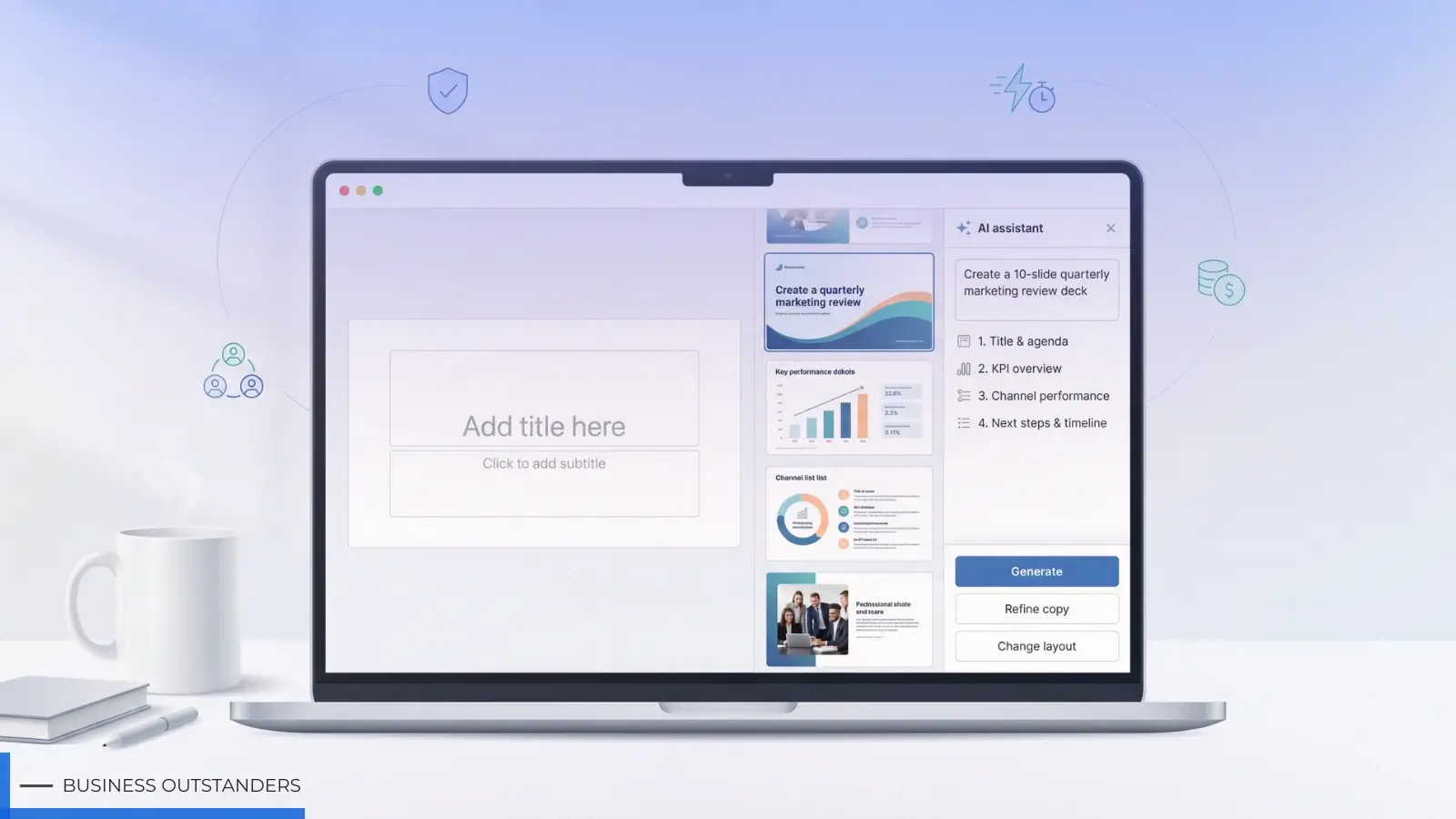
Aident AI is part of a newer category of tools trying to close that gap. Its product positioning centers on turning natural language into executable AI Playbooks, with broad integrations across business applications. That matters because growth teams usually know what they want the workflow to accomplish, even if they do not want to build it step by step in a technical interface.
A growth leader should be able to say: “Every Monday, review new competitor announcements, summarize the three most important positioning changes, compare them with our current messaging, and draft recommended actions.” That sentence is closer to how business teams think.
Risks to Manage
Agentic automation should be adopted with discipline.
First, sensitive workflows need review gates. Customer-facing messages, financial decisions, hiring decisions, and legal communications should not be fully autonomous.
Second, teams should monitor quality. A workflow that saves time but creates inaccurate summaries or off-brand messaging is not progress.
Third, automation should be observable. Leaders need to know what ran, what changed, what failed, and what requires attention.
Finally, companies should avoid automating broken processes too quickly. If a workflow is unclear or politically messy, adding AI may simply make confusion move faster. Start with repeatable work that already has a clear owner.
The Strategic Opportunity
The next stage of business productivity will not be defined by who owns the most tools. It will be defined by who can coordinate work across tools most intelligently.
Agentic automation gives growth teams a way to turn strategy into repeatable execution. It helps leaders maintain visibility, reduce manual coordination, and move faster without asking teams to live inside more dashboards.
The companies that benefit most will not be the ones that automate everything. They will be the ones that automate the right things: research, preparation, reporting, monitoring, and handoffs.
In a market where speed and clarity matter, AI agents are becoming more than assistants. They are becoming the connective tissue of modern growth operations.
Business Outstanders brings you sharp insights on tech, business, entrepreneurship, law, crypto, and more. We uncover what’s next. Stay updated, sign up for our newsletter and be part of the future!