Introduction
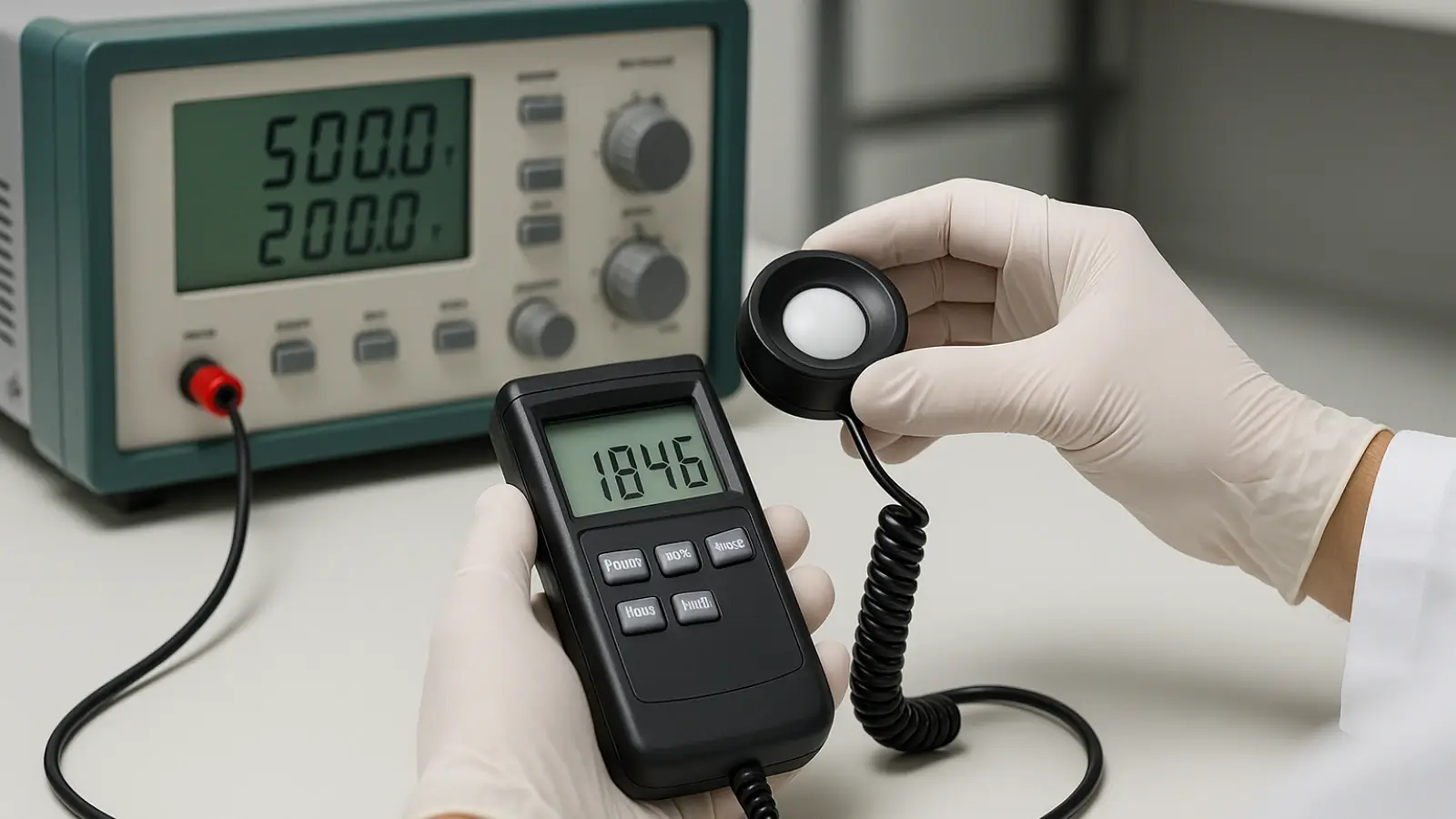
Light meters (lux meters) are used to measure the intensity of illumination in environments from photography studios and greenhouses to laboratories and workplaces. Accurate light measurements are vital for regulatory compliance, safety, energy efficiency, and process control. Without routine calibration, even high-quality meters can drift, jeopardizing your operations and outcomes.
Why Light Meter Calibration Is Important
-
Workplace Safety: Regulatory agencies like OSHA require certain minimum lighting levels in workplaces to prevent accidents and ensure employee well-being.
-
Process Control: In manufacturing or scientific research, consistent lighting can be essential for quality control or experimental repeatability.
-
Energy Efficiency: Accurate readings help optimize lighting systems, reducing energy waste and costs.
-
Compliance: Industries such as food service, healthcare, and laboratories must meet strict lighting standards for inspections and certifications.
Factors Leading to Light Meter Inaccuracy
-
Sensor Degradation: Repeated exposure to intense light, heat, or humidity can degrade the sensor.
-
Physical Damage: Drops, bumps, or exposure to dust and moisture can impact accuracy.
-
Aging Electronics: Electronic components can drift over time, subtly affecting readings.
-
Improper Storage: Leaving meters in direct sunlight or high humidity when not in use accelerates deterioration.
Calibration Best Practices
1. Define a Calibration Interval
Manufacturers often recommend annual calibration, but more frequent checks may be needed in high-use or critical settings.
2. Use Accredited Labs
Choose ISO/IEC 17025-accredited providers like SIMCO, which use reference standards traceable to NIST or equivalent bodies.
3. Calibrate Across Expected Ranges
Test and adjust the meter at multiple light levels (e.g., low, medium, high) to ensure accuracy throughout its intended range.
4. Environmental Considerations
Calibrate under stable ambient conditions to minimize the effects of temperature or background light.
5. Maintain Calibration Records
Proper documentation is crucial for compliance, audits, and trend analysis.
Real-World Example
A commercial greenhouse operator noticed inconsistent plant growth across different sections. Investigation revealed that a miscalibrated light meter had led to uneven light distribution. After recalibrating the meter, the operator was able to adjust the lighting system, resulting in more uniform crop yields.
In the film industry, a cinematographer’s uncalibrated meter resulted in several scenes being underexposed, causing costly reshoots. Calibrated meters are now a mandatory part of the crew’s equipment checklist.
Actionable Tips
-
Check meter functionality before each use
-
Store meters in protective cases away from extreme temperatures and humidity
-
Immediately recalibrate after any drops or suspected damage
-
Label devices with calibration dates and next due dates
-
Use meters only within their specified measurement range
Why SIMCO?
SIMCO provides:
-
Precise calibration for all major light meter brands
-
Fast turnaround and flexible scheduling
-
Comprehensive, traceable calibration certificates
-
Support for both lux and foot-candle measurements
Conclusion
Regular light meter calibration ensures the reliability of your illumination measurements—critical in safety, compliance, and process control. By adhering to best practices and working with trusted providers like SIMCO, you can confidently shed light on your operations’ success.
Business Outstanders brings you sharp insights on tech, business, entrepreneurship, law, crypto, and more. We uncover what’s next. Stay updated, sign up for our newsletter and be part of the future!