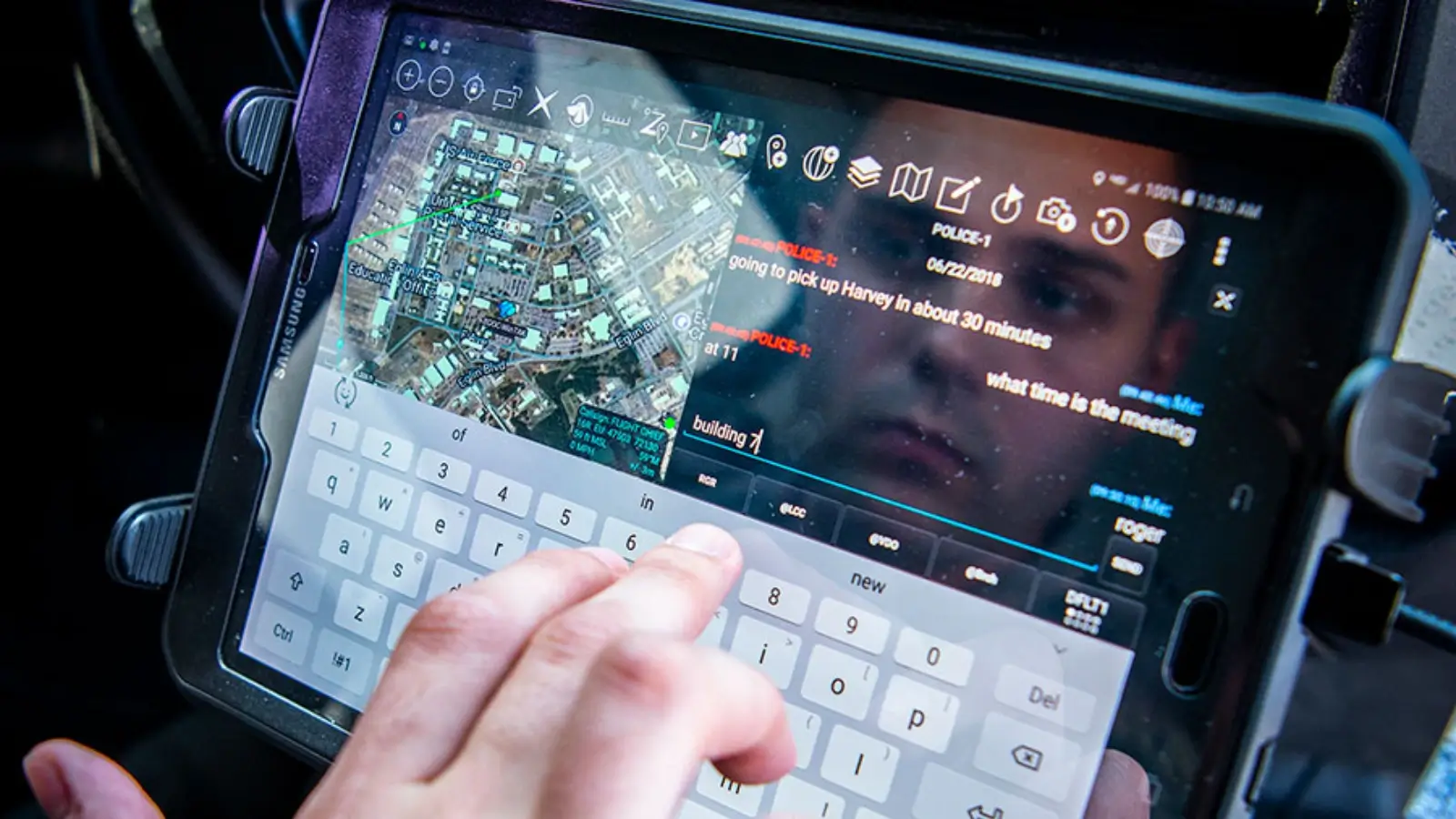
In Operation Desert Storm, 25% of American battle deaths were due to friendly fire, primarily because tactical reach exceeded visual confirmation. In response, the Air Force Research Laboratory (AFRL) pioneered the Tactical Assault Kit (TAK), a modern operating saystem for tactical engagements designed to safeguard service members. Over the last 15 years, TAK has evolved into a comprehensive, government-owned ecosystem. It serves as a powerful operational backbone for special warfare and public safety alike—all at no cost to the end user and funded by the American taxpayer.
The concept for ATAK came in 2003 while an AFRL engineer was deployed to Afghanistan with AFSOC, several years before smartphones became mainstream, as a vehicle to demonstrate the value of advanced information management.
All operations have required speed, clear information, and strong coordination throughout history; today we can take advantage of technology. This is really helpful for teams, police officers, and emergency responders around the world. Teams can see what's happening and communicate easily.
When TAK was first being developed, the goal was to fix a problem that had been around for a long time by attempting to take advantage of several intersecting technology revolutions. Keys were smartphones and tactical IP-based radios. In critical situations where every second counts, traditional communication systems were not effective, creating serious risks for teams in the field. TAK significantly addressed this challenge. It launched a new precedent of operational clarity and precision by developing a single digital interface where operators can visualize positions, share information, and coordinate with greater efficiency.
The Triumph of a Taxpayer-Funded Tactical Ecosystem
TAK is unique not only because of its capabilities but also because of the strategy that led to its success. TAK is a government-led, AFRL-developed, taxpayer-funded project that is shaped by direct feedback from tactical teams, warfighters, and first responders, guaranteeing that it satisfies actual operational requirements.
In order to enable the ecosystem to grow beyond military usage, TAK was designed as a dual-use project, and the government took great effort to ensure that it remained publicly releasable. In real-world deployment, this uncommon instance of public-sector innovation has kept up with, and sometimes surpassed the speed of private-sector solutions.
ATAK's success was confirmed in 2014 when the Army Nett Warrior Program chose it over other government and commercial alternatives due to its superior features, competitive pricing, unrestricted rights, and strong network capabilities.
Today, TAK has become a common tactical operating system, connecting thousands of users in defense, law enforcement, and emergency response. Its effectiveness comes from its ability to combine multiple data sources into a single, clear picture. This allows for quicker decision-making, enhances coordination, and leads to better results in the field.
The Real-World Impact of TAK in Action
TAK’s true value lies not just in its capabilities but in its performance under real-world operational conditions. In military operations or disaster response scenarios, users must make rapid and informed decisions. TAK enables teams to do this effectively. It delivers a live operational picture that enables faster, more informed responses. This improves efficiency and enhances safety for personnel in the field.
The system has been adopted by numerous government agencies, including the FBI, Secret Service, US Marshals, and Homeland Security (Coast Guard, ICE, CBP, and FEMA), who use it for large public events like the Super Bowl and disaster response. The CSAF further touted ATAK’s critical use in Hurricanes Harvey, Irma, and Maria in his 2017 keynote address. Its effectiveness in increasing soldier power has also been internationally recognized, with The Guardian reporting on a 2021 urban warfare exercise where British marine commandos defeated 1,500 of their US counterparts with the help of this situational awareness technology.
WearTAK: A Case Study in Ecosystem Modularity
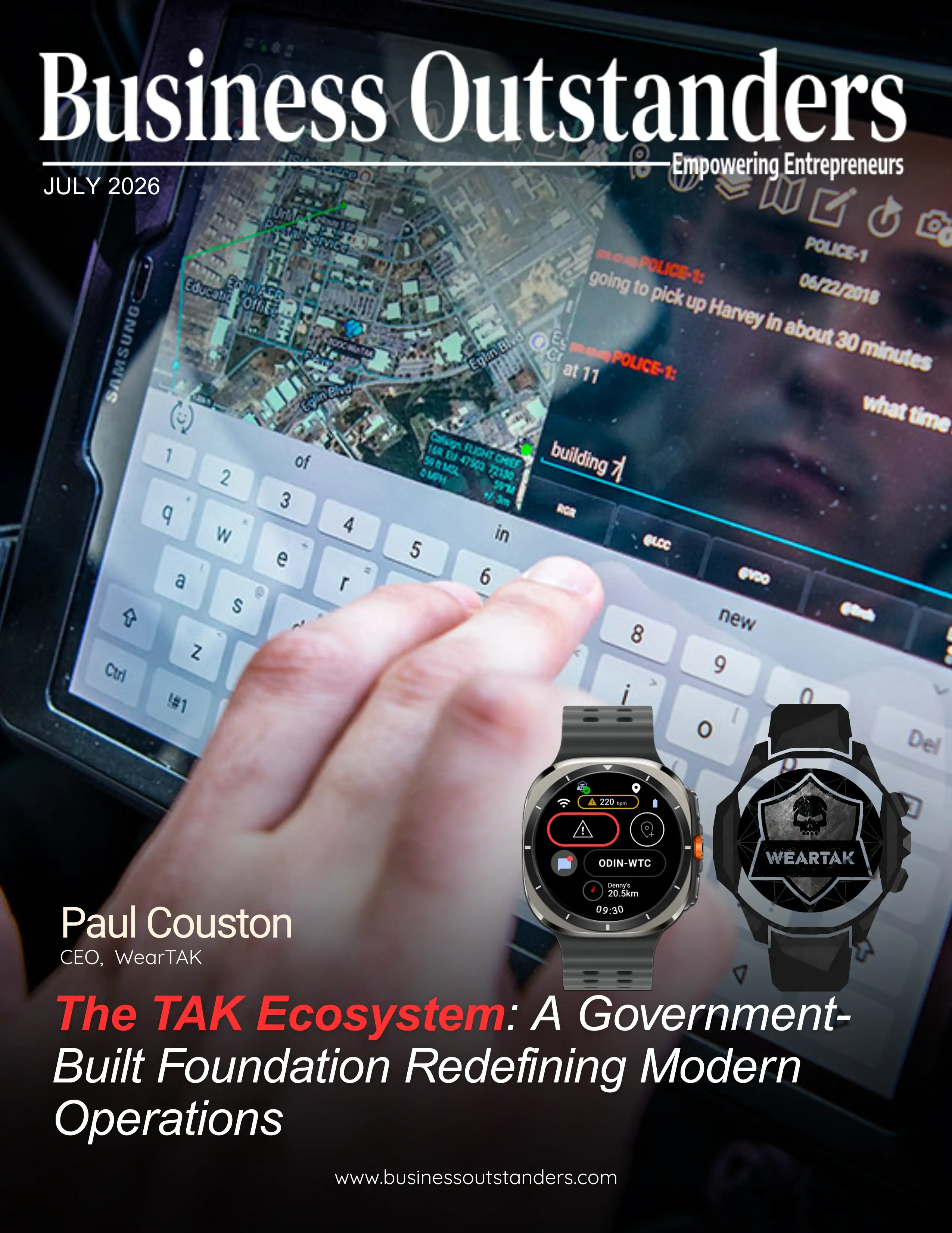
The strength of the TAK ecosystem is best demonstrated by its ability to integrate specialized capabilities like WearTAK. WearTAK is not merely a software, but a validation of TAK’s open architecture. By leveraging the ecosystem's core standards, WearTAK extends situational awareness directly to the individual operator’s wrist, integrating real-time data, communication, and physiological monitoring into a seamless wearable interface- essentially, taking the power of situational awareness from the greater TAK ecosystem and putting it on the wrist. Principal Architect of WearTAK, Alex Gorsuch “I spend a lot of time understanding user needs and putting it in- every single part of the 10-year roadmap of WearTAK is driven solely by end user request. For example, users can navigate, chat, markup and view maps, and send automated alerts, all while keeping eyes on the target. Some of these things I had initially fought against, but when TAK users ask for features, it’s my job to listen and ensure it’s never a fair fight for freedom’s adversaries.”
WearTAK utilizes the established TAK infrastructure to provide automated alerts and secure data transmission, proving that the ecosystem can support highly specific operational tools without adding unnecessary complexity. It reinforces the primary pillars of the TAK vision: clarity, coordination, and control within a unified dynamic environment. The success of WearTAK is a direct result of the ecosystem’s inherent interoperability. Because the TAK system is designed to be highly adaptable, modular extensions can be deployed rapidly and function perfectly with existing hardware and software. This flexibility is the primary reason why the TAK ecosystem remains the premier choice for modern, data-driven operations.
With more than $9 million invested in research and development, WearTAK continues to improve while the software remains completely free for users, forever. This allows warfighters, first responders, partner forces, and even some neighborhood watch groups to use the platform at no cost, helping them operate more effectively in real-world situations. Of particular interest to other ecosystem players is that anyone can build a plugin for WearTAK, just like ATAK. There are a variety of template plugins and a full SDK users can access in order to scale their TAK workflows onto the wrist. This architecture and plugin workflow, including a third-party pipeline process, is directly built upon the proven architecture of the broader TAK ecosystem. This serves as a microcosm for how the entire TAK platform is constructed—designed not for isolation, but for seamless integration at scale.
Scaling Innovation Through a Unified Architecture
The TAK architecture is built upon mission-critical requirements refined by years of direct warfighter feedback, creating a unified framework that prioritizes interoperability. This open-architecture approach allows the ecosystem to scale rapidly, ensuring that as new operational challenges emerge, the platform can adapt without compromising its core reliability. When a new capability is introduced, it inherits the established security, network protocols, and user trust already embedded within the broader TAK environment.
The scalability of this system is evidenced by its widespread deployment, with hundreds of thousands of users currently active across global defense organizations and public safety teams. Every branch of the U.S. military, along with numerous allied partner nations, utilizes these capabilities not as isolated gadgets, but as integrated components of a larger, synchronized network. This adoption validates that the ecosystem can reliably support diverse operational needs where every second counts, providing a common operational picture across vastly different mission sets.
The modularity of the ecosystem is best exemplified by extensions like WearTAK, which demonstrates how specialized tools can be seamlessly integrated into the existing infrastructure to meet niche requirements. This scalability is further evidenced by a study conducted by the TPC, which found several thousand contracts containing TAK requirements, highlighting the immense ongoing investment and demand for TAK-based capabilities across both military and civilian sectors.
Ultimately, the TAK ecosystem serves as the definitive model for government-funded, open-architecture innovation. By providing a resilient and practical foundation, the system ensures that teams on the ground are equipped with technologies that are not only advanced but also deeply integrated. As operational needs continue to evolve, the TAK ecosystem remains the essential modular bedrock for shaping the future of tactical awareness and coordination, ensuring the collective safety and effectiveness of those who serve.
Website: https://ascentitech.com/