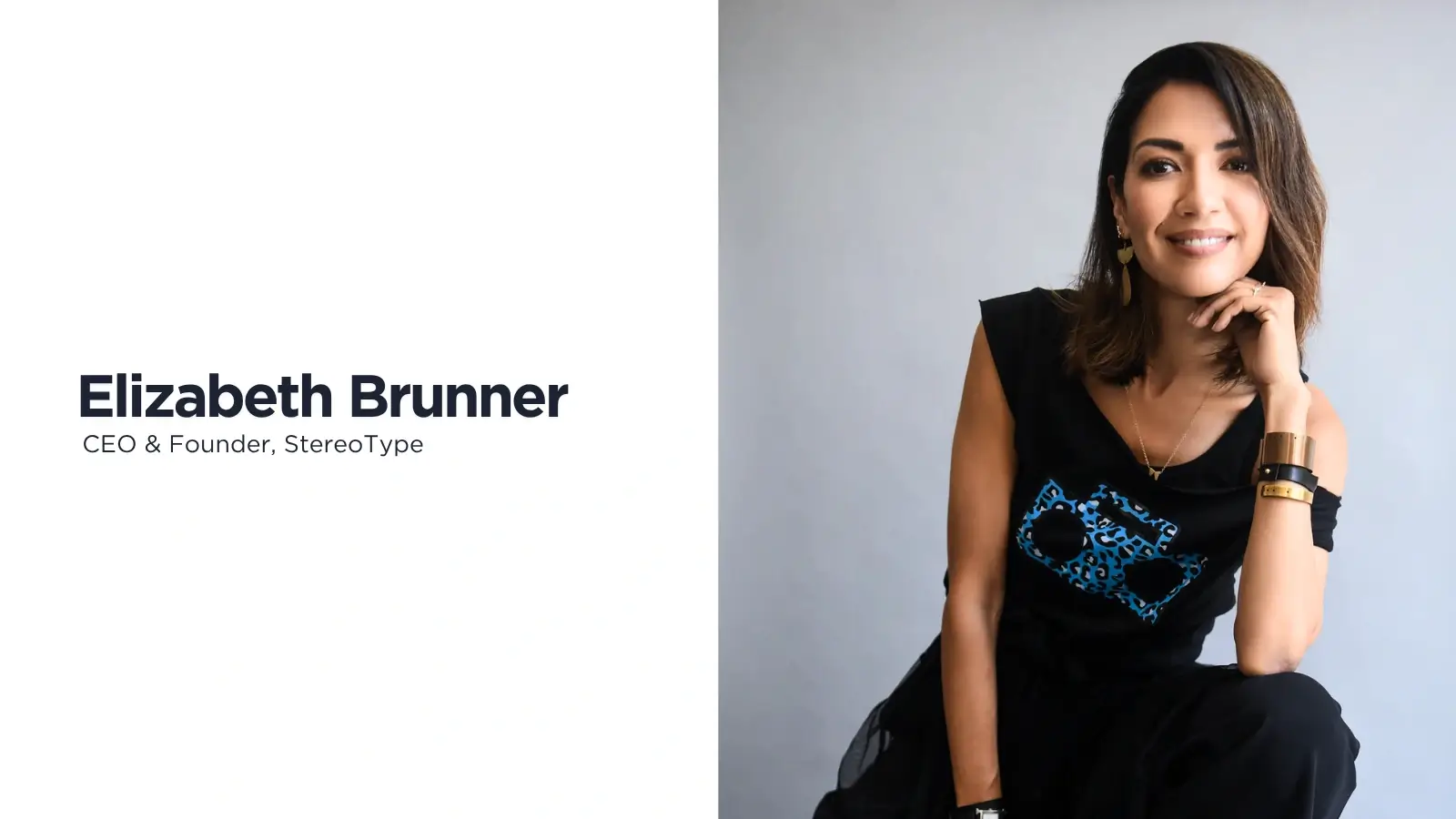
Elizabeth Brunner is not your typical fashion founder. Before building StereoType into a purpose-driven label challenging long-held norms, her journey was shaped by something far more personal, watching her twins express themselves freely, without the constraints of traditional gendered fashion. What began as small, joyful moments at home soon evolved into a deeper questioning of the rigid categories that define how children (and adults) are expected to dress.
Today, as the CEO and founder of StereoType, Elizabeth is leading a movement toward what she calls “blended fashion”, a philosophy and intentional mix of masculine and feminine that celebrates individuality, creativity, and authenticity over labels. In this interview, she shares how her experiences as a parent, entrepreneur, and advocate for self-expression have shaped her brand’s mission, the challenges of pushing against industry norms, and why she believes the future of fashion lies in breaking boundaries rather than reinforcing them.
Interview Highlights:
Q. Your brand, StereoType, was born out of observing your twins’ fashion choices as they dressed themselves and went against traditional fashion standards for clothing. How did observing your twins’ early fashion choices lead you to question deeply ingrained fashion standards based on gender, and how did this realization inform your vision for the brand?
The observation was gradual but it also started well before my twins were even born when I would tell people I was having boy/girl twins. I was flooded with all the typical gear for twins. Pink clothes for my daughter and blues for my son. I really didn’t like how generalized the options were for my unborn babies but the deep dislike didn’t really sink in until much later.
Around 3-years-old my son asked me if could try on his twin sister's dress. I said yes, helped him in it and something magical happened, he was brimming with joy. I remember watching him twirl and jump, and laugh. He loved the way the fabric was moving with him below his waist, like he had a dance partner. I’d never seen him so completely happy, just watching him filled me with joy, too.
Same for my daughter, the moment she started wearing baseball hats backwards and camo shorts, something switched inside her. She was somehow transformed and it was visable. There were many small moments like that that quickly added up to my brand vision. The simple question for me to answer was, “does the box really exist”? The answer is no.
Q. Prior to launching StereoType, you founded Piece x Piece, a sustainable fashion brand. How did your experience with Piece x Piece inform your thinking on sustainability and ethical practices in the operations of StereoType?
Both Piece x Piece and StereoType were born the same way, I was deeply compelled. My heart told me that there was a better way and I couldn’t stop thinking about it. I was called to disrupt the status quo and create meaningful change. Piece x Piece was all about reimaging something that was considered waste, and disrupting a wasteful cycle. I went into StereoType with the same desire to design mindfully and consider the full cycle from end to end. It’s not easy to do because we are conditioned to shop fast and cheap but that’s not what I wanted my brand to stand for, so it basically comes down to personal values and ethics.
Q. You define the idea of “blended fashion” as a core tenet of your brand philosophy. How do you distinguish between gender-neutral fashion and the blended fashion philosophy that your brand embodies?
I wasn’t down with the term gender-neutral because to me it implies a toning down, and making things kind of bland. I wanted my designs to amplify so I coined my designs Blended Fashion™, a mix of masculine and feminine, equal in value and defined by no one. I love this way of thinking because my kids were naturally doing this on their own, mixing clothing from each other's wardrobe. It was totally instinctive for them and it made me realize how natural it really is for kids to dress for joy not gender.
Q. Traditional boys’ and girls’ sections in clothing stores are still the norm for many consumers and parents. What kind of pushback have you received in communicating the importance of self-expression in children’s fashion, and how do you overcome this resistance?
I’m not going to lie it can be tough to overcome the pushback but that’s what happens when you challenge the status quo. I knew it would take courage to communicate my vision and purpose and it’s been a slow process of building up that courage, especially now with so much division. But honestly, when I get pushback now it’s almost a form of validation because most of that resistance comes from fear and the conditioning of conforming, it’s deeply ingrained and hard to unlearn but it is possible. My vision and my brand are not for everyone and that’s okay, so the criticism is easier to brush off now. I’m more interested in transforming than conforming and I’m attracting those who are interested in that as well.
Q. Your twins are officially co-founders of your business. How has involving them in the creative process informed ideas at StereoType, and what have you learned from them as co-founders?
I learned how to get in touch with my inner child more when I watched my twins. They helped me visualize the feeling before I even got started. They were five-year-old when I started thinking about starting StereoType and watching them naturally express themselves gave me so much energy and inspiration. It was like watching myself as a child in a way because I remembered how much wonder I had as a kid. They helped me tap back into that remembering and it informed my direction. They are also literally the DNA of the brand so it made sense to include them in the building of the business. At minimum they are seeing first-hand what it takes to go after a dream, and they love being a part of it. It’s a family business.
Q. StereoType is a proud woman-owned and San Francisco-made company. Can you tell me about the ethical and community-driven commitments that you, as a leader, feel passionate about, and how these set your brand apart in the larger fashion industry?
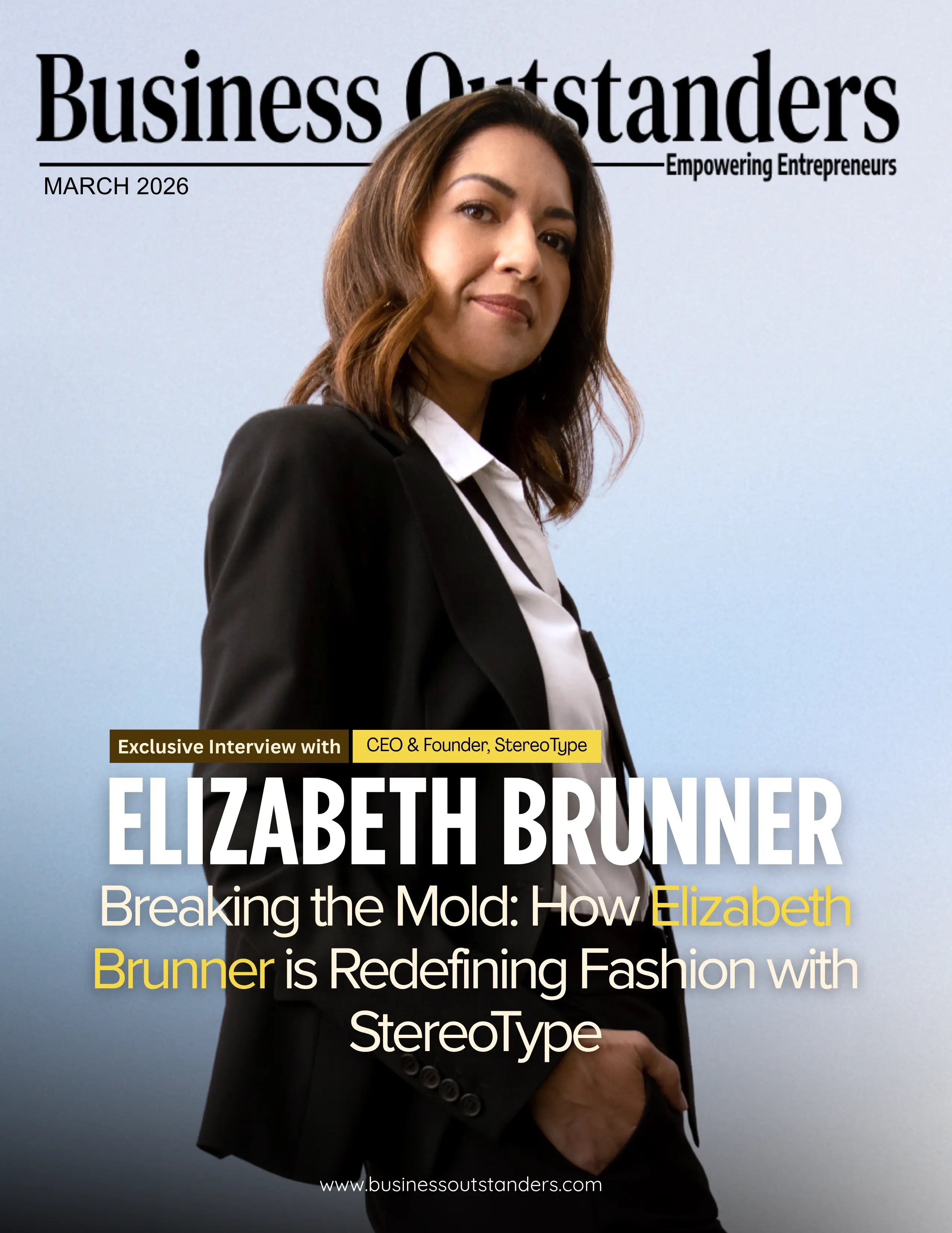
I’m a deep thinker (for better or worse) and that means thinking about every single way my brand can have an impact. Whether that be supporting parents, local manufacturing, choosing recycled fabrics, to communicating the ethos and advocating for self-expression. It’s all encompassing and it's about making meaningful decisions that lead to change, even if it’s small. l not just making stuff, I’m creating a thoughtful eco-system. That’s not an industry norm and it takes time and a lot of patience to build but I prefer to lead with my heart than follow the herd.
Q. In previous interviews, you’ve talked about the need to change one’s perspective during challenging times as an entrepreneur. How do you, personally, change your perspective, and how does this help you stay focused on your mission?
Sometimes changing my perspective is easier said than done, (que the therapist) but I think one of the most empowering things I tend to do when I’m feeling challenged is look at the macro not the micro. As an entrepreneur it’s so easy to get bogged down in all details of running a business. It’s straight up exhausting. But somehow, I come back to, “okay, this feeling/moment sucks but do I regret what I’m doing”? Do I regret this journey? Sometimes it is hard to muster up the answer but it’s always, no. Have I made more mistakes than I can count, absolutely, but how can I regret a calling? Even if my business closes tomorrow, I know the legacy I’m leaving behind with my message, my clothing, my children’s book and song. I’m proud of all of it. Even if there are some scrapes and bruises along the way.
Q. The name StereoType is clearly a play on words between stereotypes and identity. What does the name of your brand mean to you, and how do you hope it encourages consumers to think about cultural identity outside of fashion?
I love this question, StereoType is a play on words. My logo is a boombox, which represents the Stereo, which essentially means two channels coming together to create balance and harmony. To me this represents my boy/girl twins, and the blending that they do with clothing. They are creating their own unique look which creates inner harmony. Type, means, you can change yourself, “your type” and anytime. You don’t need permission, you just need awareness. The boombox is also a symbol for being in-tune with yourself which I think we are all in some way striving for. I’m also a child of the 80’s and 90’s so it’s a nod to the culture of carrying around a boombox on your shoulder. It’s a statement.
Q. As the fashion industry continues to evolve and discussions about gender identity become more prevalent, how does StereoType see itself serving families in terms of expression, identity, and social norms through fashion choices?
I consider myself an advocate for individuality more than an entrepreneur because it’s more about the message than the products but they go hand in hand. When I started sharing the idea for StereoType with adults they would all say similar things “when is the adult line coming out” or “I wish this clothing was around when I was a kid” I think as a society we are yearning to be accepted as we are. We've been deeply programmed to believe we have to follow the crowd, that we must conform and avoid standing out. I say, you were born to stand out.
Q. What are your hopes for the future of fashion and self-expression for young people, both creatively and culturally, and how does StereoType aim to impact this?
I hope the future of fashion is more about self-expression and individualism. My kids don’t follow trends and I love that. I created StereoType because I wanted my kids to be free to express themselves authentically, and I want that for all kids, and adults too. Culturally I think the majority is ready for that, we’re tired of labels that no longer serve our true identity. It starts with asking questions and being brave enough to answer them honestly. For me it was, “do I want my kids to grow up in a world where they are told who to be rather than discover it for themselves”? It was an easy no for me, but un-learning was a hard process and it’s ongoing, but once you see the truth you can’t unsee it. I think the industry needs to catch up to a Blended Fashion™ approach to designing in general, not just for kids but, for adults, too. I hope I’m paving the way for that.
“I think as a society we are yearning to be accepted as we are. We've been deeply programmed to believe we have to follow the rules, that we must conform and avoid standing out. I say, "You were born to stand out.”
Connect with Elizabeth Brunner
If you find this interview valuable, you can follow Amelia’s work and connect with her directly:
LinkedIn: Click Here
Website: stereotypekids.com – Click Here
About Business Outstanders
Business Outstanders is a business magazine featuring interviews, growth strategies, and leadership insights for entrepreneurs and small business owners. If you know a business leader with a story worth telling, nominate them for a feature interview.