Imagine sinking into the warm, bubbling waters of your hot tub after a long day, surrounded by a serene outdoor space that's truly your own. But what if prying eyes from neighbors or passersby disrupt that peace? That's where customizing your hot tub gazebo comes in, turning it into a private oasis. Whether you're dealing with a compact backyard or a sprawling garden, thoughtful modifications can enhance seclusion without sacrificing style or functionality. For those with larger setups, incorporating elements like a pool cage can extend that privacy to adjacent water features, creating a cohesive retreat.
In this article, we'll explore practical ways to personalize your gazebo for ultimate privacy. From site selection to clever add-ons, these ideas draw from real-world experiences of homeowners who've transformed their spaces. We'll cover everything step by step, ensuring your project feels achievable and rewarding. Let's dive in.
Assessing Your Space and Privacy Needs
Before you start hammering nails or planting shrubs, take a good look at your yard. Privacy isn't one-size-fits-all; it depends on your surroundings. Are you in a suburban neighborhood with houses close by, or out in the countryside where wildlife is your main audience? Urban dwellers might battle street views or tall apartment buildings, while rural folks could worry about open fields.
Start by mapping out sight lines. Walk around your property and note where visibility is an issue. Use a simple string or laser pointer to simulate views from different angles. This helps identify problem areas, like a direct line from a neighbor's window to your hot tub spot.
Consider your lifestyle too. Do you host gatherings, or is this a solo relaxation zone? Families with kids might prioritize safety alongside privacy, while couples could focus on romantic seclusion. Budget plays a role—customizations range from DIY hacks to professional installations.
-
Evaluate natural barriers: Existing trees, fences, or hills can be assets. Enhance them rather than starting from scratch.
-
Check local regulations: Zoning laws might limit structure heights or materials. A quick call to your city hall can save headaches.
-
Think seasonally: Privacy needs change with the weather. Deciduous trees offer shade in summer but expose you in winter.
By understanding your unique setup, you'll make informed choices that blend seamlessly with your home.
Selecting the Ideal Location for Your Gazebo
Location is everything when it comes to privacy. Placing your gazebo thoughtfully can minimize exposure right from the start. Aim for spots tucked away from main roads or shared boundaries. A corner of the yard, backed by a garage or shed, often works wonders.
If your yard slopes, use that to your advantage. A lower area might naturally shield you from higher vantage points. Proximity to the house matters too—closer means easier access but potentially more visibility from indoors.
Wind and sun exposure influence placement. A windy spot could make privacy screens flap annoyingly, while too much direct sun might fade fabrics. Test the area at different times of day to see how light and shadows play out.
-
Proximity to utilities: Ensure easy access to power for lights or pumps, and water for maintenance.
-
Soil and drainage: Avoid low-lying areas prone to flooding; good drainage prevents mold in your private haven.
-
Future expansions: Leave room if you plan to add features like a deck or pathway.
I've seen homeowners regret hasty placements, so patience here pays off. Sketch a few options on paper—it's a low-commitment way to visualize.
Structural Enhancements for Added Seclusion
The gazebo's framework is your canvas for privacy customizations. Start with the basics: if your structure is open-sided, consider adding walls or panels. Lattice work allows airflow while blocking views, striking a balance between openness and enclosure.
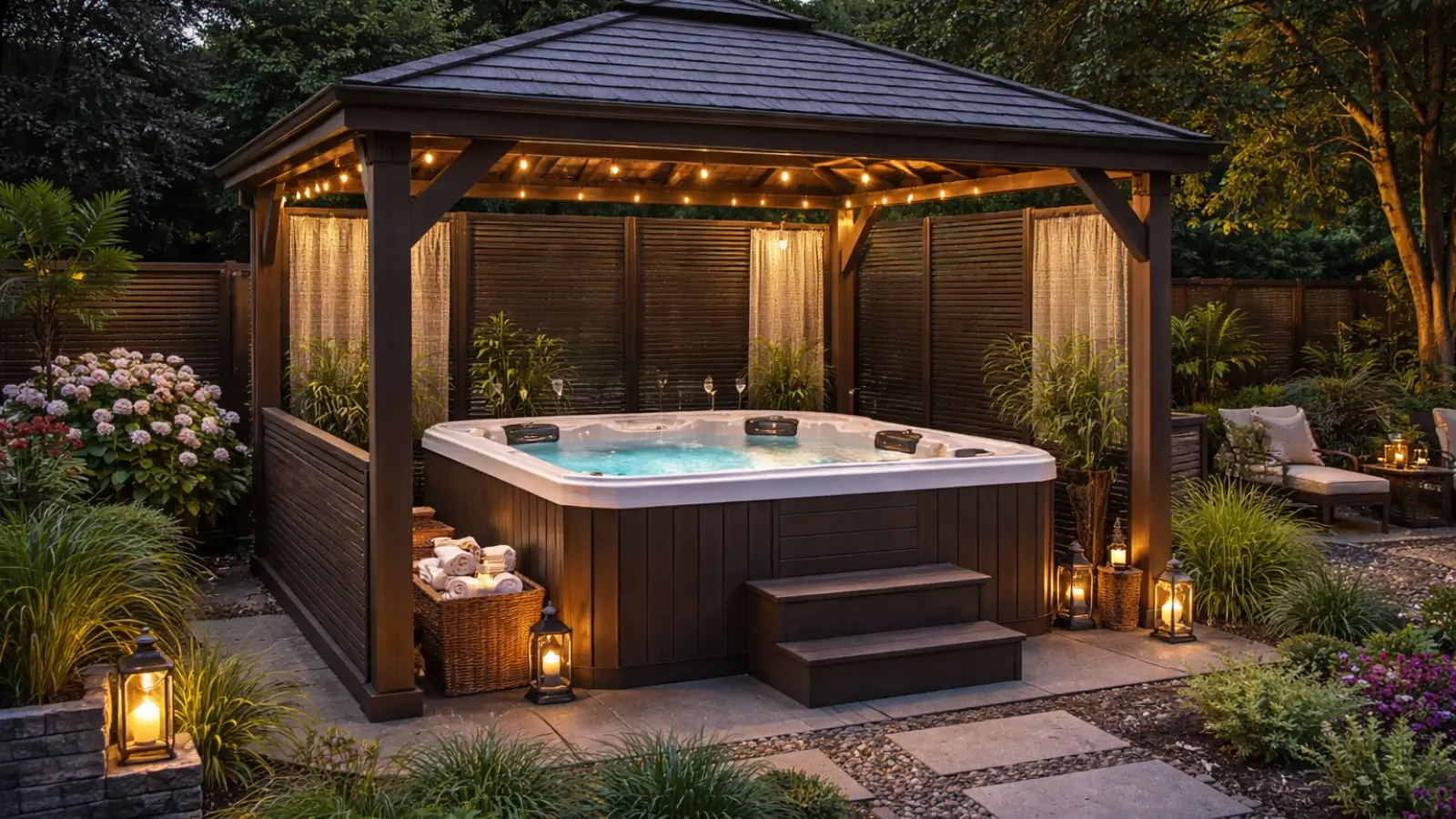
For more solidity, install retractable shades or curtains. These let you adjust privacy on the fly—open for breezy days, closed for intimate evenings. Materials like bamboo or vinyl are durable and weather-resistant.
Roofing choices impact privacy too. A solid roof provides overhead cover, but adding eaves or overhangs can extend protection from above. If birds or drones are a concern (yes, that's a thing in some areas), a finer mesh might help.
-
Modular panels: Easy to install and remove, perfect for renters or seasonal use.
-
Height adjustments: Taller structures can block upper-level views, but check height limits.
-
Integration with existing features: Tie in with fences or walls for a unified look.
Remember, structural changes should complement your hot tub's size. A cramped gazebo defeats the purpose of relaxation.
Incorporating Privacy Screens and Barriers
Screens are a game-changer for gazebo privacy. They're versatile, affordable, and can be as decorative as they are functional. Freestanding screens made from wood, metal, or fabric can section off your space without permanent alterations.
For a natural vibe, opt for living screens like tall grasses or vines on trellises. These grow over time, offering evolving privacy. Artificial options, like faux ivy panels, provide instant results with less upkeep.
Position screens strategically—along the most exposed sides. Layer them for depth: a sheer curtain inside a solid panel adds elegance.
-
Weatherproof materials: Choose UV-resistant fabrics to avoid fading.
-
DIY ideas: Repurpose old doors or shutters for a rustic charm.
-
Acoustic benefits: Thicker screens can muffle neighborhood noise, enhancing tranquility.
One friend turned her gazebo into a fortress with bamboo screens; now it's her go-to reading nook, undisturbed.
Landscaping Strategies to Boost Privacy
Landscaping is nature's privacy tool. Plants create soft, organic barriers that blend with the environment. Start with evergreens like arborvitae or holly for year-round coverage. These grow densely, forming living walls.
Layer your plants: tall trees in the back, medium shrubs in the middle, and low ground cover up front. This creates a multi-tiered shield. Flowering vines on the gazebo itself add color and camouflage.
Water features, like a small fountain, can mask sounds while drawing the eye away from boundaries. Mulch paths to define the space, making it feel more enclosed.
-
Fast-growing options: Bamboo or privet hedges for quick results.
-
Maintenance considerations: Choose low-water plants to save time.
-
Wildlife-friendly choices: Attract birds or butterflies for added ambiance.
Landscaping evolves, so plant with growth in mind. Over time, your gazebo will feel nestled in a private garden.
Lighting Solutions for Nighttime Privacy
Privacy doesn't end at sunset. Proper lighting ensures your gazebo remains secluded after dark. Avoid bright floods that illuminate everything; instead, use soft, directed lights.
String lights or lanterns create a cozy glow without revealing too much. Motion-sensor options deter intruders while preserving intimacy. Under-eave lighting highlights the structure subtly.
For ultimate control, install dimmers or smart bulbs. These let you adjust based on mood or company.
-
Solar-powered lights: Eco-friendly and wire-free.
-
Colored options: Warm tones for relaxation, cool for energy.
-
Placement tips: Focus on paths and entries, not the hot tub itself.
Good lighting turns your gazebo into a nighttime sanctuary, safe from wandering eyes.
Furniture and Accessories for a Private Feel
Furnishings inside the gazebo can enhance privacy indirectly. Tall-backed chairs or loungers positioned to face away from views create personal bubbles. Add throw pillows or blankets for comfort.
Accessories like umbrellas or canopies provide spot privacy. A small bar cart or table keeps essentials close, reducing trips that might expose you.
Incorporate storage for towels and supplies, keeping the space tidy and focused.
-
Multi-functional pieces: Ottomans with storage double as seats.
-
Textile choices: Waterproof cushions for easy care.
-
Personal touches: Artwork or mirrors reflect light and add illusion of space.
These elements make the gazebo inviting, encouraging longer, more private soaks.
Sound and Scent Enhancements for Immersive Privacy
Privacy engages all senses. Sound masking with white noise machines or wind chimes drowns out external distractions. A Bluetooth speaker playing soft music creates an auditory bubble.
Scents from essential oil diffusers or scented candles add to the escape. Lavender for calm, citrus for invigoration—tailor to your preferences.
-
Tech integrations: App-controlled devices for seamless use.
-
Natural alternatives: Planting aromatic herbs nearby.
-
Safety first: Ensure electrical items are weatherproof.
These subtle additions make your gazebo a full sensory retreat.
Maintenance and Long-Term Privacy Tips
Keeping your customizations in top shape ensures lasting privacy. Regular cleaning prevents buildup that could compromise materials. Inspect screens and plants seasonally for damage.
Pest control is key—bugs can invade private spaces. Use natural repellents to maintain eco-balance.
Update as needs change: growing families might need more enclosure, while empty-nesters could open things up.
-
Cleaning schedule: Monthly wipes for surfaces, annual deep cleans.
-
Repair kits: Keep sealants and tools handy.
-
Sustainability: Choose recyclable materials for eco-friendly upkeep.
With care, your gazebo will provide privacy for years.
Advanced Customizations for Tech-Savvy Owners
For those who love gadgets, integrate smart tech. Automated shades roll down at dusk via apps. Security cameras with privacy modes monitor without intruding.
Solar panels power lights sustainably. Heated floors extend use into cooler months.
-
App ecosystems: Compatible with Alexa or Google Home.
-
Energy efficiency: LED and low-voltage options.
-
Installation tips: Hire pros for wiring to avoid mishaps.
Tech elevates privacy to effortless luxury.
Budgeting and DIY vs. Professional Help
Customizing doesn't have to break the bank. Set a budget early, allocating for materials, labor, and contingencies. DIY for simple tasks like planting saves money, but pros handle structures safely.
Shop sales or repurpose items for thriftiness. Online tutorials guide beginners.
-
Cost breakdowns: Screens $50-200, plants $20-100 each.
-
ROI considerations: Privacy boosts property value.
-
Timeline planning: Phase projects to spread costs.
Smart budgeting makes dreams reality.
Seasonal Adaptations for Year-Round Use
Adapt your gazebo seasonally. Summer calls for breathable screens, winter for insulated panels. Fall leaf cleanup prevents clogs, spring refreshes plants.
Holiday decorations can add festive privacy without permanence.
-
Winter prep: Snow loads on roofs need checking.
-
Summer shade: Extra canopies for heat.
-
Transitional ideas: Swap fabrics for versatility.
Year-round tweaks keep privacy consistent.
Common Mistakes to Avoid
Don't overlook ventilation—too enclosed can feel stuffy. Balance privacy with airflow.
Ignore aesthetics at your peril; mismatched elements jar the eye. Test small changes first.
Overplanting leads to overcrowding; space for growth.
-
Permit oversights: Always verify requirements.
-
Material mismatches: Weather-appropriate choices last longer.
-
Neglecting comfort: Privacy shouldn't sacrifice enjoyment.
Learn from others' errors for smoother sailing.
In wrapping up, customizing your hot tub gazebo for maximum privacy is about creating a space that feels safe, serene, and uniquely yours. From strategic landscaping to smart tech, the possibilities are endless. As you plan, consider exploring options like hot tub pergolas for that perfect blend of style and seclusion. With these tips, your backyard retreat will become the envy of the neighborhood—without them ever seeing it.
Business Outstanders brings you sharp insights on tech, business, entrepreneurship, law, crypto, and more. We uncover what’s next. Stay updated, sign up for our newsletter and be part of the future!