Choosing between a confinement agency and a freelance nanny can feel like one more big decision in an already busy pregnancy. If you are comparing confinement agency vs freelance nannies, focus on what will reduce stress after delivery, protect your family, and keep day-to-day care consistent during the confinement period (commonly the first 4 weeks after birth).
In Singapore, both options can work well, but they suit different needs. The right choice depends on how much structure, assurance, and administrative support you want while you recover and learn your baby’s cues.
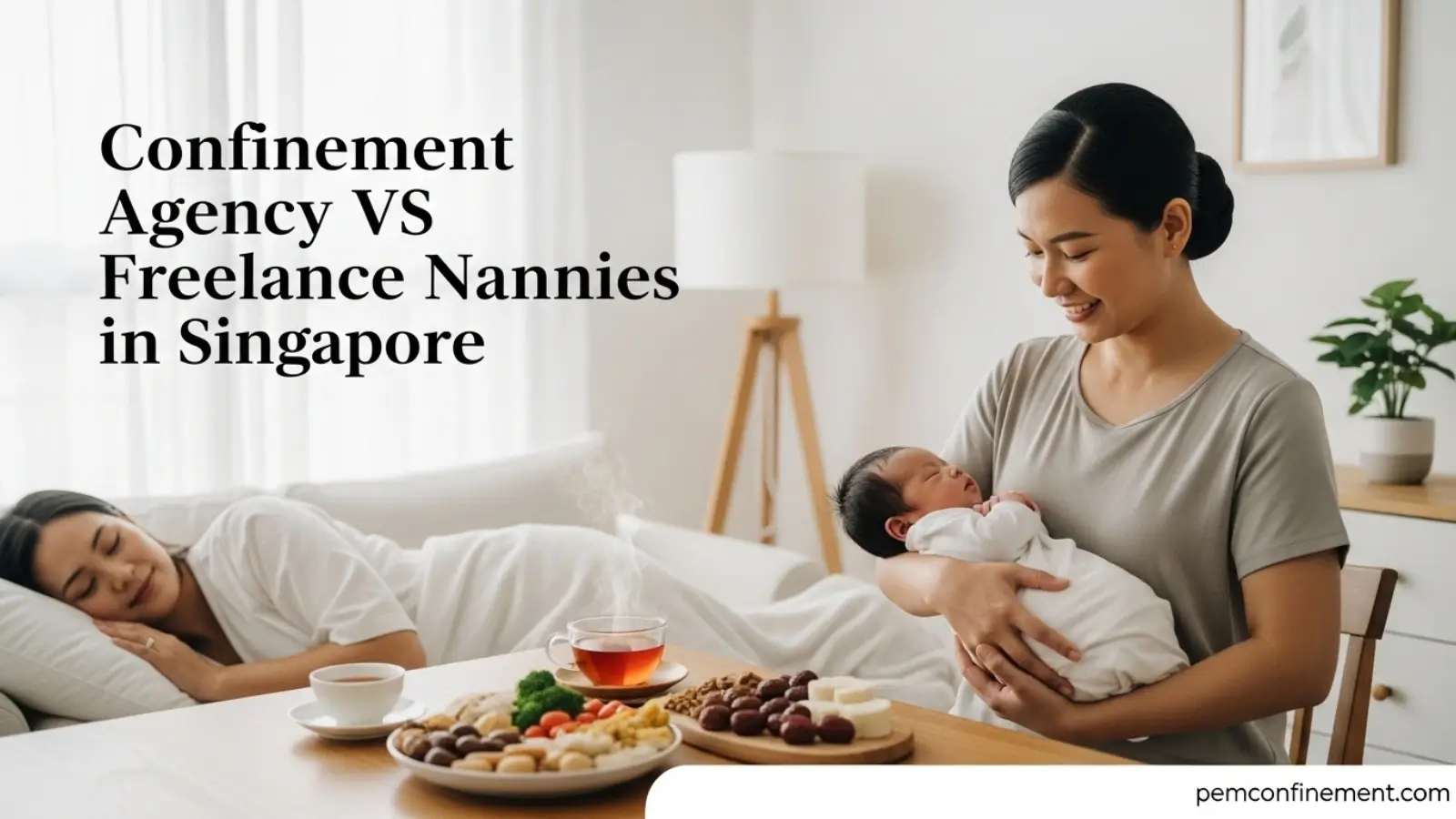
Confinement Agency VS Freelance Nannies in Singapore: A Practical Comparison
The confinement period brings real, practical demands. You need rest, regular meals, and support with newborn routines, especially at night.
A trained confinement nanny supports you with day and night baby care, confinement food and tonic cooking, herbal bath preparation, breastfeeding guidance, and laundry. The difference is how consistently those standards get delivered, and who takes responsibility when something changes.
Quick Comparison Table For Busy, Expecting Parents
|
Area |
Confinement Agency |
Freelance Nanny |
|
Training standards |
Structured, consistent training benchmarks |
Varies widely by individual |
|
Reliability |
Agency-backed scheduling and guaranteed arrival (with reputable agencies) |
Depends on the individual’s availability and commitment |
|
Paperwork support |
Often guided and managed for you |
You typically manage documentation yourself |
|
Risk management |
Clear service scope and professional oversight |
Less formal oversight, relies on trust and personal checks |
|
Cost clarity |
More transparent pricing with defined inclusions |
May look lower upfront, but you may absorb hidden time and risk costs |
Training And Day-to-Day Competence: What “Trained” Really Means
Newborn care looks simple until you are doing it while recovering and sleeping in short blocks. Skills matter most at 2am, when your baby will not settle and you are unsure if it is hunger, wind, or overtiredness.
Agency-based confinement nannies typically follow a standard training framework before they start work. Freelance nannies may be very capable, but their methods usually depend on personal experience and self-learning, with no consistent benchmark.
With PEM, nannies complete 150 hours of comprehensive training based on modules reviewed by a leading mum and baby expert. PEM nannies support you with hands-on routines, so you feel guided rather than overwhelmed in your first weeks at home.
Reliability And “What If Something Goes Wrong” Planning
Many parents only realise how much they rely on a confinement nanny after delivery. If your nanny arrives late, cancels, or changes plans, your recovery and baby’s routine take an immediate hit.
A reputable agency reduces this uncertainty through tighter scheduling controls and operational support. PEM guarantees the nanny’s arrival, which matters when your hospital discharge date is fixed and you need support from day one.
If you hire freelance, build in your own backup plan early. In the early postpartum days, you may not have the bandwidth to solve urgent gaps in care.
Legal And Administrative Load: Who Carries The Responsibility?
In Singapore, foreign confinement nannies must hold a valid MOM Work Permit for a confinement nanny, which is the legal authorization to work for a short postpartum period. This permit comes with steps, timelines, and fees you must manage correctly.
If you engage a freelance nanny, you usually handle:
-
Work permit application submissions and tracking
-
Understanding levy obligations
-
Document checks and deadline management
Many parents prefer an agency because it reduces administrative pressure when you are close to delivery, or already caring for a newborn.
Disclaimer: Work permit rules, processing timelines, fees, and levies can change. Always confirm the latest requirements directly with MOM and allow buffer time for processing.
Costs in Singapore: Look Beyond The Headline Rate
Cost matters, but it is rarely just the monthly fee. Current market references often place agency-based confinement nannies around SGD $2,500 to $4,000 per month, while freelance rates may come in lower.
However, freelance arrangements can introduce indirect costs, such as:
-
Your time managing paperwork and compliance
-
Extra contingency planning if schedules change
-
Potential last-minute paid alternatives if care falls through
Also remember the work permit fees and monthly levy vary depending on the baby’s citizenship status, and these costs sit outside the nanny’s monthly pay.
Disclaimer: All price ranges and government fees are estimates for general reading and can vary by year, provider, scope, and eligibility. Request a written quotation and verify current levies and application fees with MOM.
Safety, Oversight, And Accountability At Home
Home-based care arrangements are not regulated in the same way across the board. A work permit confirms legal work authorisation, but it does not standardise training or guarantee service quality.
An agency adds a layer of accountability because it sets clear expectations on job scope and service standards. That structure helps especially for first-time parents who want consistent routines for feeding, settling, and basic hygiene practices.
If you are reading a confinement nanny agency Singapore review, look for specifics rather than general praise. You want to see clear mentions of punctuality, baby-handling confidence, food quality, and how well the nanny supported day and night baby care.
What PEM Families Typically Prioritise During Confinement
Expecting parents researching confinement nannies Singapore often want two things at once: practical help and emotional reassurance. You should not have to micromanage your own postpartum support.
PEM nannies focus on the core needs that make your days easier:
-
Day and night baby care with safe, consistent routines
-
Confinement food and tonic cooking that fits your preferences and appetite
-
Breastfeeding guidance, including positioning support and practical feeding routines
-
Herbal bath preparation, so your daily self-care feels more manageable
-
Laundry support for mum and baby essentials
If you are considering an herbal package, PEM nannies are trained to prepare herbal packages, and mothers can add-on the package at a special rate. This keeps the process straightforward while you focus on recovery.
You can also read more about what is included and how the service works at PEM’s website here.
A Simple Decision Checklist For 1st to 3rd Trimester Planning
Use this to decide which option fits your household best.
Choose an agency if you want:
-
More predictable arrival and scheduling
-
A defined job scope with clear expectations
-
Standardised training and professional oversight
-
Less administrative load close to delivery
-
A calmer start at home, especially as first-time parents
Choose freelance if you feel comfortable with:
-
Managing paperwork and timelines yourself
-
Verifying experience through your own network
-
Accepting more variability in methods and routines
-
Handling contingencies if plans change
Why PEM Is A Steady Choice For First-Time Parents
PEM brings long-standing, practical experience into your home at a time when small things feel big. With 30+ years in the industry, 550+ nannies, and care delivered to 50,000+ mothers, PEM nannies support you with consistent routines and clear day-to-day help.
Most importantly, PEM guarantees the nanny’s arrival, so you can plan your postpartum support with more confidence.
If you want guidance on timing, package options, and pricing, Enquire Now or Get a Free Quote.
Business Outstanders brings you sharp insights on tech, business, entrepreneurship, law, crypto, and more. We uncover what’s next. Stay updated, sign up for our newsletter and be part of the future!