In recent years, mental health treatment has increasingly moved toward precision and personalization. Many individuals seeking support today report that they have tried traditional talk therapy, medication, or a combination of both, yet still feel that the underlying causes of their distress remain unresolved.
At Treehouse Thailand, a rehabilitation centre based in Chiang Mai, a different model is taking shape; one that emphasizes identifying neurological root causes rather than managing surface symptoms. By integrating advanced BrainMapping analysis using quantitative electroencephalography (qEEG) into its clinical programme, the centre is advancing a more data-driven approach to recovery, aligned with modern mental health treatment focused on lasting results.
According to Dr. Tony Tan, CEO of Treehouse Thailand, the decision to adopt BrainMapping marked a pivotal shift from observation-based care to precision-informed treatment.
Moving Beyond Trial and Error
Traditional mental health approaches often rely heavily on subjective reporting. Talk therapy depends on a client’s ability to articulate emotional states and experiences, which can be difficult for individuals dealing with trauma, cognitive fog, or emotional overwhelm. Medication management, while effective for many, can sometimes involve a cycle of adjustment before the appropriate dosage or prescription is determined.
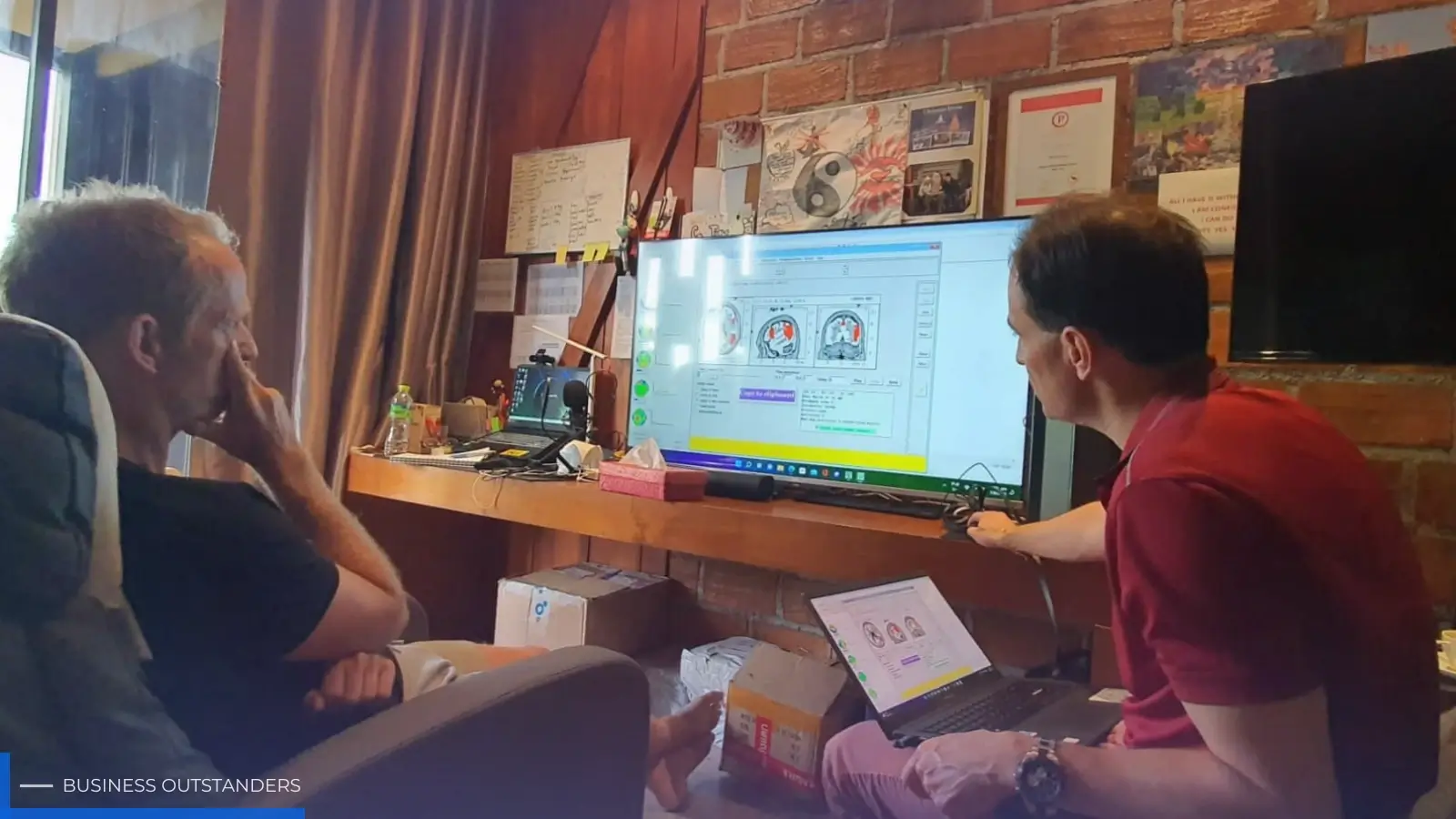
BrainMapping using qEEG provides an objective biological snapshot of neural activity. Instead of relying solely on description and observation, clinicians are able to visualize electrical patterns in the brain and identify specific dysregulations that may be contributing to symptoms.
For example, anxiety may appear as excessive high-frequency Beta activity in the frontal lobes, while depression may manifest as underactivity in the left prefrontal cortex. Trauma is often reflected in a disconnect between emotional and reasoning centres of the brain. By identifying where these imbalances lie, clinicians can implement targeted interventions designed to address the neurological source of distress rather than solely alleviating symptoms.
Dr. Tony Tan explains that this approach eliminates much of the guesswork associated with traditional recovery models. Each hour of therapy can be directed toward measurable neural targets, supporting a more focused and potentially sustainable recovery path.
Identifying Root Causes Through Electrical Signals
Measuring electrical signals through qEEG provides what Treehouse Thailand describes as a neurological “readout” of a client’s mental state. These patterns act as biomarkers that can reveal forms of dysregulation not immediately visible through interviews alone.
This is particularly important in trauma-related cases. Trauma can impair an individual’s ability to articulate what they are experiencing internally. By bypassing subjective reporting, BrainMapping can detect hidden physiological issues such as sensory processing imbalances or persistent hypervigilance.
Rather than relying on trial-and-error methods, clinicians use the resulting brain map to guide precision interventions. Specific neurofeedback protocols are selected to target the identified neural dysregulation. This approach validates the client’s experience as biological in nature and allows treatment to begin with greater clarity.
From Labels to Understanding
Treehouse Thailand also emphasizes the psychological impact of objective data. Many clients arrive believing their struggles reflect personal weakness or lack of willpower. Presenting a qEEG map that shows measurable biological patterns can shift this narrative.
Instead of asking, “What is wrong with me?” clients are encouraged to consider, “What is happening in my brain?” This reframing externalizes the issue and reduces feelings of shame. Symptoms are understood as physiological challenges rather than fixed aspects of identity.
According to Dr. Tony Tan, this shift transforms clients from passive recipients of care into active participants in their recovery. When individuals understand the neurological basis for their treatment plan, and see visual evidence of progress over time, engagement and motivation often increase.

Neurofeedback as Targeted Intervention
Once BrainMapping identifies areas of dysregulation, neurofeedback therapy becomes a central tool in treatment.
If a map reveals a high-Beta state associated with hypervigilance, neurofeedback sessions are structured to reward the brain for producing calmer frequencies. Over time, the nervous system can learn to stabilize those patterns. Conversely, if underactivation is detected, protocols can be adjusted accordingly.
Treehouse Thailand integrates neurofeedback into a broader personalized treatment plan informed by each client’s data. Rather than applying standardized schedules, the clinical team uses BrainMapping results as a “clinical compass” to design individualized protocols.
The data also assists psychiatrists in medication management, supporting more accurate dosing decisions and helping to avoid over- or under-medication. According to the centre, up to 85% of the clients are able to reduce their medication during treatment under clinical supervision.
Biofeedback and Emotional Processing
In addition to neurofeedback, Treehouse Thailand incorporates biofeedback therapy into its programme.
Biofeedback measures the body and brain’s physiological responses to certain traumatic memories, offering insight into how an individual’s nervous system reacts at a biological level. This provides a clearer picture of emotional responses that may not be fully conscious or verbally accessible.
With this information, therapists guide clients in processing emotions more effectively and charting a path toward greater clarity and regulation. By integrating measurable physiological data into therapeutic work, the centre reinforces its focus on addressing root causes rather than surface expressions of distress.
The Role of Environment and Personalization
Located in Chiang Mai, Treehouse Thailand combines its data-driven clinical model with a setting designed to support privacy and focused care. The centre emphasizes individualized attention and structured programming tailored to each client’s neurological profile.
By integrating BrainMapping, neurofeedback, and biofeedback within a personalized inpatient experience, Treehouse Thailand positions itself as offering a comprehensive approach for individuals who feel that previous treatments have not fully addressed the core drivers of their condition.
A Shift Toward Root-Cause Treatment
The integration of qEEG BrainMapping represents more than a technological addition; it reflects a broader philosophical shift in treatment. Rather than centering care around diagnostic labels alone, Treehouse Thailand focuses on identifying measurable neural patterns and addressing them directly.
-
BrainMapping reveals the source of dysregulation.
-
Neurofeedback retrains the brain’s activity.
-
Biofeedback clarifies emotional processing through physiological insight.
Together, these components form a collaborative, data-informed roadmap toward recovery.
For individuals seeking an alternative to traditional symptom-based models, Treehouse Thailand presents an approach grounded in objective measurement, personalized care, and targeted intervention.
To learn more about the programme and the centre, visit https://thetreehousethailand.com/ or contact via WhatsApp at +66918264555.
Business Outstanders brings you sharp insights on tech, business, entrepreneurship, law, crypto, and more. We uncover what’s next. Stay updated, sign up for our newsletter and be part of the future!