
Introduction: Why Your Digital First Impression Matters
Our digital footprint is more important than ever. What people find about us online often forms their first impression. This is true for both individuals and businesses.
In fact, 97% of consumers search online before making purchasing decisions. This shows just how much our online presence matters. A negative or outdated search result can seriously harm our personal and professional lives. Managing this content is vital. It helps us control our own story.
In this guide, we will explore how to take charge of your digital narrative. We will show you how to identify unwanted online content. We will then discuss core strategies for removing or suppressing it. Finally, we will cover how to build a strong, positive online presence. Our goal is to empower you to shape your online identity. For those facing significant challenges, exploring options for a Guaranteed Online Reputation can provide peace of mind.

Our digital identity is a complex mix woven from every online interaction, post, and mention. It's the sum of what search engines, social media platforms, and news outlets say about us. This collective narrative often dictates first impressions, influencing everything from career opportunities to personal relationships. The statistics underscore this reality: 97% of consumers now search online before making purchasing decisions, highlighting the critical role online perception plays in trust and credibility.
For high-net-worth individuals, public figures, and businesses, the stakes are even higher. A single negative search result, an unflattering image, or an inaccurate news article can have far-reaching consequences, impacting financial standing, professional reputation, and personal privacy. Managing this digital landscape is no longer optional; it's a fundamental aspect of modern self-preservation and brand stewardship.
Understanding how to steer this environment, identify potential threats, and strategically address them is paramount. Our approach to online reputation management (ORM) is a structured, multi-faceted process designed to give you back control of your digital story.
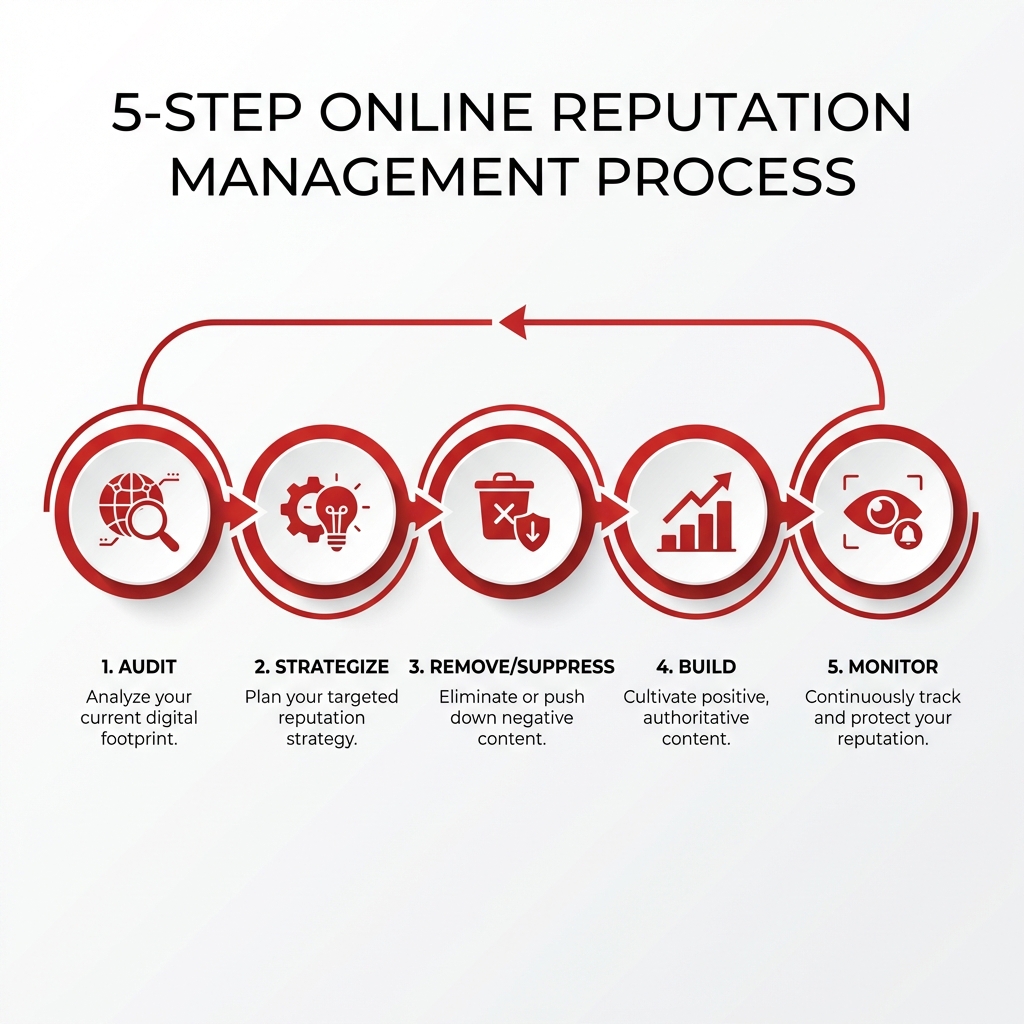
Identifying and Auditing Negative Online Content

Before any action can be taken, it’s crucial to understand the full scope of your online footprint. This involves a thorough audit to identify all instances of negative, misleading, or outdated content. Many individuals and businesses are often surprised by what they find when they conduct a deep dive into their online presence.
Self-auditing techniques can be a good starting point. Begin by performing comprehensive searches for your name, your business name, and any associated key terms across major search engines like Google, Bing, and DuckDuckGo. Pay close attention to the first few pages of results, as these are where most people form their opinions. Use advanced Google search operators (e.g., site:example.com "your name", intitle:"your name") to narrow down results and uncover hidden mentions.
Beyond general search engines, consider specific types of content and platforms:
- Negative Reviews: Platforms like Yelp, Google My Business, TripAdvisor, Glassdoor, and industry-specific review sites can host damaging feedback. For employers, negative or fake reviews can significantly affect recruitment and public image, highlighting the need for proactive management.
- Unflattering Images and Videos: These can appear on social media, image-sharing sites, news articles, or even mugshot repositories. Visual content has a powerful and immediate impact.
- Outdated News Articles: While often factual at the time, old news can become irrelevant or misleading, especially if it concerns past legal issues, business failures, or personal controversies that have since been resolved.
- Court Documents and Public Records: Legal filings, bankruptcy records, and other public documents can be indexed by search engines, making sensitive information readily accessible.
- Social Media Mentions: Beyond your own profiles, comments, tags, and posts from others can contribute to a negative narrative. Monitoring these requires vigilance.
- Complaint Websites and Forums: Sites like Ripoff Report, PissedConsumer, or various industry forums are often havens for unresolved grievances or personal attacks.
Here’s a list of common platforms where negative content often appears:
- Review Sites: Google My Business, Yelp, TripAdvisor, Glassdoor, Zomato, Angi, Healthgrades, Avvo, etc.
- Social Media Platforms: Facebook, Twitter (now X), Instagram, LinkedIn, TikTok, Reddit.
- News and Media Outlets: Local, national, and international news websites, blogs, online magazines.
- Forums and Discussion Boards: Industry-specific forums, general discussion boards (e.g., Reddit subreddits).
- Complaint and Scam Reporting Sites: Ripoff Report, PissedConsumer, Scam.com.
- Public Record Databases: Court record aggregators, mugshot sites, government databases.
- Personal Blogs and Websites: Independent blogs, personal websites, or online portfolios.
A thorough audit provides the foundation for any effective online reputation strategy. It helps us understand the nature, volume, and severity of the negative content, informing the most appropriate course of action. Ignoring your online presence can have significant repercussions, as insights from experts consistently show the impact of an unmanaged digital footprint.
Core Strategies for Online Reputation Management
Once the audit is complete, we move into strategic action. Online reputation management typically involves a combination of content removal, content suppression, and search result control, often leveraging legal options and SEO principles. The choice of strategy depends on the nature of the negative content, its source, and the specific goals.
Feature Content Removal Content Suppression Method Direct deletion of content from its source. Pushing negative content down in search results with positive content. Permanence Potentially permanent (if successful). Ongoing effort, but highly effective for visibility. Difficulty Often challenging; requires cooperation or legal grounds. Requires consistent content creation and SEO expertise. Best For False, defamatory, illegal, or privacy-violating content. True but unflattering content, or when removal isn't possible. Direct Removal: Contacting Webmasters and Utilizing Platform Policies
Direct removal is the ideal solution when possible, as it eliminates the negative content entirely. This strategy involves several approaches:
- Requesting Removal from Webmasters: For independent websites or blogs, a polite yet firm request to the site owner or webmaster can sometimes lead to removal, especially if the content is outdated, inaccurate, or violates their terms.
- Terms of Service Violations: Many platforms have strict terms of service regarding harassment, hate speech, defamation, or privacy violations. Reporting content that breaches these terms to the platform administrators can result in its removal.
- Copyright Claims (DMCA): The Digital Millennium Copyright Act (DMCA) allows copyright holders to request the removal of infringing content from websites and search engines. If someone has used your copyrighted material (e.g., photos, text) without permission, a DMCA takedown notice can be highly effective.
- Right to be Forgotten (GDPR): In the European Union, the General Data Protection Regulation (GDPR) grants individuals the "right to be forgotten," allowing them to request the removal of certain personal data from search engine results under specific conditions. This can be a powerful tool for EU citizens dealing with outdated or irrelevant information.
- Platform-Specific Reporting Tools: Most social media sites, review platforms, and content hosts provide built-in reporting mechanisms for inappropriate content. Familiarizing yourself with these tools can expedite the removal process.
Direct removal often requires persistence, a clear understanding of legal rights, and sometimes, legal intervention. It's a proactive step that, when successful, can bring significant relief.
Suppression: Pushing Negative Content Down with Positive Assets
When direct removal isn't feasible or successful, content suppression becomes the primary strategy. This involves strategically creating and promoting positive, high-quality content to outrank and push negative search results further down the search engine results pages (SERPs), effectively making them less visible. The goal is to ensure that when someone searches for you or your brand, the first few pages are dominated by positive, controlled narratives.
Key elements of a successful suppression strategy include:
- Positive Content Creation: This is the cornerstone. We develop engaging, informative, and valuable content such as articles, blog posts, press releases, interviews, and multimedia (videos, podcasts). This content is designed to be highly relevant to your public image and optimized for search engines.
- high-domain authority Publishing: Publishing content on reputable websites, news outlets, and industry-leading platforms that have a strong domain authority is critical. Search engines favor content from these sources, giving your positive assets a better chance to rank higher. Our connections with high-domain authority publications ensure your brand is positioned at the top of search results.
- Personal Branding and Thought Leadership: Developing a strong personal brand involves showcasing your expertise, values, and accomplishments. This can be done through LinkedIn profiles, professional websites, guest blogging, and speaking engagements.
- SEO Strategy: Applying robust search engine optimization techniques to all positive content ensures it is easily findable. This includes keyword research, on-page optimization, and building a strong backlink profile.
- Asset Development: Creating and optimizing a diverse range of online assets, including personal websites, professional social media profiles (LinkedIn, Twitter, etc.), Wikipedia pages (if applicable), and online portfolios.
- Social Media Profile Optimization: Ensuring all your social media profiles are professional, active, and consistently reflect your desired image. Regular engagement and content sharing on these platforms can also boost their visibility in search results.
Suppression is a long-term, ongoing effort that requires strategic planning and consistent execution. It’s about building a robust, positive digital ecosystem that naturally overshadows any lingering negative elements.
When to Seek Professional Online Reputation Management Services
While some basic ORM tasks can be handled independently, there are specific situations where professional assistance becomes invaluable, if not essential. The complexity, sensitivity, and potential impact of reputation issues often necessitate expert intervention.
- Crisis Management: When a sudden, severe negative event occurs (e.g., a scandal, major negative press, a viral online attack), rapid and strategic response is critical. Professionals can quickly assess the situation, formulate a crisis communication plan, and implement immediate suppression or removal tactics to mitigate damage.
- Complex Legal Issues: If negative content involves defamation, libel, privacy violations, or requires legal action (like DMCA takedowns or "right to be forgotten" requests), legal expertise combined with ORM strategies is crucial. Navigating these legal avenues without professional guidance can be risky and ineffective.
- Persistent Attacks or Smear Campaigns: Dealing with organized, sustained attacks from disgruntled individuals, competitors, or anonymous sources requires sophisticated strategies and resources that most individuals or businesses don't possess.
- Need for Discretion and Privacy: High-net-worth individuals, CEOs, and public figures often require a discreet approach to reputation management. Professionals can operate confidentially, protecting their clients' identities while effectively managing their online presence. This becomes especially important for leaders who must balance public visibility with personal privacy while representing their companies.
- Advanced Technology and Resources: Professional ORM firms use advanced monitoring tools, proprietary removal techniques, and extensive networks for content placement and promotion. This technological edge and resource access are often beyond what an individual can achieve. Many pioneering online reputation management firms now offer consulting divisions for personalized brand improvement, demonstrating the depth of specialized services available.
- Seeking a Guaranteed Online Reputation: For those who need definitive results and peace of mind, some specialized services offer guarantees on content removal or suppression. This level of assurance typically comes from firms with proven track records and robust methodologies.
Professional ORM services provide not just tactical execution but also strategic foresight, ensuring that your online reputation is not just managed, but actively built and protected for the long term.
Building a Resilient and Positive Digital Presence
Beyond reacting to negative content, a truly effective online reputation management strategy involves proactively building a strong, resilient, and positive digital presence. This approach creates a "buffer" of positive assets that can absorb and diminish the impact of any future negative content. It's about taking ownership of your narrative and shaping how the world perceives you or your brand.
- Proactive Strategy: This involves anticipating potential reputation risks and building safeguards. It's about consistent effort to maintain a positive online image rather than waiting for a crisis to strike.
- Content Marketing: Regularly creating and sharing valuable content related to your expertise, industry, or personal brand. This can include blog posts, articles, whitepapers, case studies, and infographics. The goal is to establish yourself as an authority and a trusted source of information.
- Thought Leadership: Positioning yourself or your brand as a leader in your field. This can involve contributing to industry publications, participating in expert panels, speaking at conferences, or sharing insightful commentary on current events relevant to your niche.
- Positive Review Generation: Actively encouraging satisfied customers to leave positive reviews on relevant platforms. This builds social proof and helps to counterbalance any negative feedback. 91% of consumers read reviews before making a purchase, making review management incredibly important. Negative or fake reviews can profoundly affect employers and businesses, underscoring the need for robust review generation and management strategies.
- Social Media Engagement: Maintaining active and professional profiles on relevant social media platforms. Engaging with your audience, sharing valuable content, and participating in discussions can improve your visibility and build a positive community around your brand.
- Personal Website/Blog: A personal website or blog serves as your central online hub, giving you complete control over your narrative. It's an ideal place to showcase your achievements, share your insights, and curate your professional image. This is a foundational asset for any individual or business serious about their online presence.
This proactive approach to digital presence building is essential for long-term reputation health. It not only helps to suppress existing negative content but also creates a robust foundation that can withstand future challenges. It also ties into the broader concept of digital identity management, where managing your various online accounts and ensuring consistent, secure representation across platforms is key to a cohesive online footprint. For comprehensive digital identity management, businesses often explore solutions that simplify customer identity and access management (CIAM), offering features like passwordless, passkeys, and social logins. Implementing such systems can be done in minutes, not hours, with platforms that offer a Free Trial to streamline integration and scalability.
The Role of Proactive Online Reputation Management
Proactive ORM is about playing offense, not just defense. It’s a continuous process that involves:
- Monitoring Tools: Utilizing specialized software and services to continuously track mentions of your name or brand across the internet. This includes social media, news sites, forums, and review platforms. Setting up alerts (like Google Alerts) can provide real-time notifications of new content.
- Building a Buffer of Positive Assets: Consistently creating and promoting positive content ensures that search engines have ample positive material to rank. This makes it harder for negative content to rise to the top.
- Long-Term Strategy: ORM is not a one-time fix. It requires a sustained commitment to content creation, SEO, and monitoring. A long-term strategy adapts to changes in search algorithms and online trends.
- Reputation Marketing: Integrating ORM with broader marketing efforts to actively promote positive aspects of your brand. This includes showcasing testimonials, positive reviews, and media mentions.
By taking a proactive stance, you not only manage your reputation but actively shape it, ensuring that your digital footprint accurately reflects your true value and achievements.
Frequently Asked Questions about Removing Online Content
We understand that navigating the complexities of online reputation can raise many questions. Here, we address some of the most common inquiries we receive.
How long does it take to see results from reputation management?
The timeline for seeing results from online reputation management can vary significantly. It largely depends on several factors:
- Complexity of the Situation: Minor issues, such as a few outdated links or a single negative review, might show improvements within a few weeks to a couple of months. Major crises involving widespread negative press, legal disputes, or persistent smear campaigns can take much longer, often several months to over a year.
- Nature of the Content: Direct content removal, if successful, can yield immediate results once the content is taken down. However, the process of achieving removal can be lengthy, involving negotiations with webmasters or legal proceedings. Suppression strategies, which involve pushing down negative content with positive assets, typically require 6-12 months to show significant, stable results, as search engines need time to index new content and adjust rankings.
- Resources and Expertise Applied: Engaging experienced professionals with advanced tools and strategies can often accelerate the process compared to attempting DIY solutions. Most professional campaigns deliver noticeable results within 6-12 months, with ongoing monitoring and adjustments for long-term success.
It's important to set realistic expectations and understand that ORM is a marathon, not a sprint. Consistency and patience are key.
Can negative content be permanently removed from the internet?
Sometimes, negative content can be permanently removed from the internet, but it's not always guaranteed. The possibility of permanent removal depends heavily on:
- Content Type and Host: Content hosted on platforms with strict terms of service (e.g., social media for hate speech, copyright infringement) or sites that comply with legal takedown notices (DMCA, Right to be Forgotten) has a higher chance of permanent removal. Content on independent blogs or forums that are unresponsive or legally protected can be much harder to remove.
- Legal Avenues: If the content is defamatory, illegal, or violates privacy laws, legal action can lead to its permanent removal. This often involves court orders or formal legal requests.
- Webmaster Cooperation: Sometimes, a direct request to the webmaster can result in removal, especially if the content is old, inaccurate, or no longer relevant.
- Search Engine De-indexing: Even if content remains on a website, it can sometimes be de-indexed from search engines, making it virtually impossible to find through search. This isn't removal from the internet, but removal from search results.
More commonly, especially for content that is factual but unflattering, suppression is the most effective strategy. This involves pushing the negative content down in search results so that it is rarely seen. While not "permanent removal," it achieves the practical outcome of making the content invisible to the vast majority of searchers.
Is online reputation management only for businesses?
Absolutely not. While businesses certainly benefit immensely from ORM, it is equally, if not more, crucial for individuals, especially those in high-profile positions.
- Individuals: Anyone with an online presence, from job seekers to community leaders, can benefit from managing their digital footprint. A clean online record can open doors, while a problematic one can close them.
- Executives and CEOs: The online reputation of a company's leadership is inextricably linked to the brand's reputation. Negative content about an executive can severely impact investor confidence, employee morale, and public trust.
- Public Figures: Celebrities, politicians, athletes, and other public personalities are constantly under scrutiny. ORM helps them manage public perception, control narratives during controversies, and protect their personal and professional images.
- High-Net-Worth Individuals: For affluent individuals, privacy and discretion are paramount. ORM services can shield them from unwanted attention, protect against scams, and ensure their financial and personal lives remain secure from public view.
Anyone who has an online presence and cares about how they are perceived by others can benefit from online reputation management. It's about taking proactive steps to control your digital story and safeguard your future.
Conclusion: Taking Ownership of Your Online Narrative
In today's interconnected world, your digital footprint is an extension of your identity, influencing perceptions and opportunities. From initial consumer searches to professional networking, what the internet says about you or your brand holds significant weight. As we've explored, effectively managing this digital narrative requires a strategic, multi-faceted approach.
We've outlined key strategies, from carefully auditing your online presence to understanding the nuances of direct content removal and strategic suppression. We've emphasized the power of proactive reputation building, leveraging positive content, high-domain authority publishing, and robust SEO to create a resilient digital buffer. For complex situations or when discretion and guaranteed results are paramount, seeking professional online reputation management services becomes an invaluable investment. The impact of ignoring your online presence can be profound, affecting everything from purchasing decisions to employment opportunities.
Online reputation management is a continuous process, not a one-time fix. It’s about empowering individuals and brands to take ownership of their online story, ensuring that their digital presence accurately reflects their true value, achievements, and aspirations. By taking control of your digital footprint, you not only mitigate risks but also actively shape a positive, trustworthy, and authentic online identity that serves you well into the future.
Ready to take charge of your online narrative? Learn more about how to protect and improve your digital reputation.
Contact us for a consultation today!
Business Outstanders brings you sharp insights on tech, business, entrepreneurship, law, crypto, and more. We uncover what’s next. Stay updated, sign up for our newsletter and be part of the future!