Business growth was built on a simple formula for decades. Extract resources, manufacture products, sell them, and dispose of what remains.
Today, a new generation of entrepreneurs is challenging that model. They are not seeing waste as an unavoidable cost. They are seeing it as an untapped asset capable of generating revenue, reducing expenses, and creating long-term competitive advantages. From a sustainable packaging startup to an established industrial recycler, businesses across sectors are proving that profitability and resource efficiency can go hand in hand.
The change comes at a very critical time. The world generates over 2.1 billion tonnes of solid waste every year. Projections suggest that numbers will climb to 3.8 billion by 2050. Against that backdrop, the circular economy is no longer a fringe concept discussed at sustainability conferences. It has become a fast-growing commercial frontier. Business leaders of today are racing to claim their share of it.
How Is Waste Becoming a Business Opportunity?
The global circular economy solutions market was estimated at USD 2.7 trillion in 2024. It is even projected to grow at a CAGR of 8.2% to USD 5.8 trillion by 2034. That growth is being fueled by businesses finding new value in materials once considered waste. Circular economy service providers are playing an increasingly important role in helping manufacturers and warehouses recover revenue from scrap and surplus materials.
That trajectory is not driven by goodwill alone. It reflects a real structural shift in how businesses source materials, manage waste streams, and generate returns.
Entrepreneurs who recognized this early have built serious competitive advantages. Across sectors, the most decisive moves have come from operators who reengineered their supply chains to rely on recovered materials rather than virgin inputs. Olympus Recycling encourages further lean into this kind of model. Such models help design custom programs that reduce operational burden for industrial clients while increasing scrap returns.
The logic is simple. Businesses no longer have to absorb the cost of material removal. They can monetize it.
Why Is the Industrial Sector Leading the Change?
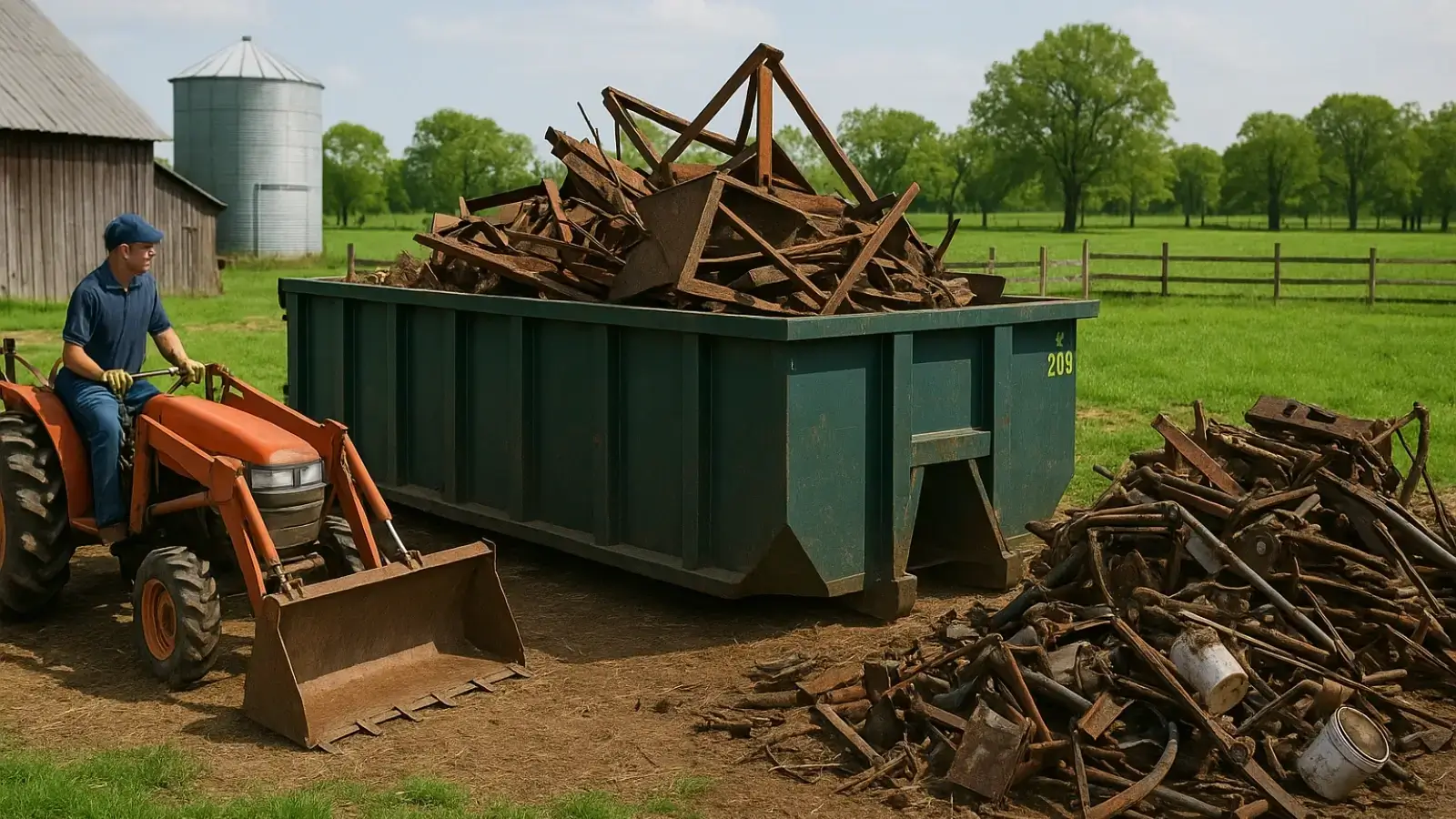
Manufacturing and industrial operations produce some of the largest and most consistent volumes of recyclable material. Aluminum, copper, stainless steel, ferrous metals, and wiring are not byproducts to discard. They are assets waiting for the right infrastructure to unlock their value.
According to FactMR, the global scrap metal recycling market was valued at USD 307.5 billion in 2024 and is expected to reach USD 577.2 billion by 2034, growing at a CAGR of 6.5%. That growth is fueled largely by industrial sectors embracing circular supply chains, where recovered scrap re-enters production cycles in place of newly mined ore.
The energy case reinforces the economic one. Aluminum recycling consumes roughly 95% less energy than primary smelting. Recycling can reduce steel-related emissions by 50%. Entrepreneurs who build businesses around these efficiencies are not simply cutting costs. They are positioning themselves ahead of regulatory curves that increasingly penalize high-emission production methods.
What Strategies are Entrepreneurs Adopting?
What separates circular economy leaders from those still running linear operations comes down to three practices.
First, they design for recovery from the start. Whether they manufacture physical goods or run industrial facilities, they choose materials and processes with end-of-life handling in mind. This reduces downstream costs and opens up revenue from material recovery.
Second, they build collaborative infrastructure. The circular economy does not function in isolation. It requires logistics partners, processors, and buyers who can absorb recovered materials at volume. Entrepreneurs who invest in those relationships early build supply chains that competitors cannot easily replicate.
Third, they treat sustainability metrics as growth indicators. According to an EPA report, millions of tons of potentially recoverable materials continue to be landfilled each year. These waste materials create opportunities for businesses that can keep resources in circulation.
Companies that invest in material recovery, recycling, and reuse programs are not only reducing waste-related costs but also creating new revenue streams and strengthening supply chain resilience. Leaders who track circular performance alongside financial performance are often the ones best positioned to capture that value.
Why Circular Strategies Are Becoming a Competitive Advantage
What is accelerating this shift is a convergence of factors that entrepreneurs are uniquely positioned to act on. Commodity price volatility is making recovered materials more attractive relative to virgin inputs.
Regulatory frameworks in Europe, North America, and emerging markets are raising the cost of linear disposal. Corporate sustainability commitments create high demand for partners. These partners can help large organizations hit their recycling and waste reduction targets.
The entrepreneurs thriving in this environment share a common trait: they stopped seeing their industry's waste as a cost center and started treating it as an inventory. That mindset shift is not a values statement. It is a business model.
The circular economy revolution is already underway. The question for every entrepreneur today is not whether to participate in it, but how quickly they can build the infrastructure to lead it.
FAQs
What is the circular economy in simple terms?
A circular economy is an economic model that keeps materials, products, and resources in use for as long as possible through recycling, reuse, repair, and recovery. Unlike the traditional linear model of take-make-dispose, it aims to reduce waste, conserve resources, and create long-term economic value.
How can entrepreneurs profit from the circular economy?
Entrepreneurs can profit from the circular economy by recovering valuable materials, reducing waste disposal costs, improving resource efficiency, and creating new revenue streams. Businesses that reuse, recycle, or remanufacture materials often benefit from lower operating costs, stronger supply chains, and growing demand for sustainable solutions.
Why is scrap metal recycling important for businesses?
Scrap metal recycling helps businesses recover value from unused materials while reducing disposal expenses. Recycled metals require significantly less energy than producing new metals from raw resources, lowering costs and emissions. It also supports circular supply chains by returning valuable materials to production.
Key Insights on Circular Economy for Entrepreneurs
|
Global Waste Generation |
More than 2.1 billion tonnes of solid waste are generated annually worldwide |
|
Waste Projection by 2050 |
Expected to reach 3.8 billion tonnes per year |
|
Circular Economy Solutions Market (2024) |
Valued at USD 2.7 trillion |
|
Circular Economy Solutions Market (2034) |
Projected to reach USD 5.8 trillion |
|
Market Growth Rate |
CAGR of 8.2% between 2024 and 2034 |
|
Scrap Metal Recycling Market (2024) |
Valued at USD 307.5 billion |
|
Scrap Metal Recycling Market (2034) |
Expected to reach USD 577.2 billion |
|
Scrap Recycling Growth Rate |
CAGR of 6.5% through 2034 |
|
Aluminum Recycling Efficiency |
Uses approximately 95% less energy than primary aluminum production |
|
Steel Recycling Impact |
Can reduce steel-related emissions by up to 50% |
The circular economy proves that sustainability and profitability are no longer competing priorities. Entrepreneurs who embrace resource recovery, recycling, and circular supply chains are not just reducing waste. They are building more resilient and future-ready businesses.
As market demand, regulatory expectations, and resource constraints continue to evolve, companies that treat waste as a source of value rather than a cost are likely to be the ones leading the next era of business growth.
Business Outstanders brings you sharp insights on tech, business, entrepreneurship, law, crypto, and more. We uncover what’s next. Stay updated, sign up for our newsletter and be part of the future!