There's a version of brand building that costs millions and takes years. And then there's the version that's actually available to most entrepreneurs — leaner, faster, and increasingly common in Thailand's online commerce scene.
In the past three years, a wave of Thai sellers has made the transition from reselling other people's products to launching their own. Some of them built brands that now generate consistent seven-figure monthly revenue on Shopee alone. What they have in common isn't a large starting budget. It's a specific sequence of decisions, made in the right order.
This guide walks through that sequence — from choosing a category through to building the kind of brand loyalty that makes your business defensible.

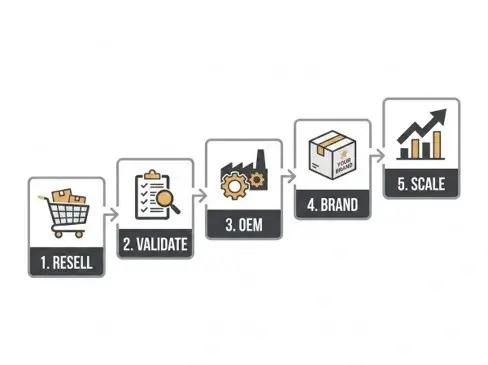
Step 1: Find Product-Market Fit Before You Build a Brand
The single most expensive mistake in Thai e-commerce brand building is investing in OEM manufacturing and brand identity before confirming that buyers want the product.
The sequence that works: sell a comparable product first. Source it from a third-party supplier or use a dropship model. Watch what buyers ask for, what they complain about, which photos they click, which descriptions convert. That data becomes the brief for your own product development — far more valuable than any market research report.
Give yourself a minimum of 60 days of real selling data before initiating an OEM relationship. If you can't generate any sales in 60 days with an established product, your own branded version of the same product won't change that.
Step 2: Choose a Category Where You Can Win
Not all product categories are equal for new brand builders. The best categories for launching a brand in Thailand share three characteristics: strong repeat purchase behaviour (so your customer acquisition cost amortises over time), a natural OEM supply chain (so you're not building manufacturing from scratch), and room for differentiation beyond price.
Health and beauty, pet products, functional food and beverages, and home organisation products tick all three boxes. Fashion is high volume but margin-thin and intensely competitive. Electronics require significant technical expertise and after-sales infrastructure that most new brand builders underestimate.
Step 3: Build the Brand Identity Around the Customer, Not the Product
Thai brand identity that performs has one thing in common: it's built around what the customer wants to feel or become, not around product specifications.
A skincare brand that positions around 'professional-grade formulas at accessible prices' is making a product claim. A skincare brand that positions around 'the confidence that comes from skin that works for you' is making an identity promise. Thai buyers — especially in health, beauty, and lifestyle categories — buy identity more than specification.
This means brand naming, visual identity, and copywriting should all be stress-tested against the question: does this make the customer feel how they want to feel? Not: does this describe what's in the product?
Step 4: Build Distribution Before You Build Awareness
New brand builders in Thailand consistently over-invest in brand awareness (advertising, influencer marketing) before they have the distribution infrastructure to convert that awareness into revenue.
The right order: get your Shopee store optimised and your LINE OA active before you spend on paid promotion. Make sure the path from discovery to purchase to repeat purchase is working smoothly with organic traffic before you pour petrol on it with paid. Advertising amplifies what's already working — it doesn't fix what isn't.
Step 5: Build the Team Around Your Gaps, Not Your Strengths
Most brand founders are strong in one or two areas — product, customer relationships, content, operations — and weak in the rest. The temptation is to hire people similar to yourself or to manage every function personally. Both approaches limit growth.
The brands that scale fastest in Thailand's online market are the ones where the founder focuses on the two or three things they do better than anyone else on the team, and brings in genuine expertise for the rest. For many brand operators, working with an experienced online business partner in Thailand is the most capital-efficient way to access that expertise without the overhead of full-time hires across multiple functions. One Agency Thailand structures its partnerships exactly this way — filling the strategy, marketing, and operational gaps so founders can stay in their zone.
The Long Game: What Separates Brands That Last
After two to three years of growth, the brands that remain competitive in Thailand's online market have done one thing consistently: they've built a relationship with their customers that competitors can't easily replicate.
That relationship lives in LINE OA open rates, in repeat purchase frequency, in the organic reviews that accumulate over time. None of these are built by a single campaign. They're built by a consistent customer experience, compounded over time.
Start building that relationship on day one. Respond personally to early buyers. Ask what they'd change. Thank them when they leave reviews. The unit economics of a returning customer versus a new customer — in a market where acquisition costs are rising — make this the highest-ROI activity most brand builders consistently underprioritise.
Business Outstanders brings you sharp insights on tech, business, entrepreneurship, law, crypto, and more. We uncover what’s next. Stay updated, sign up for our newsletter and be part of the future!