Written by Gini Graham Scott, PhD
While I have spent the last two years working with AI for assistance with research, illustrations, and creating first drafts for different writing projects, AI has also undermined the livelihoods of writers, artists, translators, and other professionals around me. The paradox is hard to escape: the same tools that have helped me are also shrinking the pool of paid work available to many of the people who built those professions. The percentage declines alone are troubling, but the actual numbers make the disruption more concrete. And many of these numbers and percentages are from 2024 and 2025. The continuation of these trends has resulted in even more declines.
Losses in Publishing and Writing
In publishing and adjacent creative fields, some of the clearest recent numbers come from the Society of Authors’ 2024 survey. The survey drew 787 responses from a pool of 12,500 members and other authors, including fiction and nonfiction writers, illustrators, translators, scriptwriters, poets, and journalists. Within that surveyed group, 26% of illustrators and 36% of translators said they had already lost work to generative AI. If those same percentages were extrapolated cautiously across the Society’s 12,500-member base, they would imply thousands of affected creative workers.
The same Society of Authors survey found that 37% of illustrators and 43% of translators said the income from their work had decreased in value because of generative AI. In other words, the harm is not limited to outright job loss; many who still have work are being paid less for it. The survey also found that 57% of nonfiction writers, 65% of fiction writers, 77% of translators, and 78% of illustrators expected AI to reduce their future income. That means concern is no longer confined to the people who have already lost assignments; it has spread across most major writing and illustration categories represented in the survey.
Freelance platform data adds another piece of the picture. A 2024 Upwork market analysis tracking more than 2.5 million new projects published on the platform found that writing projects declined by 28% year over year and translation projects declined by 22%, indicating the loss of many tens of thousands of freelance opportunities. At the same time, the number of applications for writing projects fell by 26%, a sign that the category itself is shrinking rather than simply becoming more competitive.
In ghostwriting, public relations, content marketing, and lower-end commercial writing, the losses are often diffused across thousands of small assignments rather than captured in one clean public tally. That is why the clearest evidence here often comes from platform declines and employer behavior rather than official government job-loss data. Clients that once hired writers for blog posts, web copy, newsletters, or press releases are increasingly asking for AI-generated drafts to be “cleaned up” rather than written from scratch or skipping the writer entirely for routine pieces. The result is not always one dramatic layoff; more often it is the disappearance of the smaller paid jobs that once sustained a writing career.
Losses for Artists and Filmmakers
For artists and creators more broadly, UNESCO’s 2026 report, drawing on data from more than 120 countries, warned that music creators could lose up to 24% of their revenue by 2028 and audiovisual creators could lose 21% because of the expanding role of AI-generated content in global markets. UNESCO also said these disruptions threaten the livelihoods of millions of cultural workers, in that digital revenues now account for 35% of creators’ income, up from 17% in 2018, showing both how dependent creative workers have become on digital platforms and how exposed they are when those platforms are flooded with AI-generated alternatives.
Film and screenwriting tell a similar story, since UNESCO’s figures indicate that audiovisual creators are facing projected revenue losses of 21% by 2028, and related reporting has included screenwriters among the groups expected to take significant hits as AI-generated content becomes more common. In practical terms, if an individual screenwriter or audiovisual creator was earning $100,000 annually from their work, a 21% decline would mean about $21,000 less per year. Across a workforce of thousands, that is enough to push many mid-career professionals out of the field.
Losses in Office and White Collar Work
The ripple effects do not stop with writers and artists. Broader labor-market forecasts show how AI is reshaping office work, administrative work, law, sales, and other professional fields. The World Economic Forum’s Future of Jobs analysis projected that 85 million jobs could be displaced globally by automation and AI by 2025, while 97 million new roles could be created in response. Other WEF reporting has projected 92 million jobs lost and 170 million created by 2030, for a net gain of 78 million jobs worldwide. These global economy-wide estimates show the scale of churn that is now underway.
Thus, the same technology that is eroding parts of publishing, ghostwriting, translation, and illustration is also transforming back-office and white-collar work. Administrative assistants, data-entry workers, customer-support agents, junior legal staff, and sales-development workers are all exposed because AI systems can now handle scheduling, summarizing, lead scoring, routine drafting, first-pass legal review, invoice processing, and other repetitive knowledge tasks. The pattern is similar across fields: AI first removes or compresses the lower-routine layers of a profession, then forces the surviving workers to do more high-level, judgment-intensive work with fewer paid hours available in the middle.
Gains through New Jobs
Yet the story is not only one of loss. The same World Economic Forum data that projected 85 million jobs displaced by 2025 also projected 97 million new roles emerging, many tied to AI, data, digital workflows, content systems, and more complex forms of human-machine collaboration. By 2030, the WEF’s estimate of 170 million jobs created versus 92 million displaced suggests that AI may expand the labor market overall even while it destabilizes many existing careers. In creative fields, this shows up in hybrid roles: AI-assisted illustrator, AI content strategist, prompt designer, AI-savvy editor, creative workflow consultant, and educator.
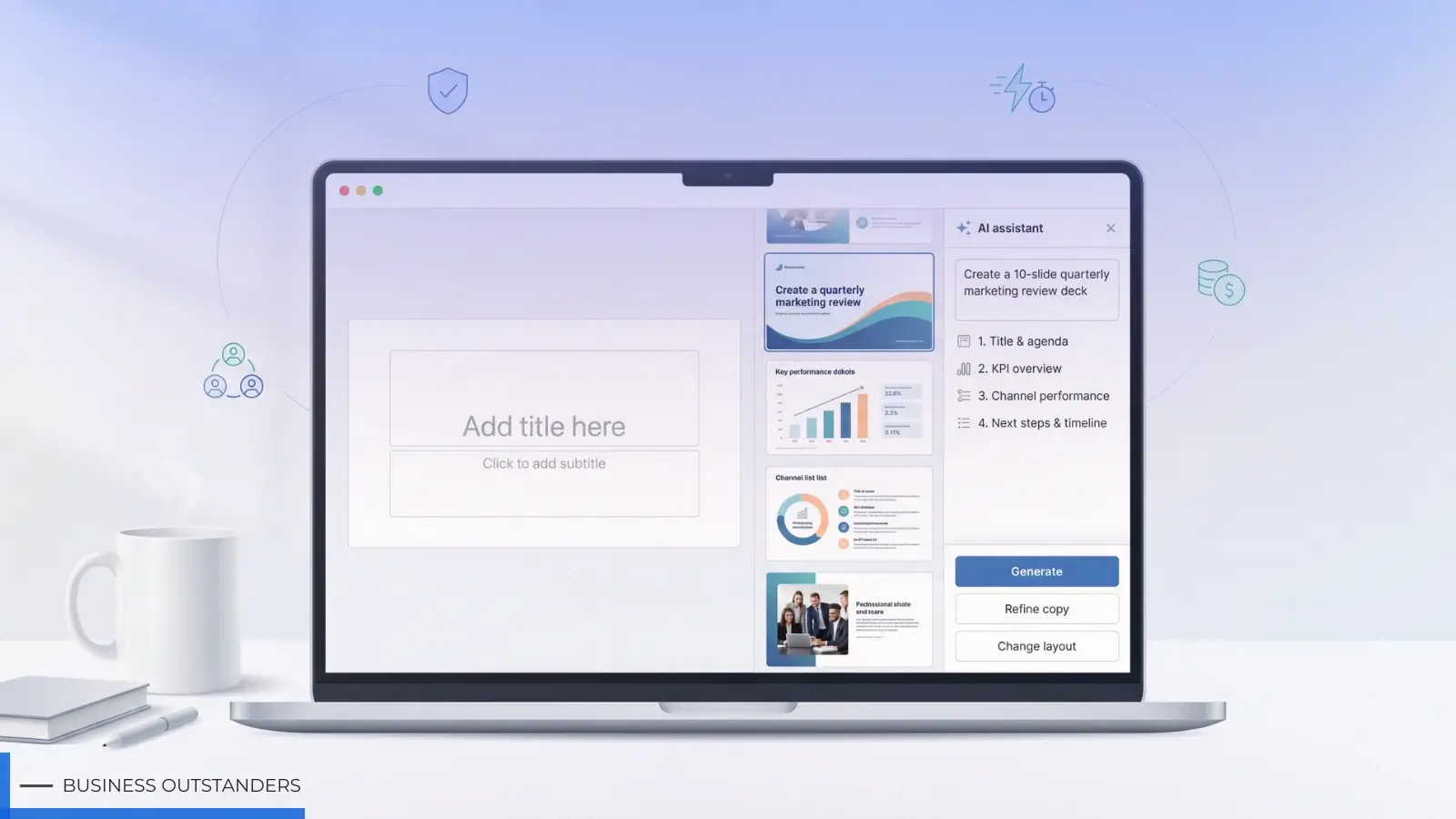
More specifically, AL has created many new jobs inside the creative industries. Analysts tracking AIdriven roles point to emerging titles such as “AI art curator,” “AIassisted video producer,” and “AI music composer,” where professionals blend domain expertise with fluency in AI tools. In video production, for example, AI is increasingly used to handle tasks like rough cuts, color matching, subtitle generation, and localization, freeing human editors to focus on pacing, emotion, and story.
Within the arts, a 2026 Gallup report on creative workers found that artists are more likely than other workers to use generative AI for idea generation, creative exploration, and rapid iteration, while still relying on human judgment to shape the final outcome amid the rapid growth of AI-assisted creativity.”. The technology is showing up most in the early stages of projects, such as in brainstorming concepts, testing styles, mocking up storyboards, and in the unglamorous but essential work of organizing assets, drafting proposals, and planning logistics
Broader labor market forecasts suggest that, while AI could automate up to 30% of work hours in the U.S. by 2030, it is also likely to increase demand for creative and business roles that can leverage these tools. The World Economic Forum’s projections that 97 million new AI-adjacent roles could appear by 2025 highlight the scale of this shift whereby fewer people are doing repetitive, rulebased work, and more people are orchestrating complex systems, managing AI workflows, and interpreting outputs.
How AI Has Become a Collaborator Rather than a Competitor
Thus, for writers and publishing professionals who remain in the field, AI is increasingly a collaborator rather than a pure competitor. Authors can use language models to generate research summaries, test outline variations, explore alternative endings, and develop drafts for different audiences, while they still rely on human judgment for narrative voice, structuring the project, organizing material, and expressing emotions. At the same time, editors are experimenting with AI to flag inconsistencies, check continuity across series, or generate quick comps and positioning statements for marketing teams.
As for artists and designers, they are using AI tools to create compositions they later refine by hand, generate variations that spark new directions, or build entire workflows around hybrid pipelines where AI handles pattern, texture, and background while the artist focuses on focal characters and key story beats. Some have moved into roles as “AI style directors,” overseeing model training on ethically sourced datasets and ensuring that the outputs align with their goal for a brand or narrative.
In law, sales, and office work, the emerging advantage belongs to those who can “speak AI” fluently, such as people who know how to frame prompts, evaluate outputs critically, and stitch multiple tools together into coherent workflows. Lawyers who understand the strengths and weaknesses of AI research tools are using them to compress hours of document review into minutes, then reinvesting that time in strategy and client counseling. Sales professionals use AI to generate personalized outreach at scale but still rely on their own skill for discovery calls, relationship building, and closing.
Thus, across these various industries, even as AI is eliminating many types of work and the roles of individuals doing that work, it has created other work opportunities for those who learn how to use AI. In this way, AI is drawing attention to what is distinctly human in each profession. For example, for writers, that may be their narrative judgment and lived experience; for artists, that may be their unique aesthetic and choice of AI models to use; for lawyers, that may be their reasoning, decision-making, and presentation style; and for sales and PR, their personal power, connections, and trust. In short, the workers who thrive are those who treat AI as leverage to amplify their craft, rather than as an enemy or magic shortcut out to destroy them.
In turn, this transformation in the world of work has shaped my own experience. While I have lost many ghostwriting opportunities to authors turning to AI to write their books, I have found other work using AI. For example, over the last two years, I have used AI to create illustrations for children’s books and covers for song recordings and books, do research for book chapters and articles, and draft articles and press releases on a variety of topics. I have also spoken to groups about using AI and created videos with AI generated images and animations. So I have become part of the new labor category AI is helping create, not someone replaced by the tool, but someone learning how to direct it, refine it, and teach others to use it responsibly.
Thus, the numbers point in two directions at once. On the loss side, recent evidence shows hundreds of surveyed writers and illustrators already reporting lost work, millions of cultural workers facing revenue losses, and major freelance marketplaces seeing steep declines in writing and translation demand. On the opportunity side, global forecasts point to tens of millions of new jobs, and creative workers who learn how to combine AI speed with human judgment may be able to do more ambitious work with broader skill sets than before.
Follow Gini’s work at: www.changemakerspublishingandwriting.com/
Pick up her latest book “The Facebook Problem...And How to Fix It” on Amazon: https://a.co/d/08BQIIfG
Follow Gini on Substack: https://substack.com/@ginigrahamscott
Business Outstanders brings you sharp insights on tech, business, entrepreneurship, law, crypto, and more. We uncover what’s next. Stay updated, sign up for our newsletter and be part of the future!