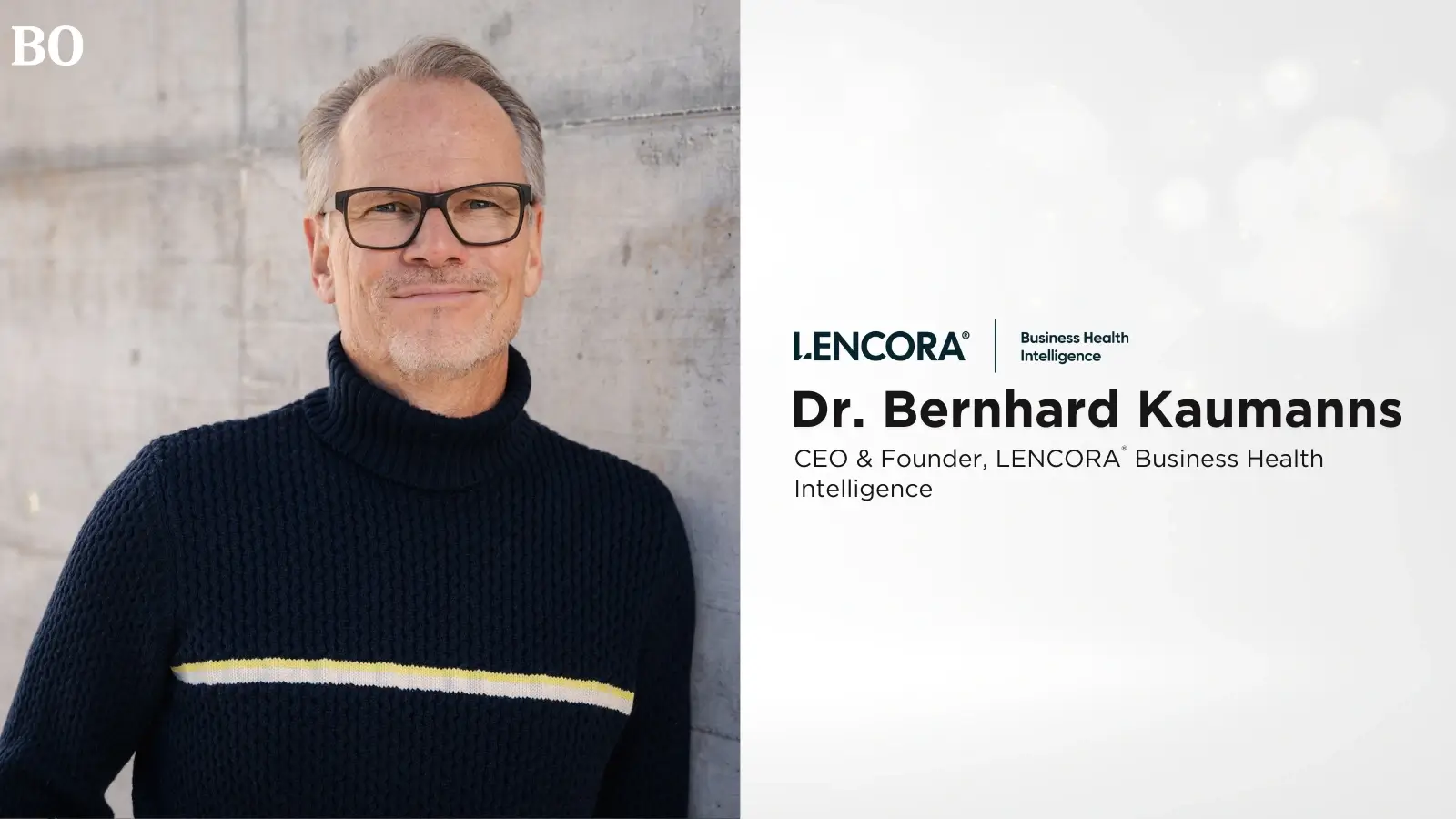
In a business landscape where burnout and disengagement cost organizations millions annually, Dr. Bernhard Kaumanns offers a fundamentally different perspective. As both physician and CEO, he argues that health and performance aren't competing priorities requiring balance - they're two sides of the same coin. This interview explores how medical thinking transforms business leadership, revealing why organizations that treat them as separate will always underperform those that understand their interconnection.
From learning discipline through early startup missteps to witnessing cultural differences in accountability, Dr. Kaumanns shares practical insights on sustainable leadership. He challenges conventional wisdom about control, transparency, and what truly drives high performance in modern organizations.
The conversation addresses critical questions facing today's leaders: How do you make tough decisions without sacrificing people or performance? What leadership traits are boards overlooking? How should organizations prepare for demographic shifts and AI disruption? His answers combine clinical precision with entrepreneurial pragmatism, offering a roadmap for leaders seeking sustainable success rather than short-term wins at the expense of long-term capability.
Interview Highlights:
Q. Dr. Bernhard, you have a career that merges medicine, leadership, and business. What led you to pursue both an MD and an MBA, and how do these disciplines influence your leadership style?
My journey from MD to MBA to CEO stems from deep curiosity about how complex systems work - whether the human body or a business organization. At university, I was equally drawn to medicine and economics. Medicine taught me that health and illness exist on a razor-thin line, revealing the fragility and resilience of human systems. A decade later, I pursued an MBA to understand economic systems with the same depth.
At LENCORA®, we've built our business health intelligence model on this insight: health and performance are two sides of the same coin. Just as physicians can't treat symptoms without understanding root causes, CEOs can't drive sustainable performance without addressing both visible and invisible drivers of organizational health.
The lesson I carry daily: You cannot lead effectively without taking care of your own health and balance first. It's not self-indulgence - it's strategic necessity.
Q. Health and performance are often seen as competing priorities, but you view them as interconnected. How does LENCORA® translate this belief into business solutions?
Most companies measure only what's easily visible - sick days and turnover. But that's just the tip of the iceberg. The real problem remains hidden: gradual performance decline, diminishing motivation, mounting frustration, and ultimately dissatisfied customers. These invisible factors often cost organizations millions in lost revenue.
This is where LENCORA® business health intelligence makes the difference. We make visible the untapped potential beneath the surface. Through our unique combination of medical expertise, management experience, and AI, we reveal root causes and deliver solutions that are economically viable, clearly measurable, and individually tailored.
We don't just identify problems - we quantify hidden costs and show organizations exactly where performance potential is being lost and how to recover it.
Learn more: https://lencora.ch | LinkedIn: https://www.linkedin.com/company/lencora/
Q. As CEO, can you share one of your first major leadership decisions and how it shaped your organization's direction?
As a bootstrapped startup, we learned discipline the hard way. Our initial positioning was far too broad, costing us precious time and money we couldn't afford to lose. We were trying to be everything to everyone, which meant we became nothing to anyone.
The turning point: We built early market feedback mechanisms into our process and adopted a lean positioning strategy. Instead of perfecting our offering behind closed doors, we engaged potential customers quickly. Their honest feedback forced us to sharpen our focus and concentrate resources where they mattered most.
My advice to founders: Don't wait for perfection. Get to market early and let customer feedback drive your development. Speed and iteration beat polish every time. The market teaches faster and more accurately than any internal strategy session ever could.
Q. Business leaders face constant pressure. How do you approach tough decisions when people responsibilities and financial performance are equally important?
High performers thrive under pressure when they have four essential elements: clarity on goals, freedom to operate, trust from leadership, and a purpose bigger than themselves. Creating this environment is a leader's most important responsibility.
My job isn't to make all tough decisions alone. It's to build an environment where everyone understands their responsibility for financial performance. We maintain radical transparency about spending and returns - every team member sees the numbers and understands what success looks like. When difficult calls must be made, everyone's already engaged. They understand the context and recognize why certain decisions are necessary.
This doesn't make hard decisions easy, but it makes them sustainable and builds trust that carries you through the next challenge.
Q. Looking back at your clinical career, was there a defining moment that changed how you view leadership or accountability?
After working in Germany's hierarchical hospital system, I moved to the UK. What I witnessed transformed my understanding of leadership: The department head openly shared his mistakes and lessons learned before the entire team. He discussed a misdiagnosis, walked through his thought process, identified where he went wrong, and explained what he learned.
In Germany, this would have been unthinkable. Admitting mistakes was viewed as weakness. But what I observed in the UK was actually stronger leadership - it required courage and created psychological safety that elevated the entire team's performance.
The takeaway that shaped my leadership philosophy: Embrace a learning system, not a blaming system. Mistakes aren't failures - they're data. This approach gives organizations permission to experiment, innovate, and improve without fear.
Q. How do you balance professional expectations with personal needs, especially with constant availability demands and the need for strategic thinking?
Startup reality means you're perpetually short on time, money, and resources. The temptation is to sacrifice yourself first, but managing this pressure healthily requires clarity, focus, and discipline. Burnout serves no one - not you, not your team, not your organization.
For long-term strategic thinking, I hike in the mountains where my best ideas emerge. Daily, I protect my morning routine, including no smartphone for the first 60 minutes. Other non-negotiables: healthy food, sufficient sleep, outdoor exercise, and guilt-free days off.
Does it work 100% of the time? Absolutely not. But hitting these targets 90% of the time keeps me effective and sustainable. Perfection is a trap. Good enough, consistently applied, creates lasting performance. That's the real goal.
Q. What leadership trait do you believe is most undervalued by board members and executives today, and why?
Here's my core belief: Nine out of ten employees genuinely want to deliver excellent work, achieve their goals, and celebrate wins. They don't wake up wanting to underperform. Yet many organizations are designed as if the opposite were true - with rigid controls and micromanagement that assume people can't be trusted.
High performance requires flexibility in leadership approaches, work structures, and processes. Different people need different conditions to excel, and one-size-fits-all approaches guarantee mediocrity.
My message to boards and executives: Stop overvaluing control and start valuing adaptability. Create the right leadership mindset and work environment built on trust and autonomy, and high performance will follow naturally.
Adaptability - that's the most undervalued leadership trait today.
Q. What do you believe will be the biggest change in the next five years, and how should leaders prepare?
Two mega-trends will reshape everything: Demographics and Artificial Intelligence.
The demographic crisis is already here. More people retire annually than enter the workforce, creating massive knowledge drain and talent shortages. Your employer brand will matter more than pay rates or location. Leaders must invest now in becoming organizations where talented people genuinely want to work - flexible, purpose-driven, developmental. This isn't HR rhetoric; it's survival strategy.
The AI gap is equally urgent. AI transforms work daily, yet only one-third of leaders are using or learning it. We need to reach 90% adoption fast because this technology will change every job imminently. Leaders who don't understand AI can't make informed decisions about its deployment, risks, or opportunities.
The leaders who master both will define the next decade.
Q. How do you foster creativity in your staff while ensuring consistent performance and reliability for customers?
Creativity and reliability aren't opposites - they're complementary when structured properly. At LENCORA®, we separate work into two categories: operations requiring reliability and stability, and innovation spaces where experimentation is encouraged.
For customer-facing reliability, we maintain clear processes, quality standards, and accountability metrics. Everyone knows what excellence looks like. But within those boundaries, people have significant autonomy in how they achieve results. Autonomy breeds ownership, which drives both creativity and accountability.
For innovation, we create dedicated time for exploration with structured experiments and calculated risks. The key is psychological safety - people must know they won't be punished for thoughtful experiments that don't succeed. Creativity isn't something you demand from people; it's something you create conditions for.
Q. What would you recommend to recent graduates seeking an impactful career combining medicine and management?
Start with excellence in one domain before attempting to merge both. Build deep clinical expertise first - understand medicine from the inside, treat patients, experience healthcare system realities. Surface-level medical knowledge combined with business thinking produces shallow strategy that serves no one well.
Then move into the business side through real work, not just classroom learning. Join a healthcare organization, tackle operational challenges, understand how decisions actually get made. I pursued my MBA after a decade in medicine because I had specific questions that needed answers, not because an MBA seemed like the next logical step.
Stay curious and embrace discomfort. The most impactful innovations happen at field intersections. Build networks across both worlds, find mentors who've walked similar paths, and remember: the goal isn't just career success - it's using your unique perspective to improve health at work for everyone.
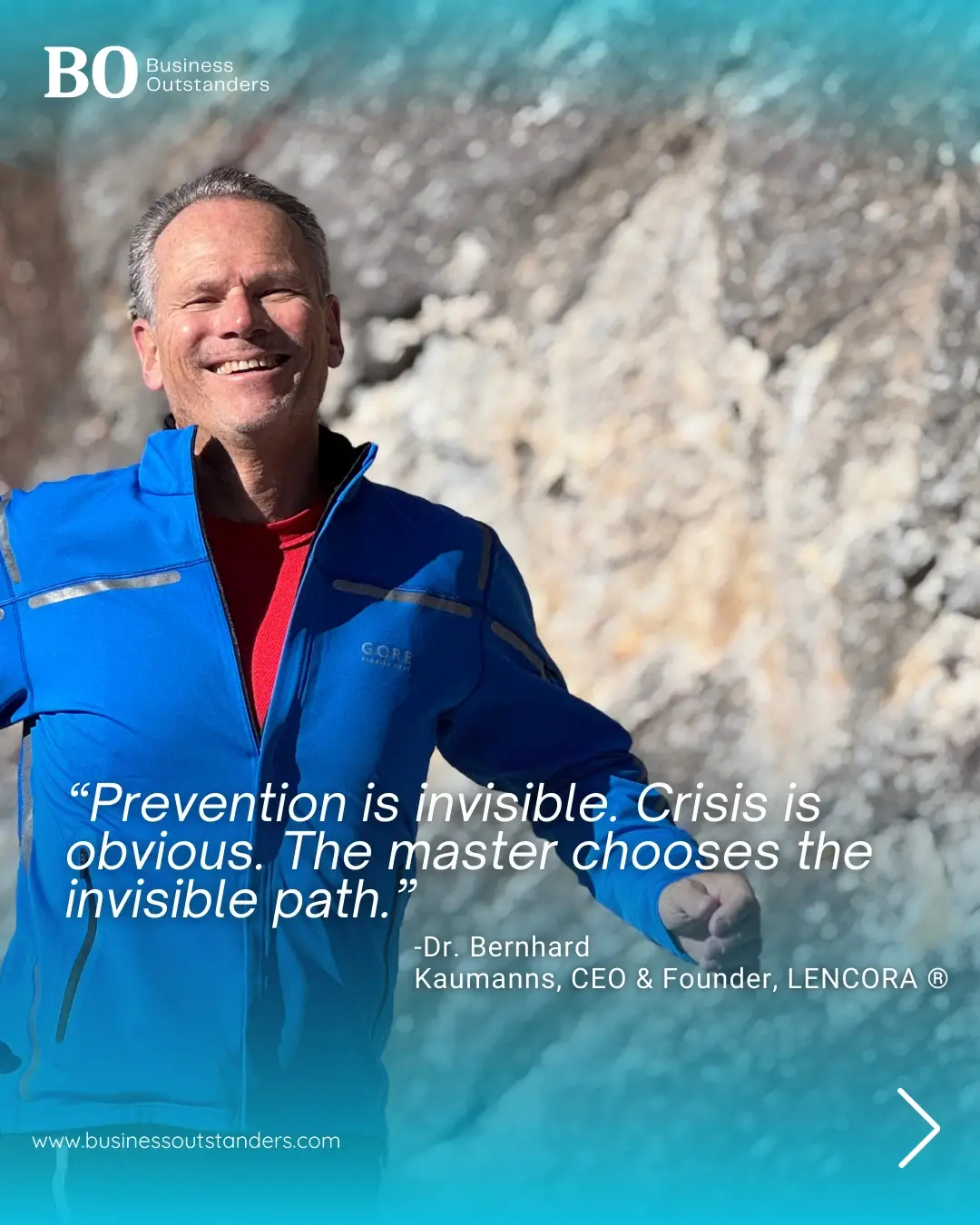
"Prevention is invisible. Crisis is obvious. The master chooses the invisible path.”
Dr. Bernhard Kaumanns | CEO & Founder, LENCORA® Business Health Intelligence
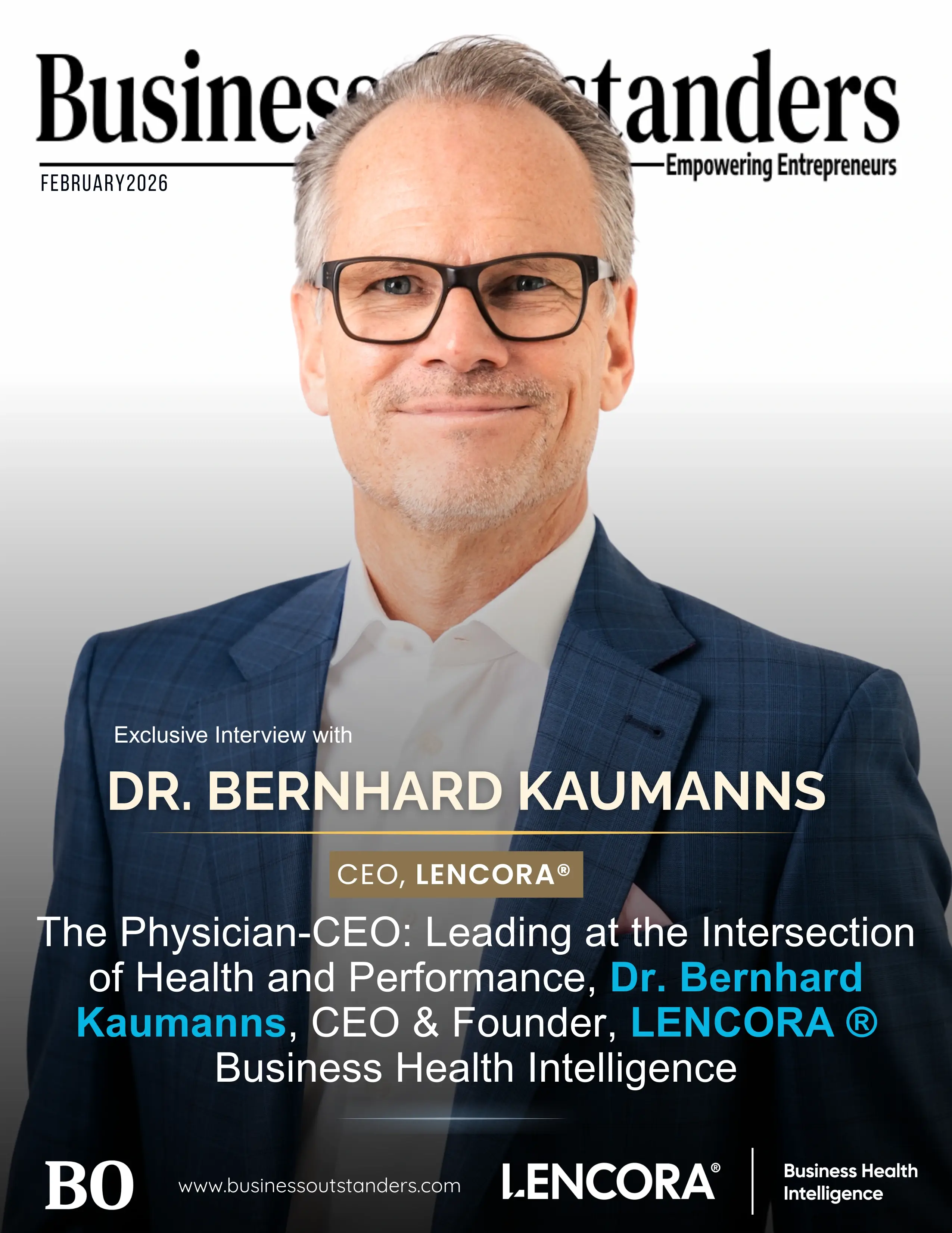
Dr. Bernhard Kaumanns' outlook rethinks the meaning of leadership in an age of burnout, talent scarcity, and technological revolution. As he bridges medicine and management leadership, he proves conclusively that health and performance are in no way obstacles but amplifiers of success. As Dr. Kaumanns shares his perspective on leadership throughout the interview with Janina Kugel, it becomes clear that at the heart of sustainable achievement lies simplicity itself: understanding, certainty, flexibility, and a commitment to robust self-care in all its forms.
Dr. Kaumanns' comments about demographic trends and AI technologies should serve as a wake-up call of sorts to those leaders stuck in old ways of thinking and too afraid to act on the trends that define our future. This interview is as much about leadership as it is about leadership in practice. Dr. Kaumanns reminds us that when people are approached as complex systems rather than controllable resources, success happens as a matter of course. Our future will be led by our willingness to think and act in different ways with our health at the forefront of every decision.
About Business Outstanders
Business Outstanders is a business magazine featuring interviews, growth strategies, and leadership insights for entrepreneurs and small business owners. If you know a business leader with a story worth telling, nominate them for a feature interview.