Introduction
Taking a product from idea to market is harder than most founders expect. You have a concept that makes sense on paper, maybe even a rough sketch or early prototype — but turning that into something manufacturable, scalable, and sellable is a different challenge entirely. Many startups lose months and significant budgets trying to manage that process without the right support.
That is where a product development company becomes one of the most valuable partners you can have. Working with the right team from the early stages means fewer costly redesigns, faster timelines, and a product that is actually ready for production — not just ready for a pitch deck.
This article breaks down what a product development company does, which services matter most, why location plays a role, and how to choose a partner that fits your business goals.
What Is a Product Development Company?
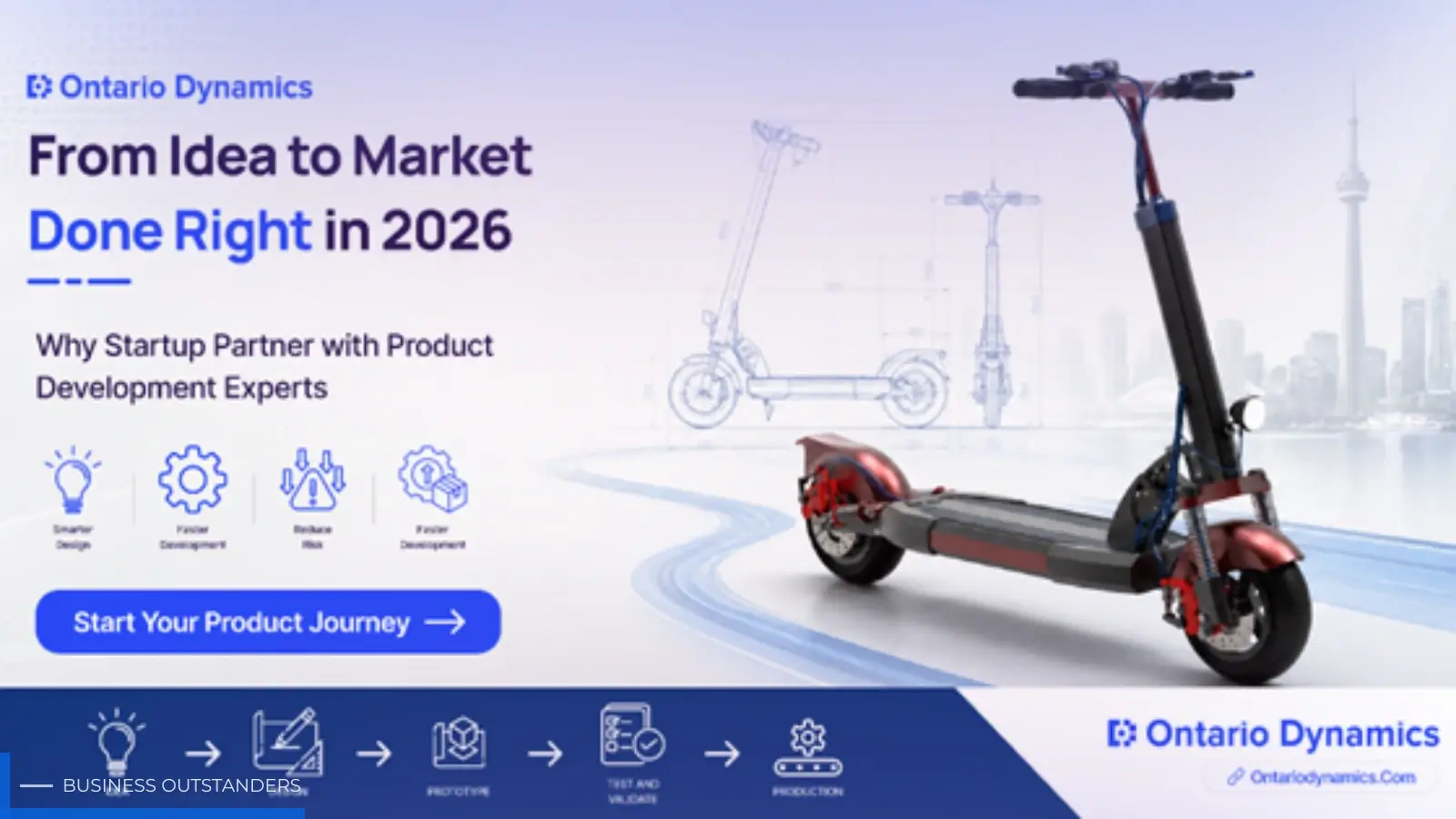
A product development company is a specialised engineering firm that helps businesses transform early-stage concepts into fully functional, production-ready products. Unlike a general engineering consultancy, a product development company is structured specifically around the full lifecycle of a product — from the first rough idea through to supplier-ready documentation and manufacturing handoff.
The scope of work typically includes mechanical and industrial design, 3D CAD modelling, design for manufacturability, structural analysis, prototyping, and validation testing. These are not services offered loosely — they are integrated disciplines that work together to reduce risk and shorten the path to market.
What separates a strong product development company from a standard design studio is depth. They understand not just how a product should look or function in theory, but how it will behave under real-world conditions. That means accounting for tolerances, material behaviour, thermal performance, and assembly constraints long before a prototype is ever built.
For startups and manufacturing businesses alike, this upstream rigour is what prevents expensive surprises downstream.
Core Product Development Services Explained
Understanding what is included in a complete engagement helps you evaluate whether a firm can genuinely handle your project — or whether you will end up managing gaps yourself.
Comprehensive product development services typically cover the following areas:
- Concept Development and Feasibility: This is where the engineering team works alongside you to define what the product needs to do, what constraints exist, and whether the concept is technically viable before any significant investment is made.
- 3D CAD Design and System Architecture: Detailed modelling of parts and assemblies using professional CAD tools. This stage establishes component interfaces, geometry, and tolerances using GD&T standards.
- Design for Manufacturability (DFM): One of the most overlooked but critical phases. DFM ensures that your design can actually be produced at scale without unnecessary cost or complexity. Catching manufacturing issues at the design stage is far cheaper than catching them during tooling or production.
- Prototyping — Alpha and Beta Builds: Physical prototypes are built to test form, fit, and function. Multiple rounds allow incremental refinement before finalising the design.
- Structural Simulation and FEA: Finite Element Analysis is used to test how designs respond to stress, heat, and load conditions — without waiting for physical failure.
- Testing and Validation: Functional, environmental, and reliability testing confirm that the product meets relevant safety and performance standards.
- Production Documentation: Final drawings, bill of materials, assembly instructions, and supplier packages that give manufacturers everything they need to produce consistently.
When all of these product development services are handled under one roof, projects move faster and with fewer errors between phases.
The Role of Machine Design Services in Product Development
For startups operating in industrial, automotive, or manufacturing-adjacent sectors, machine design services are often an essential part of the development process — not a separate offering.
Machine design involves engineering systems that include moving components, mechanical linkages, actuators, and load-bearing structures. When a product interacts with or forms part of a larger mechanical system, the design must account for dynamics, fatigue, kinematics, and assembly integration in ways that pure product design work does not always address.
A firm with strong machine design services brings a level of engineering discipline that is directly applicable to complex product development. They understand how physical systems behave under operating conditions, how tolerances stack up across assemblies, and how to design for both performance and longevity.
For startups building hardware that operates in demanding environments — industrial automation, clean energy, speciality vehicles, medical devices — having a team with machine design expertise on the same project is a meaningful advantage. It means your product is designed not just to function, but to last.
Why Choose a Product Development Company in Toronto?
Geography matters more than many founders initially realise. Working with a product development company Toronto or elsewhere in Ontario offers practical advantages that become obvious once a project is underway.
First, access to local manufacturing suppliers and fabrication shops makes the prototyping and production transition significantly smoother. When your engineering team has established relationships with regional suppliers, lead times are shorter and procurement decisions are better informed.
Second, proximity enables real collaboration. Site visits, in-person design reviews, and hands-on access to prototypes are all easier when your partner is nearby. Many of the most important project decisions happen fastest when teams are in the same room.
Third, a product development company Toronto or Ontario-based firm, will have working familiarity with Canadian regulatory standards, industry certifications, and compliance requirements relevant to your market. That knowledge saves time and prevents costly oversights during the approval process.
Finally, for startups looking to scale within Canada or export to the US market, working with a firm embedded in Ontario's manufacturing ecosystem provides supply chain advantages that remote partnerships simply cannot replicate.
How to Choose the Right Product Development Partner
Once you have decided to work with a product development company, choosing the right one comes down to a few non-negotiable criteria.
- Relevant Industry Experience: Look for a team that has worked on products similar in complexity to yours. Ask for case studies or examples from comparable sectors.
- End-to-End Capabilities: A firm that can take your project from concept through production documentation reduces handoff risk and keeps accountability in one place.
- NDA and IP Protection: Any reputable product development company will offer a non-disclosure agreement before discussions begin. If they hesitate, walk away.
- Clear Communication Practices: You should receive regular updates, honest assessments, and plain-language explanations — not just technical jargon. Evaluate this during your first few conversations.
- Realistic Timelines: Be cautious of firms that promise aggressive timelines without understanding your full project scope. Good partners ask detailed questions before committing to schedules.
Conclusion
Startups that invest in the right engineering partnership early rarely regret it. The cost of poor decisions during the development phase — redesigns, failed prototypes, manufacturing delays — almost always exceeds the investment in doing it properly the first time.
If you are evaluating how to move your concept forward in 2026, take a close look at who you want in your corner. A capable product development company does not just build what you ask for they help you build the right thing, in the right way, ready for the real world. Ontario Dynamics offers this kind of structured, engineering-led support to hardware startups and manufacturers across Ontario, with a focus on cost-effective service looking to scale efficiently.
Frequently Asked Questions
What does a product development company actually do?
It manages the full engineering process of taking a product concept through design, prototyping, testing, and manufacturing preparation. The goal is a production-ready product that performs reliably at scale.
How are product development services different from general engineering services?
General engineering firms may offer isolated services like CAD design or analysis. Product development services are structured around the complete product lifecycle, with each phase feeding into the next to reduce rework and accelerate timelines.
Why do machine design services matter for hardware startups?
If your product includes moving parts, load-bearing structures, or integrates with mechanical systems, machine design expertise ensures the engineering accounts for real operating conditions — not just static performance.
Is it better to work with a product development company in Toronto versus a remote firm?
For most hardware projects, local firms offer real advantages: supplier proximity, easier collaboration, and familiarity with Canadian regulatory requirements. These factors often translate directly to faster timelines and fewer surprises.
When should a startup engage a product development partner?
As early as possible — ideally before significant money is spent on prototypes or tooling. Early engagement allows the engineering team to identify risks and make informed design decisions before they become expensive to reverse.
Business Outstanders brings you sharp insights on tech, business, entrepreneurship, law, crypto, and more. We uncover what’s next. Stay updated, sign up for our newsletter and be part of the future!