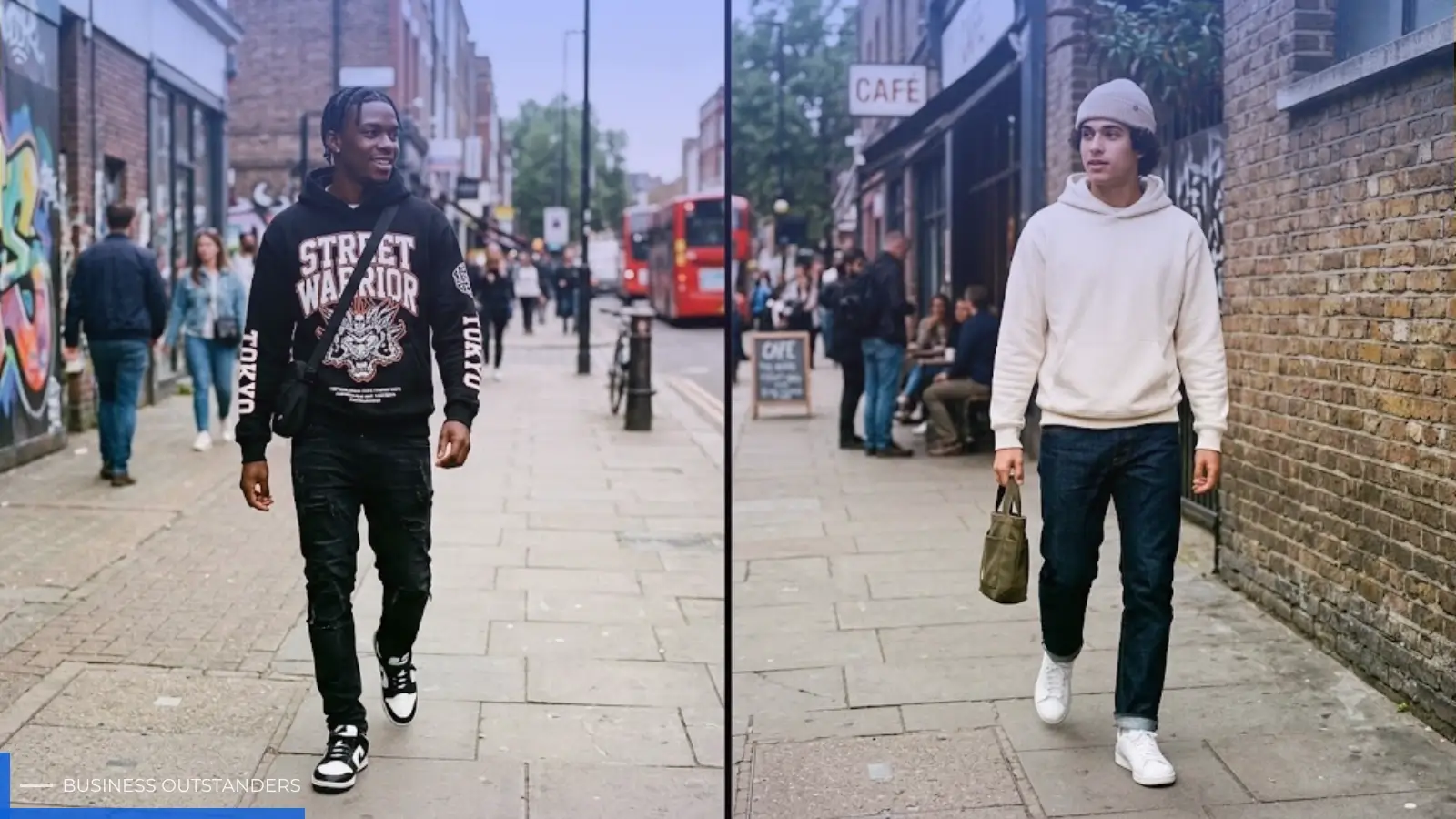
The Two Schools Splitting Every Streetwear Closet
Stand outside any sneaker store for ten minutes and you'll watch two completely different philosophies walk past wearing the same category of clothing. One school runs loud, meaning bold graphics, statement prints and pieces built to be noticed from across the street, the energy a brand like hellstar has turned into a whole identity. The other school runs quiet, meaning plain heavyweight essentials, no visible branding beyond a small mark, and outfits that whisper quality instead of announcing it. Both schools claim to be the real streetwear. Both are right, and both are missing half the picture, because the loud versus quiet debate was never actually about which one wins. It's about knowing what each school does well, when each one fits your day, and how the smartest closets quietly run both systems at once. That last part is the piece nobody writes about. The internet loves a versus battle, so every article picks a side, minimalists calling graphics childish and graphic heads calling plain fits boring, while the best dressed people you actually know own a loud drawer and a quiet drawer and switch between them like tools. This guide takes that honest position from the start. You'll get the real case for loud, the real case for quiet, the situations where each school clearly beats the other, and then the mixing rules that let one closet hold both without looking confused. No tribe loyalty required. By the end, the question stops being which side you're on and becomes which tool today's plan calls for, which is a far more useful question to wake up to. The debate was fun. The blend dresses better.
The Case for Loud: What Hellstar Gets Right
Loud streetwear works because clothing is communication, and graphics are the highest bandwidth message fabric can carry. A bold print announces taste, mood and affiliation before you've said a word, which is exactly the job streetwear was invented to do back when the whole culture grew out of skate crews, music scenes and teams marking their people. The range at hellstar shows the school at full strength, where high contrast graphics, sharp text and heavyweight cotton combine so the message arrives with structure behind it, and that fabric detail matters more than casual observers realize. Loud only works when the garment can carry the volume, since a striking print on flimsy fleece reads as a costume, while the same energy on dense cotton reads as conviction. The loud school also owns certain moments outright. Concerts, weekends, travel photos, meetups with your own scene, anywhere the point is expression, a statement piece does in one garment what a quiet outfit needs perfect execution to approach. There's a practical styling benefit too, and it's underrated: a loud piece removes decisions, because when the graphic is the outfit's engine, everything else just needs to stay neutral and clean, which makes bold pieces weirdly beginner friendly. One hero, quiet support, done. The school's honest weaknesses deserve naming as well. Graphics date faster than plains, loud pieces repeat visibly in photos, and there are rooms, offices, dinners, certain family tables, where a screaming chest print costs you more than it says. None of that sinks the school. It just defines its territory, and inside that territory, nothing quiet ever competes. My own bias, admitted freely: my favorite single garment I've ever owned was loud, and my most worn garment ever was not, which is basically this entire article in one sentence.
The Case for Quiet: Why Plain Costs More and Says More
Quiet streetwear makes a bet that sounds backwards until you've seen it work: remove the graphics and people look harder at everything else. Fabric, cut, drape and finish become the whole show, which is exactly why the quiet school lives or dies on construction quality. The pieces that define this side prove the point in the details:
- Heavyweight plain tees that hold their collar and skim the body correctly, doing with cut what loud pieces do with print
- Unbranded or small logo hoodies and sweatshirts in dense brushed fleece, where the structured hood and clean face are the design
- Matching knit and fleece sets in earth tones and neutrals, reading as considered rather than casual
- Straight cut sweatpants and tapered joggers with real weight, since quiet bottoms carry half the silhouette
- One quality jacket with zero graphics, the piece that ties every plain outfit into something finished
Notice what the list demands. Every single piece needs excellent fabric and fit, because quiet has no print to hide behind, and a cheap plain hoodie is just a cheap hoodie, while a cheap graphic hoodie at least has the graphic. That's why the quiet school skews more expensive per piece and why it photographs so well when done right, since texture and drape are what cameras love. Quiet also travels across rooms loud can't enter, working at dinner, at the office with the right pieces, and across years without dating. Its weakness mirrors its strength, though. Done lazily, quiet slides into forgettable, and a plain outfit in poor fabric with wrong proportions says nothing at all, loudly.
Where Each School Wins: A Situational Map
Stop asking which school is better and start asking which one today needs, because the winning system is situational, and the situations sort cleanly once you look. Loud takes the moments built for expression, meaning weekends with your people, gigs and events, city trips where photos happen, and any room where your scene sets the dress code, since a statement piece there works as a handshake before introductions. Quiet takes the mixed rooms, meaning workplaces with casual codes, dinners with unknown company, meetings where you want your words louder than your chest, and honestly most travel days, where plain heavyweight pieces layer better and repeat invisibly in a small bag. Weather adds its own votes, because loud graphics live best as the visible layer, so deep winter under closed coats becomes quiet territory by default, while spring and autumn, the open jacket seasons, are prime loud months when prints sit framed in outerwear. Age and life stage shift the map too, not by banning anything, but by moving the ratio, and most people drift quieter across the years while keeping one or two loud pieces that survived every purge because they meant something. Then there's the room reading skill that experienced dressers run automatically: scan where you're going, count how loud the walls are, and dress one notch below the loudest acceptable level, since slightly under the ceiling always reads better than testing it. Neither school needs to win your whole week. Loud takes Saturday, quiet takes Tuesday, and both hang in the same closet without a single argument, which is more than the internet comment sections managing this debate can claim.
Mixing Both Schools in One Outfit
The advanced move isn't owning both schools, it's wearing them in the same outfit, and there's a small set of rules that makes the blend look intentional instead of undecided. The foundation rule runs everything: one loud element maximum per outfit, with everything else drawn from the quiet school. From there, the combinations sort into reliable formulas:
- A bold graphic hoodie over completely plain heavyweight sweatpants and clean sneakers, the classic blend where quiet bottoms give the print a stage
- A loud tee under a plain open overshirt or jacket, so the graphic peeks through a calm frame and the volume drops one notch for mixed rooms
- Quiet everything plus one loud accessory, a printed beanie or standout cap, the smallest dose of the loud school that still reads as personality
- A statement piece in a muted colorway, where the design stays bold but the palette joins the quiet side, the diplomatic middle ground
- Full quiet fit with loud socks or one bright accent, honestly the entry drug for committed minimalists testing the water
The formulas share one skeleton, which is dosage control, and dosage is where blends fail, since two loud pieces argue and zero loud pieces in a "blend" is just the quiet school wearing a name tag. Fabric weight stays non negotiable across every formula too, because the blend only reads as deliberate when both schools' pieces share the same quality level, and a premium graphic over flimsy plains looks as off as the reverse. Match the weights, cap the volume at one, and the two schools stop being rivals and start being ingredients.
Building the Two Drawer Closet
Owning both schools without doubling your budget takes structure, and the cleanest version is the two drawer system, meaning a quiet foundation that covers most days plus a small loud rotation that covers the rest. Build the quiet drawer first, because it's the load bearing half, and this is where the minimal school's specialists earn their place, the way the essentials range at cole buxton approaches it, with heavyweight tees, plain structured hoodies and matching sets built so the fabric and cut do all the talking. Six to eight quiet pieces in neutrals, all mutually matching, and the foundation is done. Then add the loud drawer slowly and deliberately, two or three statement pieces maximum at any time, each one chosen by the two year test, meaning you'd have worn it two years ago and expect to want it two years from now. The ratio matters more than the totals, and for most lives the honest split lands around eighty twenty, quiet to loud, since the quiet pieces multiply across each other while each loud piece mostly stands alone. Spending should follow the same split with one twist: put your best money into the quiet anchors you'll wear constantly, but never buy a loud piece cheap, because a statement with a cracking print announces its own decline to everyone who already noticed it once. Rotation habits close the system. Loud pieces need spacing, a week or more between public appearances, while quiet pieces repeat freely since nobody clocks a plain cream hoodie twice. Here's the hands on detail from running this exact system for years: the loud drawer shrinks itself honestly, because every audit, the pieces that stopped feeling true get obvious fast, while the quiet drawer only ever loses pieces to actual wear. Let both drawers teach you at their own speed.
The Mistakes That Expose a Confused Closet
Both schools have signature failure modes, and knowing them saves you from learning each one at full price. The loud school's classic mistake is stacking, meaning two or more statements in one outfit, graphic hoodie plus printed pants plus branded cap, where every piece cancels the others and the total reads as noise rather than energy. Its second failure is quality mismatch, a bold print on thin collapsing fleece, which turns a statement into an apology, and its third is context blindness, the great graphic worn into the wrong room and spending the evening working against you. The quiet school fails differently but just as often. Its classic mistake is confusing plain with effortless, buying cheap unbranded basics and expecting the minimalist effect, when the whole school runs on fabric weight and precise fit that cheap basics never deliver. Its second failure is the beige uniform trap, where every piece is so safe the outfit dissolves into wallpaper, fixable with texture mixing and stronger silhouettes rather than with prints. And its third is quiet snobbery, honestly, dismissing all graphics as immature, which just walls off half the toolbox. The blend has its own signature mistake too, the fifty fifty outfit, where loud and quiet elements sit in equal measure and the eye can't find the intended center, so the whole look reads as a closet having an argument. Now the honest limitation this guide owes you: these rules describe what photographs well and reads clearly to most rooms, but personal style occasionally works precisely by breaking them, and someone with enough conviction can wear three prints at once and make it law. The rules are the reliable path, not the only path. Break them on purpose or not at all.
Reading Your Own Week and Setting the Ratio
The system finishes with an audit only you can run, because the right loud to quiet ratio hides in your actual calendar, not in any article's default. Track two weeks honestly, and for each day, note which school your rooms demanded and which school you actually wore, since the gap between those two columns is your whole shopping list. Someone whose weeks fill with mixed company, work settings and unknown rooms will find the data pointing overwhelmingly quiet, meaning the budget belongs in heavyweight plains and the loud drawer stays small and precious. Someone living inside their scene, creative fields, music, skate, nightlife, will find loud earning genuine daily work, and their quiet drawer shrinks toward foundation duty. Most people land between, and the between is fine, because the two drawer system flexes to any split without rebuilding. Recheck the ratio twice a year, at the same closet audits where you're already checking seams and cuffs, and let it drift as life drifts, since jobs change, cities change, and the closet that refuses to follow becomes a museum of a previous person. Watch your own photos across those months too, because pictures answer the repetition question honestly, showing whether the loud pieces are cycling enough variety and whether the quiet outfits are reading as intentional or invisible. Then relax about the whole thing, genuinely, because the loud versus quiet war was always content, not truth, and the people whose style you actually admire settled it years ago by ignoring it. Own the graphics that mean something, own the plains that carry everything, wear each where it wins, and let the two schools split the week like they were always meant to. One closet, two volumes, zero tribe fees. That's the entire resolution.
Final Words
Loud and quiet were never enemies, just tools with different jobs. The loud school owns expression, your scene, your weekends and the moments built for statements, and it demands heavyweight fabric under every print. The quiet school owns the mixed rooms, the long years and the outfits where cut and cloth do the talking, and it demands quality precisely because nothing distracts from its absence. Run both through the two drawer system, cap every blend at one loud element, match the fabric weights across schools, and let your real calendar set the ratio instead of the internet. The debate made good content. The blend makes good closets, and yours can start holding both this week.
FAQ BLOCK
Q: Is graphic streetwear going out of style?
A: No, it cycles in dosage rather than disappearing. Loud graphics and quiet minimalism have traded ground for decades, and both schools hold permanent territory. What dates isn't graphics as a category, it's specific trend prints, which is why the two year test matters before buying any statement.
Q: Can I mix a loud graphic piece with minimal pieces in one outfit?
A: Yes, and it's the strongest version of both schools. Cap the outfit at one loud element, keep everything else plain and neutral, and match the fabric quality across all pieces so the blend reads deliberate rather than undecided.
Q: Why do my plain outfits look boring instead of minimal?
A: Almost always fabric and fit. The quiet school runs entirely on heavyweight cloth, correct shoulders and controlled hems, since there's no print to carry attention. Add texture mixing, fleece against denim against knit, and plain stops reading as empty.
Q: How many statement pieces should I own?
A: Two or three at a time for most closets, against six to eight quiet foundation pieces. Loud pieces mostly stand alone while quiet pieces multiply across each other, so an eighty twenty ratio covers a typical week without repeats showing in photos.
Q: Which should I buy first, loud pieces or plain essentials?
A: Plain essentials first, always. The quiet foundation gives every future loud piece a stage to land on, while a statement bought before the basics exist ends up fighting your closet instead of leading it. Build the stage, then book the headliner.
Business Outstanders brings you sharp insights on tech, business, entrepreneurship, law, crypto, and more. We uncover what’s next. Stay updated, sign up for our newsletter and be part of the future!