Getting a catio is exciting, but your cat may not share your enthusiasm right away. With the right approach, almost any cat can learn to love their new outdoor space. Here's how to make it happen.
Why Some Cats Refuse Their Catio
You spent time setting up a beautiful outdoor enclosure, and your cat wants nothing to do with it. Before assuming your cat dislikes the catio, it helps to understand what's really going on.
It's About the Transition, Not the Catio
Cats are creatures of habit, and any new environment can feel threatening at first. A catio introduces unfamiliar sights, sounds, and smells all at once, and without enough time to process it, even a well-designed space can feel overwhelming. Most cats that initially refuse a catio come around with a slow, patient introduction.
How Personality Affects Adoption Speed
Knowing your cat's personality going in helps you set realistic expectations and avoid pushing them too hard, too fast.
|
Cat Type |
Typical Response |
Expected Adjustment Time |
|
Bold and curious |
Explores on the first or second visit |
1 to 3 days |
|
Cautious but sociable |
Needs encouragement and reassurance |
1 to 2 weeks |
|
Shy or anxious |
May avoid entirely at first |
2 to 4 weeks or more |
|
Senior or low-energy |
Slow to explore but steady |
2 to 3 weeks |
Before the First Introduction
A smooth introduction starts well before your cat ever sets paw in the catio. A little preparation goes a long way.
Picking the Right Time of Day
Timing matters more than most cat owners realize. Aim to introduce the catio during your cat's naturally active window, which for most cats falls in the early morning or late afternoon. Avoid times when your cat is sleepy, hungry, or already stressed.
Also consider what's happening outside. Loud noises from lawn equipment, construction, or nearby traffic can make the catio feel unsafe on a first visit. Choose a calm, quiet day for the best chance of a positive first impression.
Making the Catio Feel Inviting
Before your cat enters, make the space feel as welcoming as possible. Place a worn t-shirt or a familiar blanket inside so the space carries a scent your cat already associates with safety. Good pet hygiene can also help create a healthier and more comfortable environment for your cat to explore If your cat has a favorite resting spot indoors, replicate that setup as closely as you can.
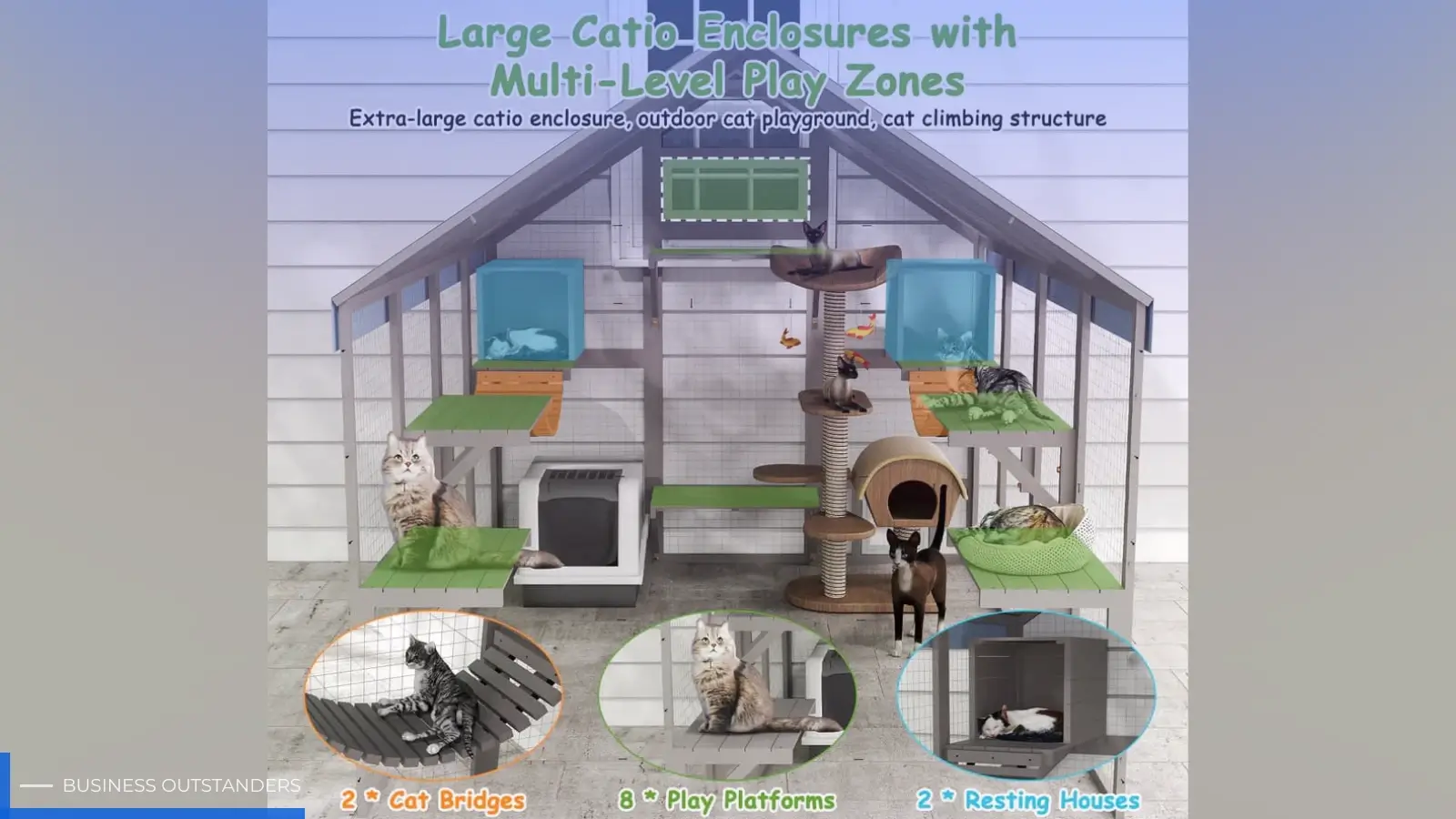
Many catios are designed with features that naturally encourage exploration, such as elevated perches, cozy hideaways, and sunny resting platforms. These built-in elements can make a real difference, especially during the early introduction phase.
What to Place Inside Beforehand
Stock the catio before the first visit so your cat has reasons to stay once they step in. A few essentials to include:
-
A perch or elevated platform for observing the surroundings
-
A hiding spot, such as a small covered bed or box
-
Fresh water
-
A few pieces of their favorite kibble or treats scattered around
-
A toy they already enjoy indoors
Hold off on adding a litter box at this stage. The goal is for the catio to feel like an inviting retreat, and easy access back inside is sufficient for bathroom needs.
The First Visit
The first time your cat enters the catio sets the tone for everything that follows. Keep it low-key and pressure-free.
Let Your Cat Lead
Open the door or cat flap and step back. Do not carry your cat into the catio or physically guide them through the entrance. Forcing the introduction, even gently, can create a negative association that takes weeks to undo.
Sit nearby and stay calm. If your cat sniffs the entrance and walks away, that is perfectly fine. Let them observe from the threshold. Many cats will enter on their own once their curiosity outweighs their caution.
How Long the First Session Should Last
Keep the first visit short, ideally between five and fifteen minutes. The goal on day one is not to make your cat love the catio. It is simply to help them learn that it is safe.
End the session on a positive note. If your cat is relaxed and exploring, call them back inside before they show any signs of stress. Leaving while the experience still feels good builds a positive memory of the space.
Comfort Signs vs. Stress Signals
Knowing how to read your cat during the first visit helps you decide when to wrap up and when to let them keep going.
|
Comfort Signs |
Stress Signals |
|
Relaxed body posture |
Crouching low to the ground |
|
Slow blinking or half-closed eyes |
Flattened ears or tucked tail |
|
Sniffing and exploring at a steady pace |
Panting or excessive grooming |
|
Sitting or lying down calmly |
Attempting to escape or refusing to move |
|
Responding to treats |
Hissing, growling, or vocalizing |
If you notice multiple stress signals, calmly bring your cat back inside and try again another day with an even shorter session.
Building Confidence Over Time
Once the first visit is behind you, the goal shifts to building a positive routine your cat looks forward to.
Using Positive Reinforcement
Treats and interactive play are the two most effective tools at this stage. Reserve high-value treats your cat does not receive at any other time, such as small pieces of cooked chicken or a favorite snack, exclusively for catio sessions. Reward frequently early on and taper off gradually as your cat grows more comfortable.
Alongside treats, bring a wand toy or laser pointer into the catio for short play sessions. This shifts your cat's focus away from the unfamiliar environment and reinforces a positive connection with the space.
Gradually Extending Time Outside
Add time in small increments over days or weeks. If your cat was comfortable for ten minutes yesterday, aim for fifteen today. Follow your cat's cues rather than a rigid timeline, as every cat moves at its own pace. Once your cat starts entering independently, leave the access door open so they can come and go on their own terms.
Special Cases
Some cats need a slightly adjusted approach based on their age, temperament, or household situation.
Shy or Anxious Cats
Anxious cats require extra patience and a slower pace. Consider spending time sitting inside the catio yourself before ever bringing your cat in. Your calm presence helps neutralize the space and signals that there is nothing to fear.
In the days leading up to the introduction, a synthetic pheromone diffuser or spray near the catio entrance can also help reduce stress-related behaviors.
If you are still choosing an enclosure, cat catios with covered sections or enclosed hiding spots tend to work best for shy cats, as these features give them a sense of shelter and control over their exposure to the outdoors.
Senior Cats
Older cats can enjoy a catio, but the introduction should be slower and comfort-focused. Add a ramp if the entry point requires any jumping, and make sure there is a soft, padded resting surface at ground level. Senior cats may not explore the full space right away, but even sitting near the entrance and taking in fresh air provides valuable mental enrichment.
Multi-Cat Households
When you have multiple cats, introduce them to the catio one at a time. Allow each cat to establish their own relationship with the space before adding the dynamic of another cat.
Once each cat is comfortable individually, bring them together during a calm moment. Make sure there are enough perches and hiding spots so no single cat can claim the entire space, as resource competition is one of the most common reasons shared spaces create tension.
In Summary
Most cats take to a catio once the introduction is handled with patience. Go at your cat's pace, keep early sessions short and positive, and let their comfort guide the timeline. When your cat starts entering the catio on their own and settling in without any prompting, you will know the process has worked.
Business Outstanders brings you sharp insights on tech, business, entrepreneurship, law, crypto, and more. We uncover what’s next. Stay updated, sign up for our newsletter and be part of the future!